Uruguay Table Olives Market: Import Trend Analysis
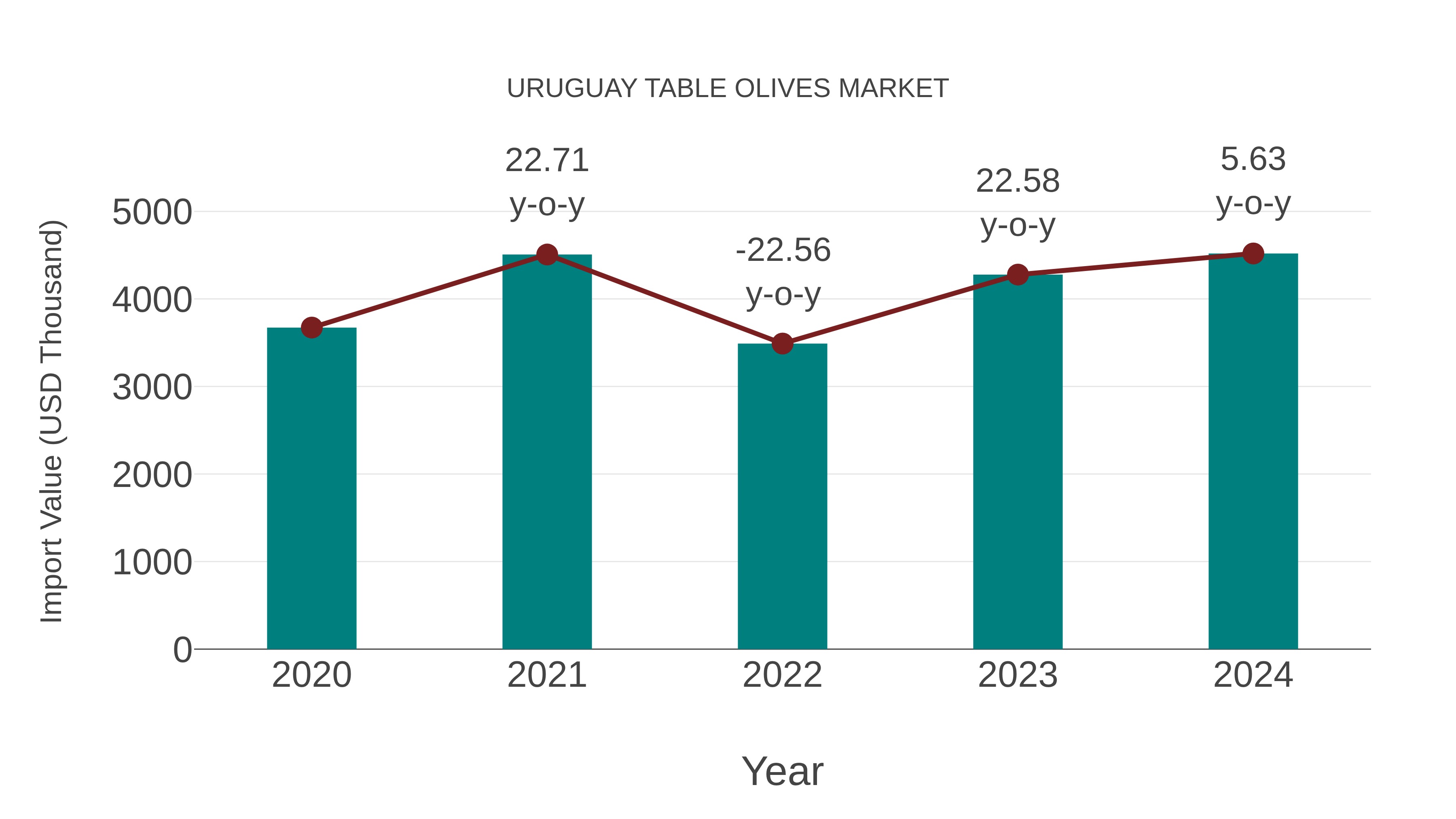
The import trend for the Uruguay table olives market in Uruguay saw a steady increase over the past five years. Data indicates a rise in imported table olives from various countries, contributing to the growth of the market.
Uruguay Table Olives Market Synopsis
The Uruguay Table Olives Market is experiencing steady growth driven by increasing consumer demand for healthy and natural food products. The market is characterized by a variety of table olive types such as green, black, and stuffed olives, catering to different consumer preferences. Domestic production of table olives in Uruguay is significant, with local producers focusing on high-quality products to meet both domestic and export demand. The market is also influenced by factors such as changing consumer lifestyles, rising awareness about the health benefits of olives, and the growing trend of snacking on healthy foods. Key players in the market include both domestic producers and international brands, contributing to a competitive landscape. Overall, the Uruguay Table Olives Market presents opportunities for growth and innovation in response to evolving consumer preferences.
Uruguay Table Olives Market Trends
The Uruguay Table Olives market is currently seeing a shift towards healthier and more sustainable products, with a growing demand for organic and natural options. Consumers are increasingly looking for high-quality olives with unique flavors and varieties, creating opportunities for premium and specialty products in the market. Additionally, there is a rising interest in value-added products such as flavored olives and convenient packaging formats to cater to changing consumer preferences and lifestyles. With a focus on quality and innovation, there is potential for local producers to differentiate themselves in the market and capture a larger share of both domestic and export markets. Overall, the Uruguay Table Olives market presents opportunities for companies to capitalize on the growing demand for premium, organic, and innovative products.
Uruguay Table Olives Market Challenges
In the Uruguay Table Olives Market, challenges include increasing competition from imported olives, fluctuating prices of raw materials, and changing consumer preferences towards healthier and more sustainable food options. Additionally, limited marketing efforts and distribution channels hinder the growth of local producers in reaching a wider audience both domestically and internationally. Strict regulations and quality standards imposed by importing countries also pose challenges for exporters in meeting the required certifications and ensuring product compliance. Adapting to these market dynamics and implementing efficient production processes will be crucial for players in the Uruguay Table Olives Market to remain competitive and sustainable in the long term.
Uruguay Table Olives Market Investment Opportunities
The growth of the Table Olives Market in Uruguay is primarily driven by increasing consumer awareness about the health benefits of olives, such as their high content of antioxidants and healthy fats. Additionally, changing dietary habits and a growing preference for Mediterranean cuisine in the region are boosting the demand for table olives. The rising trend of snacking on healthy and convenient foods is also contributing to the market growth, as table olives are seen as a nutritious and flavorful option. Furthermore, the expanding retail sector and increasing disposable income among the urban population are providing opportunities for market players to introduce a variety of table olive products and flavors to cater to the diverse consumer preferences in Uruguay.
Uruguay Table Olives Market Government Polices
Government policies related to the Uruguay Table Olives Market focus on promoting sustainable agricultural practices, ensuring food safety standards, and facilitating trade agreements to enhance market access. The government provides support to olive producers through subsidies and financial assistance programs, encouraging the adoption of modern technologies and best practices to improve productivity and quality. Additionally, regulatory bodies enforce strict guidelines for the production, processing, and labeling of table olives to maintain high standards and protect consumer interests. Uruguay also actively participates in international trade negotiations to expand export opportunities for its table olive industry, seeking to strengthen partnerships with key markets and comply with global trade regulations to boost competitiveness and market presence.
Uruguay Table Olives Market Future Outlook
The future outlook for the Uruguay Table Olives Market appears positive, with steady growth expected in the coming years. Increasing consumer awareness regarding the health benefits of olives, such as their high antioxidant content and potential role in reducing the risk of chronic diseases, is likely to drive demand. Additionally, the rising popularity of Mediterranean cuisine globally is expected to further boost consumption of table olives. Uruguay`s favorable climate for olive cultivation and growing investments in modern agricultural practices are anticipated to result in improved yields and quality of olives, enhancing the country`s competitiveness in the international market. Overall, the Uruguay Table Olives Market is poised for growth, with opportunities for expansion both domestically and in export markets.
Key Highlights of the Report:
- Uruguay Table Olives Market Outlook
- Market Size of Uruguay Table Olives Market, 2025
- Forecast of Uruguay Table Olives Market, 2032
- Historical Data and Forecast of Uruguay Table Olives Revenues & Volume for the Period 2022 - 2032F
- Uruguay Table Olives Market Trend Evolution
- Uruguay Table Olives Market Drivers and Challenges
- Uruguay Table Olives Price Trends
- Uruguay Table Olives Porter's Five Forces
- Uruguay Table Olives Industry Life Cycle
- Historical Data and Forecast of Uruguay Table Olives Market Revenues & Volume By Type for the Period 2022 - 2032F
- Historical Data and Forecast of Uruguay Table Olives Market Revenues & Volume By Black Olive for the Period 2022 - 2032F
- Historical Data and Forecast of Uruguay Table Olives Market Revenues & Volume By Green Olive for the Period 2022 - 2032F
- Historical Data and Forecast of Uruguay Table Olives Market Revenues & Volume By Application for the Period 2022 - 2032F
- Historical Data and Forecast of Uruguay Table Olives Market Revenues & Volume By Online Store for the Period 2022 - 2032F
- Historical Data and Forecast of Uruguay Table Olives Market Revenues & Volume By Supermarket for the Period 2022 - 2032F
- Historical Data and Forecast of Uruguay Table Olives Market Revenues & Volume By Convenience Store for the Period 2022 - 2032F
- Historical Data and Forecast of Uruguay Table Olives Market Revenues & Volume By Other for the Period 2022 - 2032F
- Uruguay Table Olives Import Export Trade Statistics
- Market Opportunity Assessment By Type
- Market Opportunity Assessment By Application
- Uruguay Table Olives Top Companies Market Share
- Uruguay Table Olives Competitive Benchmarking By Technical and Operational Parameters
- Uruguay Table Olives Company Profiles
- Uruguay Table Olives Key Strategic Recommendations






































