Norway Table Olives Market Top 5 Importing Countries and Market Competition (HHI) Analysis
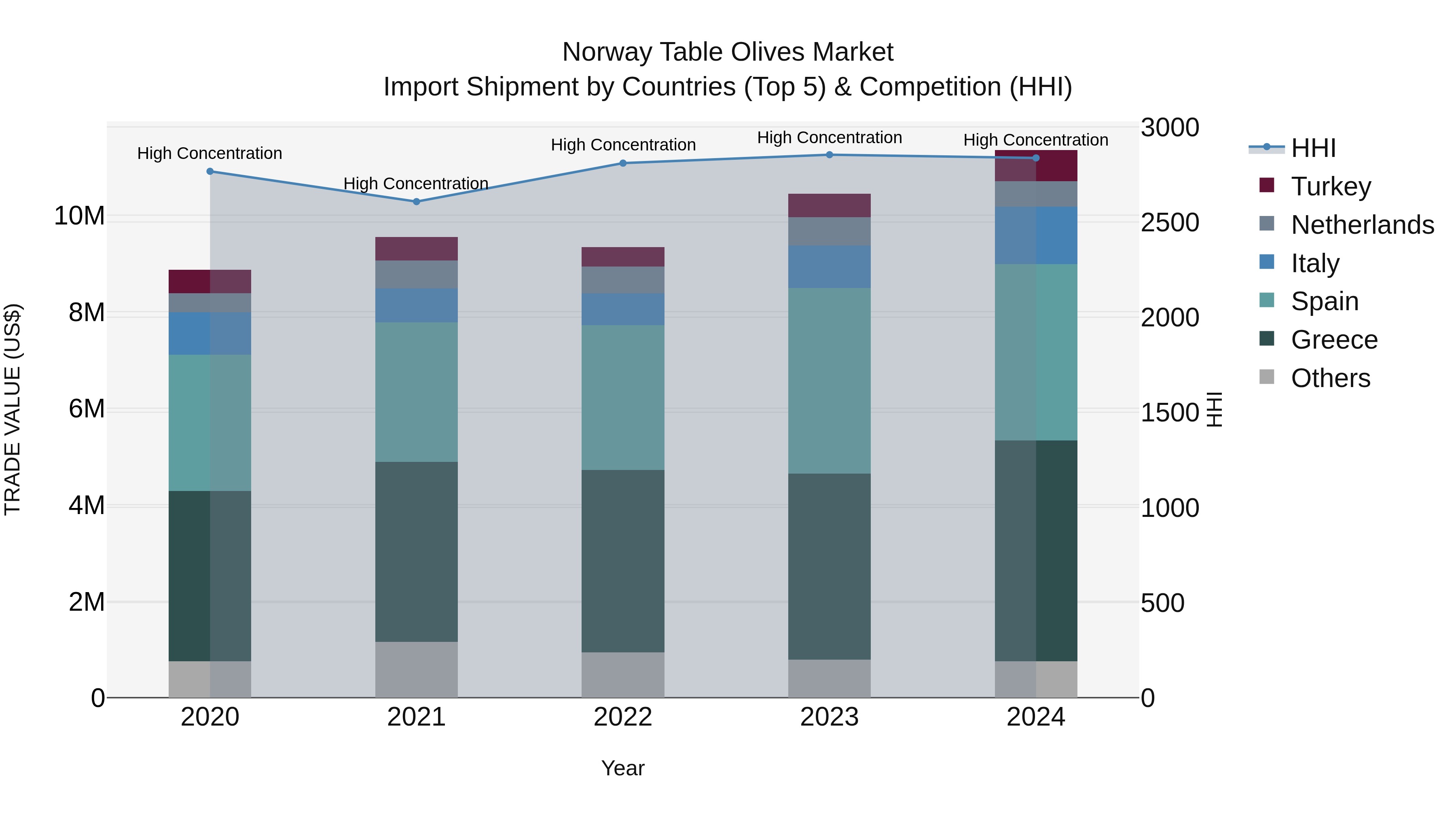
Norway`s table olives import market in 2024 continued to be dominated by key players such as Greece, Spain, Italy, Turkey, and the Netherlands, indicating a high level of concentration. The Compound Annual Growth Rate (CAGR) from 2020 to 2024 stood at a healthy 6.36%, with a notable growth rate of 8.62% from 2023 to 2024. This data suggests a consistent demand for table olives in Norway and highlights the significance of these exporting countries in meeting that demand.
Norway Table Olives Market Synopsis
The Norway table olives market is characterized by a growing demand for premium and high-quality olives among consumers who appreciate Mediterranean cuisine. The market is primarily driven by increasing health awareness and the rising popularity of Mediterranean diets in the region. Norwegian consumers are increasingly seeking out diverse olive varieties such as Kalamata, green, and black olives, both for culinary use and as a healthy snack option. The market is also influenced by the growing trend of gourmet food and a preference for natural, organic, and sustainable products. Key players in the Norway table olives market include both domestic producers and international brands, with a focus on product innovation, packaging, and marketing strategies to cater to the evolving consumer preferences in the region.
Norway Table Olives Market Trends
The Norway Table Olives Market is experiencing a growing demand for specialty and premium varieties of olives, driven by an increasing consumer interest in Mediterranean cuisine and healthy eating. There is a noticeable trend towards organic and locally-sourced table olives, as consumers prioritize sustainability and quality. Opportunities exist for olive producers to expand their product offerings to cater to this demand, as well as to leverage e-commerce platforms to reach a wider audience. Additionally, introducing innovative flavors and packaging formats can help differentiate brands in the market. Collaborating with retailers and restaurants to promote the versatility of table olives in various dishes can also drive market growth. Overall, the Norway Table Olives Market presents opportunities for producers to capitalize on the growing consumer interest in premium, organic, and locally-sourced products.
Norway Table Olives Market Challenges
In the Norway Table Olives Market, challenges include limited domestic production due to the country`s climate, which necessitates importing a significant portion of table olives. This reliance on imports makes the market vulnerable to fluctuations in international supply and pricing. Additionally, consumer preferences in Norway tend to favor traditional Scandinavian foods over Mediterranean products like olives, leading to lower demand compared to other European countries. Furthermore, the high cost of imported olives can make it challenging for local producers to compete in terms of pricing, impacting their market share. To thrive in the Norway Table Olives Market, companies need to focus on educating consumers about the health benefits and versatility of olives, as well as exploring innovative marketing strategies to increase demand and differentiate their products.
Norway Table Olives Market Investment Opportunities
The Norway Table Olives Market is primarily driven by the rising consumer awareness regarding the health benefits of olives, such as being a good source of healthy fats and antioxidants. The increasing adoption of Mediterranean diet patterns among the Norwegian population is also fueling the demand for table olives. Additionally, the growing trend of snacking on healthy and convenient food options is boosting the consumption of olives as a nutritious snack. The influence of social media and food blogs promoting olive-based recipes and dishes is further contributing to the market growth. Moreover, the expanding retail sector and availability of a variety of flavored olives in supermarkets and specialty stores are enhancing consumer accessibility and driving the overall market for table olives in Norway.
Norway Table Olives Market Government Polices
The Norway Table Olives Market is influenced by various government policies, including regulations on food safety and quality standards enforced by the Norwegian Food Safety Authority. Additionally, the Norwegian government has implemented agricultural subsidies to support domestic olive production and promote sustainable farming practices. Import policies and tariffs also play a role in shaping the market dynamics, with Norway being a member of the European Free Trade Association (EFTA) and having trade agreements with countries like Turkey and Spain, major table olive producers. Government initiatives to promote healthy eating habits and local food consumption further impact consumer preferences and demand for table olives in Norway. Overall, government policies in Norway aim to ensure food safety, support domestic producers, and regulate imports to maintain a competitive and sustainable table olives market.
Norway Table Olives Market Future Outlook
The Norway table olives market is expected to witness steady growth in the coming years due to increasing consumer awareness about the health benefits of olives and the growing trend of Mediterranean cuisine in the country. Factors such as rising disposable incomes, changing dietary preferences towards healthier options, and the popularity of gourmet foods are likely to drive the demand for table olives in Norway. Additionally, the rising trend of snacking on healthy and convenient foods is expected to further boost the market. Producers focusing on product innovation, introducing new flavors and packaging formats, and emphasizing on sustainable and organic production methods will likely gain a competitive edge in the market. Overall, the Norway table olives market is poised for growth with opportunities for both domestic producers and international exporters to capitalize on the increasing demand.
Key Highlights of the Report:
- Norway Table Olives Market Outlook
- Market Size of Norway Table Olives Market, 2024
- Forecast of Norway Table Olives Market, 2031
- Historical Data and Forecast of Norway Table Olives Revenues & Volume for the Period 2021- 2031
- Norway Table Olives Market Trend Evolution
- Norway Table Olives Market Drivers and Challenges
- Norway Table Olives Price Trends
- Norway Table Olives Porter's Five Forces
- Norway Table Olives Industry Life Cycle
- Historical Data and Forecast of Norway Table Olives Market Revenues & Volume By Type for the Period 2021- 2031
- Historical Data and Forecast of Norway Table Olives Market Revenues & Volume By Black Olive for the Period 2021- 2031
- Historical Data and Forecast of Norway Table Olives Market Revenues & Volume By Green Olive for the Period 2021- 2031
- Historical Data and Forecast of Norway Table Olives Market Revenues & Volume By Application for the Period 2021- 2031
- Historical Data and Forecast of Norway Table Olives Market Revenues & Volume By Online Store for the Period 2021- 2031
- Historical Data and Forecast of Norway Table Olives Market Revenues & Volume By Supermarket for the Period 2021- 2031
- Historical Data and Forecast of Norway Table Olives Market Revenues & Volume By Convenience Store for the Period 2021- 2031
- Historical Data and Forecast of Norway Table Olives Market Revenues & Volume By Other for the Period 2021- 2031
- Norway Table Olives Import Export Trade Statistics
- Market Opportunity Assessment By Type
- Market Opportunity Assessment By Application
- Norway Table Olives Top Companies Market Share
- Norway Table Olives Competitive Benchmarking By Technical and Operational Parameters
- Norway Table Olives Company Profiles
- Norway Table Olives Key Strategic Recommendations






































