Italy Bamboos Market Size Growth Rate
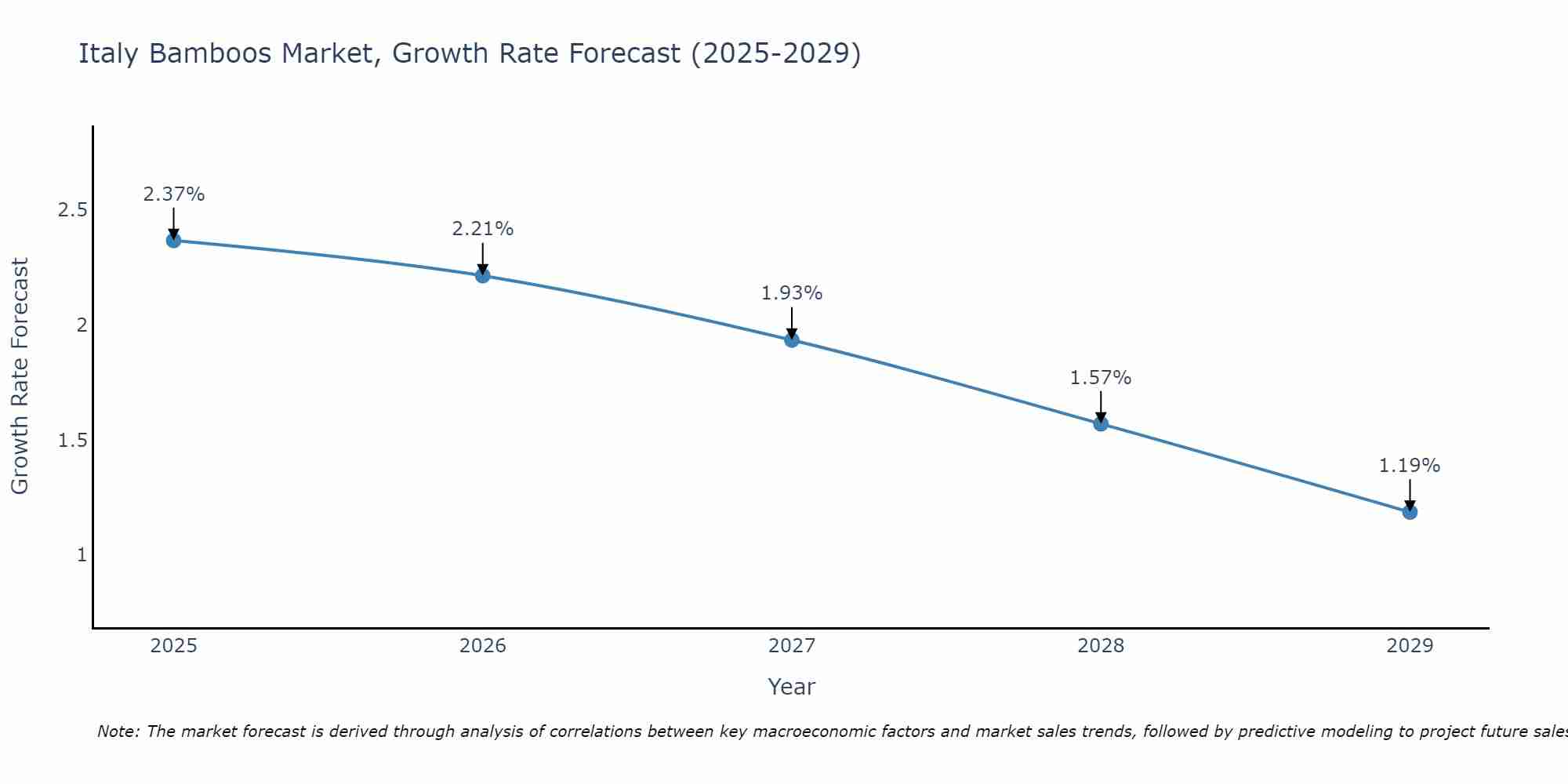
The Italy Bamboos Market could see a tapering of growth rates over 2025 to 2029. Beginning strongly at 2.37% in 2025, growth softens to 1.19% in 2029.
Italy Bamboos Market Overview
The Italy bamboo market is experiencing steady growth due to the increasing demand for sustainable and eco-friendly products across various industries. Bamboo, known for its versatility and durability, is being utilized in construction, furniture, textiles, and even as a substitute for plastic in packaging. The market is driven by the rising awareness among consumers about the environmental benefits of bamboo, such as its rapid growth rate and ability to sequester carbon dioxide. Additionally, government initiatives promoting the use of sustainable materials further contribute to the market growth. Italian companies are focusing on innovation in bamboo processing techniques to enhance product quality and expand their market presence. Overall, the Italy bamboo market is poised for continued expansion as the sustainable living trend gains momentum.
Italy Bamboos Market Trends
The Italy bamboo market is experiencing a surge in demand due to the growing popularity of sustainable and eco-friendly products. Bamboo is being increasingly used in various industries such as construction, furniture, textiles, and even in the food and beverage sector. Consumers are gravitating towards bamboo products due to their durability, versatility, and environmental benefits. The market is also witnessing a rise in innovative bamboo-based products, such as bamboo flooring, clothing, and packaging materials. With a heightened awareness of environmental issues and a shift towards more sustainable practices, the Italy bamboo market is expected to continue its upward trajectory in the coming years.
Italy Bamboos Market Challenges
In the Italy Bamboos Market, some key challenges are related to the limited awareness and understanding of the benefits of bamboo products among consumers. Additionally, there is a lack of standardized regulations and certifications for bamboo products, which can hinder market growth and consumer trust. Another challenge is the competition from traditional materials like wood and plastic, which have established market footholds. Supply chain issues, such as sourcing sustainable bamboo and ensuring quality throughout the production process, also pose challenges for businesses operating in the Italy Bamboos Market. Overcoming these challenges will require strategic marketing efforts to educate consumers, collaboration with industry stakeholders to establish standards, and investment in sustainable sourcing practices to ensure the long-term viability of the market.
Italy Bamboos Market Investment Opportunities
The Italy Bamboos Market presents an array of investment opportunities across various sectors. One of the key areas for investment is in the manufacturing industry, particularly in the production of bamboo-based products such as flooring, furniture, and textiles. With the increasing global demand for sustainable and eco-friendly products, investing in the development of innovative bamboo products can be a lucrative venture. Additionally, the growing trend of bamboo as a renewable resource for construction materials and bioenergy presents opportunities for investment in infrastructure projects and renewable energy initiatives. Furthermore, there is potential for investment in bamboo cultivation and farming practices to meet the rising demand for raw bamboo materials. Overall, the Italy Bamboos Market offers a diverse range of investment prospects for those looking to capitalize on the sustainability and versatility of bamboo.
Italy Bamboos Market Government Policy
In Italy, government policies related to the bamboo market are focused on promoting sustainable cultivation and utilization of bamboo as a renewable resource. The government encourages research and development in bamboo production techniques, supports initiatives to increase the use of bamboo in various industries, and provides incentives for farmers and entrepreneurs to engage in bamboo cultivation. Additionally, there are regulations in place to ensure sustainable harvesting practices and to protect natural bamboo habitats. The government also promotes the use of bamboo in construction and manufacturing sectors as a way to reduce carbon emissions and promote eco-friendly practices. Overall, Italy`s government policies aim to foster a thriving and environmentally conscious bamboo market in the country.
Italy Bamboos Market Future Outlook
The Italy Bamboos Market is poised for significant growth in the coming years due to the increasing awareness of sustainability and eco-friendly products. With the rising demand for renewable resources and environmentally friendly materials, bamboos are gaining popularity in various industries such as construction, furniture, and textiles. Additionally, the versatility and durability of bamboos make them an attractive alternative to traditional materials. The market is expected to witness a surge in demand for products made from bamboos, driving manufacturers to expand their production capacities and innovate new products. As consumers become more conscious of their environmental impact, the Italy Bamboos Market is likely to experience steady growth and become a key player in the global sustainability movement.
Key Highlights of the Report:
- Italy Bamboos Market Outlook
- Market Size of Italy Bamboos Market, 2021
- Forecast of Italy Bamboos Market, 2031
- Historical Data and Forecast of Italy Bamboos Revenues & Volume for the Period 2018 - 2031
- Italy Bamboos Market Trend Evolution
- Italy Bamboos Market Drivers and Challenges
- Italy Bamboos Price Trends
- Italy Bamboos Porter's Five Forces
- Italy Bamboos Industry Life Cycle
- Historical Data and Forecast of Italy Bamboos Market Revenues & Volume By Application for the Period 2018 - 2031
- Historical Data and Forecast of Italy Bamboos Market Revenues & Volume By Raw Materials for the Period 2018 - 2031
- Historical Data and Forecast of Italy Bamboos Market Revenues & Volume By Industrial Products for the Period 2018 - 2031
- Historical Data and Forecast of Italy Bamboos Market Revenues & Volume By Furniture for the Period 2018 - 2031
- Historical Data and Forecast of Italy Bamboos Market Revenues & Volume By Shoots for the Period 2018 - 2031
- Historical Data and Forecast of Italy Bamboos Market Revenues & Volume By Others for the Period 2018 - 2031
- Italy Bamboos Import Export Trade Statistics
- Market Opportunity Assessment By Application
- Italy Bamboos Top Companies Market Share
- Italy Bamboos Competitive Benchmarking By Technical and Operational Parameters
- Italy Bamboos Company Profiles
- Italy Bamboos Key Strategic Recommendations






































