Italy Facade Market: Import Trend Analysis
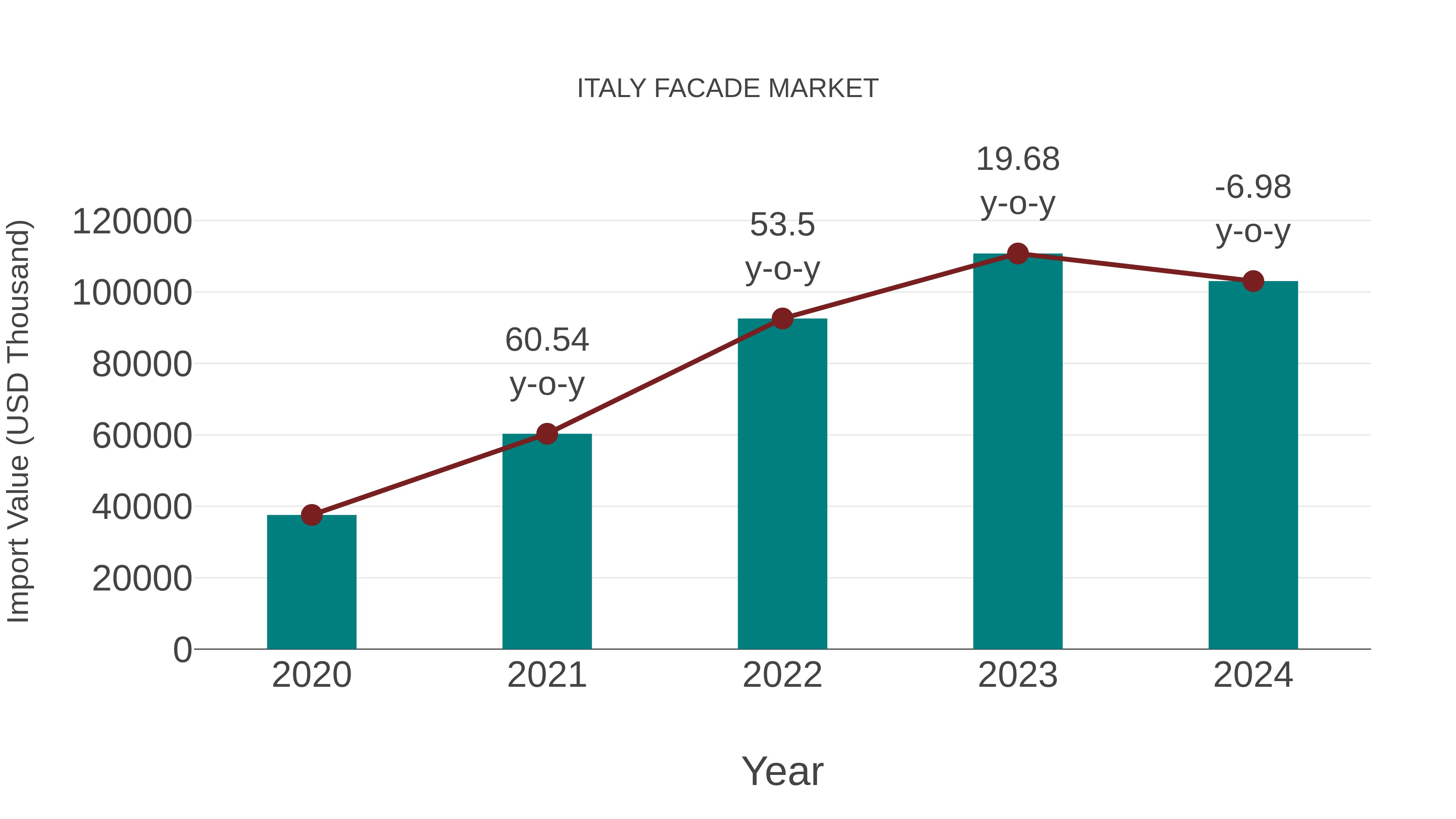
In 2024, Italy facade Market: Import Trend Analysis saw an increasing trend in imports, driven by a growing demand for innovative and high-quality materials. This trend reflected a shift towards modern architectural designs and sustainability requirements in the construction sector.
Italy Facade Market Synopsis
The Italy Facade Market is experiencing growth driven by factors such as increasing construction activities, renovation projects, and a focus on energy-efficient building designs. The market is witnessing a rise in demand for innovative facade materials and technologies that offer enhanced aesthetics, functionality, and sustainability. Key trends in the market include the adoption of green building practices, the use of advanced glazing systems, and the integration of smart technologies for energy management. Major players in the Italy Facade Market are investing in research and development to offer customized solutions and meet the evolving needs of customers. Additionally, stringent regulations related to energy efficiency and environmental sustainability are influencing the market dynamics, prompting stakeholders to explore eco-friendly facade solutions.
Italy Facade Market Trends
The Italy Facade Market is currently experiencing a shift towards sustainable and energy-efficient building facades. There is a growing demand for innovative facade solutions that enhance thermal performance, reduce energy consumption, and contribute to overall building sustainability. Green building certifications such as LEED and BREEAM are driving the adoption of eco-friendly facade materials and technologies in Italy. Additionally, there is a trend towards the integration of smart technologies in facades, allowing for better control of lighting, ventilation, and overall building performance. The market is also witnessing a preference for aesthetically pleasing and customizable facade designs that reflect the unique architectural heritage of Italy while meeting modern sustainability requirements. Overall, the Italy Facade Market is evolving towards a more sustainable, efficient, and technologically advanced future.
Italy Facade Market Challenges
The Italy facade market faces several challenges, including stringent regulations and building codes, which may limit design flexibility and increase costs for developers and contractors. Additionally, the market is highly competitive, with a significant number of local and international players vying for projects. Economic uncertainty and fluctuating material prices also pose challenges for stakeholders in the facade industry. Sustainability concerns and the increasing demand for energy-efficient solutions further add complexity to the market landscape. To succeed in this competitive environment, companies need to innovate, adapt to changing regulations, offer cost-effective solutions, and differentiate themselves through quality and sustainability initiatives.
Italy Facade Market Investment Opportunities
The Italy Facade Market presents lucrative investment opportunities due to the country`s focus on sustainable architecture and building practices. With a growing demand for energy-efficient and aesthetically pleasing building facades, there is a need for innovative solutions and materials in the market. Investors can explore opportunities in the development and manufacturing of advanced facade systems, such as ventilated facades, insulated panels, and solar shading devices. Additionally, there is a rising trend towards digitalization and smart technology integration in building facades, opening up possibilities for investments in smart glass, dynamic shading systems, and integrated building management solutions. Collaborating with architects, developers, and construction companies to offer custom facade solutions tailored to meet the evolving needs of the Italian market can also be a strategic investment approach.
Jordan Agar Market Government Policies
The Italian government has implemented various policies to regulate and promote the Facade Market. These include building codes and regulations that focus on energy efficiency, safety, and aesthetics of building facades. Additionally, there are incentives and subsidies in place to encourage the use of sustainable and innovative facade materials and technologies. The government also emphasizes the importance of preserving historical facades through strict conservation and restoration guidelines. Overall, the policies aim to drive the growth of the facade market in Italy by fostering innovation, sustainability, and compliance with quality standards.
Italy Facade Market Future Outlook
The Italy Facade Market is poised for steady growth in the coming years due to increasing demand for energy-efficient building solutions and the ongoing trend of sustainable construction practices. The market is expected to benefit from government initiatives promoting green building technologies and the rising awareness among consumers regarding the importance of environmentally friendly building materials. Additionally, advancements in facade technology, such as the integration of smart systems and innovative materials, are expected to drive market growth further. With a focus on aesthetics, functionality, and energy efficiency, the Italy Facade Market is projected to expand, offering opportunities for manufacturers, designers, and construction companies to capitalize on the growing demand for modern and eco-friendly building facades.
Key Highlights of the Report:
- Italy Facade Market Outlook
- Market Size of Italy Facade Market, 2025
- Forecast of Italy Facade Market, 2032
- Historical Data and Forecast of Italy Facade Revenues & Volume for the Period 2022 - 2032F
- Italy Facade Market Trend Evolution
- Italy Facade Market Drivers and Challenges
- Italy Facade Price Trends
- Italy Facade Porter's Five Forces
- Italy Facade Industry Life Cycle
- Historical Data and Forecast of Italy Facade Market Revenues & Volume By Product for the Period 2022 - 2032F
- Historical Data and Forecast of Italy Facade Market Revenues & Volume By Ventilated Facades for the Period 2022 - 2032F
- Historical Data and Forecast of Italy Facade Market Revenues & Volume By Non-ventilated Facades for the Period 2022 - 2032F
- Historical Data and Forecast of Italy Facade Market Revenues & Volume By Others for the Period 2022 - 2032F
- Historical Data and Forecast of Italy Facade Market Revenues & Volume By End-use for the Period 2022 - 2032F
- Historical Data and Forecast of Italy Facade Market Revenues & Volume By Commercial for the Period 2022 - 2032F
- Historical Data and Forecast of Italy Facade Market Revenues & Volume By Residential for the Period 2022 - 2032F
- Historical Data and Forecast of Italy Facade Market Revenues & Volume By Industrial for the Period 2022 - 2032F
- Italy Facade Import Export Trade Statistics
- Market Opportunity Assessment By Product
- Market Opportunity Assessment By End-use
- Italy Facade Top Companies Market Share
- Italy Facade Competitive Benchmarking By Technical and Operational Parameters
- Italy Facade Company Profiles
- Italy Facade Key Strategic Recommendations






































