Italy Food Colors Market: Import Trend Analysis
In 2024, Italy food colors Market: Import Trend Analysis saw a notable increase in imports, driven by a growing demand for diverse and innovative food products. The Market: Import Trend Analysis witnessed a shift towards natural and organic food colors, reflecting consumer preferences for healthier options.
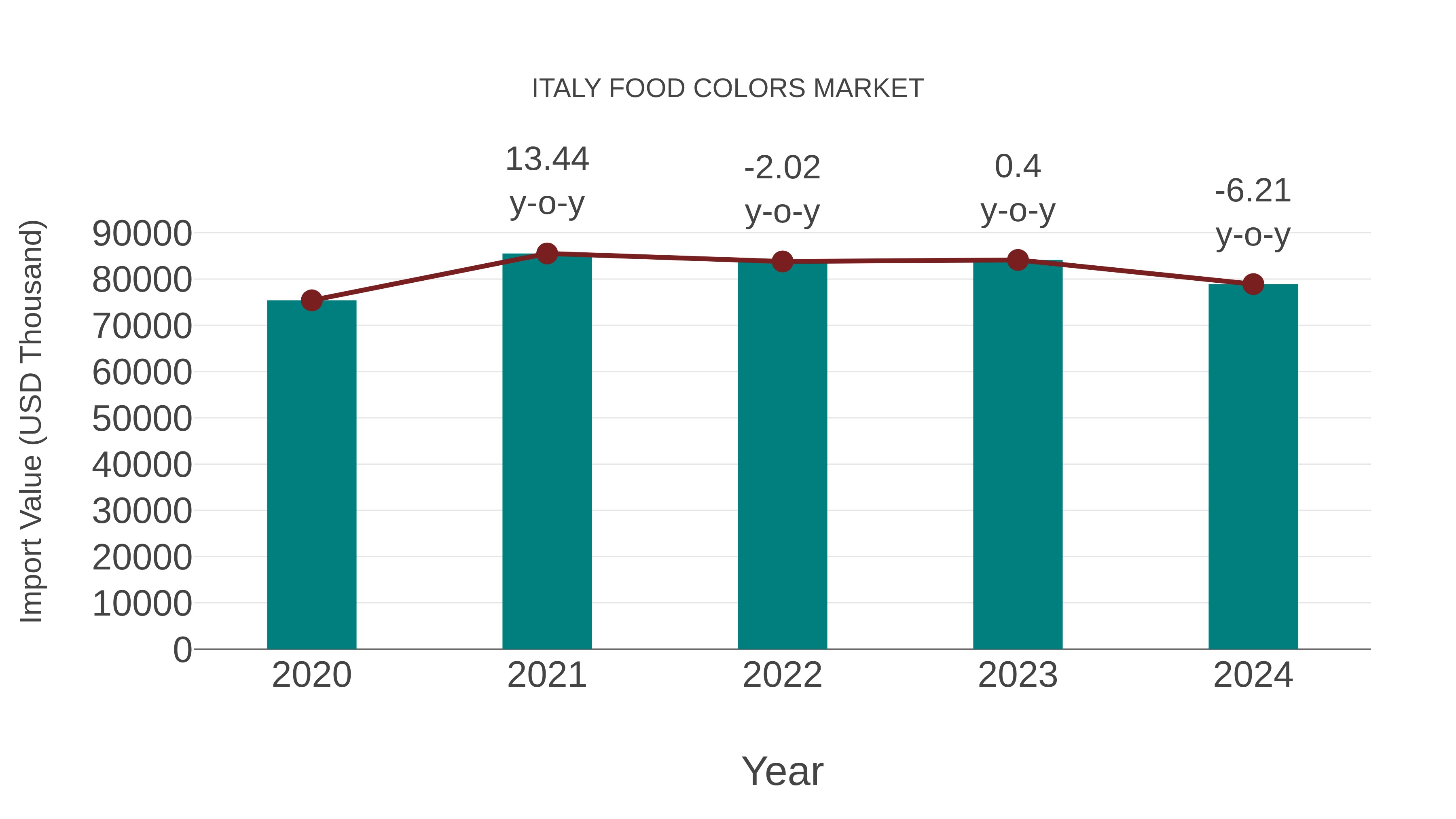
Italy Food Colors Market Synopsis
The food colors market in Italy is growing, driven by the demand for visually appealing and attractive food products. Food colors are used to enhance the appearance of food and beverages. The market benefits from the increasing demand for natural and clean label food colors and the growing trend of innovative and exotic food products.
Drivers of the market
The Italy Food Colors Market is witnessing growth due to the increasing demand for natural and synthetic colorants in food and beverage products. Food colors enhance the visual appeal, attractiveness, and marketability of food products, driving their adoption by food manufacturers, bakeries, confectioneries, and beverage companies.
Challenges of the market
The Italy Food Colors Market faces various challenges related to consumer preferences, regulatory requirements, and technological advancements. Meeting the demand for natural and clean-label food colors while ensuring stability and vibrancy presents a significant challenge for manufacturers. Additionally, navigating regulatory scrutiny and evolving safety standards requires continuous innovation and investment in research to develop compliant colorants. Moreover, the growing trend towards plant-based and vegan products adds complexity to sourcing suitable color ingredients. Addressing these challenges demands collaboration across the supply chain and a commitment to transparency and sustainability.
Government Policy of the market
Italy government policies aim to ensure the safety, quality, and consumer acceptance of food colors through regulations and standards that govern their use in food products. Measures include permissible color additives, labeling requirements for food colorants, and safety assessments to evaluate the potential health risks associated with synthetic and natural food coloring agents.
Key Highlights of the Report:
- Italy Food Colors Market Outlook
- Market Size of Italy Food Colors Market, 2024
- Forecast of Italy Food Colors Market, 2031
- Historical Data and Forecast of Italy Food Colors Revenues & Volume for the Period 2018 - 2031
- Italy Food Colors Market Trend Evolution
- Italy Food Colors Market Drivers and Challenges
- Italy Food Colors Price Trends
- Italy Food Colors Porter's Five Forces
- Italy Food Colors Industry Life Cycle
- Historical Data and Forecast of Italy Food Colors Market Revenues & Volume By Type for the Period 2018 - 2031
- Historical Data and Forecast of Italy Food Colors Market Revenues & Volume By Natural for the Period 2018 - 2031
- Historical Data and Forecast of Italy Food Colors Market Revenues & Volume By Synthetic for the Period 2018 - 2031
- Historical Data and Forecast of Italy Food Colors Market Revenues & Volume By Nature Identical for the Period 2018 - 2031
- Historical Data and Forecast of Italy Food Colors Market Revenues & Volume By Application for the Period 2018 - 2031
- Historical Data and Forecast of Italy Food Colors Market Revenues & Volume By Food Products for the Period 2018 - 2031
- Historical Data and Forecast of Italy Food Colors Market Revenues & Volume By Beverages for the Period 2018 - 2031
- Historical Data and Forecast of Italy Food Colors Market Revenues & Volume By Form for the Period 2018 - 2031
- Historical Data and Forecast of Italy Food Colors Market Revenues & Volume By Liquid for the Period 2018 - 2031
- Historical Data and Forecast of Italy Food Colors Market Revenues & Volume By Powder for the Period 2018 - 2031
- Historical Data and Forecast of Italy Food Colors Market Revenues & Volume By Gel for the Period 2018 - 2031
- Historical Data and Forecast of Italy Food Colors Market Revenues & Volume By Solubility for the Period 2018 - 2031
- Historical Data and Forecast of Italy Food Colors Market Revenues & Volume By Dyes for the Period 2018 - 2031
- Historical Data and Forecast of Italy Food Colors Market Revenues & Volume By Lakes for the Period 2018 - 2031
- Italy Food Colors Import Export Trade Statistics
- Market Opportunity Assessment By Type
- Market Opportunity Assessment By Application
- Market Opportunity Assessment By Form
- Market Opportunity Assessment By Solubility
- Italy Food Colors Top Companies Market Share
- Italy Food Colors Competitive Benchmarking By Technical and Operational Parameters
- Italy Food Colors Company Profiles
- Italy Food Colors Key Strategic Recommendations






































