Italy Glycolic Acid Market: Import Trend Analysis
In 2024, Italy glycolic acid Market: Import Trend Analysis saw a steady rise in imports, driven by increased demand from various industries. The country experienced a notable uptick in the volume of glycolic acid imports, reflecting a growing reliance on foreign sources to meet domestic Market: Import Trend Analysis needs.
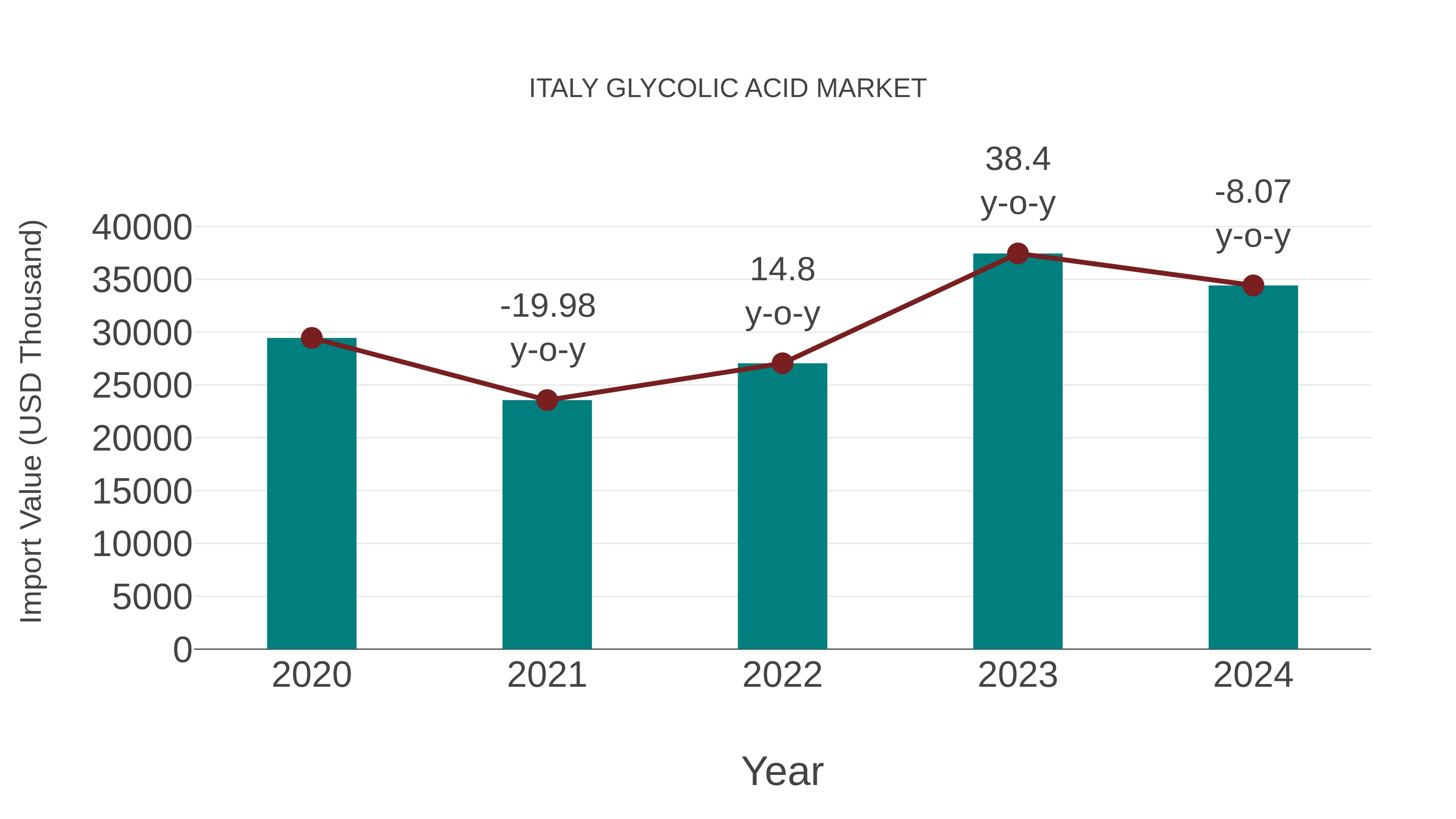
Italy Glycolic Acid Market Synopsis
Italy glycolic acid market is expanding, driven by its application in cosmetics, personal care, and industrial cleaning products. Glycolic acid is valued for its exfoliating and skin-renewing properties. The market benefits from the growing demand for anti-aging skincare products and advancements in cosmetic formulations.
Drivers of the market
The Italy Glycolic Acid Market is experiencing growth due to the demand for alpha hydroxy acids (AHAs) in skincare, cosmetics, and chemical peels. Glycolic acid offers exfoliation, skin renewal, and anti-aging properties, driving its adoption in formulations for facial cleansers, moisturizers, and professional skincare treatments in Italy beauty and wellness industry.
Challenges of the market
The glycolic acid market in Italy encounters challenges such as the high cost of production and raw materials. Ensuring the purity and effectiveness of glycolic acid is crucial, particularly for its applications in cosmetics and pharmaceuticals. The market also faces regulatory hurdles, as manufacturers must comply with stringent safety and quality standards. Competition from other alpha hydroxy acids (AHAs) and synthetic alternatives further complicates the market dynamics, necessitating continuous innovation and development.
Government Policy of the market
Italy encourages innovation and sustainability in the glycolic acid market through policies promoting eco-friendly production processes, product quality standards, and industrial competitiveness. Measures include regulations on glycolic acid purity and safety, support for research and development in green chemistry, and incentives for companies to invest in biodegradable and renewable glycolic acid production.
Key Highlights of the Report:
- Italy Glycolic Acid Market Outlook
- Market Size of Italy Glycolic Acid Market, 2025
- Forecast of Italy Glycolic Acid Market, 2032
- Historical Data and Forecast of Italy Glycolic Acid Revenues & Volume for the Period 2022-2032F
- Italy Glycolic Acid Market Trend Evolution
- Italy Glycolic Acid Market Drivers and Challenges
- Italy Glycolic Acid Price Trends
- Italy Glycolic Acid Porter's Five Forces
- Italy Glycolic Acid Industry Life Cycle
- Historical Data and Forecast of Italy Glycolic Acid Market Revenues & Volume By Grade for the Period 2022-2032F
- Historical Data and Forecast of Italy Glycolic Acid Market Revenues & Volume By Cosmetic for the Period 2022-2032F
- Historical Data and Forecast of Italy Glycolic Acid Market Revenues & Volume By Technical for the Period 2022-2032F
- Historical Data and Forecast of Italy Glycolic Acid Market Revenues & Volume By Application for the Period 2022-2032F
- Historical Data and Forecast of Italy Glycolic Acid Market Revenues & Volume By Personal Care & Dermatology for the Period 2022-2032F
- Historical Data and Forecast of Italy Glycolic Acid Market Revenues & Volume By Industrial for the Period 2022-2032F
- Historical Data and Forecast of Italy Glycolic Acid Market Revenues & Volume By Household for the Period 2022-2032F
- Italy Glycolic Acid Import Export Trade Statistics
- Market Opportunity Assessment By Grade
- Market Opportunity Assessment By Application
- Italy Glycolic Acid Top Companies Market Share
- Italy Glycolic Acid Competitive Benchmarking By Technical and Operational Parameters
- Italy Glycolic Acid Company Profiles
- Italy Glycolic Acid Key Strategic Recommendations






































