Italy High Strength Steel Market: Import Trend Analysis
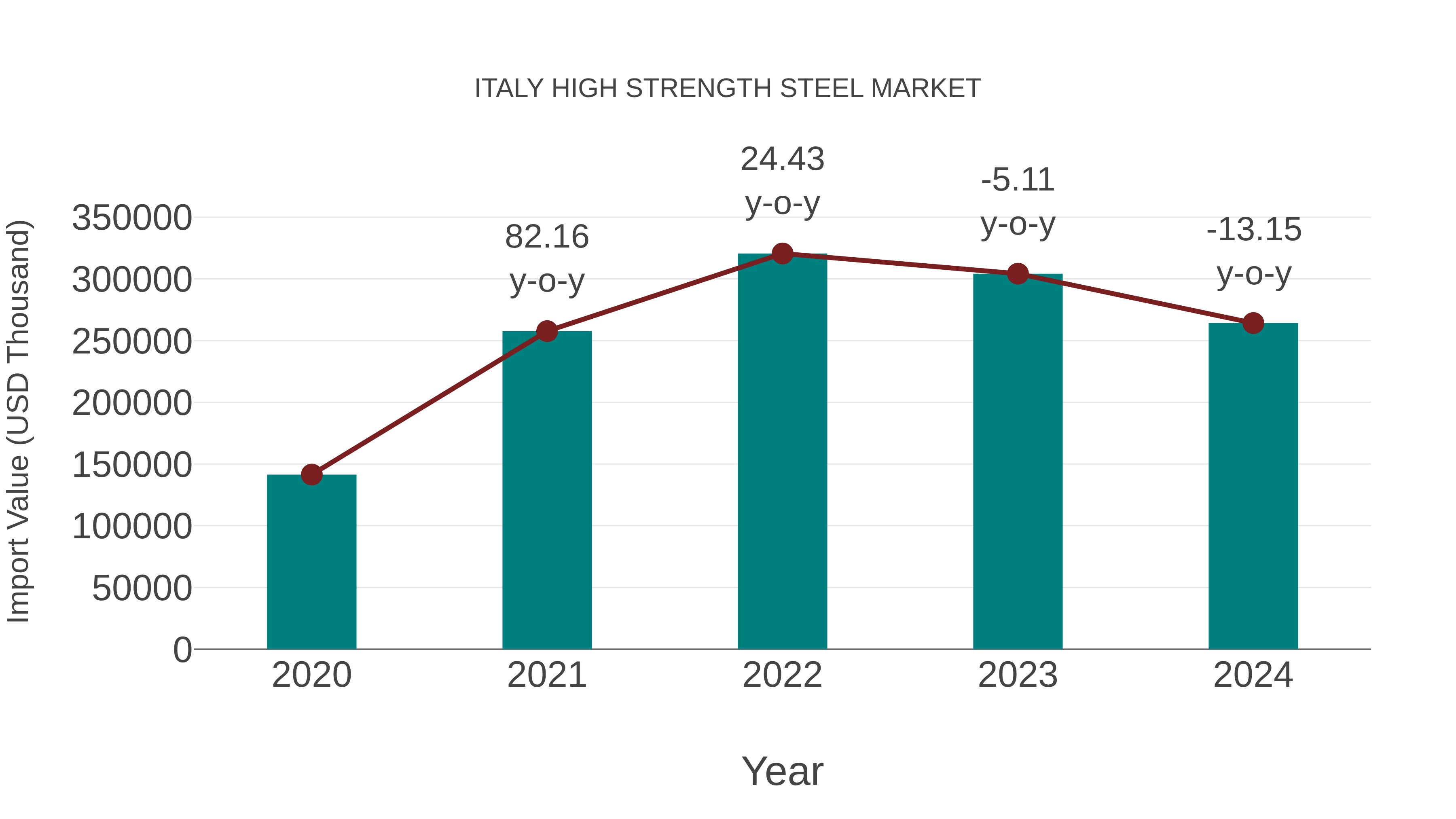
In 2024, Italy high-strength steel Market: Import Trend Analysis saw a notable increase in imports. The trend reflected a growing demand for high-quality steel products, potentially driven by infrastructure projects and manufacturing needs in the country.
Italy High Strength Steel Market Synopsis
Italy high strength steel market is expanding, driven by its use in automotive, construction, and manufacturing industries. High strength steel offers superior mechanical properties and weight reduction benefits. The market benefits from advancements in steel production technology and the increasing demand for high-performance and sustainable materials.
Drivers of the market
The Italy High Strength Steel Market is driven by demand from construction, automotive, and manufacturing industries. High strength steel offers superior mechanical properties and lightweight construction, driving its adoption in structural components, automotive frames, and machinery manufacturing in Italy.
Challenges of the market
The high strength steel market in Italy is challenged by the need to meet stringent industry standards and performance requirements. The high cost of production and raw materials, along with competition from other advanced materials like composites, presents significant hurdles. Additionally, environmental regulations and sustainability concerns impact the market dynamics.
Government Policy of the market
Italy government supports the high strength steel market through policies promoting material innovation, industrial competitiveness, and sustainability. Measures include funding for steel research and development, regulations on material specifications and performance standards, and incentives for companies to invest in advanced steel manufacturing technologies for automotive, construction, and infrastructure applications.
Key Highlights of the Report:
- Italy High Strength Steel Market Outlook
- Market Size of Italy High Strength Steel Market, 2025
- Forecast of Italy High Strength Steel Market, 2032
- Historical Data and Forecast of Italy High Strength Steel Revenues & Volume for the Period 2022-2032F
- Italy High Strength Steel Market Trend Evolution
- Italy High Strength Steel Market Drivers and Challenges
- Italy High Strength Steel Price Trends
- Italy High Strength Steel Porter's Five Forces
- Italy High Strength Steel Industry Life Cycle
- Historical Data and Forecast of Italy High Strength Steel Market Revenues & Volume By Product Type for the Period 2022-2032F
- Historical Data and Forecast of Italy High Strength Steel Market Revenues & Volume By Dual Phase Steel for the Period 2022-2032F
- Historical Data and Forecast of Italy High Strength Steel Market Revenues & Volume By Bake Hardenable Steel for the Period 2022-2032F
- Historical Data and Forecast of Italy High Strength Steel Market Revenues & Volume By Carbon Manganese Steel for the Period 2022-2032F
- Historical Data and Forecast of Italy High Strength Steel Market Revenues & Volume By Other Product Types for the Period 2022-2032F
- Historical Data and Forecast of Italy High Strength Steel Market Revenues & Volume By Application for the Period 2022-2032F
- Historical Data and Forecast of Italy High Strength Steel Market Revenues & Volume By Automotive for the Period 2022-2032F
- Historical Data and Forecast of Italy High Strength Steel Market Revenues & Volume By Construction for the Period 2022-2032F
- Historical Data and Forecast of Italy High Strength Steel Market Revenues & Volume By Yellow Goods and Mining Equipment for the Period 2022-2032F
- Historical Data and Forecast of Italy High Strength Steel Market Revenues & Volume By Aviation and Marine for the Period 2022-2032F
- Historical Data and Forecast of Italy High Strength Steel Market Revenues & Volume By Other Applications for the Period 2022-2032F
- Italy High Strength Steel Import Export Trade Statistics
- Market Opportunity Assessment By Product Type
- Market Opportunity Assessment By Application
- Italy High Strength Steel Top Companies Market Share
- Italy High Strength Steel Competitive Benchmarking By Technical and Operational Parameters
- Italy High Strength Steel Company Profiles
- Italy High Strength Steel Key Strategic Recommendations






































