Italy Hospitality Furniture Market: Import Trend Analysis
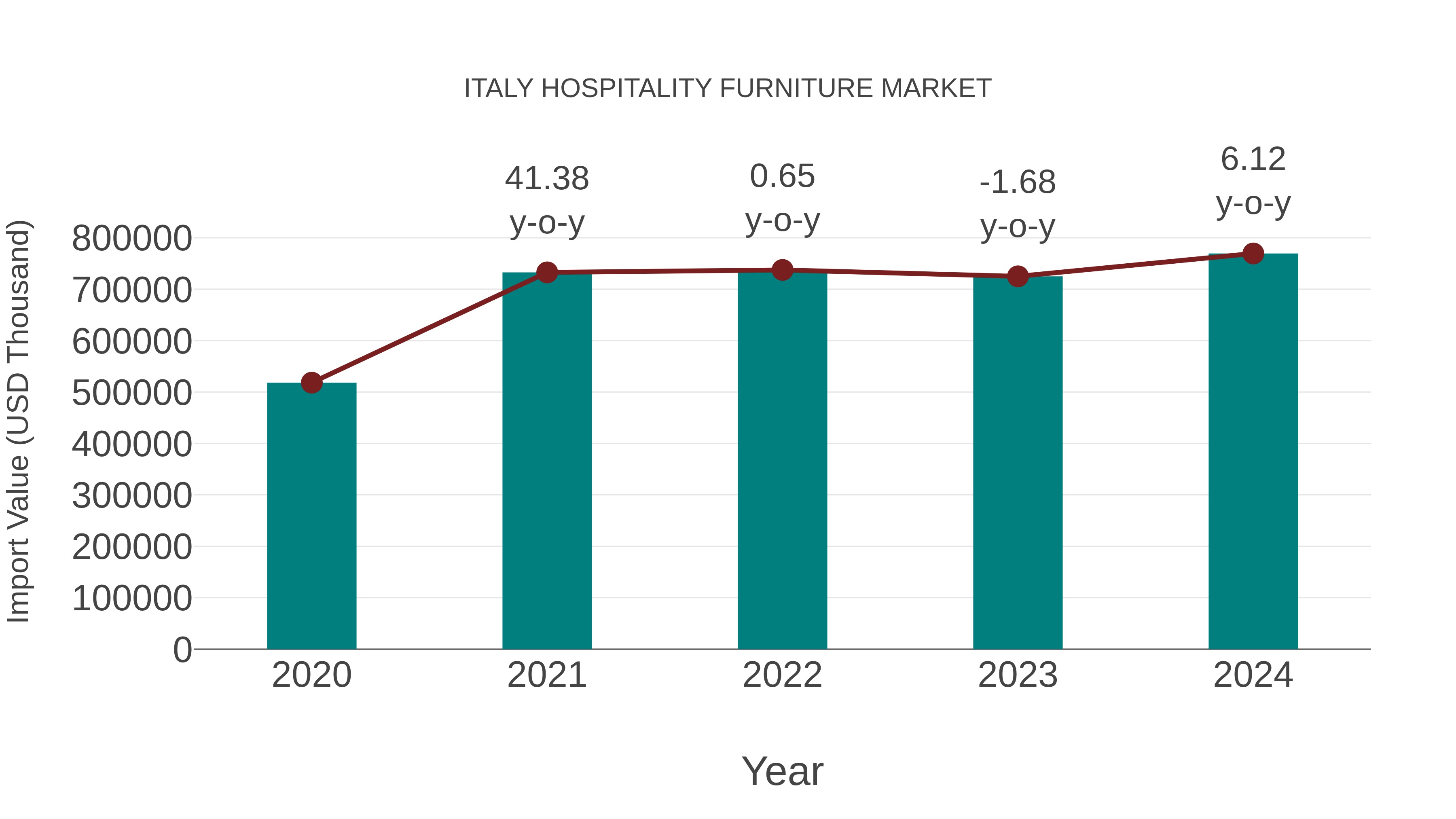
In 2024, Italy hospitality furniture Market: Import Trend Analysis saw a notable import trend, reflecting a shift towards higher-quality and design-focused products. Imports of premium materials and innovative designs were evident, indicating a growing preference for luxury and aesthetic appeal in the Market: Import Trend Analysis.
Italy Hospitality Furniture Market Synopsis
The Italy Hospitality Furniture Market is a dynamic sector that caters to the needs of hotels, restaurants, and other hospitality establishments in the country. Known for its rich history of design and craftsmanship, Italy offers a wide range of high-quality and stylish furniture options for the hospitality industry. The market is characterized by a strong emphasis on luxury and elegance, with a focus on premium materials such as wood, leather, and metal. Italian furniture manufacturers are renowned for their innovative designs, attention to detail, and commitment to quality. The market is also influenced by changing trends in interior design and consumer preferences, leading to a variety of styles and options for hospitality businesses looking to enhance their spaces and create a unique and inviting environment for their guests.
Italy Hospitality Furniture Market Trends
In the Italy Hospitality Furniture Market, there is a growing trend towards sustainable and eco-friendly materials and designs. Hotels and restaurants are increasingly focusing on sourcing furniture that is not only stylish and functional but also environmentally conscious. This includes using materials such as reclaimed wood, bamboo, and recycled plastic in furniture production. Additionally, there is a rising demand for customizable and modular furniture pieces to cater to the diverse needs of different hospitality establishments. The shift towards more flexible and adaptable furniture solutions reflects the industry`s emphasis on creating unique and personalized guest experiences. Furthermore, there is a noticeable preference for modern and minimalist designs that offer a sleek and contemporary aesthetic to enhance the overall ambiance of hospitality spaces in Italy.
Italy Hospitality Furniture Market Challenges
In the Italy Hospitality Furniture Market, one of the main challenges faced is intense competition from both domestic and international manufacturers. This competition puts pressure on pricing and margins for companies operating in the market. Additionally, fluctuations in raw material prices and supply chain disruptions can impact the cost structure of furniture manufacturers. Another challenge is the need to constantly innovate and stay ahead of design trends to meet the evolving preferences of customers in the hospitality industry. Furthermore, economic uncertainties and regulatory changes can also pose challenges for companies operating in the Italy Hospitality Furniture Market, requiring them to adapt quickly to market conditions and consumer demands to maintain a competitive edge.
Italy Hospitality Furniture Market Investment Opportunities
The Italy Hospitality Furniture Market presents promising investment opportunities due to the country`s reputation for luxury and design excellence in the hospitality industry. With a strong emphasis on style and quality, Italian hospitality furniture manufacturers are known for their craftsmanship and innovative designs, which appeal to upscale hotels, restaurants, and resorts worldwide. Investing in this market could offer potential for growth, especially as the global hospitality sector continues to expand. Furthermore, Italy`s rich cultural heritage and tradition of artisanship provide a unique selling point for investors looking to capitalize on the demand for high-end, aesthetically pleasing furniture in the hospitality sector. By tapping into this market, investors can align themselves with a prestigious industry known for its sophistication and elegance.
Italy Hospitality Furniture Market Future Outlook
The future outlook for the Italy Hospitality Furniture Market appears promising, driven by the country`s strong tourism industry and increasing demand for high-quality, aesthetically pleasing furniture in hotels, restaurants, and other hospitality establishments. As the travel and tourism sector continues to rebound post-pandemic, there is anticipated growth in hotel construction and renovation projects, which will fuel the demand for modern and innovative furniture solutions. Sustainability and eco-friendly practices are also becoming increasingly important in the industry, leading to a shift towards more sustainable materials and designs. Additionally, the growing trend of experiential hospitality is expected to drive the need for unique and customizable furniture pieces that enhance the overall guest experience. Overall, the Italy Hospitality Furniture Market is likely to experience steady growth and innovation in the coming years.
Key Highlights of the Report:
- Italy Hospitality Furniture Market Outlook
- Market Size of Italy Hospitality Furniture Market, 2021
- Forecast of Italy Hospitality Furniture Market, 2031
- Historical Data and Forecast of Italy Hospitality Furniture Revenues & Volume for the Period 2018 - 2031
- Italy Hospitality Furniture Market Trend Evolution
- Italy Hospitality Furniture Market Drivers and Challenges
- Italy Hospitality Furniture Price Trends
- Italy Hospitality Furniture Porter's Five Forces
- Italy Hospitality Furniture Industry Life Cycle
- Historical Data and Forecast of Italy Hospitality Furniture Market Revenues & Volume By Type for the Period 2018 - 2031
- Historical Data and Forecast of Italy Hospitality Furniture Market Revenues & Volume By Wooden Furniture for the Period 2018 - 2031
- Historical Data and Forecast of Italy Hospitality Furniture Market Revenues & Volume By Leather & Fabric Furniture for the Period 2018 - 2031
- Historical Data and Forecast of Italy Hospitality Furniture Market Revenues & Volume By Metal Furniture for the Period 2018 - 2031
- Historical Data and Forecast of Italy Hospitality Furniture Market Revenues & Volume By Others for the Period 2018 - 2031
- Historical Data and Forecast of Italy Hospitality Furniture Market Revenues & Volume By Applications for the Period 2018 - 2031
- Historical Data and Forecast of Italy Hospitality Furniture Market Revenues & Volume By Economy Hotel for the Period 2018 - 2031
- Historical Data and Forecast of Italy Hospitality Furniture Market Revenues & Volume By Extended-stay Hotel for the Period 2018 - 2031
- Historical Data and Forecast of Italy Hospitality Furniture Market Revenues & Volume By Full-service Hotel for the Period 2018 - 2031
- Historical Data and Forecast of Italy Hospitality Furniture Market Revenues & Volume By Luxury Hotel for the Period 2018 - 2031
- Historical Data and Forecast of Italy Hospitality Furniture Market Revenues & Volume By Others for the Period 2018 - 2031
- Historical Data and Forecast of Italy Hospitality Furniture Market Revenues & Volume By Industry Vertical for the Period 2018 - 2031
- Historical Data and Forecast of Italy Hospitality Furniture Market Revenues & Volume By Hotels & Restaurants for the Period 2018 - 2031
- Historical Data and Forecast of Italy Hospitality Furniture Market Revenues & Volume By Public Places for the Period 2018 - 2031
- Historical Data and Forecast of Italy Hospitality Furniture Market Revenues & Volume By Corporate Offices for the Period 2018 - 2031
- Historical Data and Forecast of Italy Hospitality Furniture Market Revenues & Volume By Others for the Period 2018 - 2031
- Italy Hospitality Furniture Import Export Trade Statistics
- Market Opportunity Assessment By Type
- Market Opportunity Assessment By Applications
- Market Opportunity Assessment By Industry Vertical
- Italy Hospitality Furniture Top Companies Market Share
- Italy Hospitality Furniture Competitive Benchmarking By Technical and Operational Parameters
- Italy Hospitality Furniture Company Profiles
- Italy Hospitality Furniture Key Strategic Recommendations






































