Italy Molasses Market: Import Trend Analysis
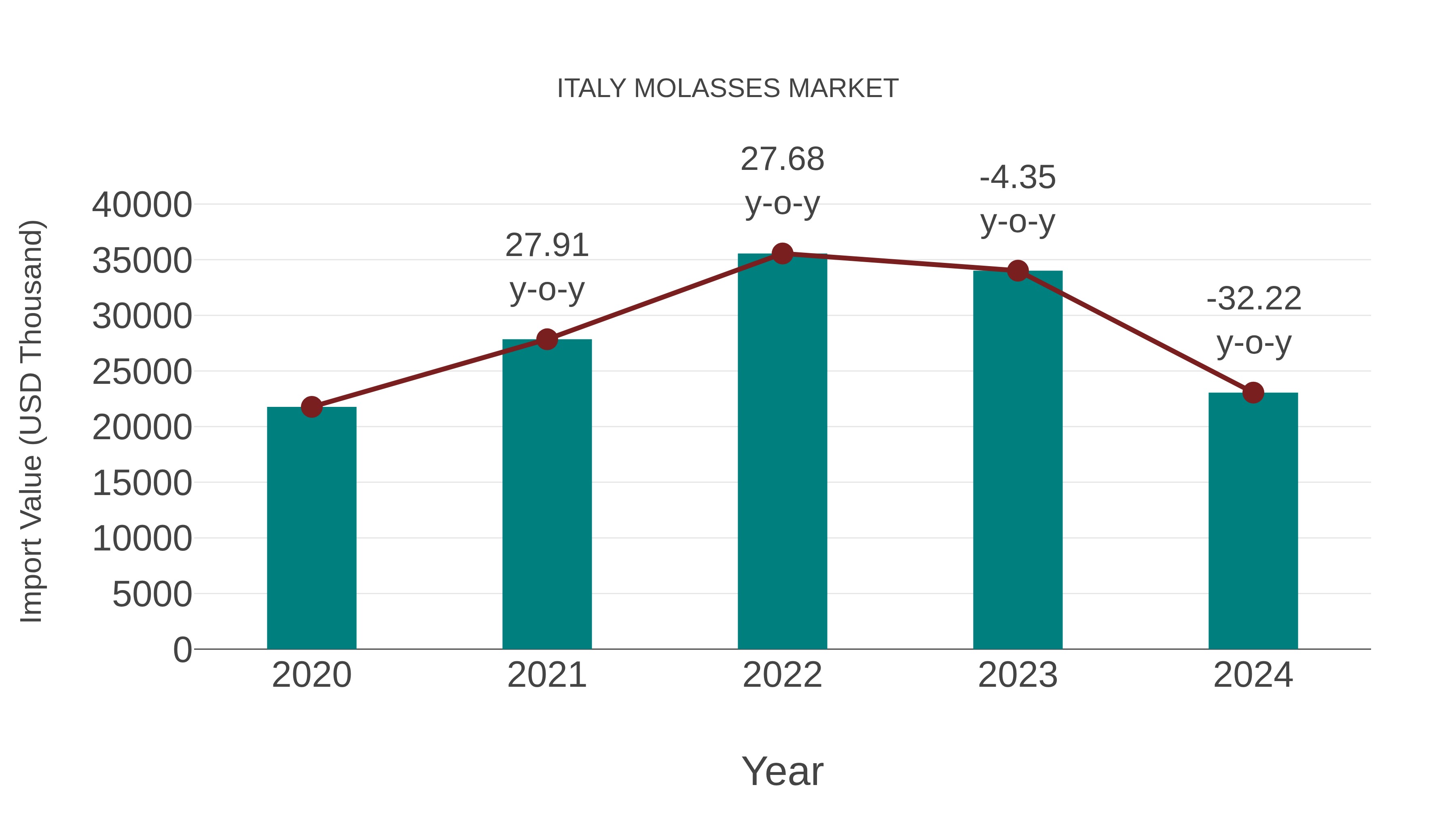
In 2024, Italy molasses Market: Import Trend Analysis witnessed a declining trend in imports. This decrease can be attributed to various factors impacting the Market: Import Trend Analysis dynamics, such as shifts in consumer preferences, changes in supply chains, or economic conditions affecting trade patterns.
Italy Molasses Market Overview
The Italy molasses market is characterized by steady growth driven by the increasing demand for molasses in various industries such as food and beverage, animal feed, and agriculture. Molasses is widely used as a sweetener, flavor enhancer, and feed ingredient in the country. The market is also influenced by the growing trend towards natural and organic products, as molasses is seen as a healthier alternative to refined sugar. Key players in the Italy molasses market include both domestic and international manufacturers, with a focus on product innovation and expanding distribution channels. Overall, the market is expected to continue its positive growth trajectory, supported by the versatile applications of molasses across different industries.
Italy Molasses Market Trends
The Italy Molasses Market is experiencing a growing demand for organic and non-GMO molasses products, driven by an increasing focus on health and sustainability among consumers. Additionally, there is a rising interest in using molasses as a natural sweetener and flavor enhancer in various food and beverage products, including baked goods, marinades, and sauces. Producers in the Italy Molasses Market are also exploring innovative uses of molasses in the animal feed industry as a cost-effective and nutritious feed ingredient. With a growing emphasis on clean label products and the benefits of molasses as a source of minerals and antioxidants, the market is witnessing a shift towards higher quality and specialty molasses offerings to cater to evolving consumer preferences.
Italy Molasses Market Challenges
In the Italy Molasses Market, some challenges faced include fluctuating prices due to external factors such as weather conditions affecting sugarcane crops, leading to supply shortages and price volatility. Additionally, competition from alternative sweeteners and changing consumer preferences towards healthier options pose challenges for molasses producers. Regulatory hurdles and trade restrictions may also impact market dynamics. Furthermore, the lack of awareness about the nutritional benefits of molasses among consumers and limited marketing efforts by industry players present obstacles in expanding market reach. Overall, navigating these challenges requires strategic planning, product diversification, and effective marketing strategies to sustain growth in the Italy Molasses Market.
Italy Molasses Market Investment Opportunities
Investment opportunities in the Italy Molasses Market include potential growth in the animal feed industry, particularly for livestock and poultry. Molasses is a valuable feed ingredient due to its high energy content and palatability, making it a popular choice for enhancing animal nutrition. Additionally, with the increasing focus on sustainable and environmentally friendly practices, molasses is being used in biogas production as a feedstock for anaerobic digestion processes, presenting opportunities in the renewable energy sector. Furthermore, the food and beverage industry in Italy continues to utilize molasses in products such as confectionery, baked goods, and alcoholic beverages, offering potential for growth and diversification. Investors should keep an eye on market trends, regulatory developments, and innovations in molasses production to capitalize on these opportunities in the Italy Molasses Market.
Italy Molasses Market Government Policy
In Italy, government policies related to the molasses market primarily focus on agricultural regulations, food safety standards, and environmental sustainability. The Italian government sets guidelines for the production, labeling, and marketing of molasses to ensure consumer protection and promote fair trade practices. Additionally, there are policies in place to support agricultural producers by providing subsidies, incentives, and technical assistance to enhance production efficiency and quality control measures. Furthermore, environmental regulations aim to reduce the carbon footprint of molasses production processes and encourage sustainable practices within the industry. Overall, the government`s policies in Italy aim to foster a competitive and sustainable molasses market while ensuring compliance with regulatory standards and promoting the well-being of consumers and the environment.
Italy Molasses Market Future Outlook
The Italy molasses market is projected to experience steady growth in the coming years, driven by increasing consumer awareness of the product`s nutritional benefits and versatility in food and beverage applications. The growing trend of using natural sweeteners and flavor enhancers in traditional Italian cuisine is also expected to contribute to market expansion. Additionally, the rising demand for molasses as a key ingredient in animal feed and biofuel production is likely to further fuel market growth. However, challenges such as fluctuating prices of raw materials and competition from alternative sweeteners may present obstacles to the market`s development. Overall, with evolving consumer preferences and expanding application areas, the Italy molasses market is poised for moderate yet sustained growth in the foreseeable future.
Key Highlights of the Report:
- Italy Molasses? Market Outlook
- Market Size of Italy Molasses? Market, 2025
- Forecast of Italy Molasses? Market, 2032
- Historical Data and Forecast of Italy Molasses? Revenues & Volume for the Period 2022 - 2032F
- Italy Molasses? Market Trend Evolution
- Italy Molasses? Market Drivers and Challenges
- Italy Molasses? Price Trends
- Italy Molasses? Porter's Five Forces
- Italy Molasses? Industry Life Cycle
- Historical Data and Forecast of Italy Molasses? Market Revenues & Volume By Source for the Period 2022 - 2032F
- Historical Data and Forecast of Italy Molasses? Market Revenues & Volume By Sugarcane for the Period 2022 - 2032F
- Historical Data and Forecast of Italy Molasses? Market Revenues & Volume By Sugarbeet for the Period 2022 - 2032F
- Historical Data and Forecast of Italy Molasses? Market Revenues & Volume By Type for the Period 2022 - 2032F
- Historical Data and Forecast of Italy Molasses? Market Revenues & Volume By Regular Molasses for the Period 2022 - 2032F
- Historical Data and Forecast of Italy Molasses? Market Revenues & Volume By Blackstrap Molasses for the Period 2022 - 2032F
- Historical Data and Forecast of Italy Molasses? Market Revenues & Volume By Nature for the Period 2022 - 2032F
- Historical Data and Forecast of Italy Molasses? Market Revenues & Volume By Organic for the Period 2022 - 2032F
- Historical Data and Forecast of Italy Molasses? Market Revenues & Volume By Conventional for the Period 2022 - 2032F
- Historical Data and Forecast of Italy Molasses? Market Revenues & Volume By End-Use for the Period 2022 - 2032F
- Historical Data and Forecast of Italy Molasses? Market Revenues & Volume By Industrial? for the Period 2022 - 2032F
- Historical Data and Forecast of Italy Molasses? Market Revenues & Volume By Commercial for the Period 2022 - 2032F
- Historical Data and Forecast of Italy Molasses? Market Revenues & Volume By Household for the Period 2022 - 2032F
- Historical Data and Forecast of Italy Molasses? Market Revenues & Volume By Sales Channel for the Period 2022 - 2032F
- Historical Data and Forecast of Italy Molasses? Market Revenues & Volume By Direct for the Period 2022 - 2032F
- Historical Data and Forecast of Italy Molasses? Market Revenues & Volume By Indirect for the Period 2022 - 2032F
- Italy Molasses? Import Export Trade Statistics
- Market Opportunity Assessment By Source
- Market Opportunity Assessment By Type
- Market Opportunity Assessment By Nature
- Market Opportunity Assessment By End-Use
- Market Opportunity Assessment By Sales Channel
- Italy Molasses? Top Companies Market Share
- Italy Molasses? Competitive Benchmarking By Technical and Operational Parameters
- Italy Molasses? Company Profiles
- Italy Molasses? Key Strategic Recommendations






































