Japan Fruit Pulp Market Import Shipment by Countries (Top 5) & Competition (HHI)
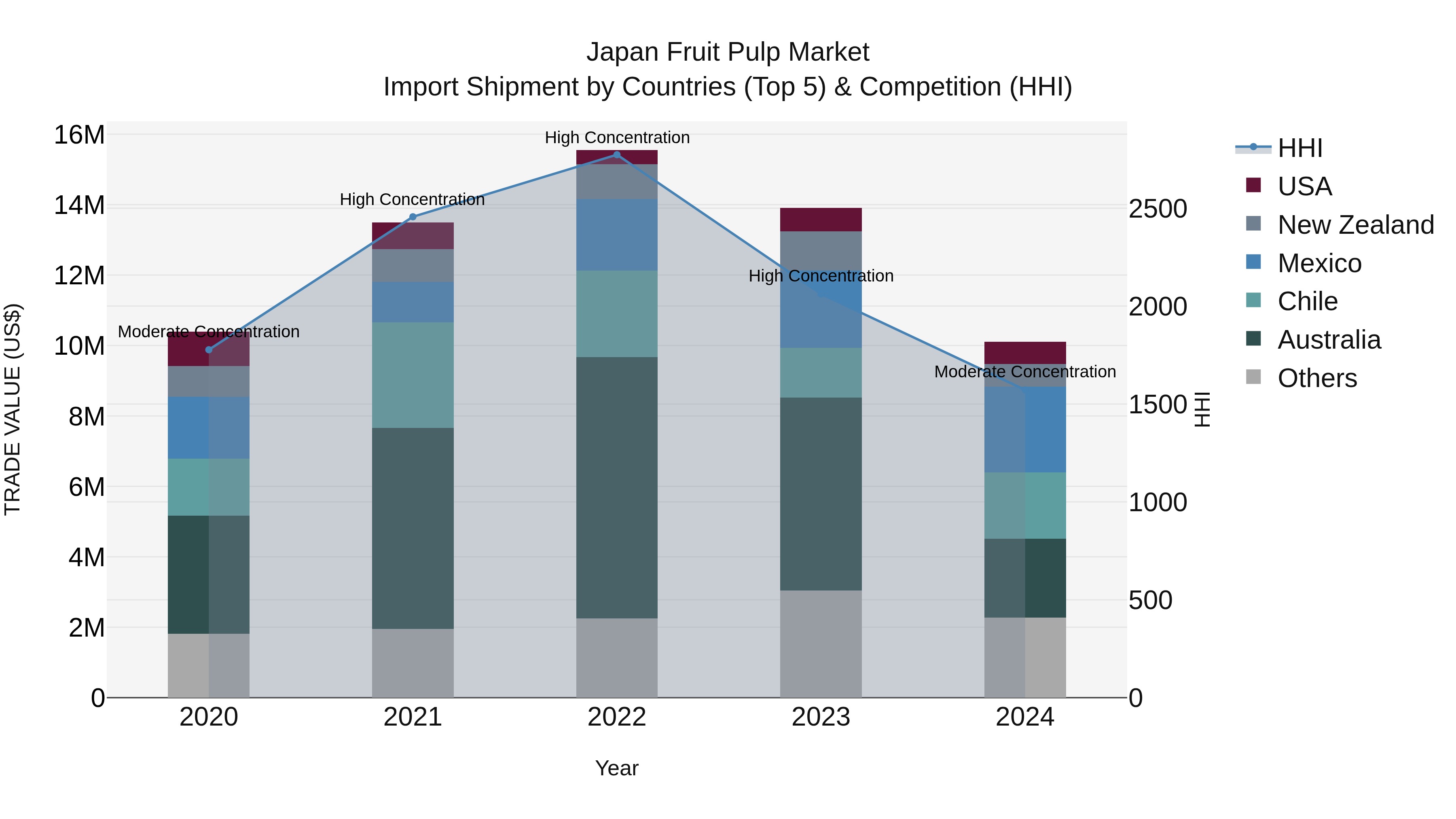
Japan's fruit pulp import market in 2024 saw a shift in concentration levels, moving from high concentration in 2023 to a more moderate level. Despite this, the market experienced a decline with a CAGR of -0.72% from 2020 to 2024. The top exporting countries to Japan were Mexico, Australia, Chile, New Zealand, and the USA. Interestingly, there was a significant decrease in growth rate from 2023 to 2024, dropping by -27.33%. This data suggests a challenging landscape for fruit pulp imports in Japan, highlighting potential shifts in supply dynamics and consumer preferences.
Japan Fruit Pulp Market Overview
The Japan Fruit Pulp Market is a growing sector within the country`s food industry, driven by the increasing demand for convenient and healthy food options. Fruit pulp is widely used in various applications such as beverages, desserts, and snacks due to its natural flavor and nutritional benefits. Pineapple, mango, and passion fruit are among the popular fruit pulp varieties consumed in Japan. The market is characterized by the presence of both domestic and international players offering a wide range of fruit pulp products to cater to diverse consumer preferences. With a rising trend towards plant-based diets and clean label products, the Japan Fruit Pulp Market is expected to witness further growth in the coming years, presenting opportunities for innovation and expansion for companies operating in this segment.
Japan Fruit Pulp Market Trends
In Japan, the fruit pulp market is experiencing significant growth driven by increasing consumer demand for healthy and convenient food options. There is a rising trend towards incorporating fruit pulp into various food and beverage products due to its natural flavor, nutrients, and texture. Key players in the market are focusing on launching innovative fruit pulp products with unique flavor combinations and functional benefits to attract a broader consumer base. Additionally, the growing popularity of fruit-based smoothies, desserts, and snacks is driving the demand for fruit pulp as a key ingredient. With a strong emphasis on quality and safety standards, Japanese consumers are increasingly opting for fruit pulp products that are sourced from high-quality, organic fruits. Overall, the Japan fruit pulp market is poised for continued growth as consumers prioritize health and wellness in their dietary choices.
Japan Fruit Pulp Market Challenges
In the Japan Fruit Pulp Market, some key challenges include strict regulations on imports, limited availability of certain fruits for pulp processing, and high production costs due to labor expenses and technological requirements. Additionally, competition from other fruit products and substitutes poses a challenge for market growth. Variability in fruit quality and supply chain logistics also contribute to the complexity of the market. Developing innovative processing techniques and addressing sustainability concerns are further hurdles that players in the Japan Fruit Pulp Market need to navigate to remain competitive in the industry. Overall, overcoming these challenges requires strategic planning, investments in research and development, and effective market positioning to meet consumer demands and stay ahead in the market.
Japan Fruit Pulp Market Investment Opportunities
In the Japan Fruit Pulp Market, there are several investment opportunities available for savvy investors. One potential avenue for investment is in the expansion of fruit pulp production facilities to meet the increasing demand for natural and healthy fruit products in the market. Investing in research and development to innovate new fruit pulp varieties or processing techniques could also provide a competitive edge. Additionally, there is a growing trend towards sustainable and organic fruit pulp products, presenting an opportunity for investors to capitalize on this niche market segment. Collaborating with local fruit farmers to ensure a stable supply chain of high-quality fruits for pulp production could also be a profitable investment strategy in the Japan Fruit Pulp Market.
Japan Fruit Pulp Market Government Policy
The Japanese government has implemented various policies to support the fruit pulp market in the country. One key policy is the promotion of agricultural sustainability and innovation through subsidies and grants for farmers producing fruit pulp. Additionally, there are regulations in place to ensure food safety and quality standards are met in the production and distribution of fruit pulp products. The government also encourages research and development in the fruit pulp industry to enhance product quality and introduce new varieties to meet consumer demand. Overall, the government`s policies aim to support the growth of the Japan fruit pulp market by fostering a conducive environment for producers, ensuring consumer confidence, and promoting innovation in the industry.
Japan Fruit Pulp Market Future Outlook
The Japan Fruit Pulp Market is expected to show steady growth in the coming years due to increasing consumer demand for natural and healthy food products. The market is projected to benefit from the growing popularity of fruit-based beverages, desserts, and snacks among health-conscious consumers. Additionally, the rising trend of incorporating fruit pulp in various food and beverage products for added flavor and nutritional value is expected to drive market growth. Key players in the market are likely to focus on product innovation, packaging advancements, and expanding distribution channels to capitalize on the growing demand. Overall, the Japan Fruit Pulp Market is anticipated to expand further as consumers continue to seek out convenient and nutritious fruit-based products.
Key Highlights of the Report:
- Japan Fruit Pulp Market Outlook
- Market Size of Japan Fruit Pulp Market, 2024
- Forecast of Japan Fruit Pulp Market, 2031
- Historical Data and Forecast of Japan Fruit Pulp Revenues & Volume for the Period 2021-2031
- Japan Fruit Pulp Market Trend Evolution
- Japan Fruit Pulp Market Drivers and Challenges
- Japan Fruit Pulp Price Trends
- Japan Fruit Pulp Porter's Five Forces
- Japan Fruit Pulp Industry Life Cycle
- Historical Data and Forecast of Japan Fruit Pulp Market Revenues & Volume By Fruit Type for the Period 2021-2031
- Historical Data and Forecast of Japan Fruit Pulp Market Revenues & Volume By Mango for the Period 2021-2031
- Historical Data and Forecast of Japan Fruit Pulp Market Revenues & Volume By Strawberry for the Period 2021-2031
- Historical Data and Forecast of Japan Fruit Pulp Market Revenues & Volume By Apple for the Period 2021-2031
- Historical Data and Forecast of Japan Fruit Pulp Market Revenues & Volume By Guava for the Period 2021-2031
- Historical Data and Forecast of Japan Fruit Pulp Market Revenues & Volume By Berries for the Period 2021-2031
- Historical Data and Forecast of Japan Fruit Pulp Market Revenues & Volume By Citrus Fruits for the Period 2021-2031
- Historical Data and Forecast of Japan Fruit Pulp Market Revenues & Volume By Others for the Period 2021-2031
- Historical Data and Forecast of Japan Fruit Pulp Market Revenues & Volume By Form for the Period 2021-2031
- Historical Data and Forecast of Japan Fruit Pulp Market Revenues & Volume By Liquid for the Period 2021-2031
- Historical Data and Forecast of Japan Fruit Pulp Market Revenues & Volume By Powder for the Period 2021-2031
- Historical Data and Forecast of Japan Fruit Pulp Market Revenues & Volume By Application for the Period 2021-2031
- Historical Data and Forecast of Japan Fruit Pulp Market Revenues & Volume By Food and Beverages for the Period 2021-2031
- Historical Data and Forecast of Japan Fruit Pulp Market Revenues & Volume By Distribution for the Period 2021-2031
- Historical Data and Forecast of Japan Fruit Pulp Market Revenues & Volume By E-Commerce for the Period 2021-2031
- Historical Data and Forecast of Japan Fruit Pulp Market Revenues & Volume By Convenience Stores for the Period 2021-2031
- Historical Data and Forecast of Japan Fruit Pulp Market Revenues & Volume By Supermarkets/Hypermarkets for the Period 2021-2031
- Historical Data and Forecast of Japan Fruit Pulp Market Revenues & Volume By Specialty Stores for the Period 2021-2031
- Historical Data and Forecast of Japan Fruit Pulp Market Revenues & Volume By Others for the Period 2021-2031
- Japan Fruit Pulp Import Export Trade Statistics
- Market Opportunity Assessment By Fruit Type
- Market Opportunity Assessment By Form
- Market Opportunity Assessment By Application
- Market Opportunity Assessment By Distribution
- Japan Fruit Pulp Top Companies Market Share
- Japan Fruit Pulp Competitive Benchmarking By Technical and Operational Parameters
- Japan Fruit Pulp Company Profiles
- Japan Fruit Pulp Key Strategic Recommendations






































