Japan Herbal Products Market Size & Growth Rate
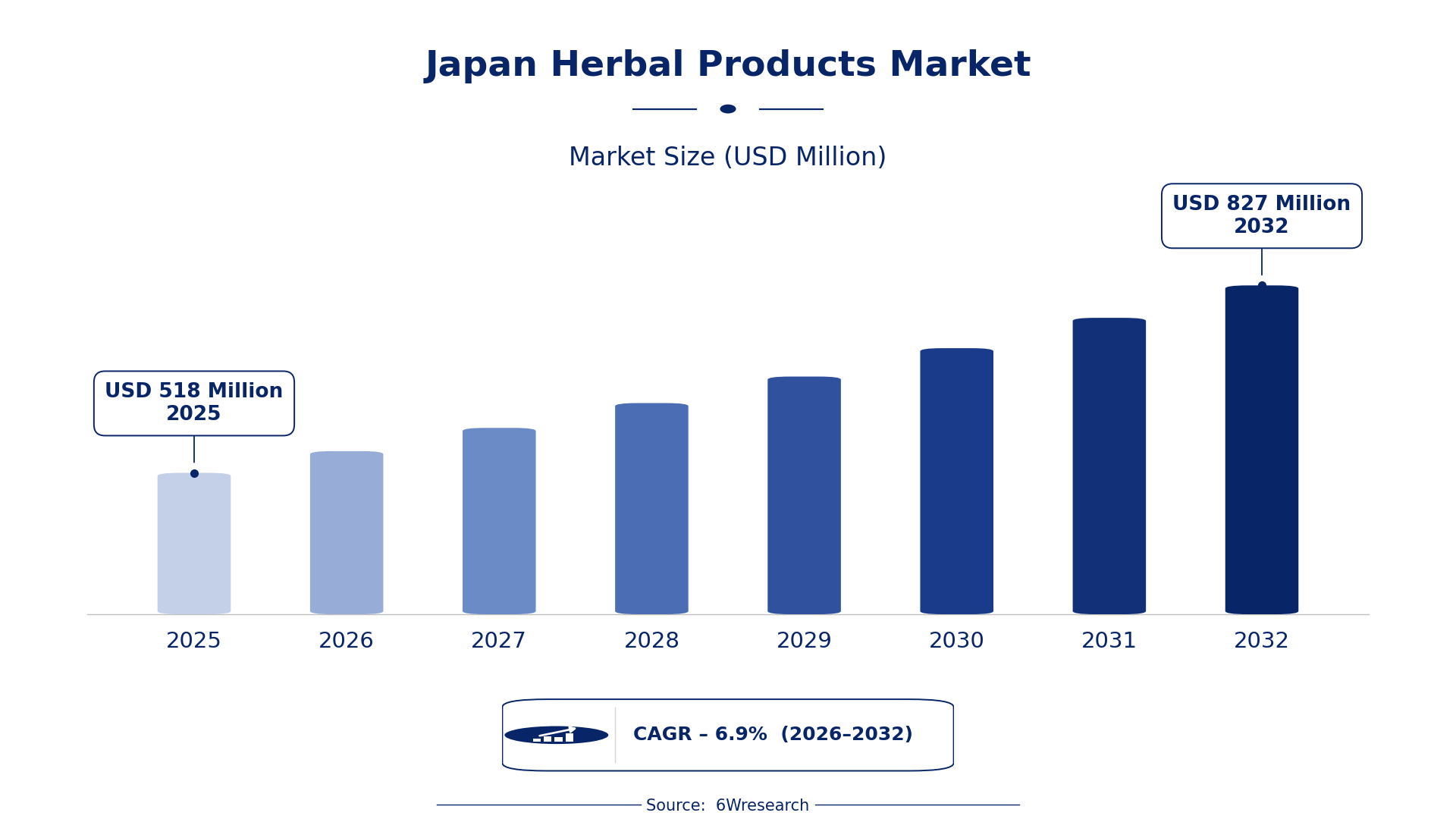
According to 6Wresearch internal database and industry insights, the Japan Herbal Products Market was valued at USD 518 Million in 2025 and is projected to reach USD 827 Million by 2032, growing at a CAGR of approximately 6.9% during 2026–2032.
Japan Herbal Products Market Highlights
| Report Metric | Details |
| Report Name | Japan Herbal Products Market (2026-2032) |
| Market Size 2025 | USD 518 Million |
| Market Size 2032 | USD 827 Million |
| Absolute Growth 2025–2032 | USD 309 Million |
| CAGR 2026–2032 | 6.9% |
| Peak Annual Growth | 9.1% in 2026 |
| Forecast Period | 2026–2032 |
| Historical Data | 2022–2025 |
| Base Year | 2025 |
| Leading Product, 2025 | Moringa (43% share) |
| Leading Formulation, 2025 | Tablets (41% share) |
| Leading Consumer, 2025 | Pregnant Women (36% share) |
| Leading Source, 2025 | Leaves (46% share) |
| Leading Function, 2025 | Medicinal (47% share) |
| Fastest-Growing Product | Echinacea (9.5% CAGR) |
| Fastest-Growing Formulation | Capsules (9.6% CAGR) |
| Fastest-Growing Consumer | Adult (8.5% CAGR) |
| Fastest-Growing Source | Fruits and Vegetable (9.4% CAGR) |
| Fastest-Growing Function | Aroma (8.3% CAGR) |
| Growing Sector | herbal supplements |
| Key End Users | health-conscious consumers, elderly population, wellness product buyers, health food stores |
Japan Herbal Products Market Year-wise Growth Rate and Key Drivers (2022–2032)
This graph illustrates the annual growth rates of the market from 2022 to 2032, highlighting a steady upward trajectory and projected market expansion over the forecast period.
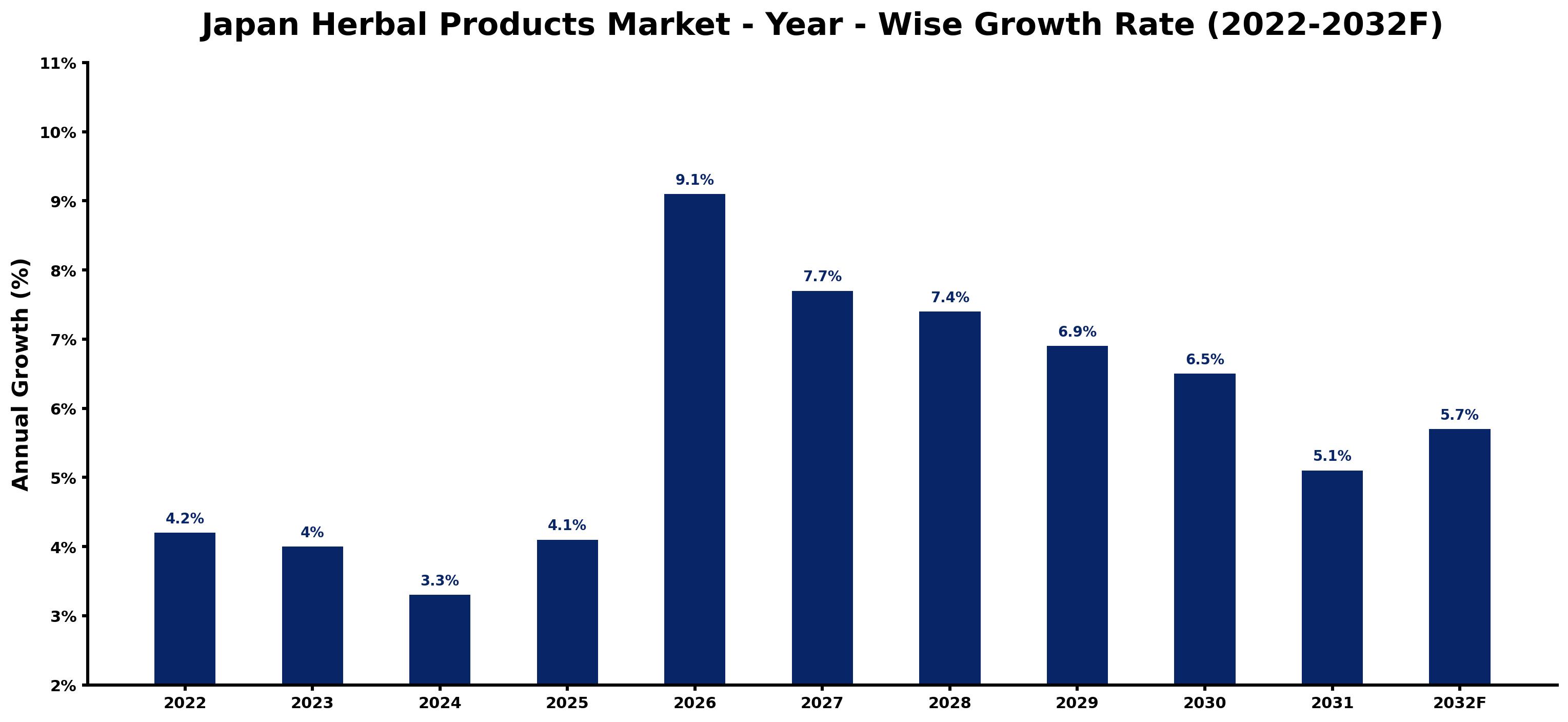
For each year, the table pairs the estimated growth rate with the leading influence on demand, showing how the drivers changed across the period.
| Year | Estimated Annual Growth (%) | Market Rationale |
| 2022 | 4.2 | The market showed steady growth, reflecting increased consumer interest in natural remedies. |
| 2023 | 4.0 | Growth slowed slightly as market adjustments occurred following heightened demand in the previous year. |
| 2024 | 3.3 | Market growth continued to decelerate as consumers became more selective in their purchases. |
| 2025 | 4.1 | A resurgence in demand was noted as consumers returned to herbal products for health maintenance. |
| 2026 | 9.1 | The market experienced a significant boost due to heightened interest in immune support products. |
| 2027 | 7.7 | Growth decelerated as the market stabilised after the peak demand of the previous year. |
| 2028 | 7.4 | A further slowdown occurred as consumers adjusted to new product offerings and trends. |
| 2029 | 6.9 | The market maintained growth as awareness of herbal benefits continued to expand. |
| 2030 | 6.5 | Growth slowed again, reflecting a maturing market with more established consumer preferences. |
| 2031 | 5.1 | The market showed signs of stabilisation as growth rates normalised after previous fluctuations. |
| 2032 | 5.7 | A renewed interest in wellness products is expected to drive growth in the coming year. |
Note: Market size estimations and growth projections presented in this report are based on 6Wresearch's proprietary forecasting methodology, utilizing the latest available industry data, government publications, and primary research inputs.
Japan Herbal Products Market Synopsis
Herbal products in Japan, derived from natural plant sources, are processed into various forms such as powders, capsules, and teas, primarily for health benefits. The Japan Herbal Products Market is growing due to rising consumer interest in natural remedies, with 30% of adults regularly using herbal supplements. Government health initiatives promoting natural products and an increasing geriatric population further drive demand, creating opportunities for suppliers to meet the needs of health-conscious consumers.
Market Dynamics Impact Analysis (2026–2032)
| Factor | Type | Impact | Primary Segment Affected |
| Growing consumer interest in natural health solutions | Driver | High | Moringa |
| Increased adoption of herbal supplements among the elderly | Driver | High | Geriatric |
| Rising demand for immune-boosting products | Opportunity | High | Echinacea |
| Expansion of health food stores in urban areas | Opportunity | Medium | Turmeric |
| Strict quality regulations affecting product availability | Restraint | High | Capsules |
| High competition among herbal product suppliers | Restraint | Medium | Tablets |
| Consumer scepticism regarding herbal efficacy | Challenge | High | Ginger |
| Limited awareness of herbal product benefits among younger consumers | Challenge | Medium | Flaxseeds |
Evaluation of Drivers in Japan Herbal Products Market (2026–2032)
Demand rests on the following drivers, each shown with the segment it touches most.
| Drivers | Primary Segment Affected | Why It Matters (Evidence) |
| Increased health consciousness among consumers | Moringa | Sales of Moringa, known for its nutritional benefits, have surged, with a 30% increase in health food stores. |
| Growing demand for immune support | Echinacea | Echinacea sales have increased during flu season, as consumers seek natural ways to boost immunity, with a 20% rise noted. |
| Aging population seeking wellness solutions | Geriatric | With over 28% of the population aged 65 and older, demand for herbal supplements is rising among older adults. |
| Popularity of herbal teas for digestive health | Ginger | Ginger tea is widely consumed, particularly among older adults, boosting demand for ginger-based products by 15%. |
| Expansion of online sales channels | Capsules | The rise of e-commerce platforms has made herbal capsules more accessible, leading to a 25% increase in consumer purchases. |
Purchasing is picking up as health consciousness grows among Japanese consumers, with 30% of adults regularly using herbal supplements. The aging population, with over 28% aged 65 and older, drives demand for wellness solutions, particularly for immune support. Increased sales of herbal teas, especially ginger, have boosted demand for ginger-based products by 15%. Urban areas are seeing a rise in online sales channels, making herbal capsules more accessible and appealing to health-conscious consumers, with a 25% increase in purchases noted.
Evaluation of Restraints in Japan Herbal Products Market
The main factors holding the market back are set out below.
| Market Restraint | Primary Segment Affected | Why It Matters (Evidence) |
| Strict quality regulations affecting product availability | Capsules | ISO 22000 standards impose rigorous safety checks, limiting the number of available products in the market. |
| High competition among herbal product suppliers | Tablets | Intense competition has led to price wars, affecting profit margins for suppliers of herbal tablets. |
| Consumer scepticism regarding herbal efficacy | Ginger | Many consumers remain unsure about the effectiveness of herbal remedies, limiting market growth for ginger products. |
| Limited awareness of herbal product benefits among younger consumers | Flaxseeds | Younger demographics often overlook the health benefits of flaxseeds, reducing overall market demand. |
| Variability in raw material supply affecting production | Echinacea | Fluctuations in Echinacea crop yields can disrupt supply chains, impacting product availability. |
Japan Herbal Products Market Challenges
Buyers of herbal products face delays due to outdated processing technology, which hampers production efficiency and can extend lead times by 25%. Producers struggle with a shortage of skilled workers in traditional herbal medicine, resulting in quality inconsistencies that deter buyers. Supply chain disruptions occur as sourcing raw materials like turmeric and ginger becomes increasingly difficult, raising costs for producers and pushing prices higher for consumers. Competition intensifies as new entrants join the market, forcing established producers to lower prices, which erodes profit margins and compromises product quality.
Trends in the Japan Herbal Products Market
The trends below show where the Japan Herbal Products Market is heading.
- Shift Towards Powdered Herbal Supplements: In 2023, powdered herbal supplements gained traction, especially in urban health markets. Sales of powdered Moringa and Flaxseeds increased by 25%, reflecting consumer preference for versatile health products.
- Growing Popularity of Herbal Teas: Herbal teas, particularly those containing ginger and turmeric, surged in popularity since 2022, with sales rising by 30% in Tokyo. This trend highlights a shift towards natural remedies among health-conscious consumers.
- Increased Focus on Immune Support Products: Since 2023, there has been a marked increase in demand for immune support products, particularly Echinacea. This shift aligns with rising health awareness, especially during flu season, resulting in a 20% increase in sales.
- Expansion of Health Food Stores: The number of health food stores in urban areas has increased by 20% since 2022, providing greater access to herbal products. This expansion supports the growing consumer base seeking natural health solutions.
Investment Opportunities in the Japan Herbal Products Market
Where to invest in the Japan Herbal Products Market: the main openings are set out below.
- Investment in Echinacea Products: Echinacea products present a strong opportunity for suppliers. The growing demand for immune support among adults, particularly during flu season, creates a need for local partnerships, with a 20% increase in sales noted.
- Supply of Herbal Teas in Urban Areas: The increasing popularity of herbal teas, particularly in Tokyo, presents an opportunity for suppliers to meet rising consumer demand. Investing in local health food stores can facilitate market entry, with a 30% sales increase observed.
- Development of Geriatric-Focused Herbal Products: With the aging population, there is a growing need for herbal products tailored to geriatric consumers. Suppliers can tap into this market by developing targeted health solutions, with a 15% growth in demand noted.
- Expansion of Online Sales Channels: The rise of e-commerce platforms provides an opportunity for herbal product suppliers to reach a broader audience. Investing in digital marketing strategies can improve visibility and sales, with a 25% increase in online purchases.
Government Initiatives in the Japan Herbal Products Market
The Medical Care Act of 1948 established standards for hospitals and clinics, including the regulation of herbal products. The Clinical Trials Act, enacted in 2018, ensures that herbal supplements undergo rigorous testing before market entry, improving consumer safety and trust.
In 2023, the Japan Health Promotion Program allocated USD 10 million to support research on natural remedies. The Ministry of Health, Labour and Welfare oversees this initiative, ensuring that herbal products meet safety and efficacy standards.
Future Insight of the Japan Herbal Products Market
New health promotion programmes are expected to emerge by 2032, driven by government initiatives advocating natural remedies. Increased adoption of ISO 22000 standards will ensure higher safety and quality for buyers, building consumer trust in herbal offerings. Technological advancements in extraction methods will enable suppliers to provide more potent products tailored to health-conscious consumers. As the population ages, demand for wellness-focused herbal options will rise, particularly among older adults seeking effective natural remedies.
Market Segmentation Analysis
Japan Herbal Products Market report covers a detailed analysis of the following market segments:
By Product – Moringa Leads, Echinacea Expected to Grow Fastest
According to Bhawna Singh, Assistant Manager at 6Wresearch, Moringa took 43% of product revenue in 2025, more than any other category. Moringa holds the largest share due to its widespread recognition for nutritional benefits, particularly in dietary supplements. It is often marketed in powdered form, appealing to health-conscious consumers seeking natural remedies. Over 2026–2032, Echinacea is expected to post the fastest growth, at a CAGR of 9.5%. Echinacea is experiencing rapid growth as it is increasingly used for immune support, especially during flu season. The rising awareness of its benefits has led to a surge in demand among consumers. Suppliers should focus on promoting Echinacea to capitalise on its growing popularity.
By Formulation – Tablets Lead, Capsules Expected to Grow Fastest
In 2025, Tablets led the formulation split with a 41% share. Tablets hold the largest share in the market as they provide a convenient option for consumers seeking herbal supplements. Their widespread availability in pharmacies and health stores reinforces their popularity among users. Capsules are projected to grow fastest, at a CAGR of 9.6% during 2026–2032. Capsules are experiencing rapid growth due to their appeal for easy consumption of herbal extracts. This shift is largely influenced by health-conscious consumers who prefer capsules over traditional tablet forms. Manufacturers should consider expanding their capsule offerings to meet the increasing consumer preference.
By Consumer – Pregnant Women Leads, Adult Expected to Grow Fastest
The largest consumer category in 2025 was Pregnant Women, at 36% of revenue. Pregnant women constitute the largest consumer segment as specific herbal products are tailored to support prenatal health. This targeted marketing strategy has solidified their strong presence in the herbal products market. Adult is set to record the highest CAGR in this split, 8.5% over 2026–2032. Adults represent the fastest-growing demographic for herbal supplements, propelled by a rising trend towards wellness and natural health solutions. Their heightened focus on preventive health measures is driving this segment's growth. Marketers should tailor their strategies to appeal specifically to adult consumers seeking wellness solutions.
By Source – Leaves Lead, Fruits and Vegetable Expected to Grow Fastest
Leaves held 46% of the Japan Herbal Products Market by source in 2025. Leaves hold the largest share in the market as they are predominantly used in teas and supplements, valued for their health benefits. The widespread consumption of herbal teas, especially among health-conscious individuals, underscores this trend. The quickest growth will come from Fruits and Vegetable, forecast to expand at a CAGR of 9.4% between 2026 and 2032. Fruits and vegetables are emerging as the fastest-growing source, increasingly featured in various herbal blends. This growth is driven by consumer interest in diversifying their herbal product choices, appealing to those seeking unique health benefits. Suppliers should consider integrating more fruits and vegetables into their offerings to capture the interest of a wider consumer demographic.
By Function – Medicinal Leads, Aroma Expected to Grow Fastest
Medicinal accounted for 47% of the market by function in 2025. Medicinal applications lead the market as the primary purpose of herbal products is to provide health benefits. This trend reflects the rising consumer preference for natural remedies and preventive health measures, particularly among older adults. Over 2026–2032, Aroma is expected to post the fastest growth, at a CAGR of 8.3%. Aroma is experiencing rapid growth, especially in the context of essential oils and aromatherapy products. The heightened consumer focus on holistic wellness and stress relief practices is significantly contributing to this segment's expansion. Companies may benefit from diversifying their product lines to include aroma-based herbal solutions to meet growing consumer demands.
Key Attractiveness of the Report
- 10 Years of Market Numbers
- Historical Data Starting from 2022 to 2025
- Base Year 2025
- Forecast Data until 2032
- Key Performance Indicators Impacting the Market
- Major Upcoming Developments and Projects
Key Highlights of the Report:
- Japan Herbal Products Market Outlook
- Market Size of Japan Herbal Products Market, 2025
- Forecast of Japan Herbal Products Market, 2032
- Historical Data and Forecast of Japan Herbal Products Revenues & Volume for the Period 2022-2032
- Japan Herbal Products Market Trend Evolution
- Japan Herbal Products Market Drivers and Challenges
- Japan Herbal Products Price Trends
- Japan Herbal Products Porter's Five Forces
- Japan Herbal Products Industry Life Cycle
- Historical Data and Forecast of Japan Herbal Products Market Revenues & Volume By Product for the Period 2022-2032
- Historical Data and Forecast of Japan Herbal Products Market Revenues & Volume By Moringa for the Period 2022-2032
- Historical Data and Forecast of Japan Herbal Products Market Revenues & Volume By Echinacea for the Period 2022-2032
- Historical Data and Forecast of Japan Herbal Products Market Revenues & Volume By Flaxseeds for the Period 2022-2032
- Historical Data and Forecast of Japan Herbal Products Market Revenues & Volume By Turmeric for the Period 2022-2032
- Historical Data and Forecast of Japan Herbal Products Market Revenues & Volume By Ginger for the Period 2022-2032
- Historical Data and Forecast of Japan Herbal Products Market Revenues & Volume By Ginseng for the Period 2022-2032
- Historical Data and Forecast of Japan Herbal Products Market Revenues & Volume By Formulation for the Period 2022-2032
- Historical Data and Forecast of Japan Herbal Products Market Revenues & Volume By Tablets for the Period 2022-2032
- Historical Data and Forecast of Japan Herbal Products Market Revenues & Volume By Capsules for the Period 2022-2032
- Historical Data and Forecast of Japan Herbal Products Market Revenues & Volume By Liquid for the Period 2022-2032
- Historical Data and Forecast of Japan Herbal Products Market Revenues & Volume By Powder and Granules for the Period 2022-2032
- Historical Data and Forecast of Japan Herbal Products Market Revenues & Volume By Soft Gels for the Period 2022-2032
- Historical Data and Forecast of Japan Herbal Products Market Revenues & Volume By Others for the Period 2022-2032
- Historical Data and Forecast of Japan Herbal Products Market Revenues & Volume By Consumer for the Period 2022-2032
- Historical Data and Forecast of Japan Herbal Products Market Revenues & Volume By Pregnant Women for the Period 2022-2032
- Historical Data and Forecast of Japan Herbal Products Market Revenues & Volume By Adult for the Period 2022-2032
- Historical Data and Forecast of Japan Herbal Products Market Revenues & Volume By Paediatric for the Period 2022-2032
- Historical Data and Forecast of Japan Herbal Products Market Revenues & Volume By Geriatric for the Period 2022-2032
- Historical Data and Forecast of Japan Herbal Products Market Revenues & Volume By Source for the Period 2022-2032
- Historical Data and Forecast of Japan Herbal Products Market Revenues & Volume By Leaves for the Period 2022-2032
- Historical Data and Forecast of Japan Herbal Products Market Revenues & Volume By Fruits and Vegetable for the Period 2022-2032
- Historical Data and Forecast of Japan Herbal Products Market Revenues & Volume By Barks for the Period 2022-2032
- Historical Data and Forecast of Japan Herbal Products Market Revenues & Volume By Roots for the Period 2022-2032
- Historical Data and Forecast of Japan Herbal Products Market Revenues & Volume By Others for the Period 2022-2032
- Historical Data and Forecast of Japan Herbal Products Market Revenues & Volume By Function for the Period 2022-2032
- Historical Data and Forecast of Japan Herbal Products Market Revenues & Volume By Medicinal for the Period 2022-2032
- Historical Data and Forecast of Japan Herbal Products Market Revenues & Volume By Aroma for the Period 2022-2032
- Historical Data and Forecast of Japan Herbal Products Market Revenues & Volume By Others for the Period 2022-2032
- Historical Data and Forecast of Japan Herbal Products Market Revenues & Volume By Application for the Period 2022-2032
- Historical Data and Forecast of Japan Herbal Products Market Revenues & Volume By Pharmaceutical for the Period 2022-2032
- Historical Data and Forecast of Japan Herbal Products Market Revenues & Volume By Personal Care for the Period 2022-2032
- Historical Data and Forecast of Japan Herbal Products Market Revenues & Volume By Food and Beverages for the Period 2022-2032
- Historical Data and Forecast of Japan Herbal Products Market Revenues & Volume By Others for the Period 2022-2032
- Historical Data and Forecast of Japan Herbal Products Market Revenues & Volume By Distribution Channel for the Period 2022-2032
- Historical Data and Forecast of Japan Herbal Products Market Revenues & Volume By Offline Stores for the Period 2022-2032
- Historical Data and Forecast of Japan Herbal Products Market Revenues & Volume By Online Stores for the Period 2022-2032
- Japan Herbal Products Import Export Trade Statistics
- Market Opportunity Assessment By Product
- Market Opportunity Assessment By Formulation
- Market Opportunity Assessment By Consumer
- Market Opportunity Assessment By Source
- Market Opportunity Assessment By Function
- Market Opportunity Assessment By Application
- Market Opportunity Assessment By Distribution Channel
- Japan Herbal Products Top Companies Market Share
- Japan Herbal Products Competitive Benchmarking By Technical and Operational Parameters
- Japan Herbal Products Company Profiles
- Japan Herbal Products Key Strategic Recommendations
Market Covered
The study includes the following segmentation.
By Product
- Moringa
- Echinacea
- Flaxseeds
- Turmeric
- Ginger
- Ginseng
By Formulation
- Tablets
- Capsules
- Liquid
- Powder and Granules
- Soft Gels
- Others
By Consumer
- Pregnant Women
- Adult
- Paediatric
- Geriatric
By Source
- Leaves
- Fruits and Vegetable
- Barks
- Roots
- Others
By Function
- Medicinal
- Aroma
- Others































