Japan Mobile Application Security Market Size & Growth Rate (2026-2032)
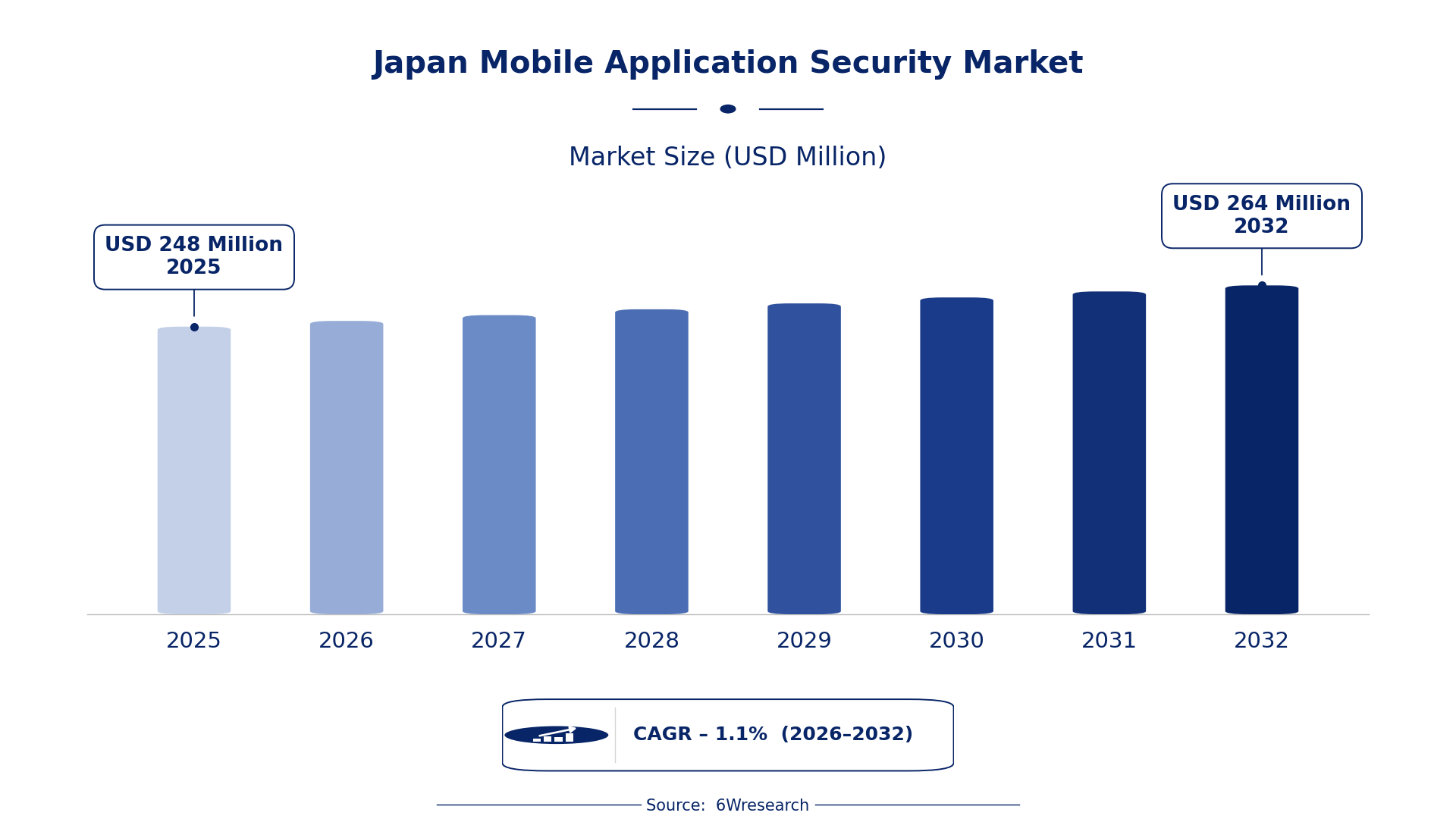
The Japan Mobile Application Security Market was estimated at USD 248 Million in 2025 and is projected to reach USD 264 Million by 2032, growing at a CAGR of 1.1% from 2026 to 2032.
Japan Mobile Application Security Market Synopsis
Japan's mobile application security landscape is increasingly shaped by the proliferation of smartphone usage and the corresponding rise in mobile applications. Businesses recognize the critical need to protect user data amidst a surge in cyber threats targeting these applications.
The market reflects a strong commitment to advanced security measures, with many companies investing in solutions like mobile application security testing and threat intelligence. This heightened focus on security is not just a trend; it is a necessary adaptation to an environment where consumer trust hinges on robust protection against vulnerabilities.
Japan Mobile Application Security Market Year-wise Growth Rate and Key Drivers
This graph illustrates the annual growth rates of the Japan Mobile Application Security Market from 2021 to 2032, highlighting a steady upward trajectory and projected expansion over the forecast period.
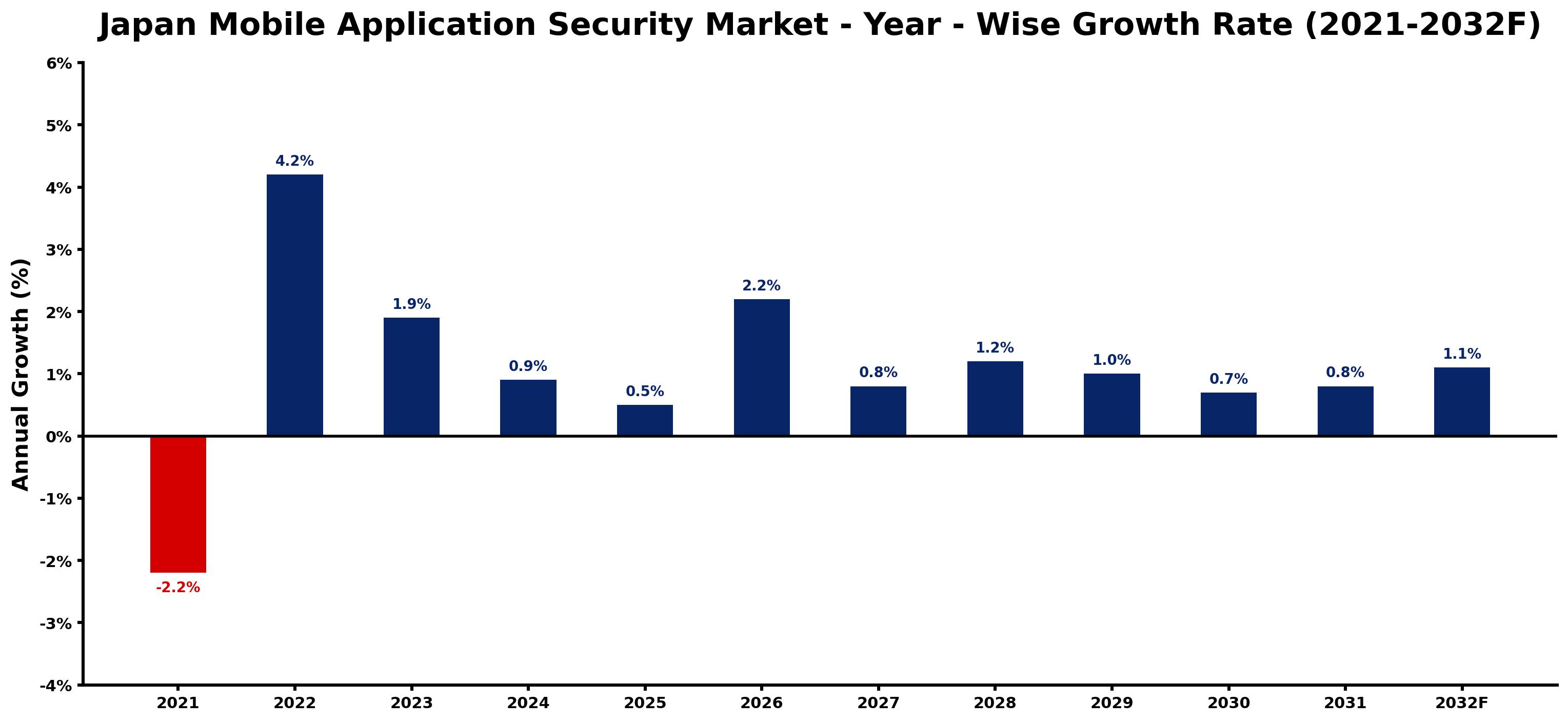
The table below presents the year‑wise growth rates along with the key drivers influencing the market
| Year | Growth Rate | Major Drivers |
| 2021 | -2.2% | Cybersecurity regulations hindered app development investments. |
| 2022 | 4.2% | Government cyber regulations tightening mobile application security. |
| 2023 | 1.9% | Increased smartphone adoption driving app security requirements. |
| 2024 | 0.9% | Regulatory compliance demands for consumer data protection. |
| 2025 | 0.5% | Growing awareness of mobile security risks among users. |
| 2026 | 2.2% | Rise in mobile payment usage heightens security concerns. |
| 2027 | 0.8% | Emergence of AI-driven security solutions for app protection. |
| 2028 | 1.2% | Corporate investments in mobile security software expand. |
| 2029 | 1.0% | Regulatory focus on mobile privacy enhancing security standards. |
| 2030 | 0.7% | User demand for secure health applications increases significantly. |
| 2031 | 0.8% | Cyberattack incidents prompt stronger app security protocols. |
| 2032 | 1.1% | Mobile gaming expansion leads to heightened security investments. |
Note: Market size estimations and growth projections presented in this report are based on 6Wresearch's proprietary forecasting methodology, utilizing the latest available industry data, government publications, and primary research inputs.
Japan Mobile Application Security Market Key Takeaways
Below are some of the specific key takeaways from the market, including:
- Increasing smartphone penetration is driving demand for mobile application security solutions.
- Regulatory frameworks are strengthening data privacy protocols, influencing security investments.
- Emerging technologies, such as biometric authentication, are becoming essential components of mobile security strategies.
- Business awareness regarding the significance of cybersecurity is on the rise, spurring proactive security measures.
- The adoption of security testing services is surging as organizations seek to mitigate potential vulnerabilities.
Evaluation of Restraints in Japan Mobile Application Security Market
The Japan Mobile Application Security Market faces notable challenges. One significant concern is the increasing sophistication of cyber attacks, which continually evolve and target mobile applications more aggressively. Compliance with regulatory standards can be burdensome for businesses, often stretching resources and complicating operational strategies.
Another pressing issue is striking the right balance between implementing stringent security protocols and maintaining a user-friendly experience. Companies risk alienating users if security measures impede usability. A lack of comprehensive understanding among developers regarding best practices in mobile application security further complicates these challenges, highlighting a need for ongoing education and training.
Japan Mobile Application Security Market Trends
In Japan, there is a noticeable shift towards integrating comprehensive security frameworks that address the nuances of mobile applications. Organizations are prioritizing advanced security protocols, including app shielding and mobile threat defense (MTD), to bolster protection against emerging threats.
Additionally, the emphasis on data privacy continues to increase, influencing companies to adopt encryption techniques and biometric solutions. The demand for proactive security measures, such as security testing services, is also rising, as firms aim to detect and rectify vulnerabilities before they can be exploited.
Japan Mobile Application Security Market Opportunities
With the growing adoption of mobile applications, substantial opportunities exist in the Japan Mobile Application Security Market. Businesses are increasingly investing in security solution providers that offer protection against malware and unauthorized access.
Investment in mobile application security testing tools and services presents lucrative prospects as organizations strive to ensure application integrity. As regulatory requirements around data protection tighten, there is heightened demand for comprehensive security solutions, positioning this segment favorably for potential investors.
Government Initiatives in the Japan Mobile Application Security Market
The Japanese government is actively fostering mobile application security through a variety of policies and guidelines aimed at enhancing data protection. The recent push for secure mobile application development, coupled with ongoing assessments by regulatory bodies, demonstrates a clear commitment to addressing security challenges in this space.
- The Ministry of Internal Affairs and Communications introduced guidelines in early 2025 for secure mobile application development focused on user data protection.
- The Information-Technology Promotion Agency (IPA) is currently conducting regular assessments of mobile application security protocols to provide actionable recommendations to developers.
- A public-private partnership was launched in late 2025 to enhance cybersecurity infrastructure, aiming to bolster industry collaboration in addressing threats.
- Plans are underway for a national awareness campaign targeting developers and end-users, set to kick off in mid-2026, to improve understanding of mobile application security best practices.
Future Insights of the Japan Mobile Application Security Market
Looking ahead to 2026-2032, the Japan Mobile Application Security Market is likely to see steady growth driven by continued adoption of mobile technologies across various sectors. As cyber threats evolve, businesses will focus heavily on investing in innovative security solutions.
The increasing complexity of regulatory frameworks will also amplify the urgency for comprehensive security measures. With advancements such as app shielding and runtime application self-protection (RASP) becoming more mainstream, companies that stay ahead of these trends will position themselves effectively in the evolving market.
Japan Mobile Application Security Market Latest Developments
Recent developments in the Japan Mobile Application Security Market indicate a proactive industry stance toward enhancing mobile security measures. Over the past year, many organizations have accelerated their focus on security technologies to protect user data against rising threats.
- A significant technology vendor announced an upgraded mobile application security suite in early 2025, providing enhanced features focused on threat detection.
- In mid-2025, a major regional operator began an initiative to integrate biometric authentication into their mobile applications, aiming to boost user security.
- A consortium of cybersecurity firms launched a collaborative research project in late 2025 to develop next-generation mobile threat defense technologies.
- Plans are currently underway for a comprehensive security audit program, expected to roll out in the second half of 2026, targeting vulnerable applications in multiple industries.
Japan Mobile Application Security Market - Key Attractiveness of the Report
- 10 Years of Market Numbers
- Historical Data Starting from 2022 to 2025
- Base Year: 2025
- Forecast Data until 2032
- Key Performance Indicators Impacting the Market
- Major Upcoming Developments and Projects
Key Highlights of the Report:
- Japan Mobile Application Security Market Outlook
- Market Size of Japan Mobile Application Security Market, 2025
- Forecast of Japan Mobile Application Security Market, 2032
- Historical Data and Forecast of Japan Mobile Application Security Revenues & Volume for the Period 2022-2032F
- Japan Mobile Application Security Market Trend Evolution
- Japan Mobile Application Security Market Drivers and Challenges
- Japan Mobile Application Security Price Trends
- Japan Mobile Application Security Porter's Five Forces
- Japan Mobile Application Security Industry Life Cycle
- Historical Data and Forecast of Japan Mobile Application Security Market Revenues & Volume By Solution for the Period 2022-2032F
- Historical Data and Forecast of Japan Mobile Application Security Market Revenues & Volume By Antivirus & Antitheft for the Period 2022-2032F
- Historical Data and Forecast of Japan Mobile Application Security Market Revenues & Volume By Data Recovery for the Period 2022-2032F
- Historical Data and Forecast of Japan Mobile Application Security Market Revenues & Volume By Others for the Period 2022-2032F
- Historical Data and Forecast of Japan Mobile Application Security Market Revenues & Volume By Deployment Type for the Period 2022-2032F
- Historical Data and Forecast of Japan Mobile Application Security Market Revenues & Volume By Cloud for the Period 2022-2032F
- Historical Data and Forecast of Japan Mobile Application Security Market Revenues & Volume By On Premise for the Period 2022-2032F
- Historical Data and Forecast of Japan Mobile Application Security Market Revenues & Volume By Industry Vertical for the Period 2022-2032F
- Historical Data and Forecast of Japan Mobile Application Security Market Revenues & Volume By BFSI for the Period 2022-2032F
- Historical Data and Forecast of Japan Mobile Application Security Market Revenues & Volume By Healthcare for the Period 2022-2032F
- Historical Data and Forecast of Japan Mobile Application Security Market Revenues & Volume By IT & Telecom for the Period 2022-2032F
- Historical Data and Forecast of Japan Mobile Application Security Market Revenues & Volume By Manufacturing for the Period 2022-2032F
- Historical Data and Forecast of Japan Mobile Application Security Market Revenues & Volume By Government and Public Sector for the Period 2022-2032F
- Historical Data and Forecast of Japan Mobile Application Security Market Revenues & Volume By Retail & E-commerce for the Period 2022-2032F
- Historical Data and Forecast of Japan Mobile Application Security Market Revenues & Volume By Others for the Period 2022-2032F
- Japan Mobile Application Security Import Export Trade Statistics
- Market Opportunity Assessment By Solution
- Market Opportunity Assessment By Deployment Type
- Market Opportunity Assessment By Industry Vertical
- Japan Mobile Application Security Top Companies Market Share
- Japan Mobile Application Security Competitive Benchmarking By Technical and Operational Parameters
- Japan Mobile Application Security Company Profiles
- Japan Mobile Application Security Key Strategic Recommendations






































