Japan Musical Instrument Market Size Growth Rate
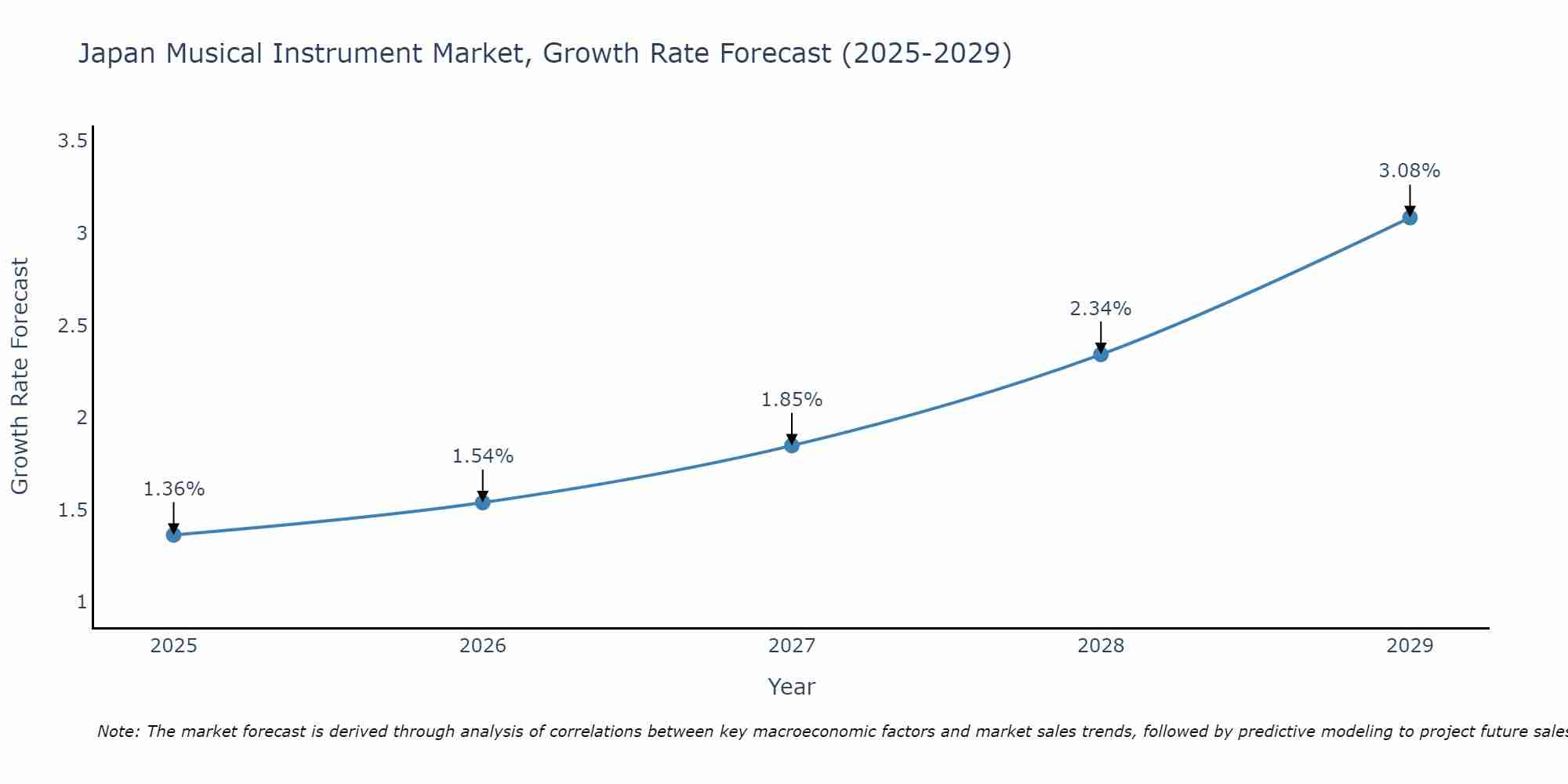
The Japan Musical Instrument Market is likely to experience consistent growth rate gains over the period 2025 to 2029. Commencing at 1.36% in 2025, growth builds up to 3.08% by 2029.
Japan Musical Instrument Market Synopsis
The Japan Musical Instrument Market is a dynamic industry driven by a strong cultural appreciation for music and a high level of musical education in the country. The market offers a wide range of musical instruments, including traditional Japanese instruments like the shamisen and koto, as well as Western instruments such as guitars, pianos, and synthesizers. Key players in the market include Yamaha, Kawai, and Roland, known for their high-quality products and innovative technology. The market also sees a growing trend towards digital music instruments and equipment, catering to the preferences of modern musicians and music enthusiasts. Overall, the Japan Musical Instrument Market is characterized by a mix of traditional and modern instruments, catering to a diverse customer base ranging from professional musicians to hobbyists.
Japan Musical Instrument Market Trends
The Japan Musical Instrument Market is witnessing several trends, including a growing preference for digital and electronic instruments such as electronic keyboards and synthesizers. This shift is driven by the increasing popularity of electronic music genres among younger musicians and enthusiasts. Additionally, there is a rising demand for compact and portable instruments, reflecting the lifestyle preferences of urban dwellers with limited space. Traditional Japanese instruments such as the shamisen and taiko drums are also experiencing a resurgence in popularity, driven by a renewed interest in preserving cultural heritage. Furthermore, sustainability and eco-friendly practices are becoming important considerations for consumers, leading to a rise in the production and consumption of environmentally conscious musical instruments. Overall, the market is evolving to cater to diverse consumer preferences and align with technological advancements and sustainability goals.
Japan Musical Instrument Market Challenges
In the Japan Musical Instrument Market, one of the key challenges is the declining interest in traditional musical instruments among the younger generation. With the rise of digital music consumption and changing cultural preferences, there is a shift towards more modern and electronic instruments. Additionally, the high cost of quality musical instruments poses a barrier for many consumers, especially students and beginners. Another challenge is the competition from international brands and online retailers, which offer a wide variety of products at competitive prices, impacting the sales of local retailers and manufacturers. However, there are opportunities for growth through innovation in product design, marketing strategies targeting younger demographics, and partnerships with online platforms to reach a wider audience.
Japan Musical Instrument Market Investment Opportunities
The Japan Musical Instrument Market presents several promising investment opportunities. With a strong cultural affinity for music and a robust economy, the market is ripe for growth. Investing in traditional Japanese instruments such as shamisen or koto could be lucrative due to their cultural significance and increasing popularity both domestically and internationally. Additionally, there is a growing trend towards digital music technology in Japan, creating opportunities in the electronic musical instrument sector. Collaborations with local manufacturers, distributors, or music schools could also be a strategic investment approach to tap into the market. Overall, the Japan Musical Instrument Market offers diverse investment avenues catering to both traditional and modern musical preferences.
Jordan Agar Market Government Policies
The Japanese government has implemented various policies to support and promote the musical instrument market in the country. These policies include tax incentives for music education programs, subsidies for music festivals and events, and funding for the preservation of traditional Japanese musical instruments. Additionally, the government has been actively involved in promoting music education in schools to foster a culture of music appreciation among the youth. The government also works closely with industry associations and stakeholders to develop regulations and standards that ensure the quality and safety of musical instruments produced and sold in Japan. Overall, these policies aim to stimulate growth in the musical instrument market, support local manufacturers, and preserve Japan`s rich musical heritage.
Japan Musical Instrument Market Future Outlook
The future outlook for the Japan Musical Instrument Market appears promising, with an expected steady growth driven by factors such as rising disposable incomes, increasing interest in music education, and a growing trend of online music learning platforms. The market is also likely to benefit from technological advancements in musical instruments, such as digital interfaces and connectivity features. Additionally, the popularity of Japanese musical instruments, such as traditional taiko drums and electronic keyboards, both domestically and internationally, is anticipated to support market growth. However, challenges such as economic uncertainties and changing consumer preferences may impact market dynamics. Overall, the Japan Musical Instrument Market is forecasted to expand in the coming years, offering opportunities for manufacturers, retailers, and other industry stakeholders to innovate and capitalize on evolving consumer trends.
Key Highlights of the Report:
- Japan Musical Instrument Market Outlook
- Market Size of Japan Musical Instrument Market, 2024
- Forecast of Japan Musical Instrument Market, 2031
- Historical Data and Forecast of Japan Musical Instrument Revenues & Volume for the Period 2018 - 2031
- Japan Musical Instrument Market Trend Evolution
- Japan Musical Instrument Market Drivers and Challenges
- Japan Musical Instrument Price Trends
- Japan Musical Instrument Porter's Five Forces
- Japan Musical Instrument Industry Life Cycle
- Historical Data and Forecast of Japan Musical Instrument Market Revenues & Volume By Product for the Period 2018 - 2031
- Historical Data and Forecast of Japan Musical Instrument Market Revenues & Volume By String Instruments for the Period 2018 - 2031
- Historical Data and Forecast of Japan Musical Instrument Market Revenues & Volume By Pianos And Keyboards for the Period 2018 - 2031
- Historical Data and Forecast of Japan Musical Instrument Market Revenues & Volume By Drums And Percussion Instruments for the Period 2018 - 2031
- Historical Data and Forecast of Japan Musical Instrument Market Revenues & Volume By Others for the Period 2018 - 2031
- Japan Musical Instrument Import Export Trade Statistics
- Market Opportunity Assessment By Product
- Japan Musical Instrument Top Companies Market Share
- Japan Musical Instrument Competitive Benchmarking By Technical and Operational Parameters
- Japan Musical Instrument Company Profiles
- Japan Musical Instrument Key Strategic Recommendations






































