Japan Smoked Salmon Market Size & Growth Rate
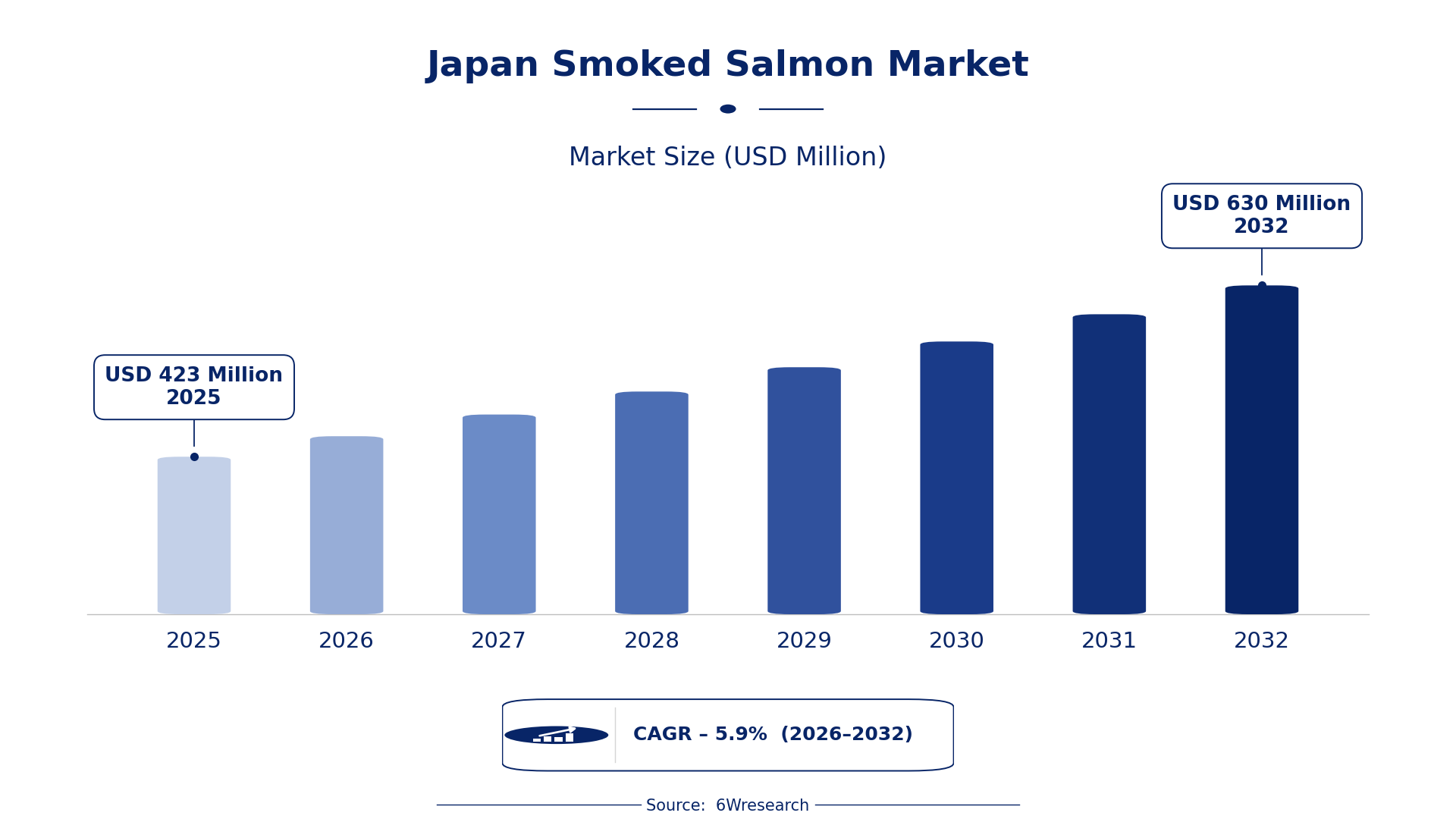
According to 6Wresearch internal database and industry insights, the Japan Smoked Salmon Market was valued at USD 423 Million in 2025 and is projected to reach USD 630 Million by 2032, growing at a CAGR of approximately 5.9% during 2026–2032.
Japan Smoked Salmon Market Highlights
| Report Metric | Details |
| Report Name | Japan Smoked Salmon Market (2026-2032) |
| Market Size 2025 | USD 423 Million |
| Market Size 2032 | USD 630 Million |
| Absolute Growth 2025–2032 | USD 207 Million |
| CAGR 2026–2032 | 5.9% |
| Peak Annual Growth | 6.4% in 2027 |
| Forecast Period | 2026–2032 |
| Historical Data | 2022–2025 |
| Base Year | 2025 |
| Leading Type, 2025 | Vac/Vacuum Packing (41% share) |
| Leading Application, 2025 | Food Service Sector (62% share) |
| Fastest-Growing Type | Canned Packaging (8.3% CAGR) |
| Fastest-Growing Application | Retail Sector (7.6% CAGR) |
| Growing Sector | Retail Sector |
| Key End Users | Food Service Sector, Retail Sector |
Japan Smoked Salmon Market Year-wise Growth Rate and Key Drivers (2022–2032)
This graph illustrates the annual growth rates of the market from 2022 to 2032, highlighting a steady upward trajectory and projected market expansion over the forecast period.
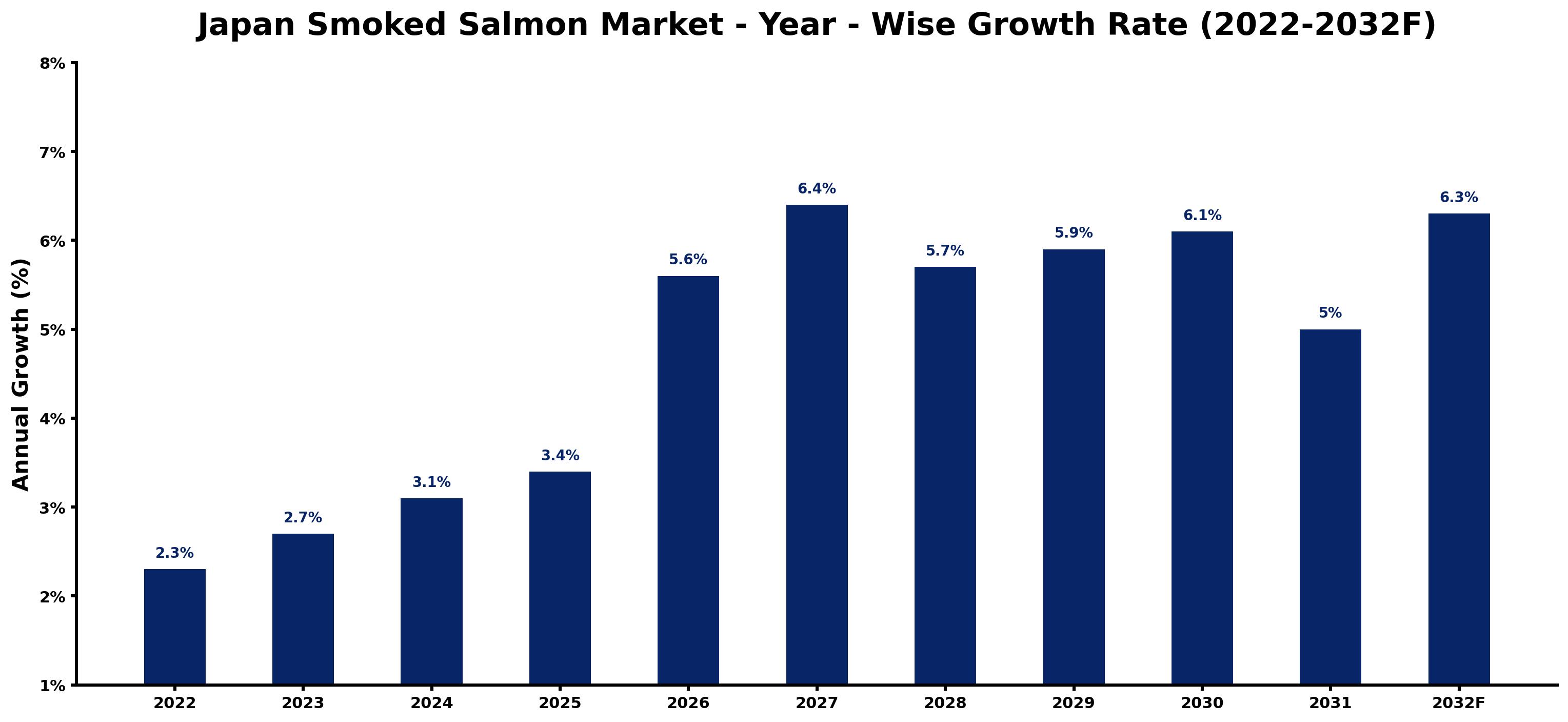
The table below sets out the estimated growth rate for each year and the main factor behind it.
| Year | Estimated Annual Growth (%) | Market Rationale |
| 2022 | 2.3 | The market experienced steady demand due to consistent seafood consumption patterns. |
| 2023 | 2.7 | Growth accelerated as the food service sector expanded its offerings. |
| 2024 | 3.1 | Increased popularity of smoked salmon in sushi contributed to higher sales. |
| 2025 | 3.4 | Sales growth was driven by rising consumer interest in gourmet food options. |
| 2026 | 5.6 | Demand is expected to rise as new culinary trends emerge. |
| 2027 | 6.4 | Peak growth will occur as the food service sector increases its smoked salmon menu items. |
| 2028 | 5.7 | Growth is projected to slow slightly as market saturation begins to set in. |
| 2029 | 5.9 | Demand is expected to rise again as convenience products gain traction among consumers. |
| 2030 | 6.1 | Continued interest in gourmet seafood will maintain upward momentum. |
| 2031 | 5.0 | Growth is projected to moderate as competition intensifies in the retail space. |
| 2032 | 6.3 | Sales will increase as sustainable sourcing practices become more prevalent. |
Note: Market size estimations and growth projections presented in this report are based on 6Wresearch's proprietary forecasting methodology, utilizing the latest available industry data, government publications, and primary research inputs.
Japan Smoked Salmon Market Synopsis
Smoked salmon is a cured fish product made from salmon, typically brined and smoked. It is widely used in culinary applications, including sushi and salads. The Japan Smoked Salmon Market is expanding due to rising demand from the food service sector, which accounted for around 40% of sales in 2022. The Tokyo metropolitan area serves as a key demand hub, while trends towards gourmet and convenient food options further drive consumption, reflecting changing consumer preferences.
Market Dynamics Impact Analysis (2026–2032)
| Factor | Type | Impact | Primary Segment Affected |
| Growing demand from the food service sector | Driver | High | Food Service Sector |
| Increased availability in retail stores | Driver | High | Retail Sector |
| Expansion of convenience food options | Opportunity | High | Retail Sector |
| Rising interest in gourmet food experiences | Opportunity | High | Food Service Sector |
| Regulatory compliance costs | Restraint | Medium | Food Service Sector |
| Competition from alternative seafood products | Restraint | Medium | Retail Sector |
| Fluctuating salmon prices | Challenge | High | Food Service Sector |
| Capacity constraints in processing facilities | Challenge | Medium | Food Service Sector |
Evaluation of Drivers in Japan Smoked Salmon Market (2026–2032)
The main growth drivers and the segments they affect most are set out below.
| Drivers | Primary Segment Affected | Why It Matters (Evidence) |
| Increased culinary use of smoked salmon | Food Service Sector | In 2022, the food service sector accounted for around 40% of smoked salmon sales, driving higher demand for gourmet dishes. |
| Expansion of retail offerings | Retail Sector | In 2022, the retail sector experienced a 15% increase in smoked salmon availability, catering to consumer preferences for convenient meal options. |
| Rising seafood consumption per capita | Food Service Sector | The average annual seafood consumption in Japan is about 30 kg, supporting higher smoked salmon purchases. |
| Growing trend towards sustainable seafood | Retail Sector | A government initiative in 2023 promoted sustainable seafood practices, encouraging consumers to choose responsibly sourced products. |
| Increased interest in traditional Japanese cuisine | Food Service Sector | Smoked salmon is often served in sushi, appealing to both domestic and international consumers. |
Spending rises because the food service sector increasingly incorporates smoked salmon into gourmet dishes, with 40% of sales in 2022 attributed to this segment. The average seafood consumption per person in Japan is about 30 kg, prompting restaurants to expand their seafood offerings. Retail stores have also increased the availability of smoked salmon products, catering to busy consumers seeking convenience. The popularity of smoked salmon in traditional Japanese cuisine, particularly sushi, continues to drive demand.
Evaluation of Restraints in Japan Smoked Salmon Market
The main factors holding the market back are set out below.
| Market Restraint | Primary Segment Affected | Why It Matters (Evidence) |
| Regulatory compliance costs | Food Service Sector | Compliance with JIS standards for food safety increases operational costs for restaurants and caterers. |
| Competition from alternative seafood products | Retail Sector | The rise of other seafood options can divert consumer attention away from smoked salmon. |
| Price fluctuations of salmon | Food Service Sector | Volatility in salmon prices affects menu pricing and profit margins for restaurants. |
| Limited processing capacity | Food Service Sector | Capacity constraints in processing facilities can lead to supply shortages during peak demand periods. |
| Consumer price sensitivity | Retail Sector | Economic fluctuations can lead to reduced spending on premium seafood products like smoked salmon. |
Japan Smoked Salmon Market Challenges
Producers face rising costs as the price of raw salmon increases, which can reduce profit margins by approximately 15% and limit production capacity. Importers struggle with a shortage of skilled workers trained in traditional smoking methods, resulting in quality inconsistencies that can delay product availability by up to three weeks for distributors. Buyers encounter fluctuating demand in the Tokyo metropolitan area, leading to excess inventory that may take up to three months to clear, affecting cash flow. Compliance with JIS standards creates supply chain disruptions, delaying shipments and resulting in lost sales opportunities for retailers.
Trends in the Japan Smoked Salmon Market
Four trends stand out in the Japan Smoked Salmon Market.
- Shift Towards Sustainable Seafood: The food service sector is increasingly adopting sustainable seafood practices, influenced by a government programme launched in 2023. This trend is evident in the Tokyo metropolitan area, where restaurants are prioritising responsibly sourced smoked salmon, reflecting changing consumer preferences.
- Rise of Convenience Packaging: Since 2022, there has been a noticeable increase in the popularity of canned smoked salmon as a convenient meal option. This trend is particularly strong in urban areas, where busy consumers seek quick and easy meal solutions.
- Growing Gourmet Food Culture: The culinary focus has shifted towards gourmet experiences, with smoked salmon being featured prominently in high-end dining. This trend began in 2022, particularly in the food service sector, where chefs are experimenting with unique dishes.
- Expansion of Retail Availability: Since 2022, the retail sector has seen a notable increase in the availability of smoked salmon products, especially in convenience stores. This expansion caters to the growing consumer demand for quick and easy meal options.
Investment Opportunities in the Japan Smoked Salmon Market
The following opportunities in the Japan Smoked Salmon Market pair current demand with a clear way in.
- Food Service Sector Demand: With the food service sector accounting for around 40% of smoked salmon sales, there is an opportunity for suppliers to expand their offerings. The Tokyo metropolitan area is a prime location for new partnerships with restaurants.
- Retail Sector Growth: The retail sector has seen a rise in smoked salmon availability, with a notable increase in convenience store offerings. Suppliers can capitalise on this trend by providing ready-to-eat smoked salmon products to meet consumer demand.
- Canned Smoked Salmon Popularity: Canned smoked salmon is gaining traction as a convenient meal option among busy consumers, with an increasing number of retail outlets stocking these products. Suppliers should consider investing in this packaging format to meet the growing demand.
- Sustainable Sourcing Initiatives: The 2023 government programme promoting sustainable seafood practices presents an opportunity for suppliers to align with consumer preferences. Collaborating with local fisheries in Hokkaido can enhance product appeal and marketability.
Government Initiatives in the Japan Smoked Salmon Market
The Food Sanitation Act amendment of 2018 introduced a positive list system for synthetic resins used in food packaging, impacting producers of smoked salmon. Compliance with these regulations ensures food safety, which is critical for maintaining consumer trust and market access. The amendment also made HACCP-based hygiene management mandatory for food businesses, enhancing overall safety standards in the industry.
In 2023, a programme was launched to promote sustainable seafood practices, overseen by the Ministry of Agriculture, Forestry and Fisheries. This initiative aims to support fisheries and seafood businesses in adopting environmentally friendly practices, benefiting producers and consumers alike. The programme includes funding for training and resources to help implement these practices effectively.
Future Insight of the Japan Smoked Salmon Market
A policy-driven shift towards sustainable seafood practices will emerge by 2032, prompting producers to adopt eco-friendly methods. Advanced processing technologies will improve product quality and efficiency, benefiting both buyers and suppliers. Increased consumer awareness will drive demand for premium smoked salmon, particularly in urban areas. The market will likely see a 40% rise in the availability of convenient smoked salmon options, catering to busy lifestyles and changing culinary preferences.
Market Segmentation Analysis
Japan Smoked Salmon Market report covers a detailed analysis of the following market segments:
By Type – Vac/Vacuum Packing Leads, Canned Packaging Expected to Grow Fastest
According to Bhawna Singh, Assistant Manager at 6Wresearch, with 41% of type revenue in 2025, Vac/Vacuum Packing was the largest category. Vacuum packing is the predominant method for smoked salmon due to its ability to maintain freshness and extend shelf life. This packaging method is widely used across various distribution channels, ensuring that consumers receive high-quality products. Canned Packaging is set to record the highest CAGR in this split, 8.3% over 2026–2032. Canned packaging is experiencing rapid growth as it caters to the convenience-seeking consumer, particularly busy individuals looking for quick meal options. The rising popularity of canned smoked salmon reflects changing consumer preferences towards ready-to-eat products. Suppliers should consider expanding their offerings in canned packaging to meet the growing demand for convenience.
By Application – Food Service Sector Leads, Retail Sector Expected to Grow Fastest
Food Service Sector held 62% of the Japan Smoked Salmon Market by application in 2025. The food service sector commands the largest share due to its significant contribution of approximately 40% to smoked salmon sales, primarily through restaurants and catering services. This sector's consistent demand for high-quality smoked salmon in traditional culinary applications, particularly sushi, solidifies its leading position. Retail Sector is projected to grow fastest, at a CAGR of 7.6% during 2026–2032. The retail sector is witnessing rapid growth as convenience stores increase their range of smoked salmon products, catering to the growing number of busy consumers seeking quick meal solutions. This trend indicates a shift towards home consumption, propelling further expansion in this segment. Suppliers must prioritise retail partnerships to effectively address the rising demand for smoked salmon in convenience stores.
Key Attractiveness of the Report
- 10 Years of Market Numbers
- Historical Data Starting from 2022 to 2025
- Base Year 2025
- Forecast Data until 2032
- Key Performance Indicators Impacting the Market
- Major Upcoming Developments and Projects
Key Highlights of the Report:
- Japan Smoked Salmon Market Outlook
- Market Size of Japan Smoked Salmon Market, 2025
- Forecast of Japan Smoked Salmon Market, 2032
- Historical Data and Forecast of Japan Smoked Salmon Revenues & Volume for the Period 2022-2032
- Japan Smoked Salmon Market Trend Evolution
- Japan Smoked Salmon Market Drivers and Challenges
- Japan Smoked Salmon Price Trends
- Japan Smoked Salmon Porter's Five Forces
- Japan Smoked Salmon Industry Life Cycle
- Historical Data and Forecast of Japan Smoked Salmon Market Revenues & Volume By Type for the Period 2022-2032
- Historical Data and Forecast of Japan Smoked Salmon Market Revenues & Volume By Vac/Vacuum Packing for the Period 2022-2032
- Historical Data and Forecast of Japan Smoked Salmon Market Revenues & Volume By Vac/Vacuum Packing Covered With Cardboard Envelope for the Period 2022-2032
- Historical Data and Forecast of Japan Smoked Salmon Market Revenues & Volume By Canned Packaging for the Period 2022-2032
- Historical Data and Forecast of Japan Smoked Salmon Market Revenues & Volume By Application for the Period 2022-2032
- Historical Data and Forecast of Japan Smoked Salmon Market Revenues & Volume By Food Service Sector for the Period 2022-2032
- Historical Data and Forecast of Japan Smoked Salmon Market Revenues & Volume By Retail Sector for the Period 2022-2032
- Japan Smoked Salmon Import Export Trade Statistics
- Market Opportunity Assessment By Type
- Market Opportunity Assessment By Application
- Japan Smoked Salmon Top Companies Market Share
- Japan Smoked Salmon Competitive Benchmarking By Technical and Operational Parameters
- Japan Smoked Salmon Company Profiles
- Japan Smoked Salmon Key Strategic Recommendations
Market Covered
The study includes the following segmentation.
By Type
- Vac/Vacuum Packing
- Vac/Vacuum Packing Covered With Cardboard Envelope
- Canned Packaging
By Application
- Food Service Sector
- Retail Sector































