Japan Yacht Market Size, Share & Growth Rate
The Japan Yacht Market was estimated at USD 134 Million in 2025 and is projected to reach USD 143 Million by 2032, growing at a CAGR of 0.9% from 2026 to 2032. This steady growth trajectory is underpinned by a combination of rising disposable incomes among affluent consumers and an increasing appreciation for marine leisure activities. Moreover, the ongoing cultural shift towards luxury experiences and eco-friendly yachting practices further fuels market demand.
Japan Yacht Market Year-wise Growth Rate and Key Drivers
This graph highlights how the Japan Yacht Market has steadily grown over the years, supported by major growth factors.
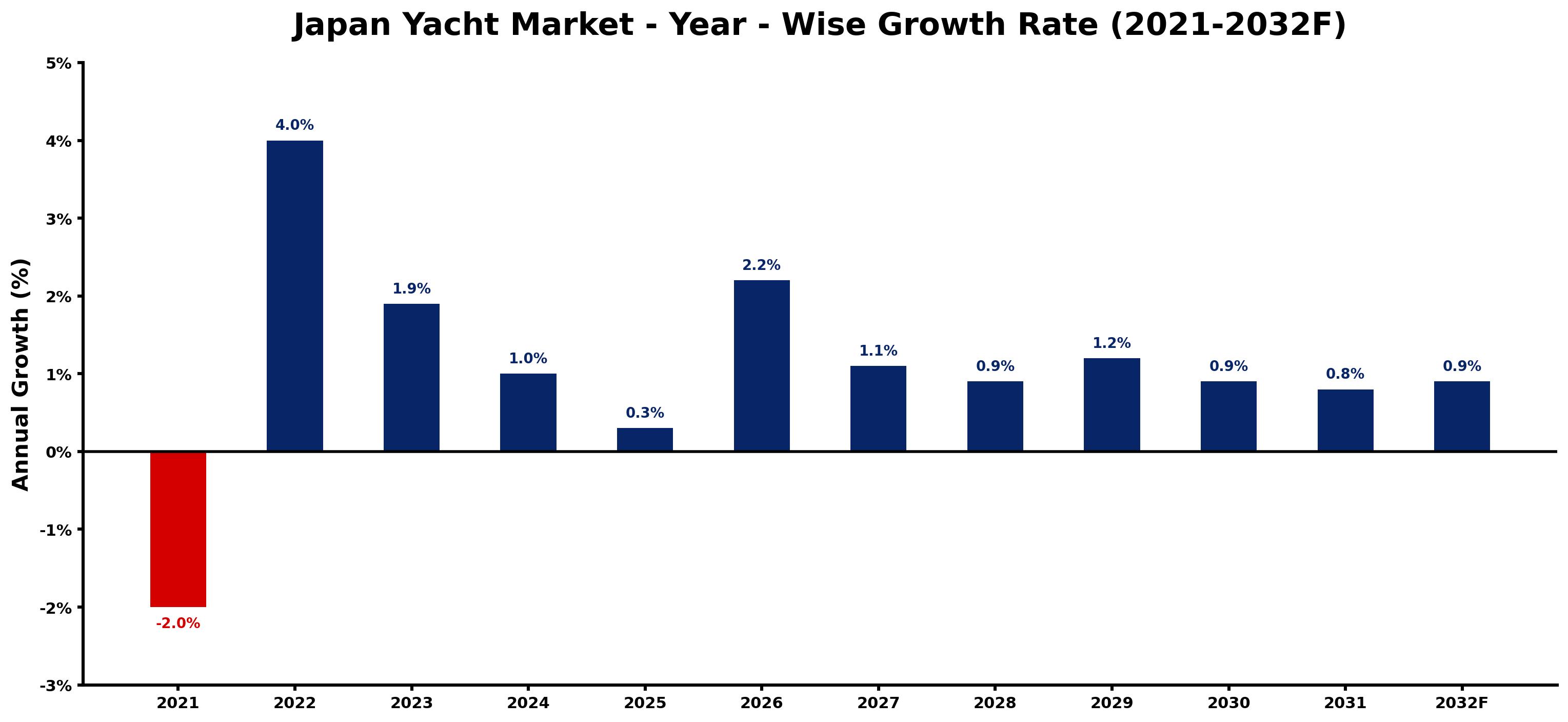
The table below presents the year‑wise growth rates along with the key drivers influencing the market
| Year | Growth Rate | Major Drivers |
| 2021 | -2.0% | Growing urbanization and commercial development |
| 2022 | 4.0% | Rapid growth in telecom and data center sectors |
| 2023 | 1.9% | Growing renewable energy integration projects |
| 2024 | 1.0% | Increasing adoption of advanced technologies |
| 2025 | 0.3% | Government infrastructure modernization initiatives |
| 2026 | 2.2% | Expansion of commercial construction activities |
| 2027 | 1.1% | Expansion of commercial construction activities |
| 2028 | 0.9% | Government infrastructure modernization initiatives |
| 2029 | 1.2% | Growing renewable energy integration projects |
| 2030 | 0.9% | Increasing industrial automation investments |
| 2031 | 0.8% | Increasing industrial automation investments |
| 2032 | 0.9% | Rising electricity demand across industries |
Note - Market size estimations and growth projections presented in this report are based on 6Wresearch's advanced forecasting approach, validated with industry datasets as of June 2026.
Japan Yacht Market Synopsis
The Japan Yacht Market is experiencing a renaissance, driven by a burgeoning interest in recreational boating among the wealthy. The allure of exclusive yacht charters and personalized services has captured the attention of affluent individuals eager to embrace luxury in their leisure pursuits.
Additionally, Japan's picturesque coastlines and rich maritime heritage are attractive to domestic and international tourists alike. With an emphasis on quality craftsmanship and sustainable practices, the market is evolving to meet sophisticated consumer expectations for both yacht ownership and charter experiences.
Japan Yacht Market Key Takeaways
- The market is bolstered by increasing interest in luxury yachting and marine tourism.
- Customization options are becoming essential, catering to individual preferences of yacht owners.
- Eco-friendly practices are gaining traction, aligning with global sustainability trends.
- Government policies are actively promoting maritime leisure and infrastructure development.
- Investment opportunities abound in yacht sales, management, and marina development.
Evaluation of Restraints in Japan Yacht Market
Despite its potential, the Japan Yacht Market faces notable constraints. The high costs associated with yacht ownership deter broader participation, limiting the market to a niche segment. Moreover, a scarcity of marina facilities and strict regulatory frameworks complicate the sailing experience. Cultural perceptions of yachting as an elite pastime further restrict mainstream adoption, leading to a seasonal market that is vulnerable to natural disruptions, such as typhoons. These factors collectively contribute to a constrained growth environment.
Japan Yacht Market Trends
The market is witnessing significant trends, particularly the rising demand for high-end yacht charters. Consumers are seeking unique experiences that offer exclusivity and a tailored touch. Additionally, as environmental consciousness grows, there is a shift towards eco-friendly designs and operations within the yachting sector. Furthermore, advancements in technology are enhancing the customization options available to buyers, allowing for bespoke modifications that meet individual tastes and preferences.
Japan Yacht Market Opportunities
The Japan Yacht Market offers a wealth of investment opportunities, primarily fueled by the affluent demographic eager for luxurious experiences. Entrepreneurs and investors can capitalize on the demand for yacht sales, charters, and management services. Developing infrastructure, such as marinas and docking facilities, will also be crucial to accommodating the expected influx of yachting enthusiasts. Moreover, partnering with local manufacturers to deliver tailored services can open new avenues for success within this evolving market.
Government Initiatives in the Japan Yacht Market
The Japanese government is proactively fostering the yacht market through various initiatives. Policies such as tax incentives for yacht purchasers and infrastructure investments aimed at enhancing marina facilities play pivotal roles. Moreover, deregulation efforts are simplifying yacht registration processes, encouraging increased participation in the yachting sector. The government's commitment to promoting marine tourism further aligns with its objectives to boost the yacht industry, showcasing Japan as an appealing destination for maritime leisure activities.
Future Insights of the Japan Yacht Market
Looking ahead to 2026-2032, the Japan Yacht Market is poised for steady expansion. The combination of rising disposable incomes and the growing inclination toward experiential travel are expected to catalyze demand for luxury yachting. Continued government support and improved infrastructure will further bolster this growth, positioning Japan as a competitive player in the global yachting landscape. With innovative designs and a focus on sustainability, local manufacturers are well-placed to meet evolving consumer expectations, ensuring a bright future for the sector.
Japan Yacht Market Latest Developments (May 2025 - June 2026)
Recent developments in the Japan Yacht Market indicate a strong push towards enhancing the overall consumer experience. Industry players are increasingly investing in eco-friendly yacht designs and maintenance practices, responding to both consumer preferences and regulatory expectations. Additionally, collaborative efforts between manufacturers and service providers are gaining traction, creating more customized offerings for consumers. These initiatives aim not only to enhance customer satisfaction but also to position Japan as a premier destination for luxury yachting experiences.
Japan Yacht Market - Key Attractiveness of the Report
- 10 Years of Market Numbers
- Historical Data Starting from 2022 to 2025
- Base Year: 2025
- Forecast Data until 2032
- Key Performance Indicators Impacting the Market
- Major Upcoming Developments and Projects
Key Highlights of the Report:
- Japan Yacht Market Outlook
- Market Size of Japan Yacht Market, 2025
- Forecast of Japan Yacht Market, 2032
- Historical Data and Forecast of Japan Yacht Revenues & Volume for the Period 2022-2032F
- Japan Yacht Market Trend Evolution
- Japan Yacht Market Drivers and Challenges
- Japan Yacht Price Trends
- Japan Yacht Porter's Five Forces
- Japan Yacht Industry Life Cycle
- Historical Data and Forecast of Japan Yacht Market Revenues & Volume By Types for the Period 2022-2032F
- Historical Data and Forecast of Japan Yacht Market Revenues & Volume By Super yacht for the Period 2022-2032F
- Historical Data and Forecast of Japan Yacht Market Revenues & Volume By Flybridge yacht for the Period 2022-2032F
- Historical Data and Forecast of Japan Yacht Market Revenues & Volume By Sport yacht for the Period 2022-2032F
- Historical Data and Forecast of Japan Yacht Market Revenues & Volume By Long range yacht for the Period 2022-2032F
- Historical Data and Forecast of Japan Yacht Market Revenues & Volume By Others for the Period 2022-2032F
- Historical Data and Forecast of Japan Yacht Market Revenues & Volume By Length for the Period 2022-2032F
- Historical Data and Forecast of Japan Yacht Market Revenues & Volume By Up to 20 ft for the Period 2022-2032F
- Historical Data and Forecast of Japan Yacht Market Revenues & Volume By 20 to 50 ft for the Period 2022-2032F
- Historical Data and Forecast of Japan Yacht Market Revenues & Volume By Above 50 ft for the Period 2022-2032F
- Japan Yacht Import Export Trade Statistics
- Market Opportunity Assessment By Types
- Market Opportunity Assessment By Length
- Japan Yacht Top Companies Market Share
- Japan Yacht Competitive Benchmarking By Technical and Operational Parameters
- Japan Yacht Company Profiles
- Japan Yacht Key Strategic Recommendations






































