Kazakhstan Fitness Equipment Market: Import Trend Analysis
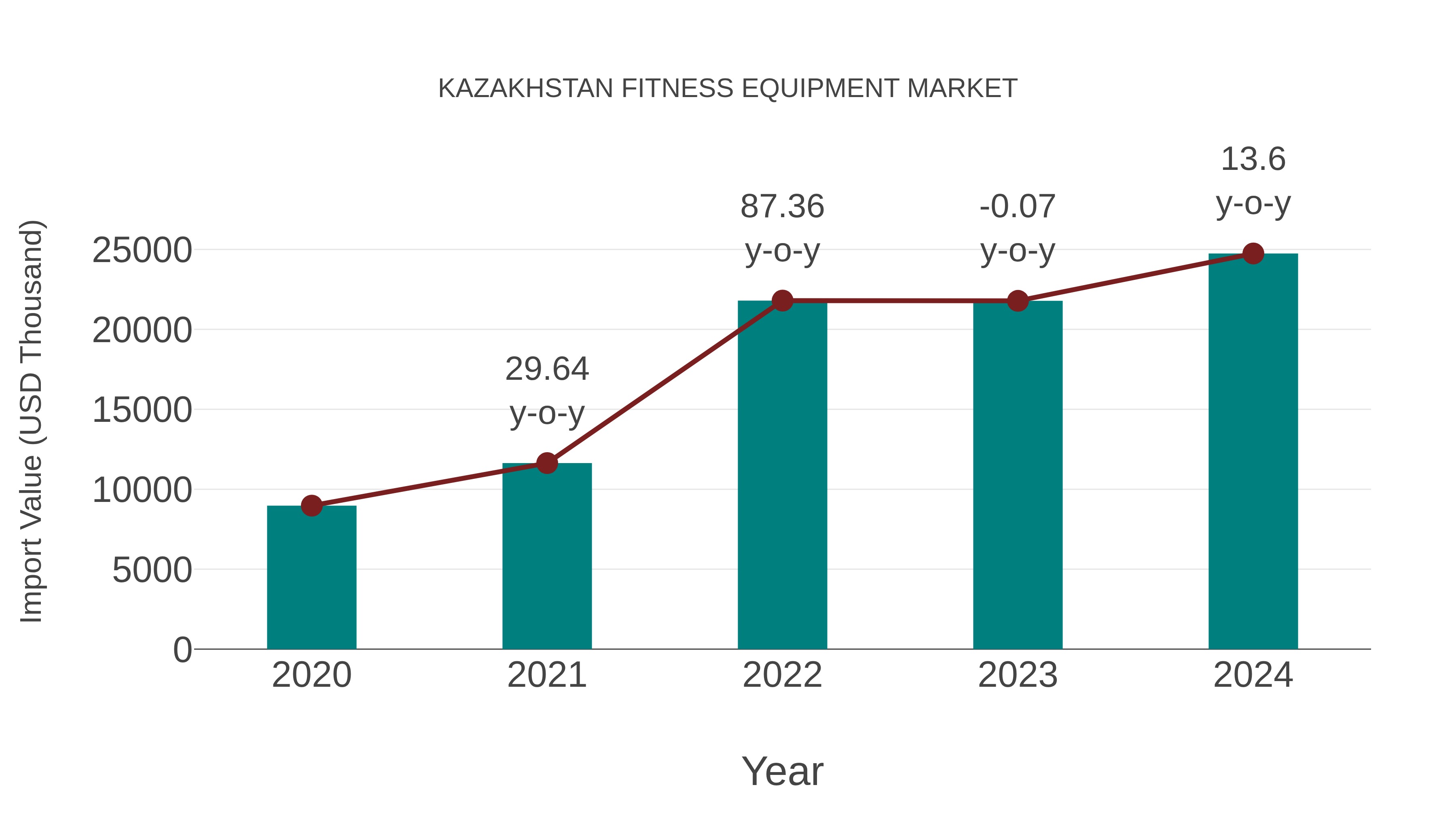
In the Kazakhstan fitness equipment market, the import trend showed a notable growth rate of 13.6% from 2023 to 2024, with a compound annual growth rate (CAGR) of 28.86% for the period of 2020-2024. This surge in imports could be attributed to an increasing demand for fitness equipment driven by a growing health-conscious population and a shift towards a more active lifestyle.
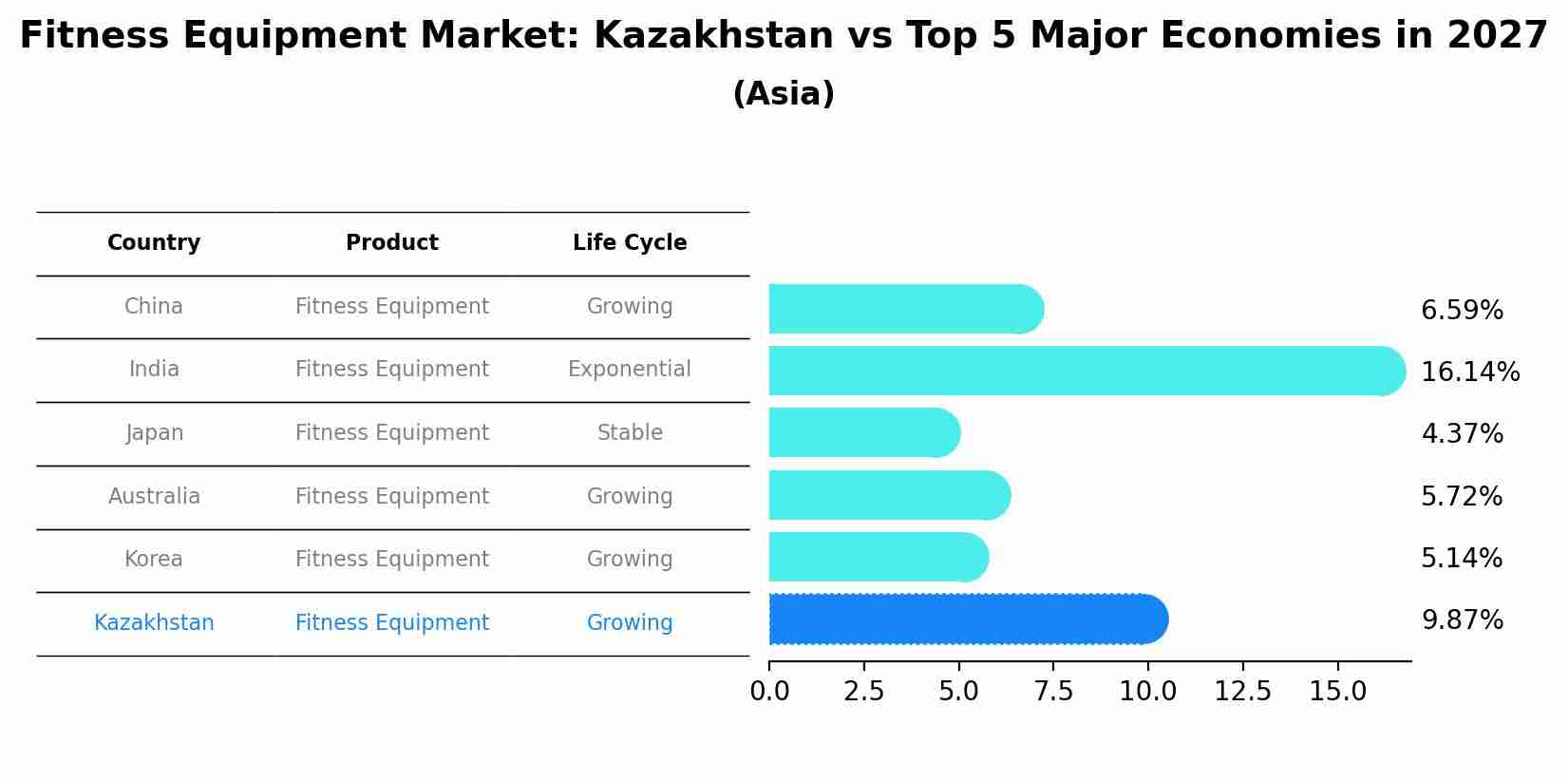
Fitness Equipment Market: Kazakhstan vs Top 5 Major Economies in 2027 (Asia)
The Fitness Equipment market in Kazakhstan is projected to grow at a growing growth rate of 9.87% by 2027, highlighting the country's increasing focus on advanced technologies within the Asia region, where China holds the dominant position, followed closely by India, Japan, Australia and South Korea, shaping overall regional demand.
Kazakhstan Fitness Equipment Market Synopsis
The fitness equipment market in Kazakhstan is expected to grow at a CAGR of 5.5% during the forecast period 2020-2026. The growing trend of physical activities and sports among individuals has significantly driven the demand for fitness accessories, thus propelling the growth of this market in Kazakhstan over the past few years. Moreover, increasing awareness about health benefits associated with regular exercise along with rising disposable incomes are other major factors fueling its growth in this region
Furthermore, ambitious expansion plans from international brands such as Adidas and Reebok are also contributing to an increase in product availability across retail stores as well as online platforms, thereby driving further demand for these products from consumers. Additionally, several government initiatives promoting healthy lifestyle through sportswear are likely to further enhance industry outlook during projected timeline. However, high cost associated with purchasing branded equipment might impede revenue generation potentials over next couple of years.
Key Highlights of the Report:
- Kazakhstan Fitness Equipment Market Outlook
- Market Size of Kazakhstan Fitness Equipment Market, 2019
- Forecast of Kazakhstan Fitness Equipment Market, 2026
- Historical Data and Forecast of Kazakhstan Fitness Equipment Revenues & Volume for the Period 2016 - 2026
- Kazakhstan Fitness Equipment Market Trend Evolution
- Kazakhstan Fitness Equipment Market Drivers and Challenges
- Kazakhstan Fitness Equipment Price Trends
- Kazakhstan Fitness Equipment Porter's Five Forces
- Kazakhstan Fitness Equipment Industry Life Cycle
- Historical Data and Forecast of Kazakhstan Fitness Equipment Market Revenues & Volume By Type for the Period 2016 - 2026
- Historical Data and Forecast of Kazakhstan Fitness Equipment Market Revenues & Volume By Cardiovascular Training Equipment for the Period 2016 - 2026
- Historical Data and Forecast of Kazakhstan Fitness Equipment Market Revenues & Volume By Strength Training Equipment for the Period 2016 - 2026
- Historical Data and Forecast of Kazakhstan Fitness Equipment Market Revenues & Volume By Other Equipment for the Period 2016 - 2026
- Historical Data and Forecast of Kazakhstan Fitness Equipment Market Revenues & Volume By End-users for the Period 2016 - 2026
- Historical Data and Forecast of Kazakhstan Fitness Equipment Market Revenues & Volume By Home consumer for the Period 2016 - 2026
- Historical Data and Forecast of Kazakhstan Fitness Equipment Market Revenues & Volume By Health club/gym for the Period 2016 - 2026
- Historical Data and Forecast of Kazakhstan Fitness Equipment Market Revenues & Volume By Other commercial user for the Period 2016 - 2026
- Kazakhstan Fitness Equipment Import Export Trade Statistics
- Market Opportunity Assessment By Type
- Market Opportunity Assessment By End-users
- Kazakhstan Fitness Equipment Top Companies Market Share
- Kazakhstan Fitness Equipment Competitive Benchmarking By Technical and Operational Parameters
- Kazakhstan Fitness Equipment Company Profiles
- Kazakhstan Fitness Equipment Key Strategic Recommendations






































