Kazakhstan Octopus Market: Import Trend Analysis
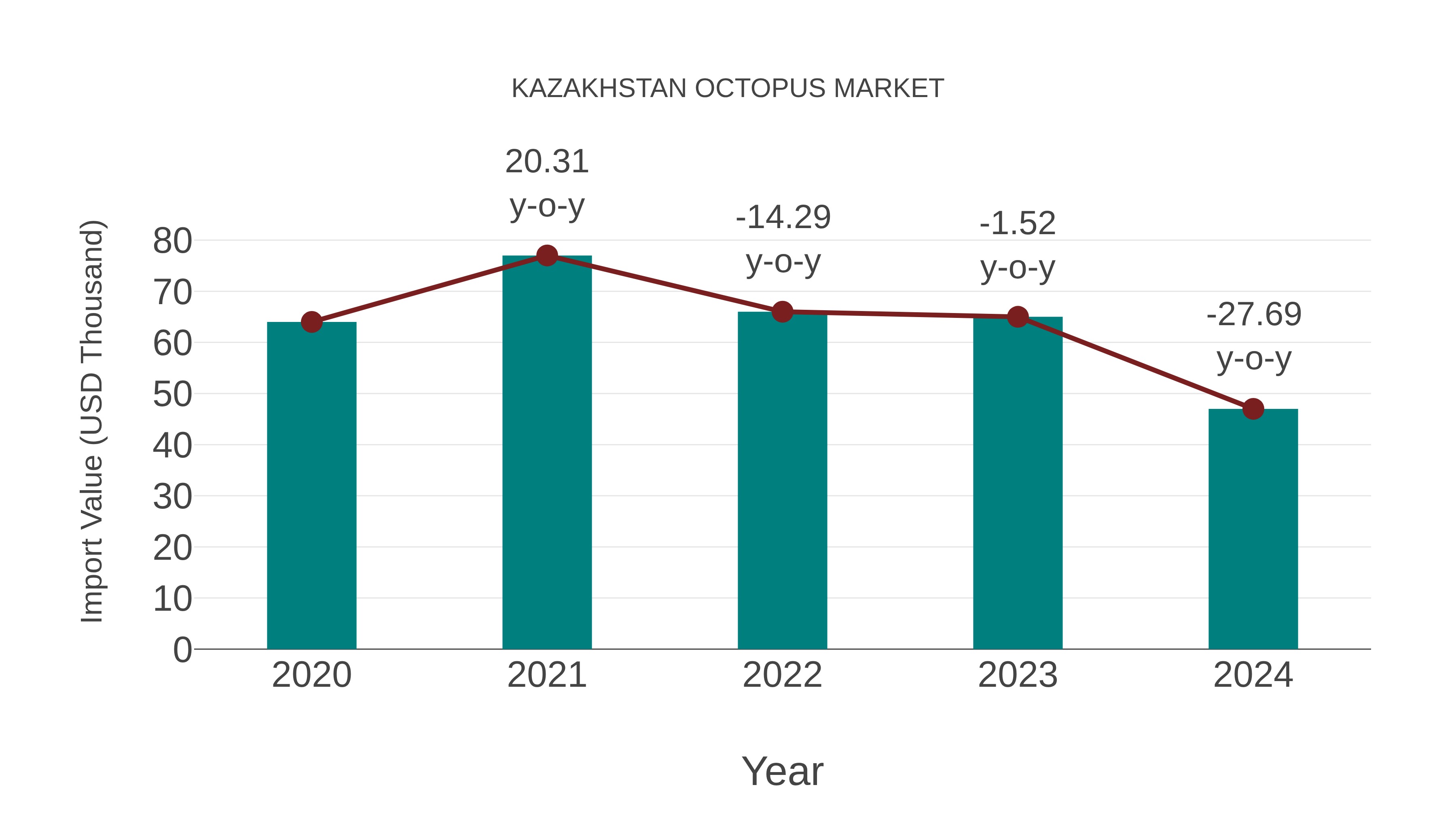
In the Kazakhstan octopus market, the import trend experienced a notable decline from 2023 to 2024, with a growth rate of -27.69%. The compound annual growth rate (CAGR) for imports over the period 2020-2024 stood at -7.43%. This negative import momentum can be attributed to shifting consumer preferences or changes in trade policies impacting market stability.
Octopus Market: Kazakhstan vs Top 5 Major Economies in 2027 (Asia)
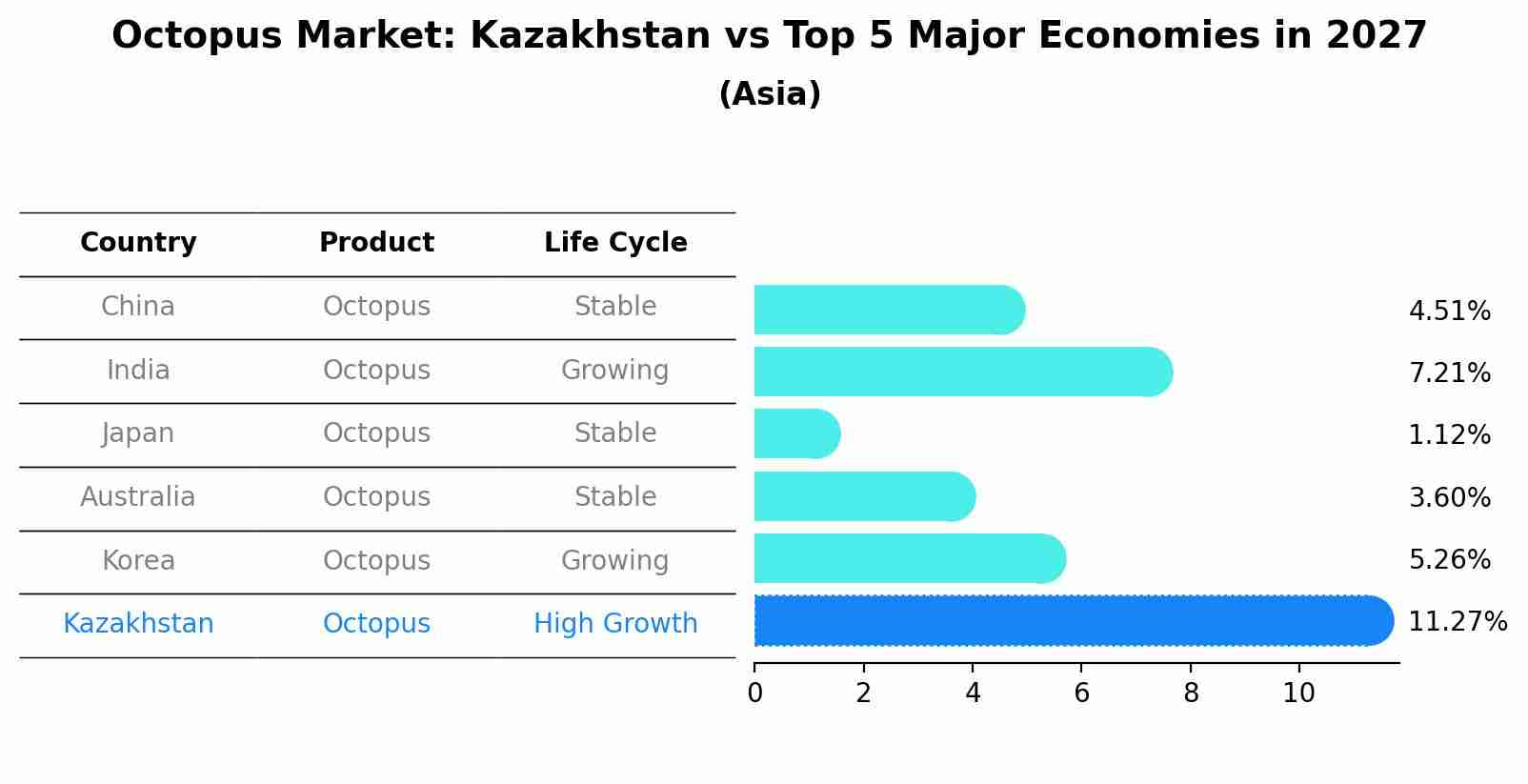
By 2027, Kazakhstan's Octopus market is forecasted to achieve a high growth rate of 11.27%, with China leading the Asia region, followed by India, Japan, Australia and South Korea.
Kazakhstan Octopus Market Synopsis
The Kazakhstan octopus market is a niche segment within the country`s seafood industry, primarily driven by the growing demand for exotic and high-quality seafood products. While the consumption of octopus in Kazakhstan is not as prevalent as in some other countries, there is a developing trend among consumers towards trying new and diverse seafood options. The market is characterized by a limited supply of fresh octopus, which is mainly imported from other countries such as Spain, Japan, and South Korea. Local seafood restaurants and specialty stores are the primary distribution channels for octopus products, with some online retailers also catering to this niche market. As the overall demand for premium seafood products continues to rise in Kazakhstan, the octopus market presents opportunities for suppliers and retailers to capitalize on the growing interest in unique and exotic culinary experiences.
Kazakhstan Octopus Market Trends
The Kazakhstan octopus market is experiencing a growing demand due to the rising popularity of seafood consumption among the country`s population. Consumers are increasingly seeking unique and exotic culinary experiences, with octopus being perceived as a delicacy. In addition, the influence of global food trends and the expanding restaurant industry in Kazakhstan are driving the demand for octopus dishes. As a result, there is a growing interest in importing octopus from other countries to meet the market demand. Sustainability and quality are also becoming important factors for consumers, leading to a focus on responsible sourcing practices among seafood suppliers. Overall, the Kazakhstan octopus market is poised for further growth and diversification in response to evolving consumer preferences and market dynamics.
Kazakhstan Octopus Market Challenges
In the Kazakhstan Octopus Market, several challenges are faced. One prominent issue is the limited availability of fresh octopus due to the country`s geographical location, as octopus is predominantly found in coastal regions. This results in a heavy reliance on imported frozen octopus, which affects the quality and taste of the product. Additionally, fluctuations in international seafood prices and import regulations pose challenges for businesses operating in the octopus market in Kazakhstan. Lack of consumer awareness and acceptance of octopus as a culinary option also hinders market growth. Furthermore, issues related to sustainability and overfishing in octopus fisheries globally can impact the supply chain and pricing in the Kazakhstan market. Addressing these challenges will be crucial for the sustainable growth and development of the octopus market in Kazakhstan.
Kazakhstan Octopus Market Investment Opportunities
The Kazakhstan Octopus Market presents an emerging opportunity for investors due to the increasing demand for seafood in the region. With Kazakhstan being a landlocked country, the availability of fresh octopus is limited, creating potential for investments in aquaculture and seafood processing facilities. Additionally, the growing trend of culinary diversity and the rising popularity of seafood consumption among Kazakh consumers further drive the market potential. Investors can explore partnerships with local aquaculture companies, establish seafood import-export businesses, or even consider setting up octopus farming operations in the country. However, it is crucial to conduct thorough market research, understand regulatory requirements, and assess the infrastructure and supply chain logistics before entering this niche market segment.
Jordan Agar Market Government Policies
The Kazakhstan government has implemented policies to regulate and promote sustainable practices in the Octopus market. These policies include quotas on octopus fishing to prevent overexploitation of the species, licensing requirements for fishermen to ensure compliance with regulations, and monitoring programs to track population levels. Additionally, there are restrictions on the use of certain fishing gear that may harm octopus populations, as well as penalties for illegal fishing activities. The government also supports research and conservation efforts to protect octopus habitats and promote the long-term viability of the market. Overall, these policies aim to balance the economic benefits of the octopus market with environmental conservation goals to ensure the continued health of Kazakhstan`s octopus population.
Kazakhstan Octopus Market Future Outlook
The Kazakhstan octopus market is expected to witness moderate growth in the coming years, driven by increasing consumer interest in exotic seafood options and the growing popularity of international cuisines in the region. Factors such as rising disposable incomes, changing dietary preferences, and the influence of global food trends are likely to contribute to the expanding demand for octopus in Kazakhstan. Additionally, improvements in supply chain infrastructure and distribution networks are expected to enhance the availability of octopus products in the market, further fueling growth. However, challenges such as sustainability concerns related to octopus fishing practices and fluctuations in international trade dynamics may pose obstacles to the market`s development. Overall, with strategic marketing efforts and a focus on quality and sustainability, the Kazakhstan octopus market is poised for steady expansion in the foreseeable future.
Key Highlights of the Report:
- Kazakhstan Octopus Market Outlook
- Market Size of Kazakhstan Octopus Market, 2025
- Forecast of Kazakhstan Octopus Market, 2032
- Historical Data and Forecast of Kazakhstan Octopus Revenues & Volume for the Period 2022 - 2032F
- Kazakhstan Octopus Market Trend Evolution
- Kazakhstan Octopus Market Drivers and Challenges
- Kazakhstan Octopus Price Trends
- Kazakhstan Octopus Porter's Five Forces
- Kazakhstan Octopus Industry Life Cycle
- Historical Data and Forecast of Kazakhstan Octopus Market Revenues & Volume By Product Type for the Period 2022 - 2032F
- Historical Data and Forecast of Kazakhstan Octopus Market Revenues & Volume By Fresh for the Period 2022 - 2032F
- Historical Data and Forecast of Kazakhstan Octopus Market Revenues & Volume By Processed for the Period 2022 - 2032F
- Historical Data and Forecast of Kazakhstan Octopus Market Revenues & Volume By Application for the Period 2022 - 2032F
- Historical Data and Forecast of Kazakhstan Octopus Market Revenues & Volume By Commercial for the Period 2022 - 2032F
- Historical Data and Forecast of Kazakhstan Octopus Market Revenues & Volume By Food and Beverage for the Period 2022 - 2032F
- Historical Data and Forecast of Kazakhstan Octopus Market Revenues & Volume By Distribution Channel for the Period 2022 - 2032F
- Historical Data and Forecast of Kazakhstan Octopus Market Revenues & Volume By Direct for the Period 2022 - 2032F
- Historical Data and Forecast of Kazakhstan Octopus Market Revenues & Volume By Indirect for the Period 2022 - 2032F
- Kazakhstan Octopus Import Export Trade Statistics
- Market Opportunity Assessment By Product Type
- Market Opportunity Assessment By Application
- Market Opportunity Assessment By Distribution Channel
- Kazakhstan Octopus Top Companies Market Share
- Kazakhstan Octopus Competitive Benchmarking By Technical and Operational Parameters
- Kazakhstan Octopus Company Profiles
- Kazakhstan Octopus Key Strategic Recommendations






































