Kazakhstan Small Wind Turbine Market: Import Trend Analysis
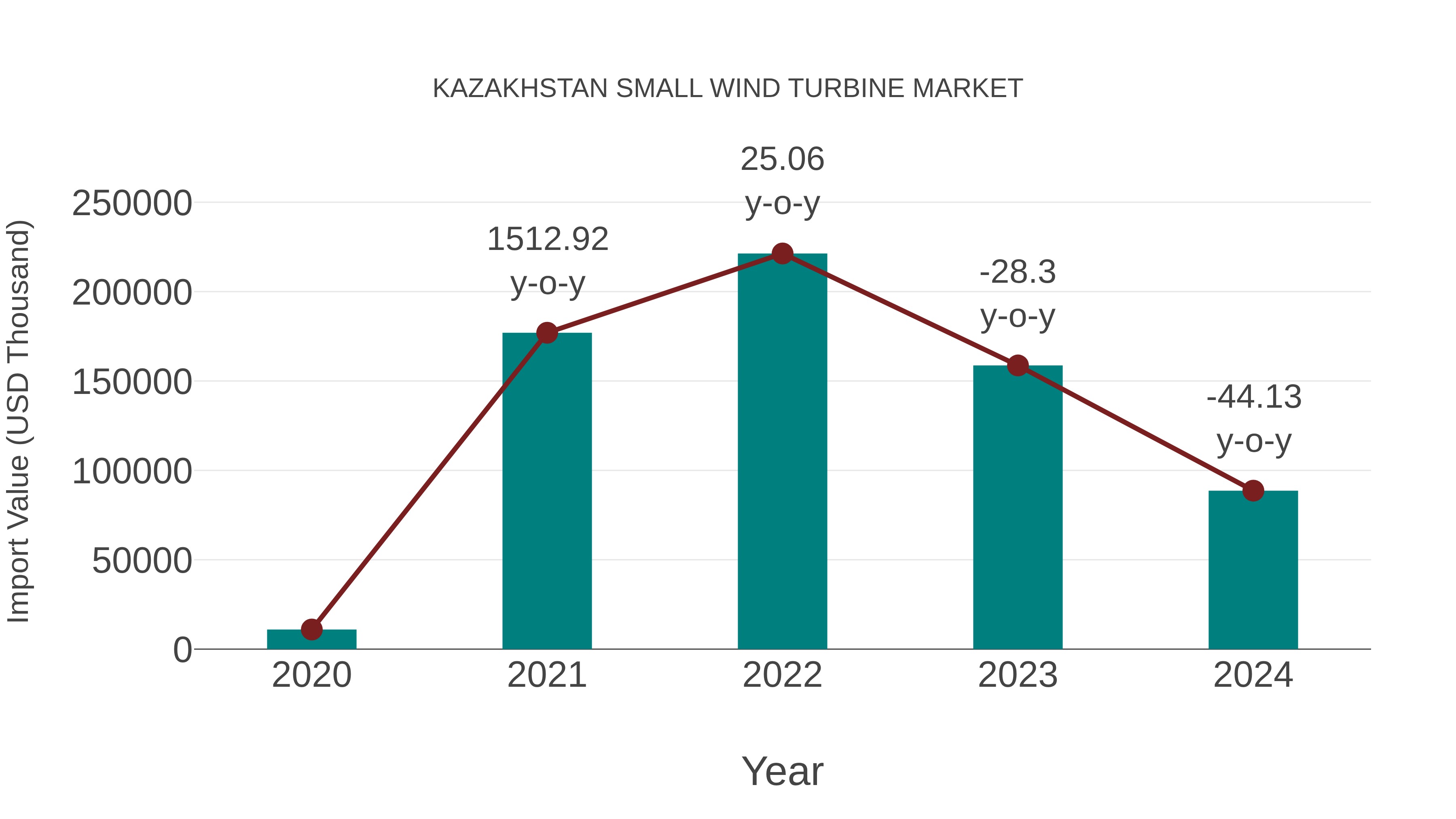
In the Kazakhstan small wind turbine market, the import trend experienced a notable decline from 2023 to 2024, with a growth rate of -44.13%. However, the compound annual growth rate (CAGR) for the period 2020-2024 stood at a robust 68.6%. This drastic change in import momentum could be attributed to shifts in demand patterns or alterations in trade policies impacting market stability.
Kazakhstan Small Wind Turbine Market Overview
The Kazakhstan Small Wind Turbine Market is currently witnessing steady growth attributed to increasing awareness about renewable energy sources and government initiatives promoting clean energy production. The market is driven by factors such as the need for energy diversification, rising energy demand, and favorable government policies supporting renewable energy projects. Small wind turbines are gaining popularity among residential, commercial, and industrial sectors in Kazakhstan due to their effectiveness in harnessing wind energy for electricity generation. Key players in the market are focusing on technological advancements to enhance turbine efficiency and reduce maintenance costs, further propelling market growth. With the country`s vast wind energy potential and the government`s commitment to reducing greenhouse gas emissions, the Kazakhstan Small Wind Turbine Market is poised for continued expansion in the coming years.
Kazakhstan Small Wind Turbine Market Trends
The Kazakhstan Small Wind Turbine Market is experiencing a growing interest in renewable energy sources, leading to an increasing demand for small wind turbines. One notable trend is the focus on off-grid applications in remote areas where access to traditional power sources is limited. This trend is driven by the need for energy independence and sustainability. Additionally, advancements in technology have made small wind turbines more efficient, reliable, and cost-effective, making them an attractive option for residential, agricultural, and commercial applications. Government support through incentives and policies promoting renewable energy development is also contributing to the growth of the small wind turbine market in Kazakhstan. Overall, the market is expected to continue expanding as awareness of the benefits of small wind turbines increases and the country seeks to diversify its energy sources.
Kazakhstan Small Wind Turbine Market Challenges
In the Kazakhstan Small Wind Turbine Market, some key challenges are the high initial investment costs associated with setting up wind turbine systems, lack of awareness and understanding among potential buyers about the benefits and feasibility of small wind turbines, limited government support or incentives for renewable energy projects, and the relatively underdeveloped infrastructure for wind energy generation in the country. Additionally, the intermittent nature of wind resources poses a challenge for ensuring consistent energy production. Addressing these challenges would require increased education and promotion efforts, government policies to support renewable energy initiatives, and investments in improving grid integration and storage solutions for small wind turbine systems in Kazakhstan.
Kazakhstan Small Wind Turbine Market Investment Opportunities
The Kazakhstan Small Wind Turbine Market presents promising investment opportunities due to the country`s efforts to diversify its energy sources and reduce reliance on fossil fuels. With a growing focus on renewable energy, small wind turbines are gaining popularity as a decentralized and sustainable energy solution. Investors can capitalize on the increasing demand for small wind turbines in remote areas or off-grid locations where traditional power sources are limited. Additionally, government incentives and support for renewable energy projects further enhance the investment potential in this market. By entering the Kazakhstan Small Wind Turbine Market, investors can contribute to the country`s sustainable development goals while potentially realizing profitable returns in the long term.
Kazakhstan Small Wind Turbine Market Government Policy
In Kazakhstan, government policies related to the small wind turbine market aim to promote renewable energy sources and reduce reliance on traditional fossil fuels. The government offers incentives such as tax breaks, subsidies, and feed-in tariffs to encourage the adoption of small wind turbines for electricity generation. Additionally, there are regulations in place to streamline the permitting process for small wind turbine installations and ensure compliance with safety and environmental standards. The government`s long-term energy strategy includes targets for increasing the share of renewable energy in the overall energy mix, which creates a favorable environment for the growth of the small wind turbine market in Kazakhstan.
Kazakhstan Small Wind Turbine Market Future Outlook
The Kazakhstan Small Wind Turbine Market is expected to see steady growth in the coming years due to increasing awareness about renewable energy sources and the country`s commitment to reducing carbon emissions. Government initiatives and incentives to promote the use of small wind turbines for decentralized power generation are likely to drive market growth. Additionally, the technological advancements in small wind turbine design and efficiency improvements are making these systems more cost-effective and attractive to consumers and businesses alike. With the rising demand for clean energy solutions and the favorable regulatory environment, the Kazakhstan Small Wind Turbine Market is poised for expansion, offering opportunities for both domestic and international players in the industry.
Key Highlights of the Report:
- Kazakhstan Small Wind Turbine Market Outlook
- Market Size of Kazakhstan Small Wind Turbine Market, 2025
- Forecast of Kazakhstan Small Wind Turbine Market, 2032
- Historical Data and Forecast of Kazakhstan Small Wind Turbine Revenues & Volume for the Period 2022 - 2032F
- Kazakhstan Small Wind Turbine Market Trend Evolution
- Kazakhstan Small Wind Turbine Market Drivers and Challenges
- Kazakhstan Small Wind Turbine Price Trends
- Kazakhstan Small Wind Turbine Porter's Five Forces
- Kazakhstan Small Wind Turbine Industry Life Cycle
- Historical Data and Forecast of Kazakhstan Small Wind Turbine Market Revenues & Volume By Axis Type for the Period 2022 - 2032F
- Historical Data and Forecast of Kazakhstan Small Wind Turbine Market Revenues & Volume By Horizontal Axis Wind Turbine for the Period 2022 - 2032F
- Historical Data and Forecast of Kazakhstan Small Wind Turbine Market Revenues & Volume By Vertical Axis Wind Turbine for the Period 2022 - 2032F
- Historical Data and Forecast of Kazakhstan Small Wind Turbine Market Revenues & Volume By Application for the Period 2022 - 2032F
- Historical Data and Forecast of Kazakhstan Small Wind Turbine Market Revenues & Volume By On-grid for the Period 2022 - 2032F
- Historical Data and Forecast of Kazakhstan Small Wind Turbine Market Revenues & Volume By Off-grid for the Period 2022 - 2032F
- Kazakhstan Small Wind Turbine Import Export Trade Statistics
- Market Opportunity Assessment By Axis Type
- Market Opportunity Assessment By Application
- Kazakhstan Small Wind Turbine Top Companies Market Share
- Kazakhstan Small Wind Turbine Competitive Benchmarking By Technical and Operational Parameters
- Kazakhstan Small Wind Turbine Company Profiles
- Kazakhstan Small Wind Turbine Key Strategic Recommendations






































