Kazakhstan Vetiver Oil Market: Import Trend Analysis
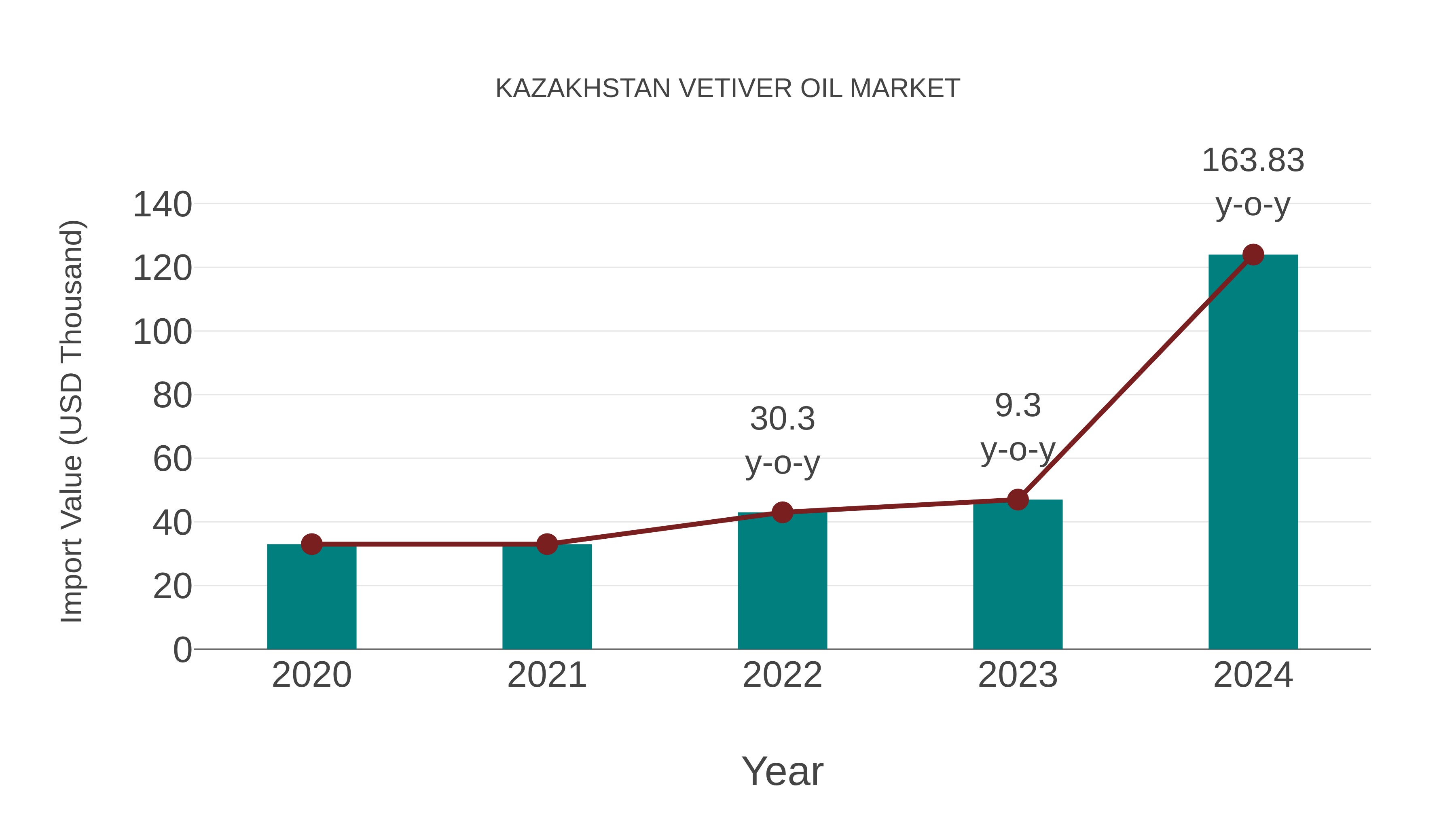
Kazakhstan`s import trend for vetiver oil saw significant growth from 2023 to 2024, with a remarkable increase of 163.83%. The compound annual growth rate (CAGR) for the period 2020-2024 stood at 39.23%. This surge in import momentum can be attributed to a notable shift in demand for vetiver oil products within the market, indicating a strong and stable market for this commodity during the period analyzed.
Kazakhstan Vetiver Oil Market Overview
Vetiver oil, derived from the vetiver plant, is used in various applications, including aromatherapy, perfumery, and skincare. In Kazakhstan, the vetiver oil market is driven by its therapeutic properties and the growing popularity of natural remedies.
Drivers of the market
The vetiver oil market in Kazakhstan is influenced by factors such as the growing demand for natural fragrances, aromatherapy products, and cosmetics derived from botanical sources. Vetiver oil, extracted from the roots of the vetiver grass, is valued for its earthy, woody aroma and therapeutic properties in skincare, perfumery, and wellness applications. As consumers seek eco-friendly and sustainable ingredients in personal care products, the demand for vetiver oil as a natural fragrance and essential oil is increasing, driving market growth.
Challenges of the market
Challenges in the Vetiver Oil market include maintaining sustainable sourcing practices, ensuring product quality and consistency, and differentiating from synthetic substitutes in the fragrance and cosmetics industry.
Government Policy of the market
The Kazakhstan Vetiver Oil Market is guided by agricultural policies that promote the cultivation of vetiver for oil production. Policies support sustainable farming practices and provide subsidies to farmers, aiming to boost local production and export potential of vetiver oil.
Key Highlights of the Report:
- Kazakhstan Vetiver Oil Market Outlook
- Market Size of Kazakhstan Vetiver Oil Market, 2025
- Forecast of Kazakhstan Vetiver Oil Market, 2032
- Historical Data and Forecast of Kazakhstan Vetiver Oil Revenues & Volume for the Period 2022-2032F
- Kazakhstan Vetiver Oil Market Trend Evolution
- Kazakhstan Vetiver Oil Market Drivers and Challenges
- Kazakhstan Vetiver Oil Price Trends
- Kazakhstan Vetiver Oil Porter's Five Forces
- Kazakhstan Vetiver Oil Industry Life Cycle
- Historical Data and Forecast of Kazakhstan Vetiver Oil Market Revenues & Volume By Application for the Period 2022-2032F
- Historical Data and Forecast of Kazakhstan Vetiver Oil Market Revenues & Volume By Medical for the Period 2022-2032F
- Historical Data and Forecast of Kazakhstan Vetiver Oil Market Revenues & Volume By Food & Beverage for the Period 2022-2032F
- Historical Data and Forecast of Kazakhstan Vetiver Oil Market Revenues & Volume By Spa & Relaxation for the Period 2022-2032F
- Kazakhstan Vetiver Oil Import Export Trade Statistics
- Market Opportunity Assessment By Application
- Kazakhstan Vetiver Oil Top Companies Market Share
- Kazakhstan Vetiver Oil Competitive Benchmarking By Technical and Operational Parameters
- Kazakhstan Vetiver Oil Company Profiles
- Kazakhstan Vetiver Oil Key Strategic Recommendations






































