Kazakhstan Watches Market: Import Trend Analysis
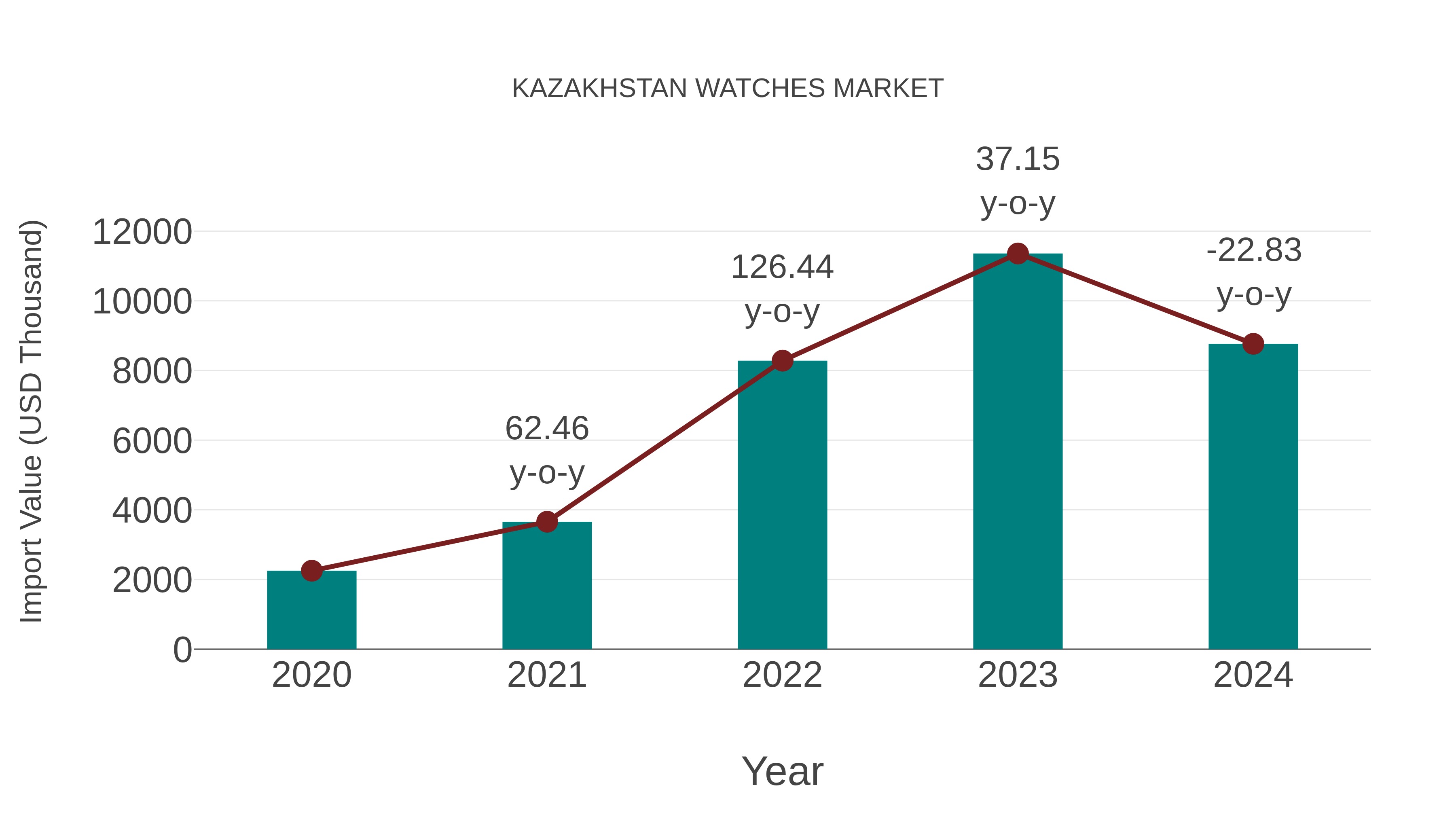
In the Kazakhstan watches market, the import trend experienced a significant decline from 2023 to 2024, with a growth rate of -22.83%. However, the compound annual growth rate (CAGR) for 2020-2024 stood at a robust 40.47%. This decline in import momentum could be attributed to shifting consumer preferences, changes in trade policies, or market saturation, impacting market stability during the period.
Kazakhstan Watches Market Overview
The Kazakhstan Watches Market reflects a blend of traditional craftsmanship and modern design, catering to diverse consumer preferences. With a growing economy and rising disposable incomes, there has been a surge in demand for luxury and premium watches among affluent consumers. Additionally, the proliferation of e-commerce platforms has made luxury timepieces more accessible to a broader audience, further driving market growth. International watch brands are actively expanding their presence in Kazakhstan through strategic partnerships and retail expansions, capitalizing on the country`s burgeoning luxury market.
Drivers of the market
The watches market in Kazakhstan is influenced by factors such as economic development, consumer preferences, and lifestyle trends. With rising disposable incomes and increasing consumer sophistication, there is a growing demand for luxury, fashion, and smartwatches across various segments of the population. Marketing campaigns, brand visibility, and evolving fashion trends play significant roles in driving consumer interest and fueling market growth in Kazakhstan watch industry.
Challenges of the market
The Watches Market in Kazakhstan encounters challenges concerning consumer preferences and market saturation. While watches are considered both fashion accessories and functional timepieces, changing consumer preferences, particularly among younger demographics, pose challenges for traditional watch manufacturers. Competition from smartwatches and wearable technology further complicates the landscape, as consumers seek innovative features and connectivity options. Moreover, economic factors such as disposable income levels and purchasing power influence market demand for luxury and premium watch brands. Adapting to evolving consumer trends and technological advancements will be crucial for sustained growth in the watches market.
Government Policy of the market
Recognizing the significance of the watch industry in both fashion and functionality, the Kazakhstan government has formulated policies to regulate and promote the watches market. This includes enforcing standards for product quality and accuracy, ensuring fair competition among watch manufacturers and retailers, and implementing consumer protection measures related to warranties and counterfeit goods. Additionally, efforts may be made to support domestic watch manufacturing and design capabilities through incentives and industry development programs.
Key Highlights of the Report:
- Kazakhstan Watches Market Outlook
- Market Size of Kazakhstan Watches Market, 2025
- Forecast of Kazakhstan Watches Market, 2032
- Historical Data and Forecast of Kazakhstan Watches Revenues & Volume for the Period 2022-2032F
- Kazakhstan Watches Market Trend Evolution
- Kazakhstan Watches Market Drivers and Challenges
- Kazakhstan Watches Price Trends
- Kazakhstan Watches Porter's Five Forces
- Kazakhstan Watches Industry Life Cycle
- Historical Data and Forecast of Kazakhstan Watches Market Revenues & Volume By Type for the Period 2022-2032F
- Historical Data and Forecast of Kazakhstan Watches Market Revenues & Volume By Smart Watches for the Period 2022-2032F
- Historical Data and Forecast of Kazakhstan Watches Market Revenues & Volume By Luxury Watches for the Period 2022-2032F
- Historical Data and Forecast of Kazakhstan Watches Market Revenues & Volume By Fitness Watches for the Period 2022-2032F
- Historical Data and Forecast of Kazakhstan Watches Market Revenues & Volume By Operations for the Period 2022-2032F
- Historical Data and Forecast of Kazakhstan Watches Market Revenues & Volume By Mechanical for the Period 2022-2032F
- Historical Data and Forecast of Kazakhstan Watches Market Revenues & Volume By Quartz for the Period 2022-2032F
- Historical Data and Forecast of Kazakhstan Watches Market Revenues & Volume By Distribution Channel for the Period 2022-2032F
- Historical Data and Forecast of Kazakhstan Watches Market Revenues & Volume By Hypermarket/ Supermarket for the Period 2022-2032F
- Historical Data and Forecast of Kazakhstan Watches Market Revenues & Volume By Convenience Stores for the Period 2022-2032F
- Historical Data and Forecast of Kazakhstan Watches Market Revenues & Volume By Online for the Period 2022-2032F
- Historical Data and Forecast of Kazakhstan Watches Market Revenues & Volume By End-Users for the Period 2022-2032F
- Historical Data and Forecast of Kazakhstan Watches Market Revenues & Volume By Women for the Period 2022-2032F
- Historical Data and Forecast of Kazakhstan Watches Market Revenues & Volume By Unisex for the Period 2022-2032F
- Kazakhstan Watches Import Export Trade Statistics
- Market Opportunity Assessment By Type
- Market Opportunity Assessment By Operations
- Market Opportunity Assessment By Distribution Channel
- Market Opportunity Assessment By End-Users
- Kazakhstan Watches Top Companies Market Share
- Kazakhstan Watches Competitive Benchmarking By Technical and Operational Parameters
- Kazakhstan Watches Company Profiles
- Kazakhstan Watches Key Strategic Recommendations






































