Kenya Bathroom Linen Market Size, Share & Growth Rate
The Kenya Bathroom Linen Market was estimated at USD 1189 Million in 2025 and is projected to reach USD 1724 Million by 2032, growing at a CAGR of 5.5% from 2026 to 2032. This growth trajectory is largely fueled by increasing urbanization, which drives demand for stylish and functional bathroom products, as well as rising disposable incomes that allow consumers to invest in higher-quality linens. The growing awareness of hygiene and personal grooming also plays a vital role in enhancing market potential.
Kenya Bathroom Linen Market Year-wise Growth Rate and Key Drivers
This graph highlights how the Kenya Bathroom Linen Market has steadily grown over the years, supported by major growth factors.
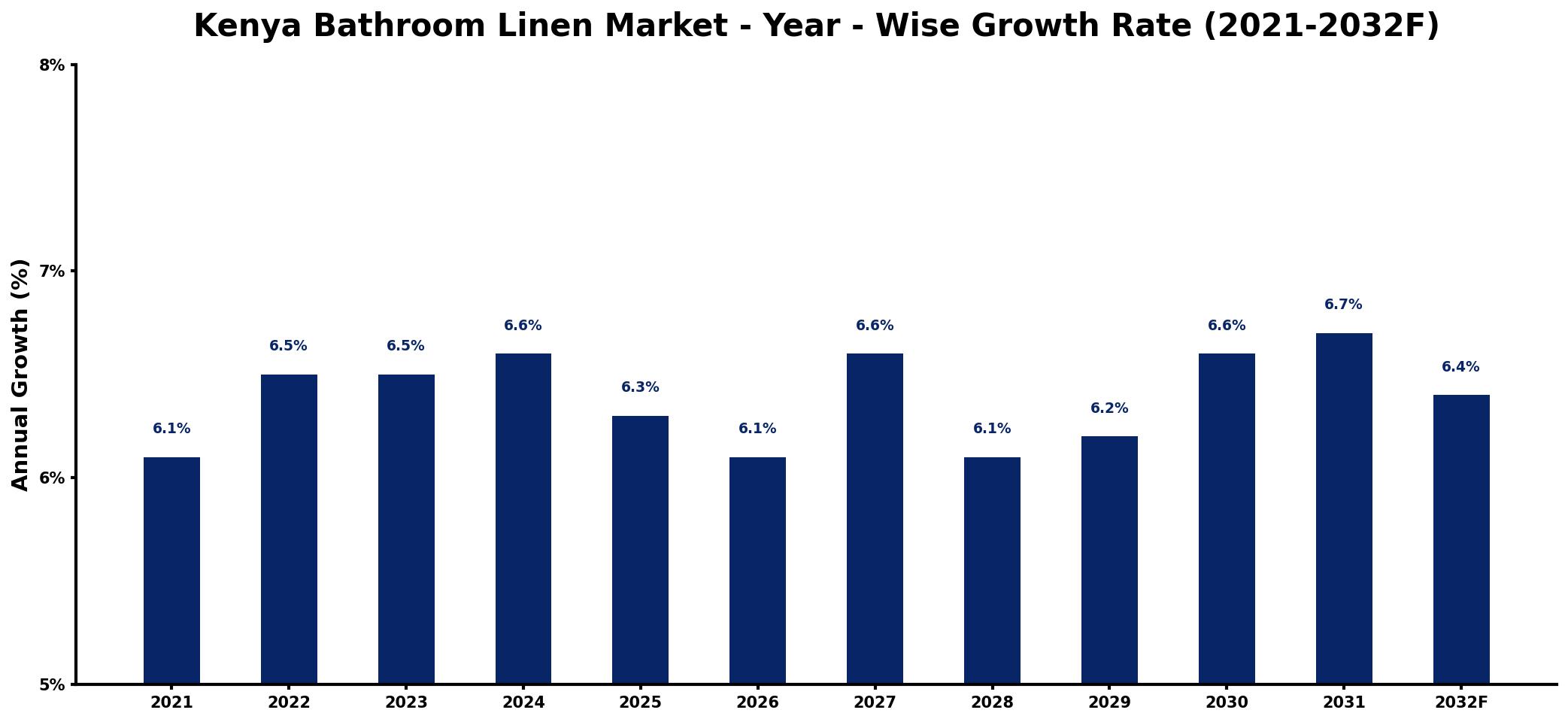
The table below presents the year‑wise growth rates along with the key drivers influencing the market
| Year | Growth Rate | Major Drivers |
| 2021 | 6.1% | Rise in home renovation projects |
| 2022 | 6.5% | Increased disposable income levels |
| 2023 | 6.5% | Growth in hospitality sector investments |
| 2024 | 6.6% | Expansion of e-commerce platforms |
| 2025 | 6.3% | Surge in tourism activities |
| 2026 | 6.1% | Higher consumer awareness trends |
| 2027 | 6.6% | Development of sustainable materials |
| 2028 | 6.1% | increased overall sector activity |
| 2029 | 6.2% | growing automotive sector requirements |
| 2030 | 6.6% | Investment in luxury accommodations |
| 2031 | 6.7% | growing regional consumption patterns |
| 2032 | 6.4% | Rising demand for home aesthetics |
Note: Market size estimations and growth projections presented in this report are based on 6Wresearch's proprietary forecasting methodology, utilizing the latest available industry data, government publications, and primary research inputs.
Kenya Bathroom Linen Market Synopsis
The Kenya bathroom linen market is currently characterized by a vibrant demand for quality and style. As more consumers seek to enhance their bathroom aesthetics, the market sees a rise in the purchase of premium towels, bathrobes, and accessories that elevate comfort and decor.
With the shift towards eco-friendly products, consumers are increasingly drawn to sustainable options like organic cotton and bamboo linens. This growing preference, paired with the convenience of online shopping, signals a shift in purchasing behaviors, especially in urban areas.
Kenya Bathroom Linen Market Key Takeaways
- Significant growth driven by urbanization and rising disposable incomes.
- Consumers are prioritizing hygiene, comfort, and aesthetic appeal.
- Eco-friendly and sustainable materials are gaining traction among consumers.
- The rise of e-commerce is expanding market access to urban and rural customers.
- Luxury and premium products are becoming increasingly popular in the market.
Evaluation of Restraints in Kenya Bathroom Linen Market
Despite its growth potential, the Kenya Bathroom Linen Market faces several restraints that could impact its trajectory. Intense competition from both local and international brands leads to pricing pressures, making it challenging for manufacturers to maintain profit margins. Additionally, fluctuating raw material costs, such as those for cotton and synthetic fibers, can create uncertainty in production expenses. Another hurdle is the limited consumer awareness and purchasing power in certain regions, which can hinder overall market growth. Furthermore, logistical challenges in reaching rural areas effectively can limit the distribution capabilities of companies.
Kenya Bathroom Linen Market Trends
A noticeable trend in the Kenya Bathroom Linen Market is the rising demand for environmentally sustainable products. Consumers are actively seeking organic cotton towels and bamboo linens, reflecting a broader shift towards eco-conscious living. Moreover, the interest in creating luxury spa-like experiences at home is driving demand for premium-quality linens, including high-thread-count towels and plush bathrobes. The growth of online retail platforms is also reshaping the landscape, as convenience and variety attract a wider customer base.
Kenya Bathroom Linen Market Opportunities
Opportunities abound within the Kenya Bathroom Linen Market for those looking to invest. As home improvement trends continue to rise, there is an increasing appetite for stylish bathroom linens that blend quality with design. Investing in innovative and eco-friendly materials, along with unique product designs, can set a brand apart in this competitive landscape. Furthermore, leveraging the power of e-commerce alongside effective digital marketing strategies can expand reach, particularly in areas previously underserved by traditional retail channels. Collaborating with local artisans to incorporate Kenyan craftsmanship can also enhance market appeal and support local economies.
Government Initiatives in the Kenya Bathroom Linen Market
While the Kenyan government does not have specific policies tailored to the bathroom linen market, it enforces general trade regulations that impact the industry. The Kenya Bureau of Standards (KEBS) ensures quality control by setting standards for textile products, which includes bathroom linens. Compliance with these standards is essential for manufacturers and importers operating in Kenya. Additionally, government policies regarding trade, such as tariffs and import duties, may indirectly affect the availability and pricing of bathroom linen products in the market.
Future Insights of the Kenya Bathroom Linen Market
Looking ahead, the Kenya Bathroom Linen Market is set to experience steady growth through 2026-2032. Increasing urbanization and disposable incomes will continue to drive demand for high-quality, aesthetically appealing products. Consumers are expected to gravitate towards innovative and sustainable options, fostering a competitive environment that encourages manufacturers to diversify their offerings. E-commerce will play an even greater role, enhancing accessibility and potentially attracting a younger demographic that values convenience.
Kenya Bathroom Linen Market Latest Developments (2025 - 2026)
Recent developments in the Kenya Bathroom Linen Market indicate a strong push toward sustainability. Many brands are adopting eco-friendly practices, reflecting changing consumer attitudes. There's also a growing focus on enhancing the online shopping experience, with companies investing in better user interfaces and customer service. Additionally, creative marketing campaigns are emerging, emphasizing the luxury aspects of bathroom linens, which resonate well with middle and upper-income demographics.
Kenya Bathroom Linen Market - Key Attractiveness of the Report
- 10 Years of Market Numbers
- Historical Data Starting from 2022 to 2025
- Base Year: 2025
- Forecast Data until 2032
- Key Performance Indicators Impacting the Market
- Major Upcoming Developments and Projects
Key Highlights of the Report:
- Kenya Bathroom Linen Market Outlook
- Market Size of Kenya Bathroom Linen Market, 2025
- Forecast of Kenya Bathroom Linen Market, 2032
- Historical Data and Forecast of Kenya Bathroom Linen Revenues & Volume for the Period 2022-2032F
- Kenya Bathroom Linen Market Trend Evolution
- Kenya Bathroom Linen Market Drivers and Challenges
- Kenya Bathroom Linen Price Trends
- Kenya Bathroom Linen Porter's Five Forces
- Kenya Bathroom Linen Industry Life Cycle
- Historical Data and Forecast of Kenya Bathroom Linen Market Revenues & Volume By Product for the Period 2022-2032F
- Historical Data and Forecast of Kenya Bathroom Linen Market Revenues & Volume By Bath Towels for the Period 2022-2032F
- Historical Data and Forecast of Kenya Bathroom Linen Market Revenues & Volume By Bathrobes for the Period 2022-2032F
- Historical Data and Forecast of Kenya Bathroom Linen Market Revenues & Volume By Others for the Period 2022-2032F
- Kenya Bathroom Linen Import Export Trade Statistics
- Market Opportunity Assessment By Product
- Kenya Bathroom Linen Top Companies Market Share
- Kenya Bathroom Linen Competitive Benchmarking By Technical and Operational Parameters
- Kenya Bathroom Linen Company Profiles
- Kenya Bathroom Linen Key Strategic Recommendations






































