Nigeria Bathroom Linen Market Top 5 Importing Countries and Market Competition (HHI) Analysis
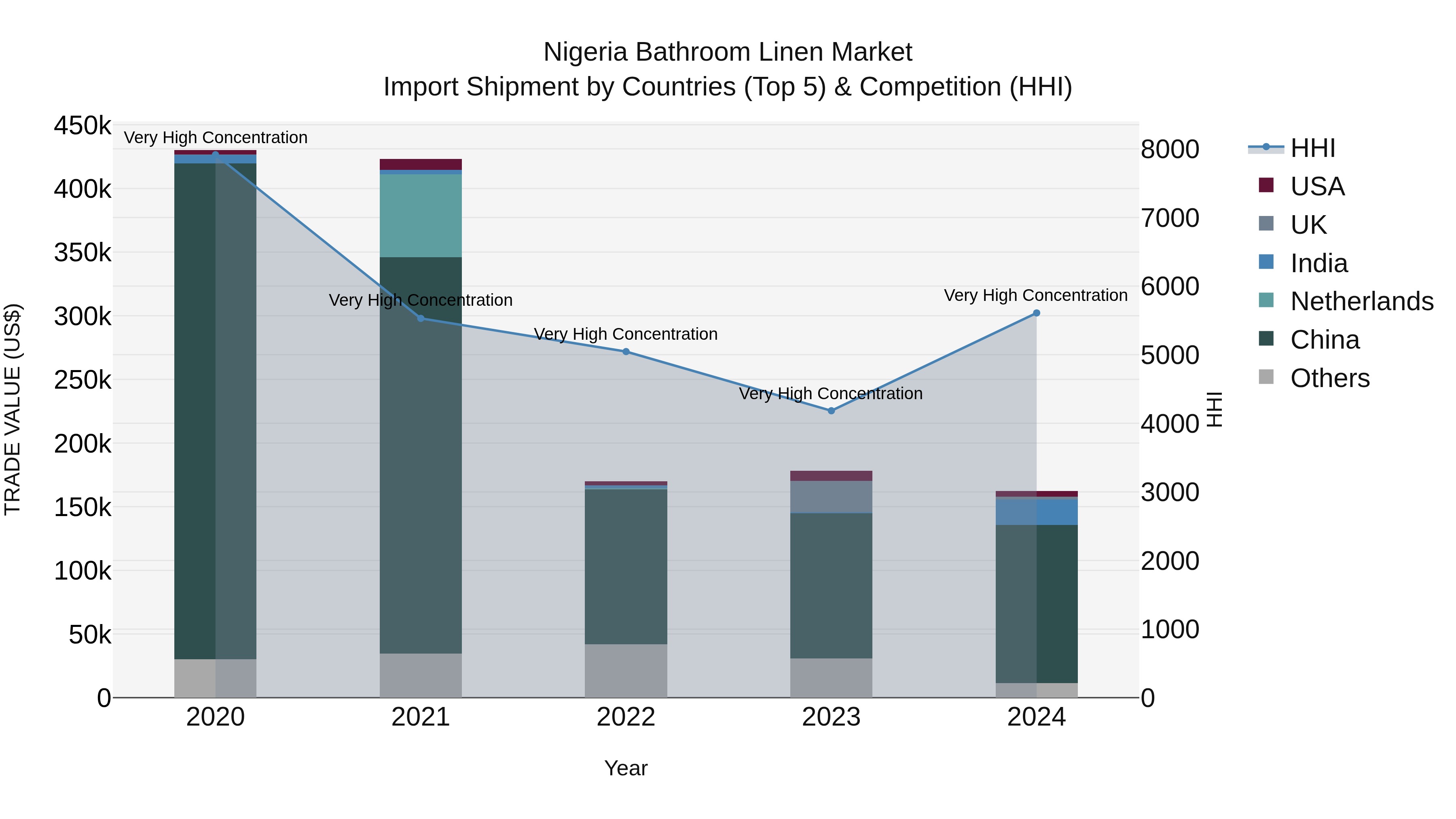
In 2024, Nigeria continued to rely heavily on imports for bathroom linens, with top exporters including China, India, Portugal, USA, and Turkey. The high concentration of market share, as indicated by the Herfindahl-Hirschman Index (HHI), remained a prominent feature. However, the industry experienced a significant decline in the compound annual growth rate (CAGR) from 2020 to 2024, with a negative rate of -21.62%. The growth rate from 2023 to 2024 further declined by -8.85%, reflecting challenges in the market that may require strategic adjustments for both importers and domestic suppliers.
Nigeria Bathroom Linen Market Synopsis
The Nigeria Bathroom Linen Market is experiencing steady growth due to increasing urbanization, rising disposable incomes, and a growing focus on home decor. Consumers are increasingly looking for high-quality, stylish bathroom linens that offer both functionality and aesthetic appeal. Key players in the market are offering a wide range of products including towels, bath mats, shower curtains, and bathrobes to cater to the diverse preferences of consumers. The market is characterized by intense competition, with players focusing on product innovation, marketing strategies, and expanding distribution channels to gain a competitive edge. The e-commerce sector is also playing a significant role in driving market growth by providing consumers with convenient access to a wide variety of bathroom linen products. Overall, the Nigeria Bathroom Linen Market is poised for further growth driven by changing consumer preferences and lifestyle trends.
Nigeria Bathroom Linen Market Trends
The Nigeria Bathroom Linen Market is experiencing a trend towards eco-friendly and sustainable products, driven by increasing consumer awareness of environmental issues. Customers are seeking out towels, bath mats, and shower curtains made from organic cotton or bamboo fibers, as well as products that use natural dyes and production processes that minimize water and energy usage. This trend is also reflected in the popularity of products that are ethically sourced and produced within Nigeria, supporting local artisans and communities. Additionally, there is a growing demand for luxury and premium bathroom linen items, as consumers seek to elevate their home decor and create a spa-like experience in their bathrooms. Overall, the market is seeing a shift towards more environmentally conscious and quality-driven products in line with global sustainability trends.
Nigeria Bathroom Linen Market Challenges
In the Nigeria Bathroom Linen Market, several challenges are faced, including competition from imported products that may offer lower prices or higher quality, inconsistent supply chain infrastructure leading to delays in product availability, and limited consumer awareness and appreciation for premium or sustainable bathroom linen options. Additionally, economic instability and fluctuations in currency exchange rates can impact the cost of production and pricing strategies for local manufacturers. Furthermore, the lack of standardized quality control measures and certification processes in the market can hinder consumer trust and confidence in the products available. Overall, navigating these challenges requires strategic marketing efforts, investment in quality control and infrastructure, as well as fostering consumer education and awareness to drive demand for locally produced bathroom linen products.
Nigeria Bathroom Linen Market Investment Opportunities
Investment opportunities in the Nigeria Bathroom Linen Market include the potential for growth in demand driven by an increasing focus on home decor and personal grooming. With a growing middle class population and rising disposable incomes, there is a significant market for high-quality and stylish bathroom linen products. Investing in innovative and sustainable materials, such as organic cotton or bamboo, could cater to the growing consumer preference for eco-friendly products. Additionally, leveraging e-commerce platforms and digital marketing strategies can help reach a wider audience and drive sales. Collaborating with local manufacturers and suppliers to ensure competitive pricing and reliable supply chain management can also be key strategies for success in this market. Overall, investing in the Nigeria Bathroom Linen Market presents opportunities for growth and profitability in a sector with untapped potential.
Nigeria Bathroom Linen Market Future Outlook
The Nigeria Bathroom Linen Market is poised for steady growth in the coming years, driven by an increasing focus on home decor and renovations, rising disposable income levels, and a growing awareness of the importance of quality bathroom textiles. Consumers are becoming more discerning when it comes to choosing bathroom linen, seeking products that offer both functionality and aesthetics. The market is also expected to benefit from the expanding hospitality sector in Nigeria, creating a demand for high-quality bathroom linen in hotels and resorts. Additionally, the shift towards online shopping platforms and the availability of a wider range of products are likely to further boost market growth. Overall, the Nigeria Bathroom Linen Market presents promising opportunities for both domestic and international manufacturers and retailers.
Key Highlights of the Report:
- Nigeria Bathroom Linen Market Outlook
- Market Size of Nigeria Bathroom Linen Market, 2024
- Forecast of Nigeria Bathroom Linen Market, 2031
- Historical Data and Forecast of Nigeria Bathroom Linen Revenues & Volume for the Period 2021 - 2031
- Nigeria Bathroom Linen Market Trend Evolution
- Nigeria Bathroom Linen Market Drivers and Challenges
- Nigeria Bathroom Linen Price Trends
- Nigeria Bathroom Linen Porter's Five Forces
- Nigeria Bathroom Linen Industry Life Cycle
- Historical Data and Forecast of Nigeria Bathroom Linen Market Revenues & Volume By Product for the Period 2021 - 2031
- Historical Data and Forecast of Nigeria Bathroom Linen Market Revenues & Volume By Bath Towels for the Period 2021 - 2031
- Historical Data and Forecast of Nigeria Bathroom Linen Market Revenues & Volume By Bathrobes for the Period 2021 - 2031
- Historical Data and Forecast of Nigeria Bathroom Linen Market Revenues & Volume By Others for the Period 2021 - 2031
- Nigeria Bathroom Linen Import Export Trade Statistics
- Market Opportunity Assessment By Product
- Nigeria Bathroom Linen Top Companies Market Share
- Nigeria Bathroom Linen Competitive Benchmarking By Technical and Operational Parameters
- Nigeria Bathroom Linen Company Profiles
- Nigeria Bathroom Linen Key Strategic Recommendations






































