Kenya Botanical Ingredients Market Size Growth Rate
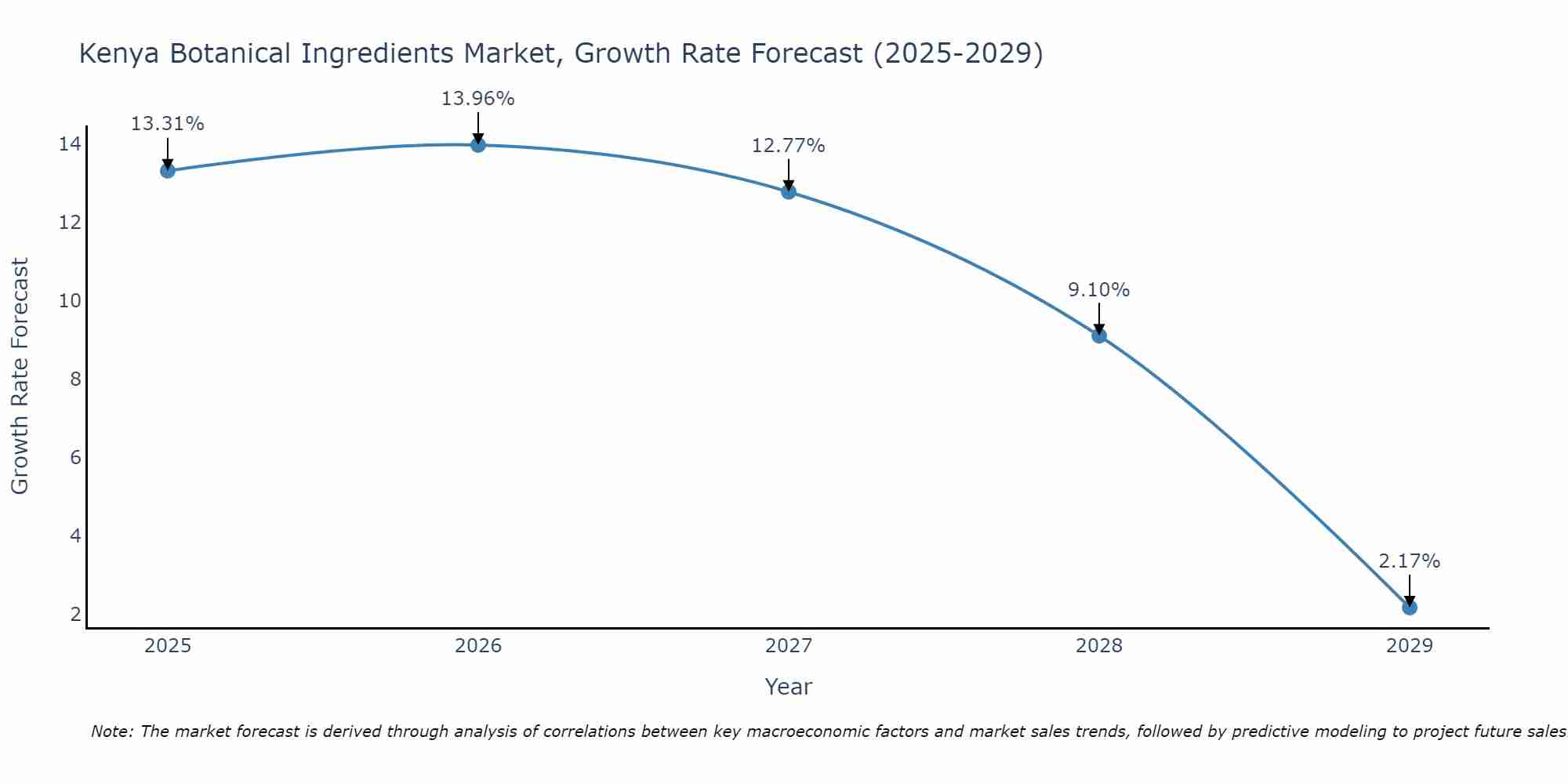
The Kenya Botanical Ingredients Market is projected to witness mixed growth rate patterns during 2025 to 2029. Growth accelerates to 13.96% in 2026, following an initial rate of 13.31%, before easing to 2.17% at the end of the period.
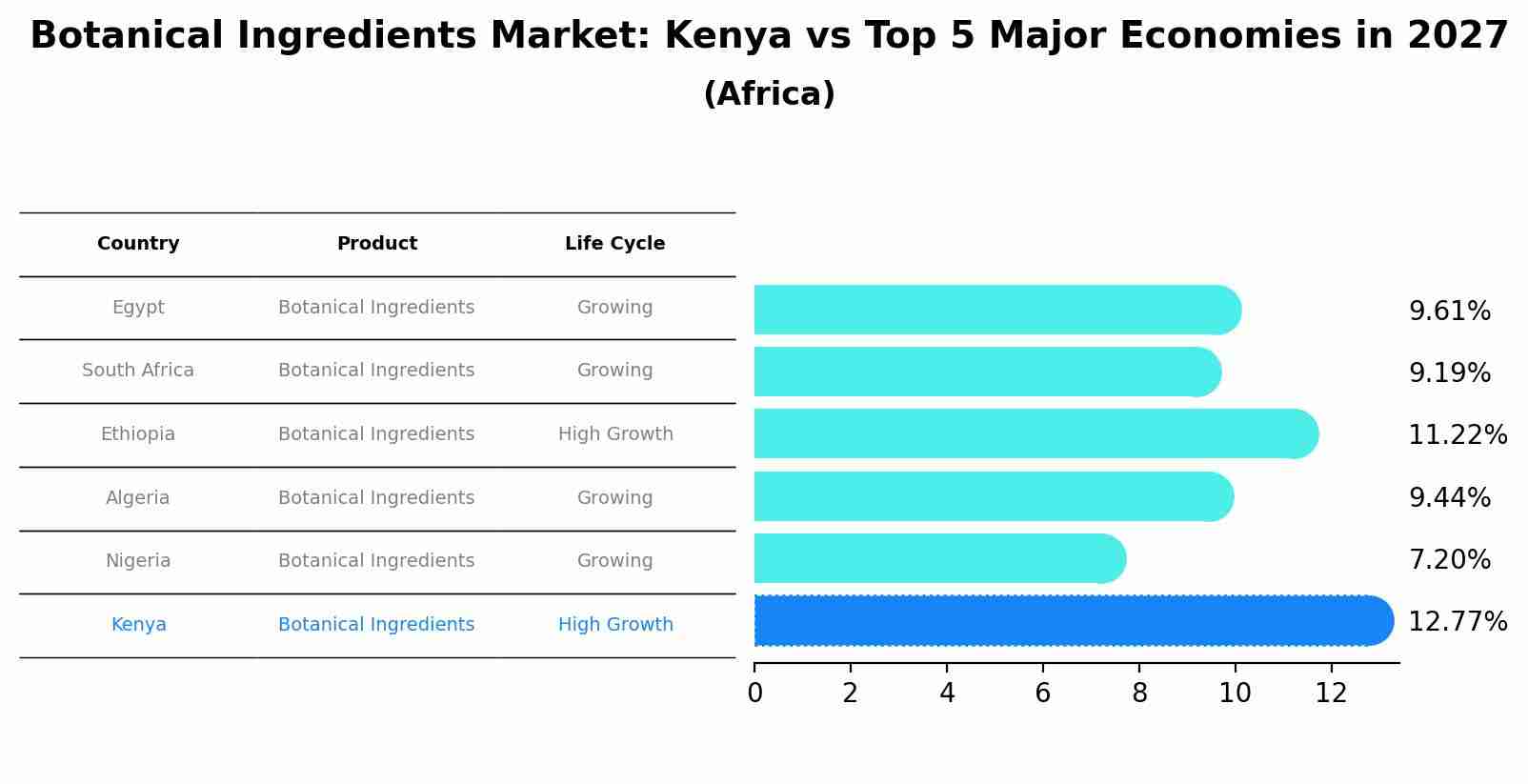
Botanical Ingredients Market: Kenya vs Top 5 Major Economies in 2027 (Africa)
By 2027, Kenya's Botanical Ingredients market is forecasted to achieve a high growth rate of 12.77%, with Egypt leading the Africa region, followed by South Africa, Ethiopia, Algeria and Nigeria.
Kenya Botanical Ingredients Market Synopsis
The Kenya Botanical Ingredients Market is experiencing growth driven by the rising demand for natural and organic products globally. Key botanical ingredients such as moringa, baobab, and hibiscus are gaining popularity due to their health benefits and versatility in various industries including food and beverage, pharmaceuticals, and cosmetics. Kenya`s rich biodiversity and favorable climate provide a conducive environment for cultivating a wide range of botanical ingredients. The country`s focus on sustainable farming practices and increasing awareness of the importance of sourcing ethically and responsibly sourced ingredients further contribute to the market`s growth potential. With increasing interest from international buyers and investments in research and development, the Kenya Botanical Ingredients Market is poised for continued expansion in the coming years.
Kenya Botanical Ingredients Market Trends
The Kenya Botanical Ingredients Market is experiencing a growing demand for natural and organic ingredients in various industries such as food and beverages, personal care, and pharmaceuticals. Consumers are increasingly seeking products that are sustainably sourced, environmentally friendly, and offer health benefits. This has led to a rise in the cultivation and export of botanical ingredients like moringa, baobab, and hibiscus from Kenya. Additionally, there is a rising interest in traditional Kenyan medicinal plants and herbs for their therapeutic properties and unique flavors. The market is also witnessing a trend towards partnerships between local farmers, suppliers, and manufacturers to ensure quality control and traceability of botanical ingredients, catering to the global demand for ethically sourced products.
Kenya Botanical Ingredients Market Challenges
In the Kenya Botanical Ingredients Market, some key challenges include inconsistent quality due to varying weather conditions affecting crop yields, limited infrastructure for processing and packaging, lack of standardized grading systems leading to difficulties in pricing and trading, and inadequate access to markets both domestically and internationally. Additionally, issues such as lack of awareness about the potential benefits of botanical ingredients, insufficient research and development capabilities, and competition from imported products with established markets pose obstacles to the growth of the industry. Overcoming these challenges will require investments in infrastructure, research, and market development, as well as collaboration among stakeholders to establish quality standards and improve market access for Kenyan botanical ingredients.
Kenya Botanical Ingredients Market Investment Opportunities
The Kenya Botanical Ingredients Market presents promising investment opportunities due to the country`s rich biodiversity and growing demand for natural products. Investments in the cultivation, processing, and export of botanical ingredients such as moringa, baobab, and tea tree oil can be lucrative. With increasing global interest in natural and organic products, Kenyan botanical ingredients hold potential in industries such as cosmetics, pharmaceuticals, and nutraceuticals. Additionally, sustainable sourcing practices and certifications can enhance market competitiveness and attract environmentally conscious consumers. Collaborating with local farmers and communities can also create social impact while ensuring a stable supply chain. Overall, the Kenya Botanical Ingredients Market offers a blend of economic potential, sustainability, and social responsibility for investors looking to tap into the growing demand for natural products.
Jordan Agar Market Government Policies
The government of Kenya has put in place various policies related to the botanical ingredients market to ensure sustainability and promote local production. These policies include the Agriculture, Fisheries and Food Authority Act, which regulates the cultivation, processing, and trade of botanical ingredients. The government also implemented the Forest Conservation and Management Act to protect the natural habitats of botanical species. Additionally, the Kenya Industrial Transformation Programme aims to promote value addition and processing of botanical ingredients to boost the local industry. Furthermore, the government encourages research and development in the botanical sector through initiatives such as the National Research Fund to enhance innovation and competitiveness in the market. Overall, these policies aim to support the growth of the Kenya botanical ingredients market while ensuring environmental conservation and sustainable practices.
Kenya Botanical Ingredients Market Future Outlook
The future outlook for the Kenya Botanical Ingredients Market is promising, driven by increasing global demand for natural and organic products. The country`s rich biodiversity and favorable climate provide a conducive environment for the cultivation of a wide variety of botanical ingredients. Growing awareness among consumers about the benefits of natural ingredients in various industries such as pharmaceuticals, cosmetics, and food and beverages is expected to further boost the market. Additionally, the rising trend towards sustainable sourcing practices and ethical production methods is likely to enhance the market`s growth prospects. With a focus on quality, innovation, and sustainability, Kenya is well-positioned to capitalize on the growing market opportunities for botanical ingredients in the coming years.
Key Highlights of the Report:
- Kenya Botanical Ingredients Market Outlook
- Market Size of Kenya Botanical Ingredients Market, 2021
- Forecast of Kenya Botanical Ingredients Market, 2031
- Historical Data and Forecast of Kenya Botanical Ingredients Revenues & Volume for the Period 2018 - 2031
- Kenya Botanical Ingredients Market Trend Evolution
- Kenya Botanical Ingredients Market Drivers and Challenges
- Kenya Botanical Ingredients Price Trends
- Kenya Botanical Ingredients Porter's Five Forces
- Kenya Botanical Ingredients Industry Life Cycle
- Historical Data and Forecast of Kenya Botanical Ingredients Market Revenues & Volume By Form for the Period 2018 - 2031
- Historical Data and Forecast of Kenya Botanical Ingredients Market Revenues & Volume By Powder for the Period 2018 - 2031
- Historical Data and Forecast of Kenya Botanical Ingredients Market Revenues & Volume By Liquid for the Period 2018 - 2031
- Historical Data and Forecast of Kenya Botanical Ingredients Market Revenues & Volume By Source for the Period 2018 - 2031
- Historical Data and Forecast of Kenya Botanical Ingredients Market Revenues & Volume By Herbs for the Period 2018 - 2031
- Historical Data and Forecast of Kenya Botanical Ingredients Market Revenues & Volume By Leaves for the Period 2018 - 2031
- Historical Data and Forecast of Kenya Botanical Ingredients Market Revenues & Volume By Spices for the Period 2018 - 2031
- Historical Data and Forecast of Kenya Botanical Ingredients Market Revenues & Volume By Flowers for the Period 2018 - 2031
- Historical Data and Forecast of Kenya Botanical Ingredients Market Revenues & Volume By Others for the Period 2018 - 2031
- Historical Data and Forecast of Kenya Botanical Ingredients Market Revenues & Volume By Application for the Period 2018 - 2031
- Historical Data and Forecast of Kenya Botanical Ingredients Market Revenues & Volume By Food & Beverages for the Period 2018 - 2031
- Historical Data and Forecast of Kenya Botanical Ingredients Market Revenues & Volume By Dietary Supplements for the Period 2018 - 2031
- Historical Data and Forecast of Kenya Botanical Ingredients Market Revenues & Volume By Personal Care & Cosmetics for the Period 2018 - 2031
- Historical Data and Forecast of Kenya Botanical Ingredients Market Revenues & Volume By Pharmaceuticals for the Period 2018 - 2031
- Historical Data and Forecast of Kenya Botanical Ingredients Market Revenues & Volume By Others for the Period 2018 - 2031
- Kenya Botanical Ingredients Import Export Trade Statistics
- Market Opportunity Assessment By Form
- Market Opportunity Assessment By Source
- Market Opportunity Assessment By Application
- Kenya Botanical Ingredients Top Companies Market Share
- Kenya Botanical Ingredients Competitive Benchmarking By Technical and Operational Parameters
- Kenya Botanical Ingredients Company Profiles
- Kenya Botanical Ingredients Key Strategic Recommendations






































