Kenya Bromine Market Size Growth Rate
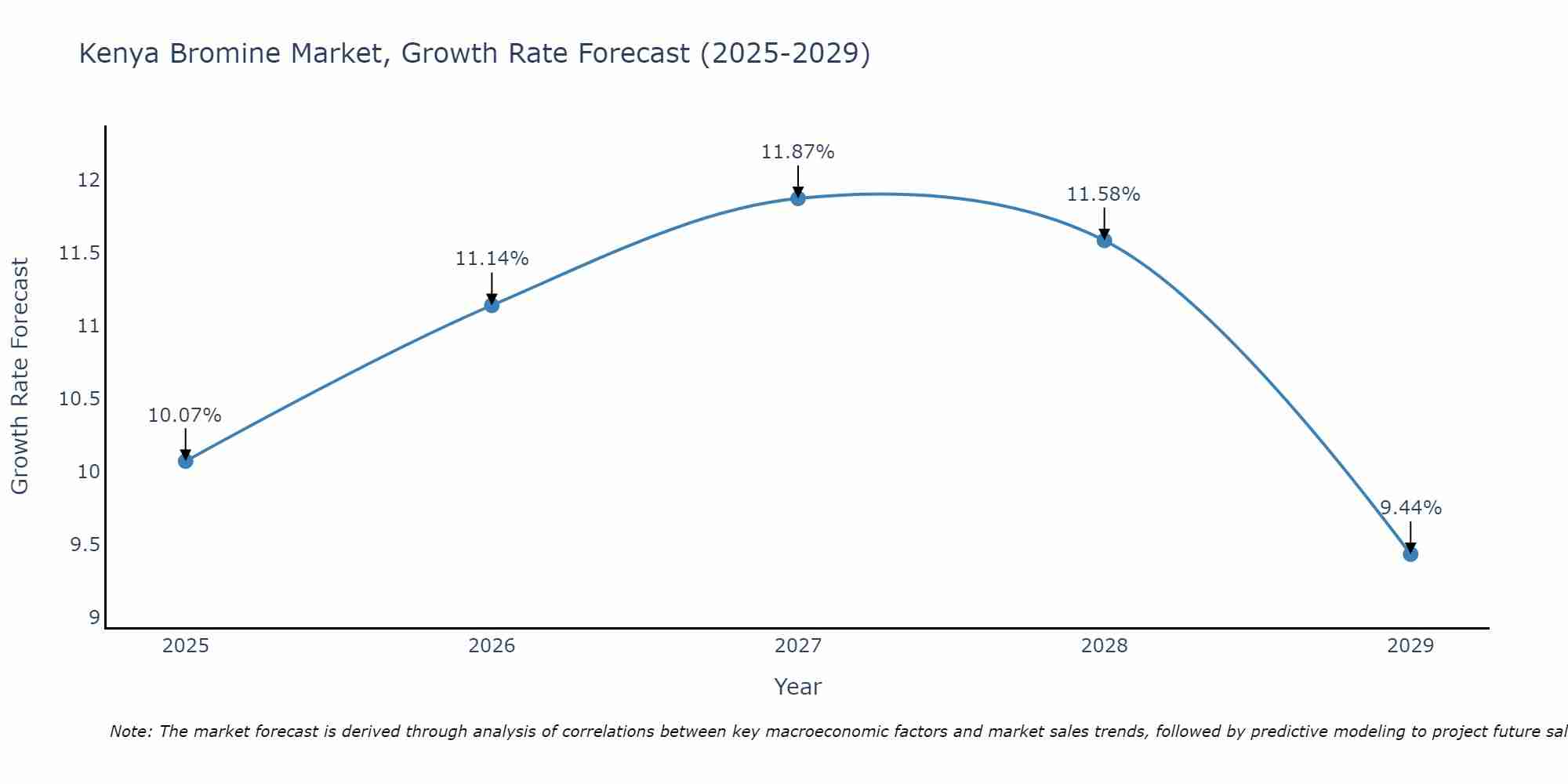
The Kenya Bromine Market is projected to witness mixed growth rate patterns during 2025 to 2029. Starting at 10.07% in 2025, the market peaks at 11.87% in 2027, and settles at 9.44% by 2029.
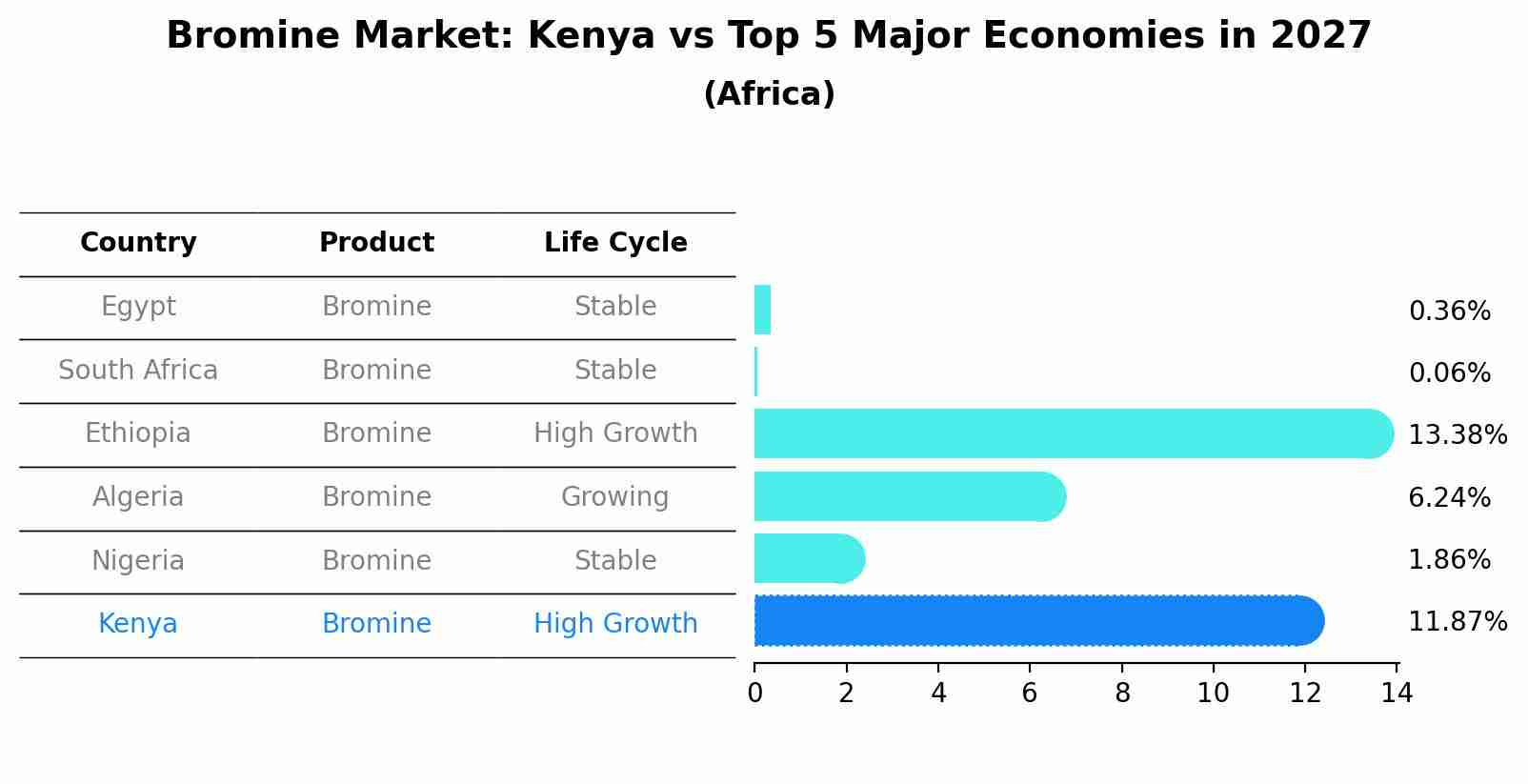
Bromine Market: Kenya vs Top 5 Major Economies in 2027 (Africa)
The Bromine market in Kenya is projected to grow at a high growth rate of 11.87% by 2027, highlighting the country's increasing focus on advanced technologies within the Africa region, where Egypt holds the dominant position, followed closely by South Africa, Ethiopia, Algeria and Nigeria, shaping overall regional demand.
Kenya Bromine Market Overview
The Kenya Bromine market is experiencing steady growth due to increasing industrial applications in sectors such as pharmaceuticals, agriculture, and oil drilling. Bromine is primarily used in flame retardants, water treatment chemicals, and mercury emissions control, driving demand in the country. The market is also benefiting from the rising awareness about the benefits of bromine-based products in various industries. Key players in the Kenya Bromine market include international suppliers and local manufacturers catering to the growing demand. However, challenges such as fluctuating raw material prices and environmental concerns regarding bromine usage are impacting market growth. Overall, the Kenya Bromine market is poised for expansion with opportunities for innovation and product development to meet evolving industry requirements.
Kenya Bromine Market Trends
The Kenya Bromine market is showing steady growth due to increasing demand from various industries such as pharmaceuticals, agriculture, and flame retardants. The agriculture sector is a key driver of growth as bromine is used in pesticides and fumigants. Additionally, the pharmaceutical industry is also contributing to the demand for bromine in Kenya due to its use in manufacturing drugs and pharmaceutical products. The market is also witnessing a trend towards sustainable and eco-friendly bromine products as companies are increasingly focusing on environmental concerns. Overall, the Kenya Bromine market is expected to continue its growth trajectory, driven by diverse industry applications and the increasing focus on sustainability.
Kenya Bromine Market Challenges
In the Kenya Bromine Market, challenges include limited domestic production capacity, dependence on imports for meeting demand, fluctuating global prices impacting local prices, lack of awareness among end-users about bromine applications, and regulatory constraints affecting market growth. The market also faces competition from alternative chemicals and substitutes, hindering potential growth opportunities. Additionally, inadequate infrastructure and logistics pose challenges in the distribution of bromine products across the country, leading to supply chain inefficiencies. Overall, overcoming these challenges will require investments in local production facilities, market education initiatives, regulatory reforms, and improvements in infrastructure to support the growth of the Kenya Bromine Market.
Kenya Bromine Market Investment Opportunities
The Kenya Bromine Market presents a promising investment opportunity due to its increasing demand in various industries such as pharmaceuticals, agriculture, and oil drilling. Bromine is used in the manufacturing of pharmaceutical products, flame retardants, and as a drilling fluid in oil extraction. With the growing need for bromine-based products in these sectors, there is a potential for investors to capitalize on this market. Additionally, Kenya`s strategic location in East Africa provides a gateway to regional markets, further enhancing the investment appeal. Investing in bromine production or distribution in Kenya could offer significant returns and long-term growth potential, especially as industries continue to expand and innovate. However, investors should conduct thorough market research and due diligence to assess the market dynamics and potential risks before committing to any investment.
Kenya Bromine Market Government Policy
The Kenyan government has implemented various policies to regulate the bromine market in the country. This includes the enactment of the Chemicals Act, which provides guidelines for the production, importation, distribution, and use of chemicals, including bromine. The government also established the Pest Control Products Board (PCPB) to oversee the registration and regulation of pesticides and other chemical products, ensuring they meet safety and environmental standards. Additionally, Kenya has adopted international agreements and protocols such as the Stockholm Convention on Persistent Organic Pollutants to control the use of harmful chemicals like bromine. These policies aim to safeguard public health, environmental sustainability, and promote responsible use of bromine and other chemicals in the country.
Kenya Bromine Market Future Outlook
The future outlook for the Kenya Bromine Market appears promising, driven by increasing demand from various industries such as pharmaceuticals, agriculture, and oil & gas. The growing emphasis on flame retardants and water treatment applications is expected to further boost market growth. Additionally, the rising awareness regarding the benefits of bromine in enhancing crop yield and improving healthcare products is anticipated to drive market expansion in the coming years. Technological advancements and innovative product developments are likely to create new opportunities for market players. However, challenges such as environmental concerns and stringent regulations may pose a threat to market growth. Overall, the Kenya Bromine Market is poised for steady growth, supported by diverse applications and evolving industry trends.
Key Highlights of the Report:
- Kenya Bromine Market Outlook
- Market Size of Kenya Bromine Market, 2021
- Forecast of Kenya Bromine Market, 2027
- Historical Data and Forecast of Kenya Bromine Revenues & Volume for the Period 2018 - 2027
- Kenya Bromine Market Trend Evolution
- Kenya Bromine Market Drivers and Challenges
- Kenya Bromine Price Trends
- Kenya Bromine Porter's Five Forces
- Kenya Bromine Industry Life Cycle
- Historical Data and Forecast of Kenya Bromine Market Revenues & Volume By Derivative for the Period 2018 - 2027
- Historical Data and Forecast of Kenya Bromine Market Revenues & Volume By Organobromine for the Period 2018 - 2027
- Historical Data and Forecast of Kenya Bromine Market Revenues & Volume By Clear Brine Fluids for the Period 2018 - 2027
- Historical Data and Forecast of Kenya Bromine Market Revenues & Volume By Hydrogen Bromide for the Period 2018 - 2027
- Historical Data and Forecast of Kenya Bromine Market Revenues & Volume By Application for the Period 2018 - 2027
- Historical Data and Forecast of Kenya Bromine Market Revenues & Volume By Flame Retardants for the Period 2018 - 2027
- Historical Data and Forecast of Kenya Bromine Market Revenues & Volume By Oil & Gas Drilling for the Period 2018 - 2027
- Historical Data and Forecast of Kenya Bromine Market Revenues & Volume By PTA Synthesis for the Period 2018 - 2027
- Historical Data and Forecast of Kenya Bromine Market Revenues & Volume By Water Treatment & Biocides for the Period 2018 - 2027
- Historical Data and Forecast of Kenya Bromine Market Revenues & Volume By Pesticides for the Period 2018 - 2027
- Historical Data and Forecast of Kenya Bromine Market Revenues & Volume By HBr Flow Batteries for the Period 2018 - 2027
- Historical Data and Forecast of Kenya Bromine Market Revenues & Volume By Pharmaceuticals for the Period 2018 - 2027
- Historical Data and Forecast of Kenya Bromine Market Revenues & Volume By Others for the Period 2018 - 2027
- Kenya Bromine Import Export Trade Statistics
- Market Opportunity Assessment By Derivative
- Market Opportunity Assessment By Application
- Kenya Bromine Top Companies Market Share
- Kenya Bromine Competitive Benchmarking By Technical and Operational Parameters
- Kenya Bromine Company Profiles
- Kenya Bromine Key Strategic Recommendations






































