Kenya Dental Sterilization Market Size, Share & Growth Rate
The Kenya Dental Sterilization Market was estimated at USD 262 Million in 2025 and is projected to reach USD 356 Million by 2032, growing at a CAGR of 4.5% from 2026 to 2032. This growth trajectory is primarily driven by the increasing number of dental procedures and a heightened awareness of the critical importance of infection control in dental practices. As dental facilities expand and the demand for high-quality sterilization methods rises, the market is set to flourish.
Kenya Dental Sterilization Market Year-wise Growth Rate and Key Drivers
This graph highlights how the Kenya Dental Sterilization Market has steadily grown over the years, supported by major growth factors.
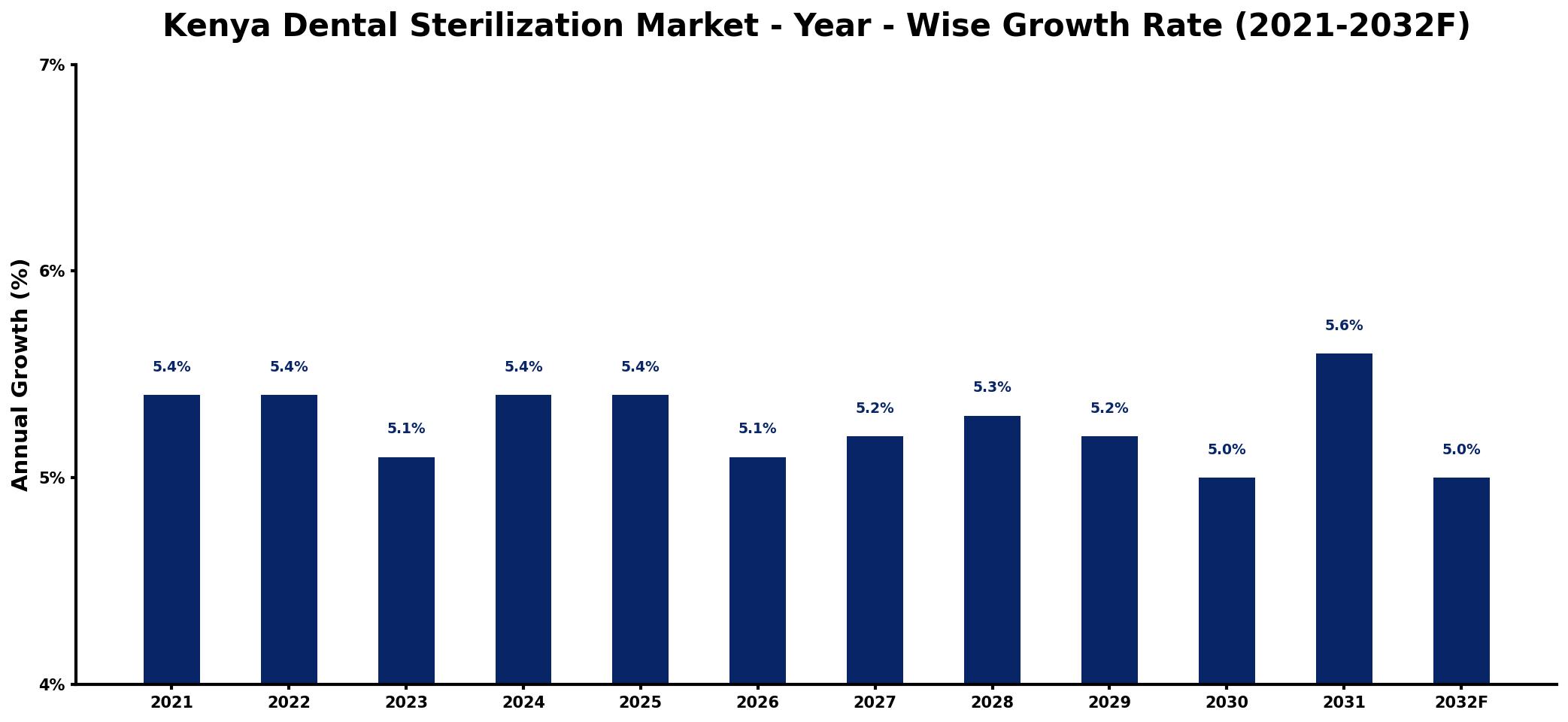
The table below presents the year‑wise growth rates along with the key drivers influencing the market
| Year | Growth Rate | Major Drivers |
| 2021 | 5.4% | Rising healthcare investment initiatives |
| 2022 | 5.4% | Increased focus on infection control |
| 2023 | 5.1% | Growing awareness of hygiene standards |
| 2024 | 5.4% | Expansion of healthcare facilities network |
| 2025 | 5.4% | Higher demand for medical equipment |
| 2026 | 5.1% | Emerging technologies in healthcare |
| 2027 | 5.2% | Strengthening regulatory compliance frameworks |
| 2028 | 5.3% | Surge in population health consciousness |
| 2029 | 5.2% | Innovations in healthcare practices |
| 2030 | 5.0% | Investment in healthcare infrastructure |
| 2031 | 5.6% | Enhanced training for medical professionals |
| 2032 | 5.0% | Collaboration among health organizations |
Note: Market size estimations and growth projections presented in this report are based on 6Wresearch's proprietary forecasting methodology, utilizing the latest available industry data, government publications, and primary research inputs.
Kenya Dental Sterilization Market Synopsis
The Kenya Dental Sterilization Market is gaining traction amid a growing emphasis on patient safety and hygiene standards in dental care. This shift is fueled by both regulatory mandates and an evolving consumer expectation for sterile environments in healthcare settings.
As more dental clinics adopt modern sterilization techniques, the demand for advanced sterilization solutions such as autoclaves, ultrasonic cleaners, and environmentally sustainable methods is on the rise. The dynamic nature of this market reflects an awareness that extends beyond mere compliance, positioning dental practitioners as proactive guardians of patient health.
Kenya Dental Sterilization Market Key Takeaways
- Rapidly increasing demand for sterilization equipment due to rising dental procedures.
- Growing awareness of infection control is enhancing market dynamics.
- Technological advancements are leading to safer, more efficient sterilization methods.
- Investment opportunities abound in advanced sterilization technologies and training services.
- Government regulations are pivotal in shaping sterilization practices in the dental sector.
Evaluation of Restraints in Kenya Dental Sterilization Market
Despite the positive outlook, the Kenya Dental Sterilization Market faces several restraints that could impede its growth. Limited access to high-quality sterilization equipment, especially in rural areas, poses a significant challenge. Furthermore, a lack of awareness among some dental professionals regarding best sterilization practices undermines patient safety. Compounding these issues is the inconsistent enforcement of sterilization standards by regulatory authorities, which can lead to variations in compliance and safety. Addressing these limitations through enhanced training, policy enforcement, and accessible equipment will be crucial for the market's advancement.
Kenya Dental Sterilization Market Trends
Emerging trends are significantly shaping the Kenya Dental Sterilization Market. There is a marked shift toward eco-friendly sterilization solutions that align with global sustainability initiatives. Additionally, the integration of digital monitoring systems and automation in sterilization equipment is gaining traction, thereby improving compliance with sterilization protocols and ensuring operational efficiency. These advancements reflect a broader movement towards modernizing healthcare practices in Kenya, demonstrating a commitment to both safety and sustainability.
Kenya Dental Sterilization Market Opportunities
The evolving landscape of the Kenya Dental Sterilization Market offers substantial investment opportunities. With the expansion of dental services, there is a consistent need for state-of-the-art sterilization technologies that meet high hygiene standards. Investors are well-positioned to explore avenues in providing innovative sterilization solutions, establishing service centers, or offering training programs focused on sterilization best practices. Collaborations with dental clinics and hospitals to provide ongoing sterilization solutions can further enhance market growth and profitability.
Government Initiatives in the Kenya Dental Sterilization Market
The Kenyan government is actively involved in promoting stringent sterilization practices in the dental sector. Regulations enforced by the Ministry of Health mandate that dental facilities adhere to comprehensive infection control measures, including the sterilization of all dental instruments. Regular inspections and audits ensure compliance, and these governmental initiatives are critical for safeguarding both patient and practitioner health. As awareness of infection control increases, ongoing government support will further bolster industry standards.
Future Insights of the Kenya Dental Sterilization Market
Looking ahead to 2026-2032, the Kenya Dental Sterilization Market is expected to maintain its growth momentum as dental care becomes increasingly prioritized. The continued rise in dental clinics, coupled with enhanced regulatory frameworks around sterilization, will drive demand for advanced sterilization solutions. Additionally, the focus on patient safety and improved hygiene standards will further expand the market. Technological innovations and increased investments in healthcare infrastructure are likely to play crucial roles in shaping a more robust dental sterilization landscape in Kenya.
Kenya Dental Sterilization Market Latest Developments (2025 - 2026)
Recent developments in the Kenya Dental Sterilization Market have underscored the importance of advanced technologies and compliance with safety standards. There has been an uptick in the adoption of smart sterilization devices that offer real-time monitoring capabilities, enhancing efficiency. Additionally, the market has seen heightened collaboration among industry stakeholders aimed at promoting awareness and education about sterilization best practices, reflecting a collective commitment to improving patient safety and care quality.
Kenya Dental Sterilization Market - Key Attractiveness of the Report
- 10 Years of Market Numbers
- Historical Data Starting from 2022 to 2025
- Base Year: 2025
- Forecast Data until 2032
- Key Performance Indicators Impacting the Market
- Major Upcoming Developments and Projects
Key Highlights of the Report:
- Kenya Dental Sterilization Market Outlook
- Market Size of Kenya Dental Sterilization Market, 2025
- Forecast of Kenya Dental Sterilization Market, 2032
- Historical Data and Forecast of Kenya Dental Sterilization Revenues & Volume for the Period 2022-2032F
- Kenya Dental Sterilization Market Trend Evolution
- Kenya Dental Sterilization Market Drivers and Challenges
- Kenya Dental Sterilization Price Trends
- Kenya Dental Sterilization Porter's Five Forces
- Kenya Dental Sterilization Industry Life Cycle
- Historical Data and Forecast of Kenya Dental Sterilization Market Revenues & Volume By Product for the Period 2022-2032F
- Historical Data and Forecast of Kenya Dental Sterilization Market Revenues & Volume By Instruments for the Period 2022-2032F
- Historical Data and Forecast of Kenya Dental Sterilization Market Revenues & Volume By Consumables and Accessories for the Period 2022-2032F
- Historical Data and Forecast of Kenya Dental Sterilization Market Revenues & Volume By End-use for the Period 2022-2032F
- Historical Data and Forecast of Kenya Dental Sterilization Market Revenues & Volume By Hospital for the Period 2022-2032F
- Historical Data and Forecast of Kenya Dental Sterilization Market Revenues & Volume By Dental Clinics for the Period 2022-2032F
- Historical Data and Forecast of Kenya Dental Sterilization Market Revenues & Volume By Dental Laboratories for the Period 2022-2032F
- Kenya Dental Sterilization Import Export Trade Statistics
- Market Opportunity Assessment By Product
- Market Opportunity Assessment By End-use
- Kenya Dental Sterilization Top Companies Market Share
- Kenya Dental Sterilization Competitive Benchmarking By Technical and Operational Parameters
- Kenya Dental Sterilization Company Profiles
- Kenya Dental Sterilization Key Strategic Recommendations






































