Kenya Feminine Hygiene Market Size Growth Rate
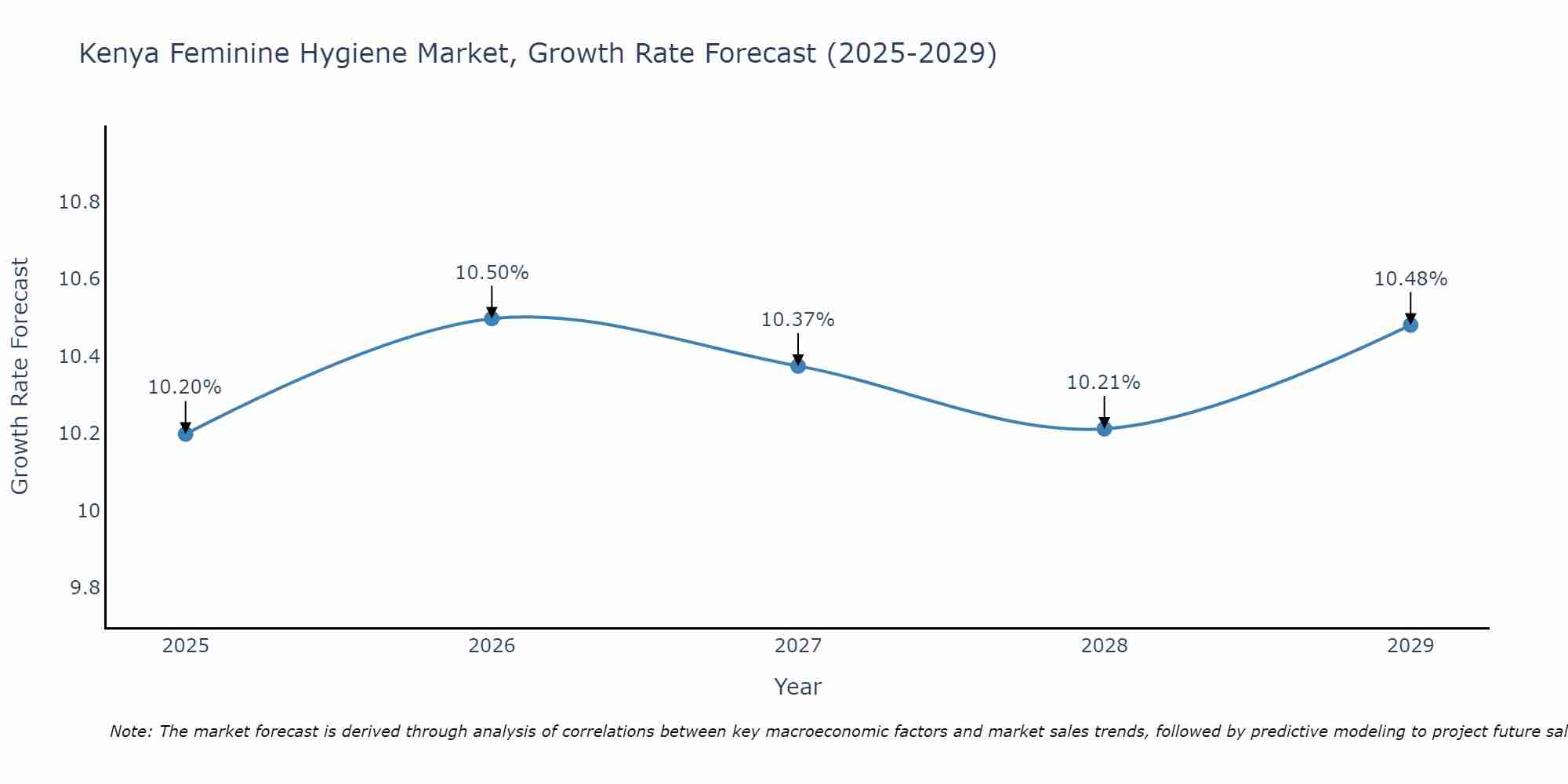
The Kenya Feminine Hygiene Market is projected to witness mixed growth rate patterns during 2025 to 2029. The growth rate begins at 10.20% in 2025, climbs to a high of 10.50% in 2026, and moderates to 10.48% by 2029.
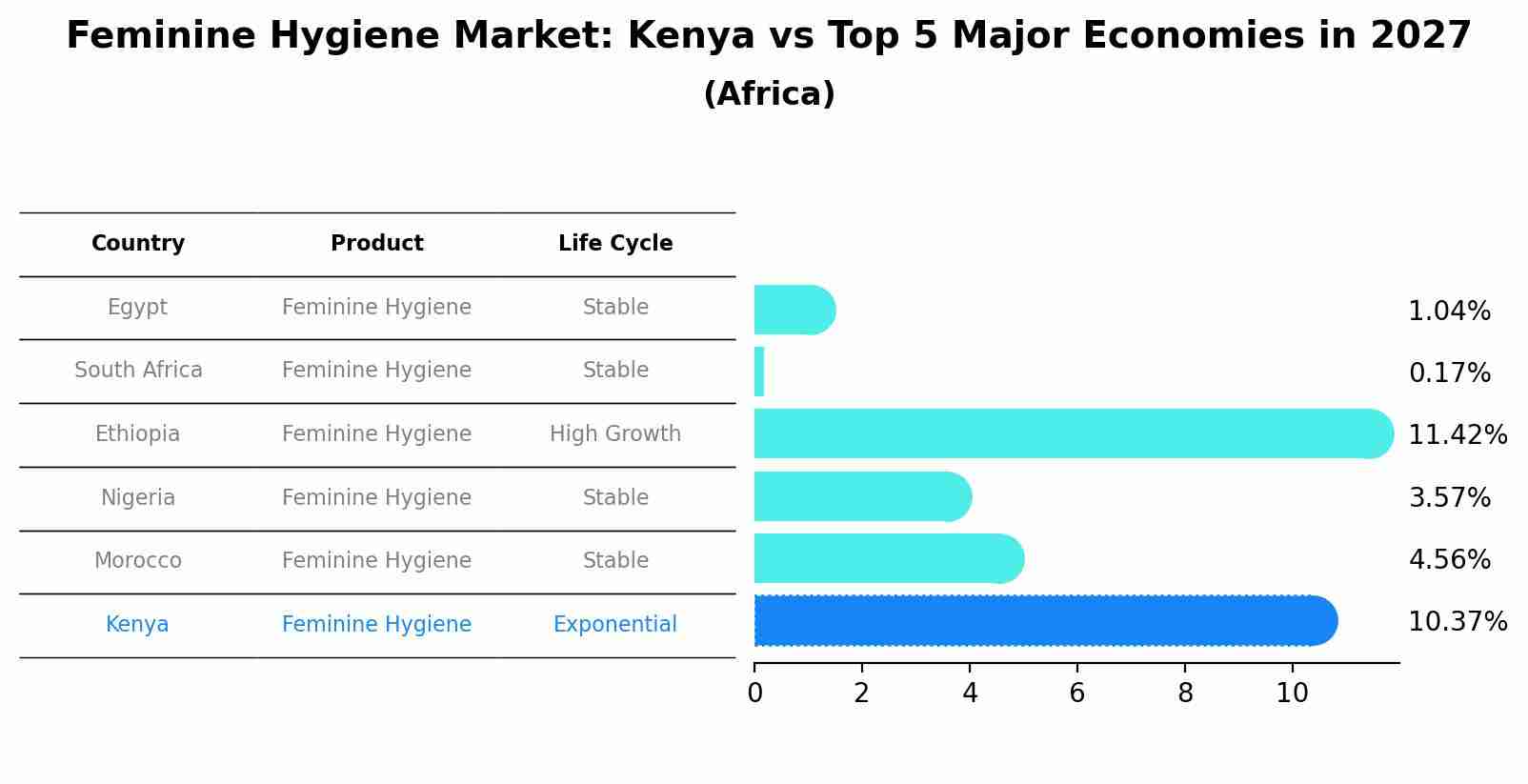
Feminine Hygiene Market: Kenya vs Top 5 Major Economies in 2027 (Africa)
The Feminine Hygiene market in Kenya is projected to grow at a high growth rate of 10.37% by 2027, within the Africa region led by Egypt, along with other countries like South Africa, Ethiopia, Nigeria and Morocco, collectively shaping a dynamic and evolving market environment driven by innovation and increasing adoption of emerging technologies.
Kenya Feminine Hygiene Market Synopsis
Kenya feminine hygiene market is expected to grow at a CAGR of 3.2% during the forecast period 2020-2026. This growth can be attributed to the rising female population and increasing awareness regarding menstrual health in the country. Other factors such as growing economic development, rising disposable incomes, increased access to information about hygiene products, and changing cultural attitudes are also helping drive this market forward. Additionally, strong government initiatives aimed at educating girls on menstruation and providing them with free sanitary pads have played an important role in boosting this sectors growth prospects. The report provides detailed insights into the market dynamics of Kenya feminine hygiene industry along with Porters five forces analysis for better understanding of competitive landscape within it. Moreover, profile of key players operating in the Kenyan Feminine Hygiene Market has been included which cover their business strategies linked by financial performance over past few years along with SWOT analysis that gives further information about these companies.
Key Highlights of the Report:
- Kenya Feminine Hygiene Market Outlook
- Market Size of Kenya Feminine Hygiene Market, 2019
- Forecast of Kenya Feminine Hygiene Market, 2026
- Historical Data and Forecast of Kenya Feminine Hygiene Revenues & Volume for the Period 2016 - 2026
- Kenya Feminine Hygiene Market Trend Evolution
- Kenya Feminine Hygiene Market Drivers and Challenges
- Kenya Feminine Hygiene Price Trends
- Kenya Feminine Hygiene Porter's Five Forces
- Kenya Feminine Hygiene Industry Life Cycle
- Historical Data and Forecast of Kenya Feminine Hygiene Market Revenues & Volume By Product Types for the Period 2016 - 2026
- Historical Data and Forecast of Kenya Feminine Hygiene Market Revenues & Volume By Sanitary Napkins/Pads for the Period 2016 - 2026
- Historical Data and Forecast of Kenya Feminine Hygiene Market Revenues & Volume By Tampons for the Period 2016 - 2026
- Historical Data and Forecast of Kenya Feminine Hygiene Market Revenues & Volume By Menstrual Cups for the Period 2016 - 2026
- Historical Data and Forecast of Kenya Feminine Hygiene Market Revenues & Volume By Others for the Period 2016 - 2026
- Historical Data and Forecast of Kenya Feminine Hygiene Market Revenues & Volume By Distribution Channel for the Period 2016 - 2026
- Historical Data and Forecast of Kenya Feminine Hygiene Market Revenues & Volume By Hypermarkets/Supermarket for the Period 2016 - 2026
- Historical Data and Forecast of Kenya Feminine Hygiene Market Revenues & Volume By Convenience Stores for the Period 2016 - 2026
- Historical Data and Forecast of Kenya Feminine Hygiene Market Revenues & Volume By Drug Stores/Pharmacies for the Period 2016 - 2026
- Historical Data and Forecast of Kenya Feminine Hygiene Market Revenues & Volume By Others for the Period 2016 - 2026
- Kenya Feminine Hygiene Import Export Trade Statistics
- Market Opportunity Assessment By Product Types
- Market Opportunity Assessment By Distribution Channel
- Kenya Feminine Hygiene Top Companies Market Share
- Kenya Feminine Hygiene Competitive Benchmarking By Technical and Operational Parameters
- Kenya Feminine Hygiene Company Profiles
- Kenya Feminine Hygiene Key Strategic Recommendations






































