Kenya Flaxseed Market Outlook | Trends, Size, Forecast, Analysis, Share, COVID-19 IMPACT, Companies, Value, Revenue, Industry & Growth
Market Forecast By Type (Ground Seed, Whole Seed), By Application (Food, Animal & Pet Food, Others) And Competitive Landscape
| Product Code: ETC088929 | Publication Date: Jun 2021 | Updated Date: Jun 2025 | Product Type: Report | |
| Publisher: 6Wresearch | Author: Sumit Sagar | No. of Pages: 70 | No. of Figures: 35 | No. of Tables: 5 |
Kenya Flaxseed Market Size Growth Rate
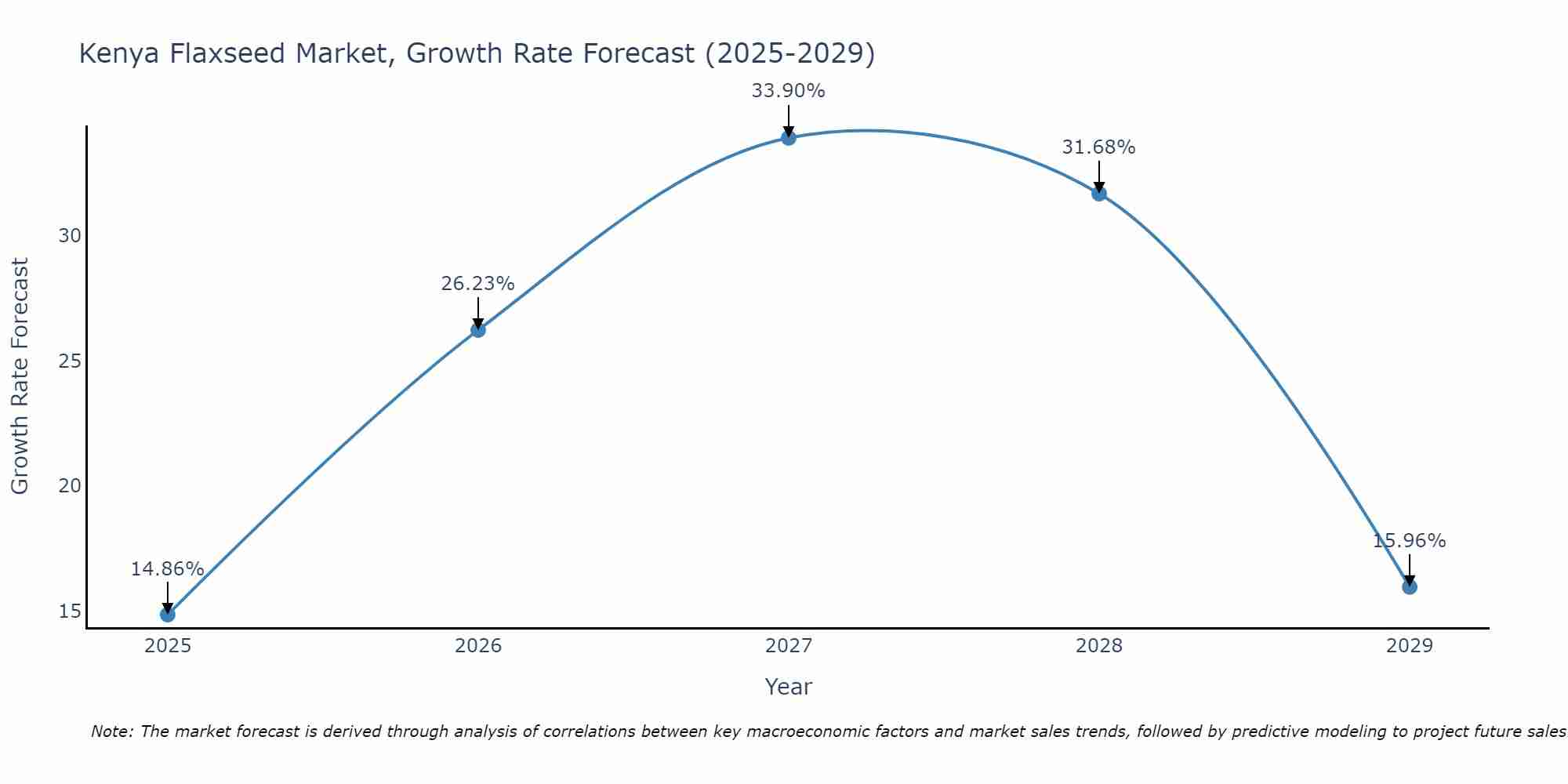
The Kenya Flaxseed Market is projected to witness mixed growth rate patterns during 2025 to 2029. Growth accelerates to 33.90% in 2027, following an initial rate of 14.86%, before easing to 15.96% at the end of the period.
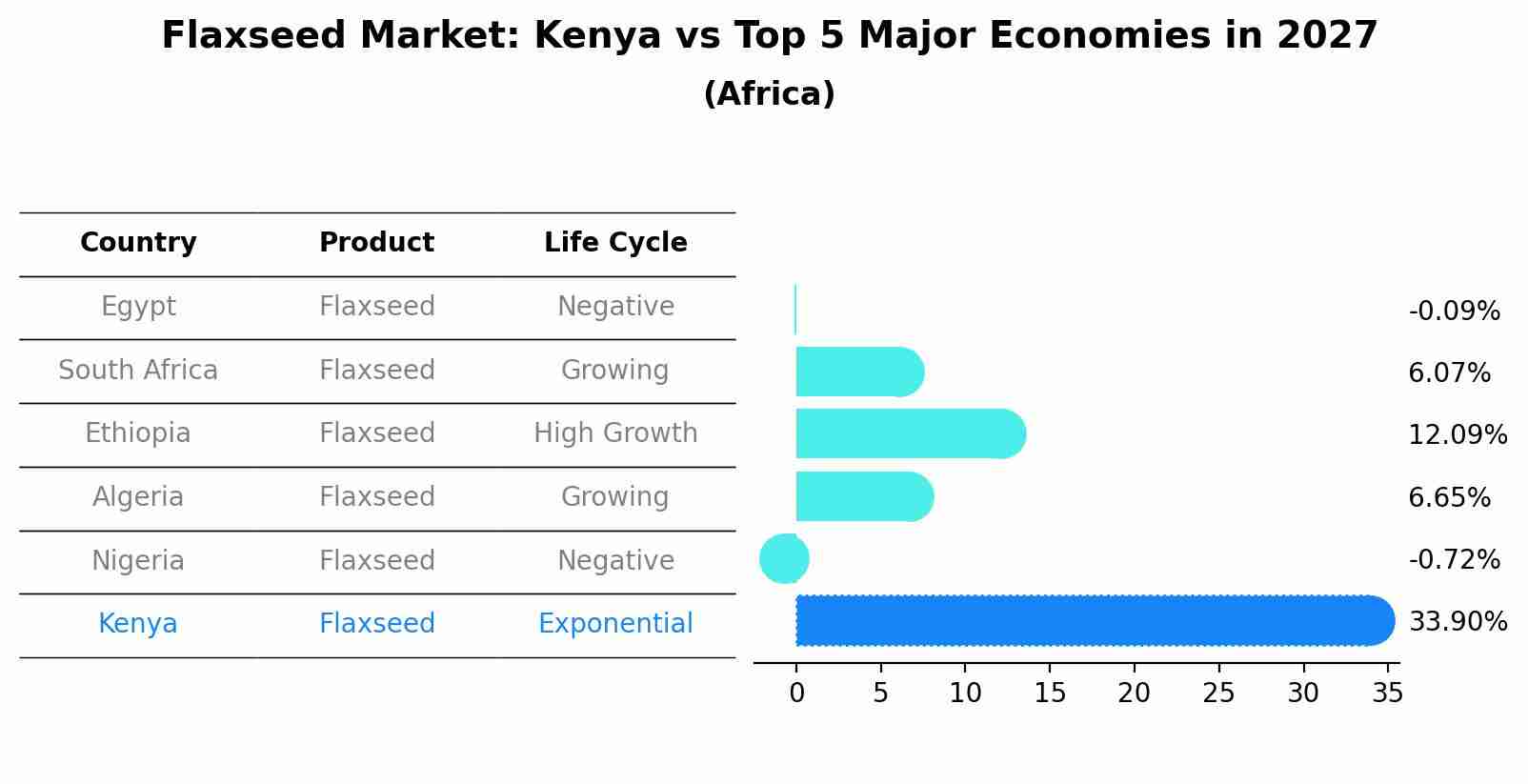
Flaxseed Market: Kenya vs Top 5 Major Economies in 2027 (Africa)
Kenya's Flaxseed market is anticipated to experience a exponential growth rate of 33.90% by 2027, reflecting trends observed in the largest economy Egypt, followed by South Africa, Ethiopia, Algeria and Nigeria.
Kenya Flaxseed Market Overview
The Kenya Flaxseed Market is experiencing steady growth due to increasing consumer awareness of the health benefits associated with flaxseeds. Flaxseeds are rich in omega-3 fatty acids, fiber, and antioxidants, making them popular among health-conscious individuals. The market is driven by the growing demand for functional foods and natural health supplements. Additionally, the versatility of flaxseeds as an ingredient in various food products such as smoothies, bread, and cereals further boosts its market presence. Key players in the Kenya Flaxseed Market include producers, distributors, and retailers who are actively promoting the nutritional benefits of flaxseeds to attract a wider consumer base. Overall, the market is expected to continue its upward trajectory as more consumers adopt healthier dietary habits and seek out natural food options.
Kenya Flaxseed Market Trends
Currently, the Kenya flaxseed market is experiencing growth due to increasing consumer awareness of the health benefits associated with flaxseeds. Flaxseeds are rich in omega-3 fatty acids, fiber, and antioxidants, making them popular among health-conscious individuals looking to improve their overall well-being. The market is also benefiting from the growing demand for plant-based sources of protein and other nutrients among the vegan and vegetarian population in Kenya. Additionally, the versatility of flaxseeds in various food products such as smoothies, baked goods, and salads is driving their uptake in the market. As a result, there is a rising trend of incorporating flaxseeds into daily diets as a functional food ingredient to promote heart health, digestive wellness, and overall nutrition in Kenya.
Kenya Flaxseed Market Challenges
In the Kenya flaxseed market, there are several challenges that hinder its growth and development. One major challenge is the lack of widespread awareness among consumers about the health benefits and uses of flaxseed, leading to low demand. Additionally, limited access to modern agricultural practices, inadequate infrastructure, and inconsistent quality standards pose challenges for flaxseed farmers and suppliers in maintaining a competitive edge in the market. Furthermore, fluctuating market prices and limited market linkages exacerbate the difficulties faced by stakeholders in the Kenya flaxseed market. Addressing these challenges will require targeted marketing efforts to educate consumers, investment in agricultural technologies and infrastructure, as well as the establishment of robust quality control measures to enhance the competitiveness and sustainability of the flaxseed market in Kenya.
Kenya Flaxseed Market Investment Opportunities
In the Kenya flaxseed market, there are several promising investment opportunities for savvy investors. Flaxseed is gaining popularity due to its numerous health benefits, including being a rich source of omega-3 fatty acids and fiber. Investing in the production and processing of flaxseed can be lucrative, as there is a growing demand for the product both domestically and internationally. Additionally, there is potential for value-added products such as flaxseed oil and supplements, which can further enhance profitability. Collaborating with local farmers to improve cultivation practices and increase yield can also be a strategic investment option. Overall, the Kenya flaxseed market presents opportunities for investors looking to capitalize on the increasing consumer awareness and demand for healthy and nutritious food products.
Kenya Flaxseed Market Government Policy
The Kenyan government does not have specific policies tailored for the flaxseed market. However, the general agricultural policies in Kenya support the production and export of various crops, which indirectly benefits the flaxseed market. The government encourages sustainable farming practices, provides extension services to farmers, and offers subsidies on inputs like fertilizers. Additionally, there are ongoing efforts to promote value addition and agro-processing industries in the country, which could create opportunities for the flaxseed market to grow. Overall, while there are no specific policies targeting flaxseed, the government`s broader agricultural policies and initiatives aim to support the agricultural sector as a whole, which can positively impact the flaxseed market in Kenya.
Kenya Flaxseed Market Future Outlook
The future outlook for the Kenya Flaxseed Market appears promising due to the increasing consumer awareness about the health benefits associated with flaxseeds. As more people in Kenya are adopting healthier lifestyles and seeking natural food options, the demand for flaxseeds is expected to rise. Additionally, the growing trend of plant-based diets and the rising prevalence of lifestyle diseases such as diabetes and heart conditions are driving the demand for flaxseeds as a functional food ingredient. With the government`s focus on promoting agriculture and supporting local farmers, the production and availability of flaxseeds in Kenya are likely to increase, further fueling market growth. Overall, the Kenya Flaxseed Market is anticipated to experience steady growth in the coming years.
Key Highlights of the Report:
- Kenya Flaxseed Market Outlook
- Market Size of Kenya Flaxseed Market, 2021
- Forecast of Kenya Flaxseed Market, 2027
- Historical Data and Forecast of Kenya Flaxseed Revenues & Volume for the Period 2018 - 2027
- Kenya Flaxseed Market Trend Evolution
- Kenya Flaxseed Market Drivers and Challenges
- Kenya Flaxseed Price Trends
- Kenya Flaxseed Porter's Five Forces
- Kenya Flaxseed Industry Life Cycle
- Historical Data and Forecast of Kenya Flaxseed Market Revenues & Volume By Type for the Period 2018 - 2027
- Historical Data and Forecast of Kenya Flaxseed Market Revenues & Volume By Ground Seed for the Period 2018 - 2027
- Historical Data and Forecast of Kenya Flaxseed Market Revenues & Volume By Whole Seed for the Period 2018 - 2027
- Historical Data and Forecast of Kenya Flaxseed Market Revenues & Volume By Application for the Period 2018 - 2027
- Historical Data and Forecast of Kenya Flaxseed Market Revenues & Volume By Food for the Period 2018 - 2027
- Historical Data and Forecast of Kenya Flaxseed Market Revenues & Volume By Animal & Pet Food for the Period 2018 - 2027
- Historical Data and Forecast of Kenya Flaxseed Market Revenues & Volume By Others for the Period 2018 - 2027
- Kenya Flaxseed Import Export Trade Statistics
- Market Opportunity Assessment By Type
- Market Opportunity Assessment By Application
- Kenya Flaxseed Top Companies Market Share
- Kenya Flaxseed Competitive Benchmarking By Technical and Operational Parameters
- Kenya Flaxseed Company Profiles
- Kenya Flaxseed Key Strategic Recommendations
Frequently Asked Questions About the Market Study (FAQs):
6Wresearch actively monitors the Kenya Flaxseed Market and publishes its comprehensive annual report, highlighting emerging trends, growth drivers, revenue analysis, and forecast outlook. Our insights help businesses to make data-backed strategic decisions with ongoing market dynamics. Our analysts track relevent industries related to the Kenya Flaxseed Market, allowing our clients with actionable intelligence and reliable forecasts tailored to emerging regional needs.
Yes, we provide customisation as per your requirements. To learn more, feel free to contact us on sales@6wresearch.com
1 Executive Summary |
2 Introduction |
2.1 Key Highlights of the Report |
2.2 Report Description |
2.3 Market Scope & Segmentation |
2.4 Research Methodology |
2.5 Assumptions |
3 Kenya Flaxseed Market Overview |
3.1 Kenya Country Macro Economic Indicators |
3.2 Kenya Flaxseed Market Revenues & Volume, 2021 & 2027F |
3.3 Kenya Flaxseed Market - Industry Life Cycle |
3.4 Kenya Flaxseed Market - Porter's Five Forces |
3.5 Kenya Flaxseed Market Revenues & Volume Share, By Type, 2021 & 2027F |
3.6 Kenya Flaxseed Market Revenues & Volume Share, By Application, 2021 & 2027F |
4 Kenya Flaxseed Market Dynamics |
4.1 Impact Analysis |
4.2 Market Drivers |
4.3 Market Restraints |
5 Kenya Flaxseed Market Trends |
6 Kenya Flaxseed Market, By Types |
6.1 Kenya Flaxseed Market, By Type |
6.1.1 Overview and Analysis |
6.1.2 Kenya Flaxseed Market Revenues & Volume, By Type, 2018 - 2027F |
6.1.3 Kenya Flaxseed Market Revenues & Volume, By Ground Seed, 2018 - 2027F |
6.1.4 Kenya Flaxseed Market Revenues & Volume, By Whole Seed, 2018 - 2027F |
6.2 Kenya Flaxseed Market, By Application |
6.2.1 Overview and Analysis |
6.2.2 Kenya Flaxseed Market Revenues & Volume, By Food, 2018 - 2027F |
6.2.3 Kenya Flaxseed Market Revenues & Volume, By Animal & Pet Food, 2018 - 2027F |
6.2.4 Kenya Flaxseed Market Revenues & Volume, By Others, 2018 - 2027F |
7 Kenya Flaxseed Market Import-Export Trade Statistics |
7.1 Kenya Flaxseed Market Export to Major Countries |
7.2 Kenya Flaxseed Market Imports from Major Countries |
8 Kenya Flaxseed Market Key Performance Indicators |
9 Kenya Flaxseed Market - Opportunity Assessment |
9.1 Kenya Flaxseed Market Opportunity Assessment, By Type, 2021 & 2027F |
9.2 Kenya Flaxseed Market Opportunity Assessment, By Application, 2021 & 2027F |
10 Kenya Flaxseed Market - Competitive Landscape |
10.1 Kenya Flaxseed Market Revenue Share, By Companies, 2021 |
10.2 Kenya Flaxseed Market Competitive Benchmarking, By Operating and Technical Parameters |
11 Company Profiles |
12 Recommendations |
13 Disclaimer |
Global Go To Market Strategy - 2030
Export potential enables firms to identify high-growth global markets with greater confidence by combining advanced trade intelligence with a structured quantitative methodology. The framework analyzes emerging demand trends and country-level import patterns while integrating macroeconomic and trade datasets such as GDP and population forecasts, bilateral import–export flows, tariff structures, elasticity differentials between developed and developing economies, geographic distance, and import demand projections. Using weighted trade values from 2020–2024 as the base period to project country-to-country export potential for 2030, these inputs are operationalized through calculated drivers such as gravity model parameters, tariff impact factors, and projected GDP per-capita growth. Through an analysis of hidden potentials, demand hotspots, and market conditions that are most favorable to success, this method enables firms to focus on target countries, maximize returns, and global expansion with data, backed by accuracy.
By factoring in the projected importer demand gap that is currently unmet and could be potential opportunity, it identifies the potential for the Exporter (Country) among 190 countries, against the general trade analysis, which identifies the biggest importer or exporter.
To discover high-growth global markets and optimize your business strategy:
Click Here
Pricing
- Single User License$ 1,995
- Department License$ 2,400
- Site License$ 3,120
- Global License$ 3,795

Leadership Perspectives from Industry Events
Search
Thought Leadership and Analyst Meet





Our Clients








6WResearch In News
- India Air Conditioner Market Set for Strong Rebound in 2026 After Weather-Led Correction and GST-Driven Recovery: 6Wresearch
- ADAS in India: How Automatic Emergency Braking, Blind Spot Detection & Driver Monitoring are Transforming Road Safety
- Doha a strategic location for EV manufacturing hub: IPA Qatar
- Demand for luxury TVs surging in the GCC, says Samsung
- Empowering Growth: The Thriving Journey of Bangladesh’s Cable Industry
- Demand for luxury TVs surging in the GCC, says Samsung
Latest Reports
- Nicaragua RPG Gaming Market (2026-2032)
- New Zealand RPG Gaming Market (2026-2032)
- Netherlands RPG Gaming Market (2026-2032)
- Nauru RPG Gaming Market (2026-2032)
- Namibia RPG Gaming Market (2026-2032)
- Mozambique RPG Gaming Market (2026-2032)
- Montenegro RPG Gaming Market (2026-2032)
- Mongolia RPG Gaming Market (2026-2032)
- Monaco RPG Gaming Market (2026-2032)
- Micronesia RPG Gaming Market (2026-2032)
Industry Events and Analyst Meet

EV India Expo 2026

HIMTEX 2026

India Refining Summit 2026

India EV Show 2026

EV tech India Expo 2026
Whitepaper
- Middle East & Africa Commercial Security Market Click here to view more.
- Middle East & Africa Fire Safety Systems & Equipment Market Click here to view more.
- GCC Drone Market Click here to view more.
- Middle East Lighting Fixture Market Click here to view more.
- GCC Physical & Perimeter Security Market Click here to view more.


