Kenya Green Data Center Market Size & Growth Rate (2026-2032)
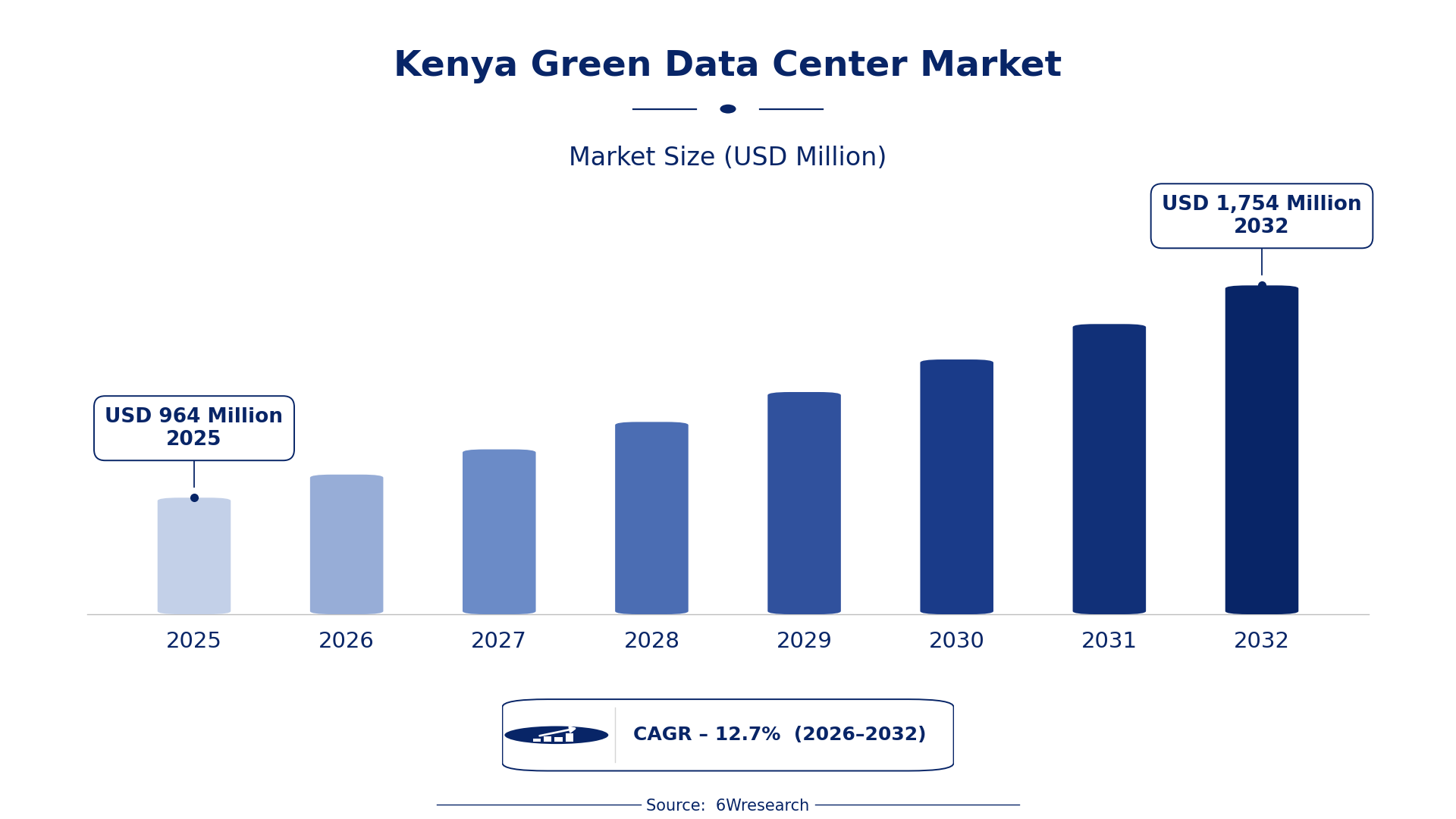
The Kenya Green Data Center Market was estimated at USD 964 Million in 2025 and is projected to reach USD 1754 Million by 2032, growing at a CAGR of 12.7% from 2026 to 2032.
Kenya Green Data Center Market Synopsis
The Kenya Green Data Center Market has recently gained momentum as businesses increasingly recognize the need for sustainable practices in their operations. This shift is not just about compliance or corporate responsibility; it’s a strategic move towards cost efficiency and competitive advantage.
Looking ahead, the market is expected to expand significantly, driven by rising data consumption and the imperative for energy-efficient solutions. As government policies align with global sustainability goals, the demand for green data centers will only intensify, creating a ripe environment for investment and innovation.
Kenya Green Data Center Market Year-wise Growth Rate and Key Drivers
This graph illustrates the annual growth rates of the Kenya Green Data Center Market from 2021 to 2032, highlighting a steady upward trajectory and projected expansion over the forecast period.
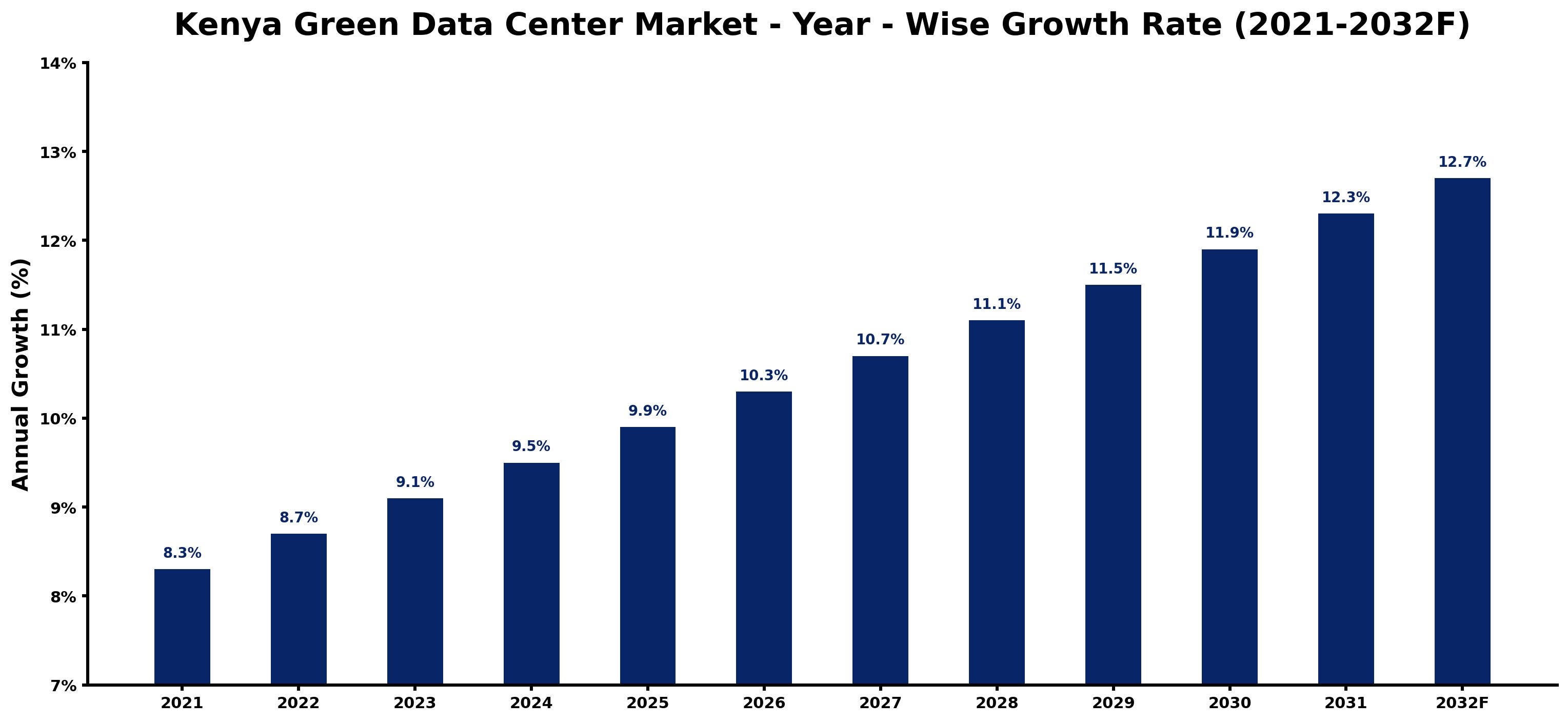
The table below presents the year‑wise growth rates along with the key drivers influencing the market
| Year | Growth Rate | Major Drivers |
| 2021 | 8.3% | Government incentives for energy-efficient data center infrastructure. |
| 2022 | 8.7% | Increased foreign investment in sustainable IT solutions. |
| 2023 | 9.1% | Growing digital economy driving cloud service adoption. |
| 2024 | 9.5% | Implementation of Kenya's green technology projects. |
| 2025 | 9.9% | Increasing local startups prioritizing eco-friendly IT services. |
| 2026 | 10.3% | Availability of affordable green energy solutions in Kenya. |
| 2027 | 10.7% | Kenya Vision 2030 emphasizes technology and innovation. |
| 2028 | 11.1% | Expanding local talent pool in IT and sustainability. |
| 2029 | 11.5% | Adoption of energy-efficient cooling technologies in data centers. |
| 2030 | 11.9% | Regulatory push for green certifications in data services. |
| 2031 | 12.3% | Rising consumer awareness of data center sustainability. |
| 2032 | 12.7% | Partnerships with global tech firms for green technology. |
Note: Market size estimations and growth projections presented in this report are based on 6Wresearch's proprietary forecasting methodology, utilizing the latest available industry data, government publications, and primary research inputs.
Kenya Green Data Center Market Key Takeaways
Below are some of the specific key takeaways from the market, including:
- The increasing adoption of renewable energy sources is a core driver of growth in the market.
- Innovative cooling technologies are being developed to enhance energy efficiency in operations.
- Government incentives are encouraging businesses to implement sustainable data center practices.
- Awareness around environmental impact is pushing companies to transition to green solutions.
- Investment opportunities abound for firms providing eco-friendly infrastructure solutions.
Evaluation of Restraints in Kenya Green Data Center Market
Despite its growth potential, the Kenya Green Data Center Market faces several restraints. A significant barrier is the limited understanding of green technologies among businesses, which can lead to hesitation in adopting new practices. High initial costs associated with eco-friendly infrastructure deter many companies from making necessary investments. The unreliable power supply in certain regions further complicates operations, leading to potential downtimes. Additionally, the shortage of skilled professionals in sustainable IT management hampers the sector’s ability to innovate and implement effective solutions.
Kenya Green Data Center Market Trends
A notable trend in the Kenya Green Data Center Market is the growing emphasis on virtualization technologies, which optimize resource use and minimize energy consumption. Companies are increasingly investing in energy-efficient cooling systems that reduce operational costs while meeting regulatory standards. on top of that, the integration of AI and machine learning in data management processes is enhancing operational efficiency and enabling predictive maintenance, thereby extending the life of data center infrastructure.
Kenya Green Data Center Market Opportunities
The market presents several opportunities for growth and investment. Companies can explore developing and managing green data centers that rely on renewable energy sources. There’s also a demand for consultancy services that help businesses transition to sustainable practices. Investors should consider opportunities in partnerships focused on developing innovative cooling technologies and energy-efficient infrastructure solutions. The increasing need for data storage and processing capabilities, coupled with government support for green initiatives, further amplifies these opportunities.
Government Initiatives in the Kenya Green Data Center Market
The Kenyan government is actively shaping the Green Data Center Market through various initiatives aimed at promoting sustainability. These policies prioritize the adoption of green technologies and provide a supportive framework for businesses looking to implement eco-friendly practices. With a focus on reducing carbon emissions, government action is essential to ensure that the market thrives and evolves.
- A tax incentive program launched in early 2025 encourages companies to invest in energy-efficient technologies.
- Current regulations promote responsible e-waste management and the use of efficient cooling systems in data centers.
- A national green technology research initiative, now underway, aims to foster innovation in the sector.
- Planned legislation expected in 2026 will mandate transparency in energy billing for data center operations.
Future Insights of the Kenya Green Data Center Market
The Kenya Green Data Center Market is likely to witness substantial growth from 2026 to 2032. As environmental sustainability becomes a priority for businesses, the demand for energy-efficient solutions will continue to rise. The ongoing digital transformation across various sectors will necessitate advanced infrastructure that aligns with sustainable practices. Enhanced government support and investment in renewable energy will further accelerate this market's growth, making it an attractive space for new entrants and established players alike.
Kenya Green Data Center Market Latest Developments
In recent months, the Kenya Green Data Center Market has seen a surge in activity as companies ramp up their investments in sustainable technologies. This trend reflects a broader commitment to environmental responsibility and efficiency within the sector. With ongoing innovations and government support, the market is primed for significant advancements.
- A major technology vendor launched a new energy-efficient cooling solution in Q1 2025, aimed at reducing operational costs for data centers.
- An initiative promoting public-private partnerships for green technology adoption began in mid-2025 and remains underway.
- A leading regional operator is expanding its green data center facilities, with construction expected to be completed by late 2026.
- Plans for a national awareness campaign on green data center technologies are set to roll out in early 2026.
Kenya Green Data Center Market - Key Attractiveness of the Report
- 10 Years of Market Numbers
- Historical Data Starting from 2022 to 2025
- Base Year: 2025
- Forecast Data until 2032
- Key Performance Indicators Impacting the Market
- Major Upcoming Developments and Projects
Key Highlights of the Report:
- Kenya Green Data Center Market Outlook
- Market Size of Kenya Green Data Center Market, 2025
- Forecast of Kenya Green Data Center Market, 2032
- Historical Data and Forecast of Kenya Green Data Center Revenues & Volume for the Period 2022-2032F
- Kenya Green Data Center Market Trend Evolution
- Kenya Green Data Center Market Drivers and Challenges
- Kenya Green Data Center Price Trends
- Kenya Green Data Center Porter's Five Forces
- Kenya Green Data Center Industry Life Cycle
- Historical Data and Forecast of Kenya Green Data Center Market Revenues & Volume By Component for the Period 2022-2032F
- Historical Data and Forecast of Kenya Green Data Center Market Revenues & Volume By Solutions for the Period 2022-2032F
- Historical Data and Forecast of Kenya Green Data Center Market Revenues & Volume By Services for the Period 2022-2032F
- Historical Data and Forecast of Kenya Green Data Center Market Revenues & Volume By Vertical for the Period 2022-2032F
- Historical Data and Forecast of Kenya Green Data Center Market Revenues & Volume By BFSI for the Period 2022-2032F
- Historical Data and Forecast of Kenya Green Data Center Market Revenues & Volume By IT and Telecom for the Period 2022-2032F
- Historical Data and Forecast of Kenya Green Data Center Market Revenues & Volume By Media and Entertainment for the Period 2022-2032F
- Historical Data and Forecast of Kenya Green Data Center Market Revenues & Volume By Healthcare for the Period 2022-2032F
- Historical Data and Forecast of Kenya Green Data Center Market Revenues & Volume By Government and Defense for the Period 2022-2032F
- Historical Data and Forecast of Kenya Green Data Center Market Revenues & Volume By Retail for the Period 2022-2032F
- Historical Data and Forecast of Kenya Green Data Center Market Revenues & Volume By Manufacturing for the Period 2022-2032F
- Historical Data and Forecast of Kenya Green Data Center Market Revenues & Volume By Others for the Period 2022-2032F
- Historical Data and Forecast of Kenya Green Data Center Market Revenues & Volume By Data Center Size for the Period 2022-2032F
- Historical Data and Forecast of Kenya Green Data Center Market Revenues & Volume By Small for the Period 2022-2032F
- Historical Data and Forecast of Kenya Green Data Center Market Revenues & Volume By Mid-sized for the Period 2022-2032F
- Historical Data and Forecast of Kenya Green Data Center Market Revenues & Volume By Large for the Period 2022-2032F
- Kenya Green Data Center Import Export Trade Statistics
- Market Opportunity Assessment By Component
- Market Opportunity Assessment By Vertical
- Market Opportunity Assessment By Data Center Size
- Kenya Green Data Center Top Companies Market Share
- Kenya Green Data Center Competitive Benchmarking By Technical and Operational Parameters
- Kenya Green Data Center Company Profiles
- Kenya Green Data Center Key Strategic Recommendations






































