Kenya Hiking Gear & Equipment Market Size, Share & Growth Rate
The Kenya Hiking Gear & Equipment Market was estimated at USD 724 Million in 2025 and is projected to reach USD 1045 Million by 2032, growing at a CAGR of 5.4% from 2026 to 2032. This growth trajectory is fueled by an increasing enthusiasm for outdoor activities among Kenyans and tourists, highlighting the allure of the countrys diverse landscapes. Furthermore, eco-tourism initiatives are enhancing awareness and accessibility to high-quality hiking gear, further driving the market's expansion.
Kenya Hiking Gear & Equipment Market Year-wise Growth Rate and Key Drivers
This graph highlights how the Kenya Hiking Gear & Equipment Market has steadily grown over the years, supported by major growth factors.
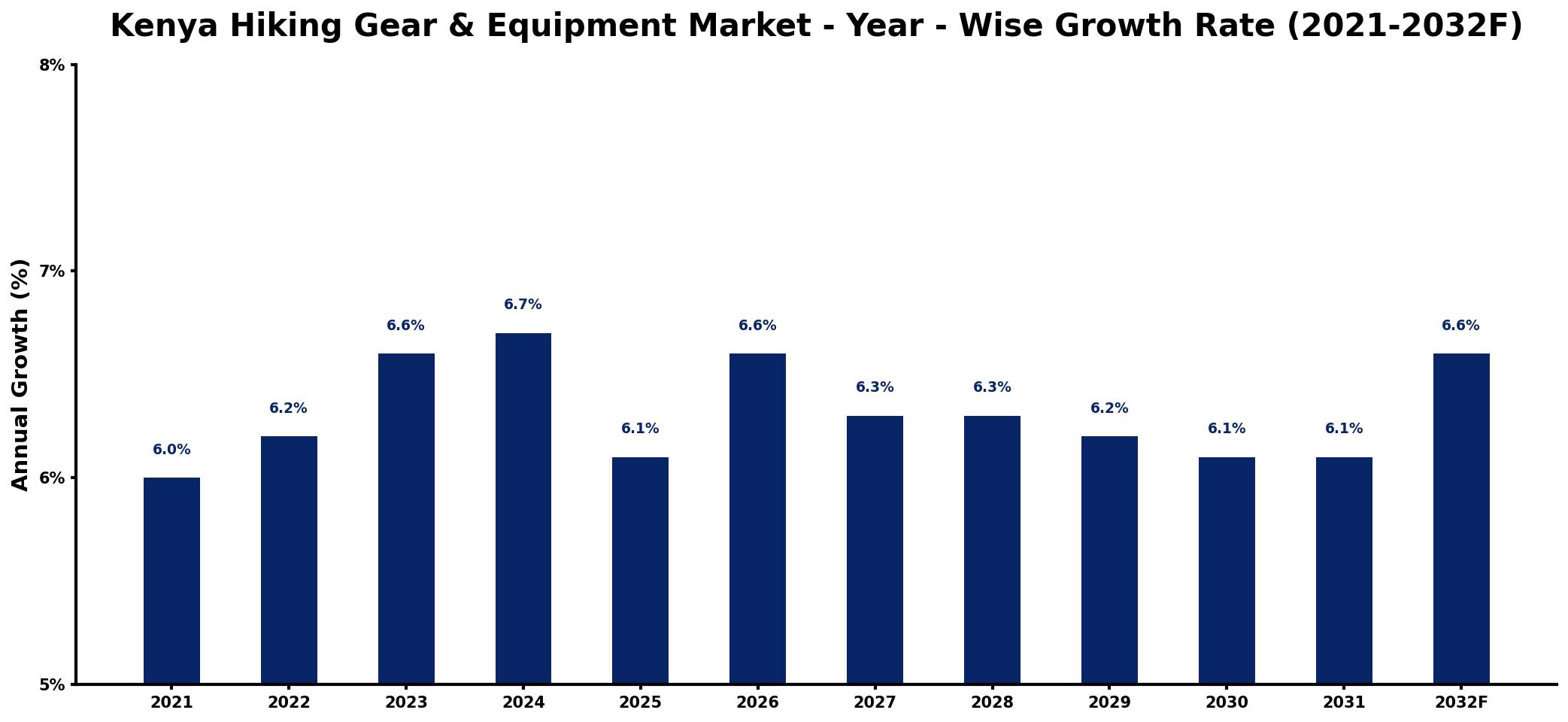
The table below presents the year‑wise growth rates along with the key drivers influencing the market
| Year | Growth Rate | Major Drivers |
| 2021 | 6.0% | rising outdoor adventure popularity |
| 2022 | 6.2% | increased tourism and travel interest |
| 2023 | 6.6% | growing environmental awareness initiatives |
| 2024 | 6.7% | enhanced digital marketing strategies |
| 2025 | 6.1% | expansion of local retailers network |
| 2026 | 6.6% | increased disposable income levels |
| 2027 | 6.3% | development of new trail networks |
| 2028 | 6.3% | collaboration with travel influencers |
| 2029 | 6.2% | growth in adventure tourism packages |
| 2030 | 6.1% | emergence of eco-friendly practices |
| 2031 | 6.1% | focus on wellness and fitness |
| 2032 | 6.6% | increased community engagement programs |
Note: Market size estimations and growth projections presented in this report are based on 6Wresearch's proprietary forecasting methodology, utilizing the latest available industry data, government publications, and primary research inputs.
Kenya Hiking Gear & Equipment Market Synopsis
Recent momentum in the Kenya Hiking Gear & Equipment Market reflects a vibrant surge in outdoor adventures, which has caught the attention of both local consumers and international tourists. This growing enthusiasm contrasts with the historically limited availability of specialized gear, presenting an opportunity for rapid market evolution.
Looking forward, the market is set to adapt to shifting consumer preferences with a stronger emphasis on durability and sustainability. As more people embrace hiking and trekking as viable recreational options, theres an emerging demand for products that blend functionality with environmental consciousness, ensuring a promising future for industry players.
- The market is experiencing a compound annual growth rate of 5.4% from 2026 to 2032.
- Increased demand for lightweight and durable hiking gear is reshaping product offerings.
- Eco-friendly hiking equipment is gaining traction among conscious consumers.
- Technological innovations are driving new product developments in the market.
- Strong competition exists among local and international brands, enhancing consumer choices.
Despite its promising trajectory, the Kenya Hiking Gear & Equipment Market faces several challenges. A significant constraint is the limited local production of high-quality gear, often resulting in a reliance on expensive imported products. This reliance is exacerbated by tariffs and shipping costs, which can inflate prices for consumers. Moreover, the prevalence of counterfeit products poses safety risks and undermines the reputation of legitimate brands. Addressing these issues through improved local manufacturing capabilities and consumer education about the importance of authentic equipment is vital for fostering sustainable market growth.
Key trends are emerging within the Kenya Hiking Gear & Equipment Market, reflecting broader changes in consumer behavior. One prominent trend is the shift toward lightweight and multi-functional gear that enhances the hiking experience without compromising comfort. Additionally, the demand for eco-friendly products is gaining momentum, aligning with global sustainability efforts. Technological advancements are also influencing the market, with innovations such as GPS-enabled devices and moisture-wicking materials becoming increasingly popular among outdoor enthusiasts.
The market presents compelling investment opportunities, particularly for brands looking to cater to the growing hiking culture in Kenya. There is a notable demand for essential hiking equipment, including backpacks, tents, and outdoor apparel suited to the unique Kenyan climate. Moreover, the increasing emphasis on sustainability opens avenues for businesses specializing in eco-friendly gear. Collaborations with local tour operators and adventure companies can also facilitate market entry and distribution, enhancing brand visibility and consumer reach.
While there are no specific government policies targeting the hiking gear sector, the Kenyan government is keen on promoting tourism, which indirectly benefits the hiking gear market. Initiatives aimed at enhancing infrastructure in national parks and conservation areas are crucial, as they encourage more visitors to explore outdoor activities. Furthermore, regulations focusing on environmental conservation may influence consumer preferences, steering them toward sustainable hiking gear options.
The future of the Kenya Hiking Gear & Equipment Market is bright, with significant growth anticipated through 2032. As health consciousness rises and disposable incomes increase, more individuals are likely to engage in outdoor pursuits. This growing trend, coupled with supportive government initiatives aimed at promoting tourism, will sustain demand for high-quality hiking gear. Market players will need to prioritize innovation and environmental sustainability to stay competitive and meet the evolving needs of consumers.
Recent developments in the Kenya Hiking Gear & Equipment Market indicate a shift towards enhanced product offerings, with several brands launching innovative gear tailored for local conditions. The focus on sustainability is evident, with more companies adopting eco-friendly materials and practices. Additionally, there is an increasing trend towards online sales channels, making hiking gear more accessible to a broader audience. Initiatives aimed at consumer education regarding the importance of proper hiking gear are also gaining momentum, contributing to market growth.
- 10 Years of Market Numbers
- Historical Data Starting from 2022 to 2025
- Base Year: 2025
- Forecast Data until 2032
- Key Performance Indicators Impacting the Market
- Major Upcoming Developments and Projects
Key Highlights of the Report:
- Kenya Hiking Gear & Equipment Market Outlook
- Market Size of Kenya Hiking Gear & Equipment Market, 2025
- Forecast of Kenya Hiking Gear & Equipment Market, 2032
- Historical Data and Forecast of Kenya Hiking Gear & Equipment Revenues & Volume for the Period 2022-2032F
- Kenya Hiking Gear & Equipment Market Trend Evolution
- Kenya Hiking Gear & Equipment Market Drivers and Challenges
- Kenya Hiking Gear & Equipment Price Trends
- Kenya Hiking Gear & Equipment Porter's Five Forces
- Kenya Hiking Gear & Equipment Industry Life Cycle
- Historical Data and Forecast of Kenya Hiking Gear & Equipment Market Revenues & Volume By Product for the Period 2022-2032F
- Historical Data and Forecast of Kenya Hiking Gear & Equipment Market Revenues & Volume By Clothes for the Period 2022-2032F
- Historical Data and Forecast of Kenya Hiking Gear & Equipment Market Revenues & Volume By Footwear for the Period 2022-2032F
- Historical Data and Forecast of Kenya Hiking Gear & Equipment Market Revenues & Volume By Backpack for the Period 2022-2032F
- Historical Data and Forecast of Kenya Hiking Gear & Equipment Market Revenues & Volume By Equipment for the Period 2022-2032F
- Historical Data and Forecast of Kenya Hiking Gear & Equipment Market Revenues & Volume By Others for the Period 2022-2032F
- Historical Data and Forecast of Kenya Hiking Gear & Equipment Market Revenues & Volume By Distribution Channel for the Period 2022-2032F
- Historical Data and Forecast of Kenya Hiking Gear & Equipment Market Revenues & Volume By Specialty stores for the Period 2022-2032F
- Historical Data and Forecast of Kenya Hiking Gear & Equipment Market Revenues & Volume By Retail stores for the Period 2022-2032F
- Historical Data and Forecast of Kenya Hiking Gear & Equipment Market Revenues & Volume By Online for the Period 2022-2032F
- Kenya Hiking Gear & Equipment Import Export Trade Statistics
- Market Opportunity Assessment By Product
- Market Opportunity Assessment By Distribution Channel
- Kenya Hiking Gear & Equipment Top Companies Market Share
- Kenya Hiking Gear & Equipment Competitive Benchmarking By Technical and Operational Parameters
- Kenya Hiking Gear & Equipment Company Profiles
- Kenya Hiking Gear & Equipment Key Strategic Recommendations






































