Kenya Perchloroethylene Market Size, Share & Growth Rate
The Kenya Perchloroethylene Market was estimated at USD 373 Million in 2025 and is projected to reach USD 509 Million by 2032, growing at a CAGR of 4.5% from 2026 to 2032. This growth trajectory is driven largely by the burgeoning textile and dry cleaning sectors, which are seeing a significant uptick in consumer spending as disposable incomes rise. With an increasing demand for efficient fabric care and cleaning services, perchloroethylene is set to play a pivotal role in supporting these industries.
Kenya Perchloroethylene Market Year-wise Growth Rate and Key Drivers
This graph highlights how the Kenya Perchloroethylene Market has steadily grown over the years, supported by major growth factors.
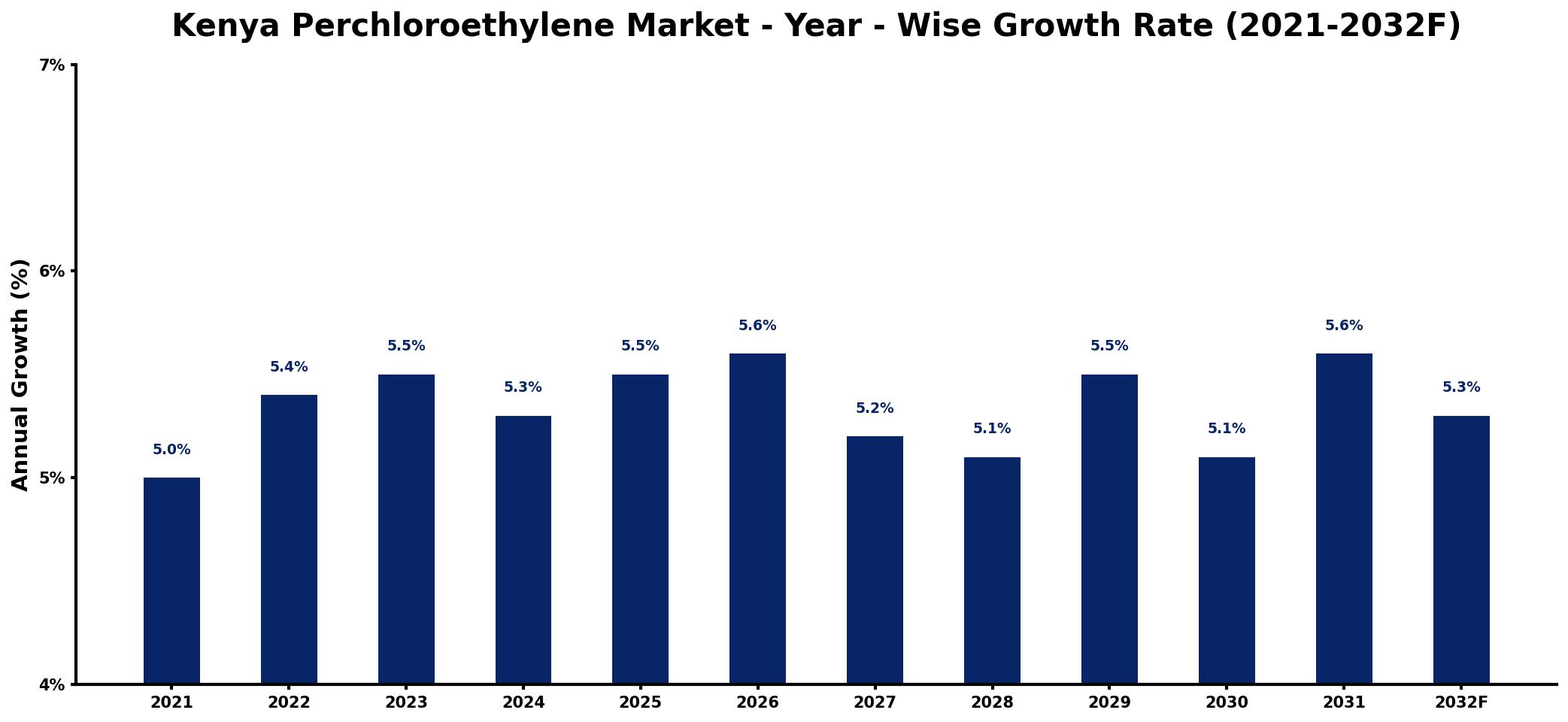
The table below presents the year‑wise growth rates along with the key drivers influencing the market
| Year | Growth Rate | Major Drivers |
| 2021 | 5.0% | Increased demand from dry cleaning |
| 2022 | 5.4% | Expansion in automotive repair services |
| 2023 | 5.5% | Growth in textile manufacturing sector |
| 2024 | 5.3% | Rising construction industry activities |
| 2025 | 5.5% | Higher investments in industrial cleaning |
| 2026 | 5.6% | Boost in electronics manufacturing needs |
| 2027 | 5.2% | Demand from chemical processing sector |
| 2028 | 5.1% | increased overall sector activity |
| 2029 | 5.5% | Increased usage in pharmaceuticals production |
| 2030 | 5.1% | Expansion of food processing facilities |
| 2031 | 5.6% | Rising demand from agricultural sector |
| 2032 | 5.3% | expanding industrial usage applications |
Note: Market size estimations and growth projections presented in this report are based on 6Wresearch's proprietary forecasting methodology, utilizing the latest available industry data, government publications, and primary research inputs.
Kenya Perchloroethylene Market Synopsis
The Kenya Perchloroethylene market is currently thriving, fueled by a robust dry cleaning industry and a growing textile sector. Perchloroethylene, commonly referred to as perc, is integral to the cleaning and degreasing processes, making it a staple in many commercial applications.
However, the market does face scrutiny due to environmental concerns surrounding perc's toxicity. As awareness around health and safety increases, stakeholders are navigating the dual challenge of meeting industrial demand while also addressing regulatory pressures.
Kenya Perchloroethylene Market Key Takeaways
- The Kenya Perchloroethylene market is witnessing growth driven by expanding textile and dry cleaning industries.
- Increased disposable incomes are leading to higher consumer spending on professional cleaning services.
- Environmental regulations are tightening, requiring businesses to adapt to safer and more sustainable practices.
- Innovation in eco-friendly alternatives presents both challenges and opportunities for market participants.
- Key regulations aim to ensure the safe handling and disposal of perchloroethylene to protect public health.
Evaluation of Restraints in Kenya Perchloroethylene Market
Despite its growth potential, the Kenya Perchloroethylene market faces notable restraints. The increasing scrutiny surrounding the environmental impact of perchloroethylene, classified as a hazardous air pollutant, has led to stringent regulations on its use and disposal. Businesses must navigate compliance challenges and invest in alternative solutions, which can elevate operational costs. This regulatory landscape compels industry players to innovate while balancing efficiency and sustainability, creating a complex environment for growth.
Kenya Perchloroethylene Market Trends
Emerging trends in the Kenya Perchloroethylene market reflect a shift toward more sustainable practices in the dry cleaning sector. Increasing consumer awareness regarding the health effects of perchloroethylene is driving demand for eco-friendly alternatives. Additionally, the rise of urbanization and changing lifestyle patterns contribute to a growing market for professional dry cleaning services, further increasing the need for efficient cleaning solvents.
Kenya Perchloroethylene Market Opportunities
The growing dry cleaning market in Kenya presents genuine investment opportunities, particularly as disposable income levels continue to rise. Enterprises that focus on sustainable practices, including the development of safer solvents and advanced cleaning technologies, are likely to thrive. Furthermore, governmental support for industrial development can provide a conducive environment for new entrants and innovations, making the Kenya Perchloroethylene market an attractive prospect for investors looking to capitalize on the evolving industry landscape.
Government Initiatives in the Kenya Perchloroethylene Market
The Kenyan government has instituted several policies to regulate perchloroethylene usage, focusing on environmental health and safety. Key initiatives include the Environmental Management and Coordination (Waste Management) Regulations that set guidelines for the proper handling and disposal of hazardous materials. Additionally, the establishment of the National Environment Management Authority (NEMA) has enhanced oversight, ensuring compliance with regulations that promote public safety and environmental sustainability within the chemical sector.
Future Insights of the Kenya Perchloroethylene Market
Looking ahead to 2026-2032, the Kenya Perchloroethylene market is poised for continued growth, driven by the expanding textile and dry cleaning industries. The projected rise in disposable incomes will likely translate into increased spending on laundry and dry cleaning services. However, companies will need to remain agile, responding to regulatory pressures and consumer demands for environmentally friendly practices. With a strategic focus on innovation and sustainability, the market can navigate challenges and harness opportunities for expansion.
Kenya Perchloroethylene Market Latest Developments (2025 - 2026)
In recent months, the Kenya Perchloroethylene market has witnessed a trend toward adopting environmentally safer practices. Companies are increasingly investing in research and development to explore alternative solvents, spurred by regulatory incentives aimed at reducing toxic emissions. Additionally, the growth in the textile industry continues to drive demand for perc, ensuring that stakeholders remain focused on quality and compliance.
Kenya Perchloroethylene Market - Key Attractiveness of the Report
- 10 Years of Market Numbers
- Historical Data Starting from 2022 to 2025
- Base Year: 2025
- Forecast Data until 2032
- Key Performance Indicators Impacting the Market
- Major Upcoming Developments and Projects
Key Highlights of the Report:
- Kenya Perchloroethylene Market Outlook
- Market Size of Kenya Perchloroethylene Market, 2025
- Forecast of Kenya Perchloroethylene Market, 2032
- Historical Data and Forecast of Kenya Perchloroethylene Revenues & Volume for the Period 2022-2032F
- Kenya Perchloroethylene Market Trend Evolution
- Kenya Perchloroethylene Market Drivers and Challenges
- Kenya Perchloroethylene Price Trends
- Kenya Perchloroethylene Porter's Five Forces
- Kenya Perchloroethylene Industry Life Cycle
- Historical Data and Forecast of Kenya Perchloroethylene Market Revenues & Volume By Type for the Period 2022-2032F
- Historical Data and Forecast of Kenya Perchloroethylene Market Revenues & Volume By Ethylene Oxychlorination for the Period 2022-2032F
- Historical Data and Forecast of Kenya Perchloroethylene Market Revenues & Volume By Acetylene Method for the Period 2022-2032F
- Historical Data and Forecast of Kenya Perchloroethylene Market Revenues & Volume By Ethylene Direct Chlorination for the Period 2022-2032F
- Historical Data and Forecast of Kenya Perchloroethylene Market Revenues & Volume By End-use for the Period 2022-2032F
- Historical Data and Forecast of Kenya Perchloroethylene Market Revenues & Volume By Dry Cleaning Agent for the Period 2022-2032F
- Historical Data and Forecast of Kenya Perchloroethylene Market Revenues & Volume By Solvent for the Period 2022-2032F
- Historical Data and Forecast of Kenya Perchloroethylene Market Revenues & Volume By Others for the Period 2022-2032F
- Kenya Perchloroethylene Import Export Trade Statistics
- Market Opportunity Assessment By Type
- Market Opportunity Assessment By End-use
- Kenya Perchloroethylene Top Companies Market Share
- Kenya Perchloroethylene Competitive Benchmarking By Technical and Operational Parameters
- Kenya Perchloroethylene Company Profiles
- Kenya Perchloroethylene Key Strategic Recommendations






































