Kenya Sunglasses Market Growth Rate Analysis (2021 - 2031)
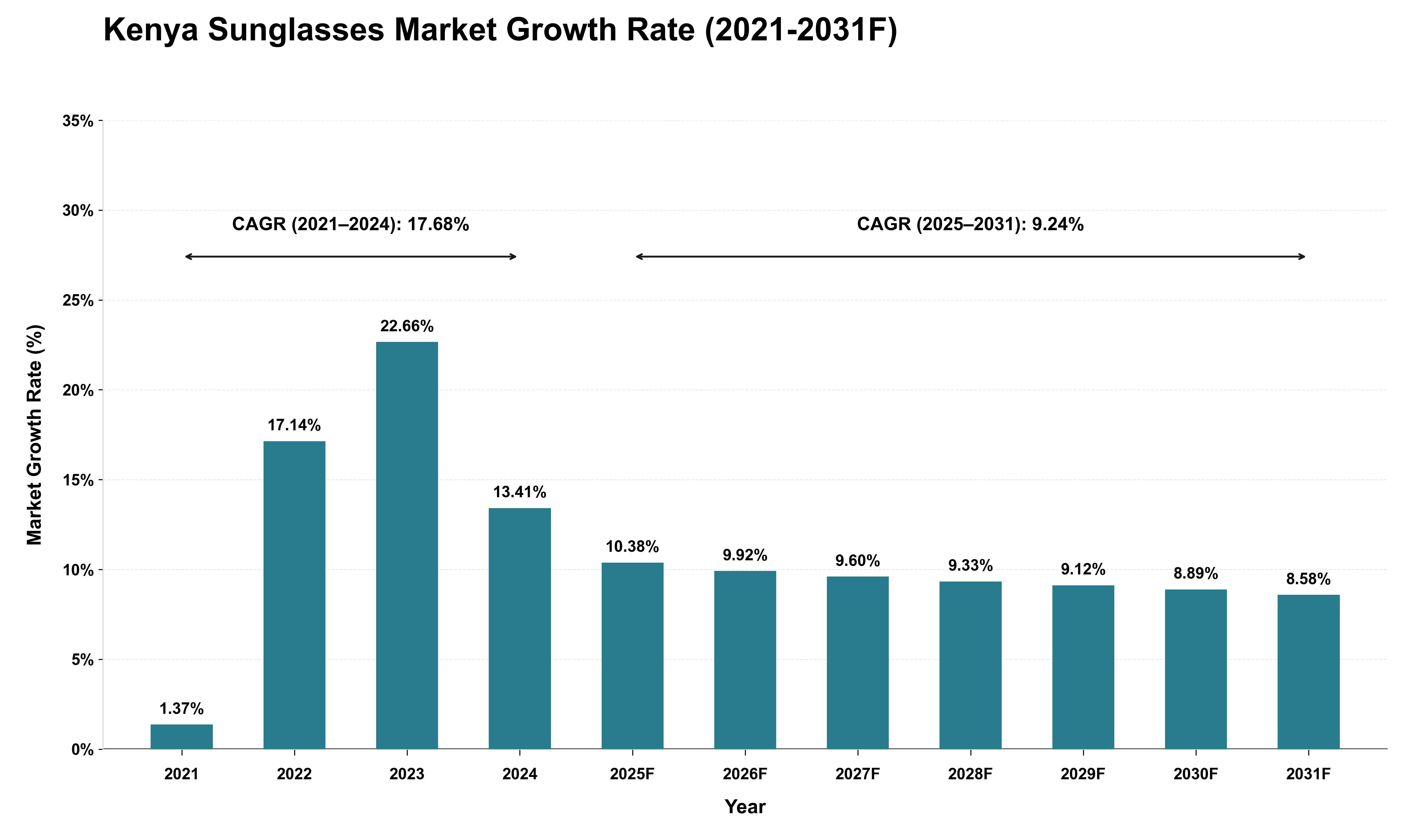
The Kenya sunglasses market experienced significant growth from 2021 to 2024, with a historical CAGR of 17.68%, driven primarily by rising end-use demand linked to increased outdoor activities and a growing middle class seeking fashionable eyewear. The sharp rise in annual growth rates, particularly in 2023 at 22.66%, can be attributed to post-pandemic recovery dynamics, where consumer spending rebounded as tourism and social events resumed. However, the forecast period from 2025 to 2031 anticipates a deceleration in growth to a CAGR of 9.24%. This shift reflects broader global trade factors such as fluctuating import reliance on raw materials and potential supply chain disruptions that could affect pricing and availability. Additionally, the anticipated stabilization of consumer preferences may lead to more measured growth rates as the market adjusts to evolving economic conditions and competitive pressures within the eyewear sector.
Key Highlights of the Report:
- Kenya Sunglasses Market Outlook
- Market Size of Kenya Sunglasses Market, 2024
- Forecast of Kenya Sunglasses Market, 2031
- Historical Data and Forecast of Kenya Sunglasses Revenues & Volume for the Period 2021 - 2031
- Kenya Sunglasses Market Trend Evolution
- Kenya Sunglasses Market Drivers and Challenges
- Kenya Sunglasses Price Trends
- Kenya Sunglasses Porter's Five Forces
- Kenya Sunglasses Industry Life Cycle
- Historical Data and Forecast of Kenya Sunglasses Market Revenues & Volume By Product Type for the Period 2021 - 2031
- Historical Data and Forecast of Kenya Sunglasses Market Revenues & Volume By Polarized for the Period 2021 - 2031
- Historical Data and Forecast of Kenya Sunglasses Market Revenues & Volume By Non-polarized for the Period 2021 - 2031
- Historical Data and Forecast of Kenya Sunglasses Market Revenues & Volume By End-Users for the Period 2021 - 2031
- Historical Data and Forecast of Kenya Sunglasses Market Revenues & Volume By Women for the Period 2021 - 2031
- Historical Data and Forecast of Kenya Sunglasses Market Revenues & Volume By Men for the Period 2021 - 2031
- Historical Data and Forecast of Kenya Sunglasses Market Revenues & Volume By Unisex for the Period 2021 - 2031
- Historical Data and Forecast of Kenya Sunglasses Market Revenues & Volume By Distribution Channel for the Period 2021 - 2031
- Historical Data and Forecast of Kenya Sunglasses Market Revenues & Volume By Online for the Period 2021 - 2031
- Historical Data and Forecast of Kenya Sunglasses Market Revenues & Volume By Offline for the Period 2021 - 2031
- Kenya Sunglasses Import Export Trade Statistics
- Market Opportunity Assessment By Product Type
- Market Opportunity Assessment By End-Users
- Market Opportunity Assessment By Distribution Channel
- Kenya Sunglasses Top Companies Market Share
- Kenya Sunglasses Competitive Benchmarking By Technical and Operational Parameters
- Kenya Sunglasses Company Profiles
- Kenya Sunglasses Key Strategic Recommendations






































