Kuwait Halal Meat Market: Import Trend Analysis
In the Kuwait halal meat market, the import trend experienced a Compound Annual Growth Rate (CAGR) of 3.74% between 2020 and 2024. This steady growth indicated a consistent demand for imported halal meat products, showcasing market stability and sustained import momentum during this period.
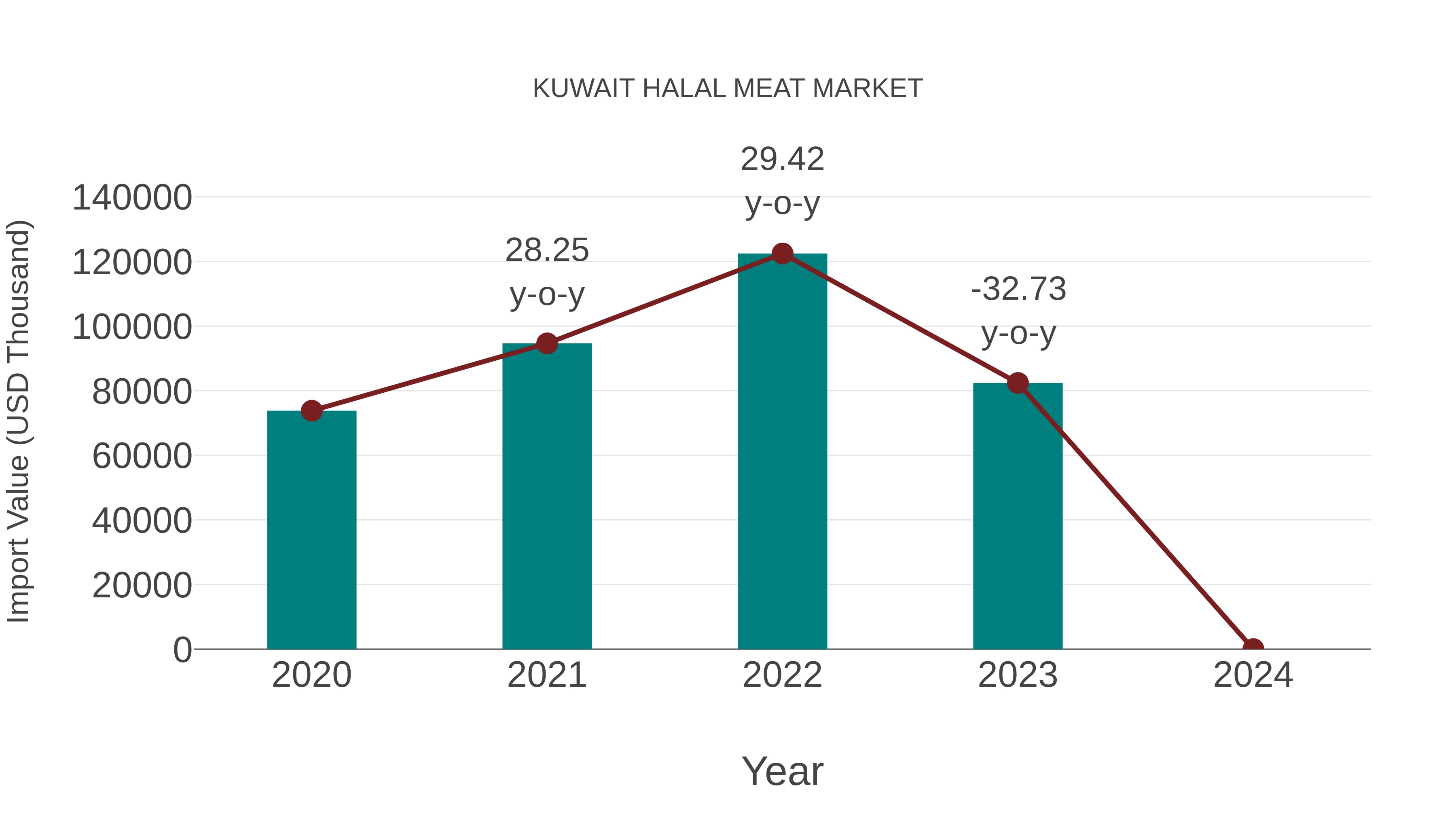
Kuwait Halal Meat Market
The halal meat market in Kuwait provides a variety of halal-certified meats, including beef, lamb, goat, and poultry, prepared according to Islamic dietary laws. Halal meat is an essential component of the Kuwait diet, with demand driven by religious observance and cultural traditions.
Drivers of the market
The Kuwait Halal Meat Market is witnessing growth driven by factors such as the growing Muslim population, increasing consumer awareness of halal dietary requirements, and the preference for high-quality and ethically sourced meat products. As Kuwait consumers seek halal-certified meat products that comply with Islamic dietary laws and ethical standards, there is a rising demand for halal meat across various segments such as beef, lamb, and poultry. Moreover, the implementation of halal certification processes, stringent quality control measures, and the adoption of halal slaughter practices contribute to the growth of the halal meat market in Kuwait, catering to the diverse needs and preferences of Muslim consumers.
Challenges of the market
Challenges in the halal meat market include maintaining halal integrity and authenticity in meat production and processing, addressing animal welfare concerns, and ensuring compliance with halal certification requirements. Additionally, market players face challenges in meeting growing demand for halal meat products while managing supply chain logistics and operational costs.
Government Policy of the market
Halal meat holds significant cultural and religious importance in Kuwait, where adherence to Islamic dietary laws is paramount. Recognizing the importance of the halal meat market in meeting the dietary preferences and religious obligations of Muslim consumers, the Kuwait government has implemented policies to regulate and support its growth. These policies include regulations to ensure humane slaughtering practices, halal certification standards for meat products, and guidelines for halal meat labeling and distribution. Additionally, the government supports initiatives to enhance the domestic production of halal meat through investments in livestock farming and processing facilities. Furthermore, the government collaborates with Islamic scholars and halal certification bodies to maintain the integrity and authenticity of halal meat products. By fostering a regulatory environment that promotes halal standards and consumer trust, the government aims to strengthen Kuwait halal meat market and ensure the availability of quality halal meat products for Muslim consumers.
Key Highlights of the Report:
- Kuwait Halal Meat Market Outlook
- Market Size of Kuwait Halal Meat Market, 2021
- Forecast of Kuwait Halal Meat Market, 2028
- Historical Data and Forecast of Kuwait Halal Meat Revenues & Volume for the Period 2018 - 2028
- Kuwait Halal Meat Market Trend Evolution
- Kuwait Halal Meat Market Drivers and Challenges
- Kuwait Halal Meat Price Trends
- Kuwait Halal Meat Porter's Five Forces
- Kuwait Halal Meat Industry Life Cycle
- Historical Data and Forecast of Kuwait Halal Meat Market Revenues & Volume By Product Type for the Period 2018 - 2028
- Historical Data and Forecast of Kuwait Halal Meat Market Revenues & Volume By Fresh Food for the Period 2018 - 2028
- Historical Data and Forecast of Kuwait Halal Meat Market Revenues & Volume By Processed Food for the Period 2018 - 2028
- Kuwait Halal Meat Import Export Trade Statistics
- Market Opportunity Assessment By Product Type
- Kuwait Halal Meat Top Companies Market Share
- Kuwait Halal Meat Competitive Benchmarking By Technical and Operational Parameters
- Kuwait Halal Meat Company Profiles
- Kuwait Halal Meat Key Strategic Recommendations






































