Kuwait Packaged Water Market: Import Trend Analysis
In the Kuwait packaged water market, the import trend exhibited a notable upward momentum from 2020 to 2024, with a robust Compound Annual Growth Rate (CAGR) of 21.17%. This surge in imports indicates a significant demand shift towards packaged water products, reflecting a strong trade performance in the market.
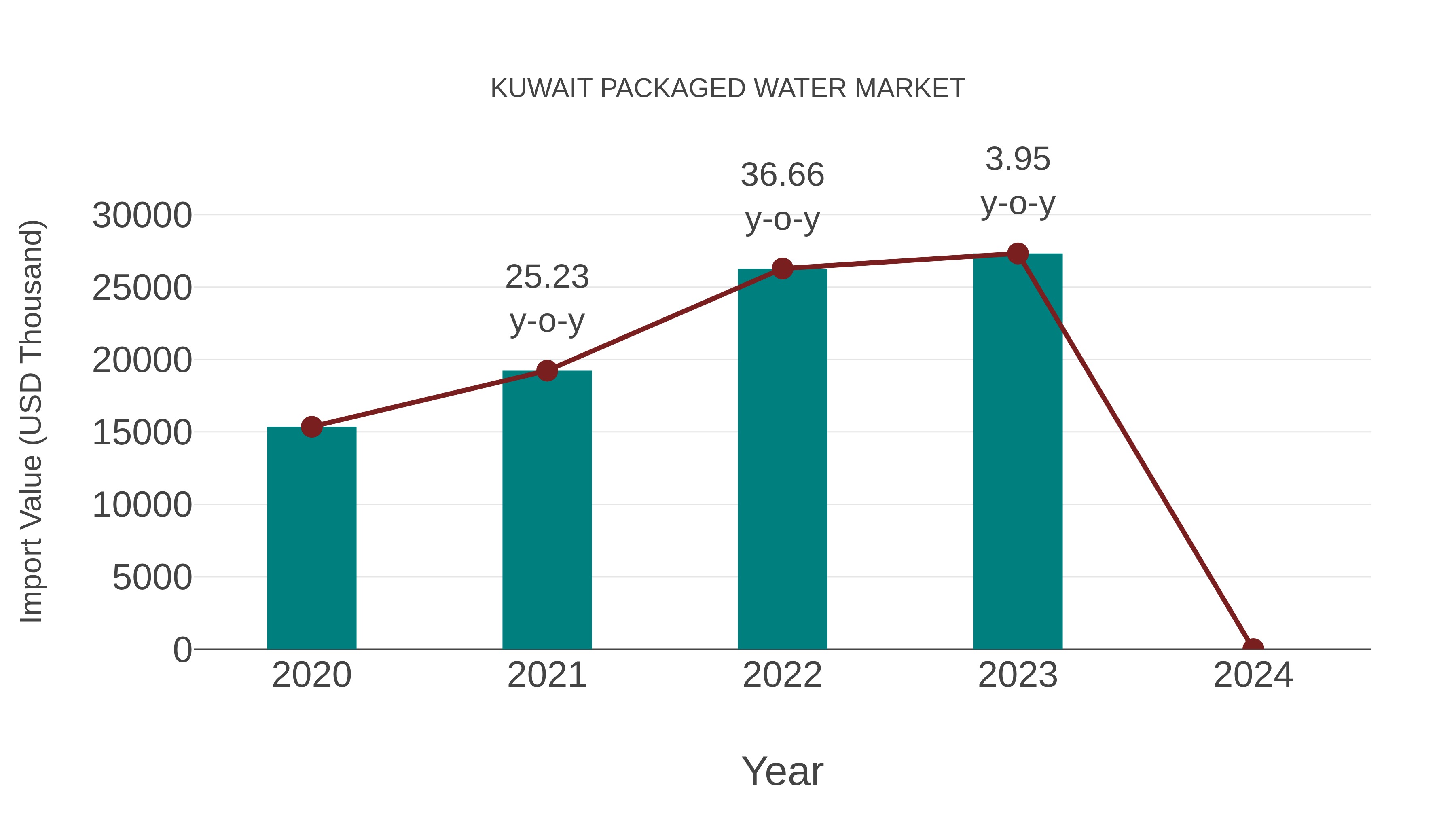
Kuwait Packaged water Market Overview
The Kuwait packaged water market is experiencing steady growth driven by factors such as increasing health awareness, convenience, and the hot climate of the region. The market is highly competitive with a variety of local and international brands offering different packaging sizes and types to cater to consumer preferences. Key players in the market are focusing on product innovation, such as introducing flavored and functional waters, to attract a wider consumer base. Additionally, the market is witnessing a shift towards environmentally friendly packaging options to address growing concerns about sustainability. With a growing population and rising disposable incomes, the demand for packaged water in Kuwait is expected to continue increasing, presenting opportunities for further market expansion and development.
Kuwait Packaged water Market Trends and Opportunities
The Kuwait packaged water market is experiencing steady growth driven by increasing health consciousness among consumers and the convenience of on-the-go hydration. The trend towards healthier beverage options and the shift away from sugary drinks has led to a rise in demand for packaged water. Opportunities in the market include the introduction of innovative packaging formats such as eco-friendly materials and enhanced functional benefits like infused flavors or added vitamins. Additionally, the growing awareness of the importance of hydration for overall well-being presents an opportunity for marketing campaigns emphasizing the health benefits of packaged water. Expanding distribution channels and leveraging e-commerce platforms for direct-to-consumer sales are also key strategies for companies to capitalize on the evolving preferences of Kuwaiti consumers in the packaged water segment.
Kuwait Packaged water Market Challenges
In the Kuwait packaged water market, some challenges faced include intense competition among numerous brands, leading to price wars and pressure on profit margins. Additionally, fluctuating raw material costs, such as plastic for bottles and transportation expenses, can impact overall production costs. Strict regulations and quality standards imposed by the government also add complexity to the market landscape, requiring companies to invest in compliance measures. Furthermore, consumer preferences and trends towards sustainable packaging and environmental consciousness are driving the need for innovative and eco-friendly packaging solutions, which can be both costly and time-consuming to implement. Overall, companies operating in the Kuwait packaged water market need to navigate these challenges effectively to maintain a competitive edge and sustain growth in the industry.
Kuwait Packaged water Market Drivers
The Kuwait packaged water market is primarily driven by factors such as increasing health consciousness among consumers, growing disposable income levels, and a shift towards convenient and portable hydration options. The hot climate in Kuwait also plays a significant role in driving the demand for packaged water as consumers seek convenient and safe drinking water solutions. Additionally, the rising trend of on-the-go consumption and increasing awareness about the importance of staying hydrated further contribute to the growth of the packaged water market in Kuwait. Branding and marketing initiatives by key players, innovative packaging solutions, and the availability of a variety of flavored and functional waters also play a crucial role in driving the market forward.
Kuwait Packaged water Market Government Policy
Government policies related to the Kuwait packaged water market focus on ensuring the safety and quality of drinking water for consumers. The Kuwait Public Authority for Food and Nutrition oversees regulations and standards for packaged water manufacturers, including requirements for labeling, production, and storage. Companies operating in the market are required to comply with these regulations to maintain consumer trust and safeguard public health. Additionally, the government aims to promote sustainability in the industry by encouraging eco-friendly packaging materials and efficient water usage practices. Overall, the government policies in Kuwait`s packaged water market prioritize consumer safety, product quality, and environmental sustainability to support a thriving and responsible industry.
Kuwait Packaged water Market Future Outlook
The future outlook for the Kuwait packaged water market is promising, driven by factors such as increasing health consciousness among consumers, a growing focus on hydration, and a rising demand for convenient and on-the-go beverage options. With a shift towards healthier lifestyles and a preference for safe and clean drinking water, the market is expected to witness steady growth in the coming years. Additionally, advancements in packaging technologies, innovative product offerings, and expanding distribution channels are likely to further fuel market growth. The increasing availability of flavored and functional water variants, along with sustainable packaging solutions, will also play a significant role in shaping the future landscape of the packaged water market in Kuwait. Overall, the market is poised for expansion and offers opportunities for both local and international players to capitalize on the evolving consumer preferences.
Key Highlights of the Report:
- Kuwait Packaged water Market Outlook
- Market Size of Kuwait Packaged water Market, 2025
- Forecast of Kuwait Packaged water Market, 2032
- Historical Data and Forecast of Kuwait Packaged water Revenues & Volume for the Period 2022 - 2032F
- Kuwait Packaged water Market Trend Evolution
- Kuwait Packaged water Market Drivers and Challenges
- Kuwait Packaged water Price Trends
- Kuwait Packaged water Porter's Five Forces
- Kuwait Packaged water Industry Life Cycle
- Historical Data and Forecast of Kuwait Packaged water Market Revenues & Volume By Product for the Period 2022 - 2032F
- Historical Data and Forecast of Kuwait Packaged water Market Revenues & Volume By Still for the Period 2022 - 2032F
- Historical Data and Forecast of Kuwait Packaged water Market Revenues & Volume By Carbonated for the Period 2022 - 2032F
- Historical Data and Forecast of Kuwait Packaged water Market Revenues & Volume By Flavored for the Period 2022 - 2032F
- Historical Data and Forecast of Kuwait Packaged water Market Revenues & Volume By Functional for the Period 2022 - 2032F
- Kuwait Packaged water Import Export Trade Statistics
- Market Opportunity Assessment By Product
- Kuwait Packaged water Top Companies Market Share
- Kuwait Packaged water Competitive Benchmarking By Technical and Operational Parameters
- Kuwait Packaged water Company Profiles
- Kuwait Packaged water Key Strategic Recommendations






































