Kuwait Transport Packaging Market Summary
The kuwait transport packaging market was estimated at USD 1134 Million in 2025 and is projected to reach USD 2053 Million by 2032, growing at a CAGR of 10.2% from 2026 to 2032.
Kuwait Transport Packaging Market Year-wise Growth Rate and Key Drivers
This graph highlights how the Kuwait Transport Packaging Market has steadily grown over the past five years, supported by major growth factors.
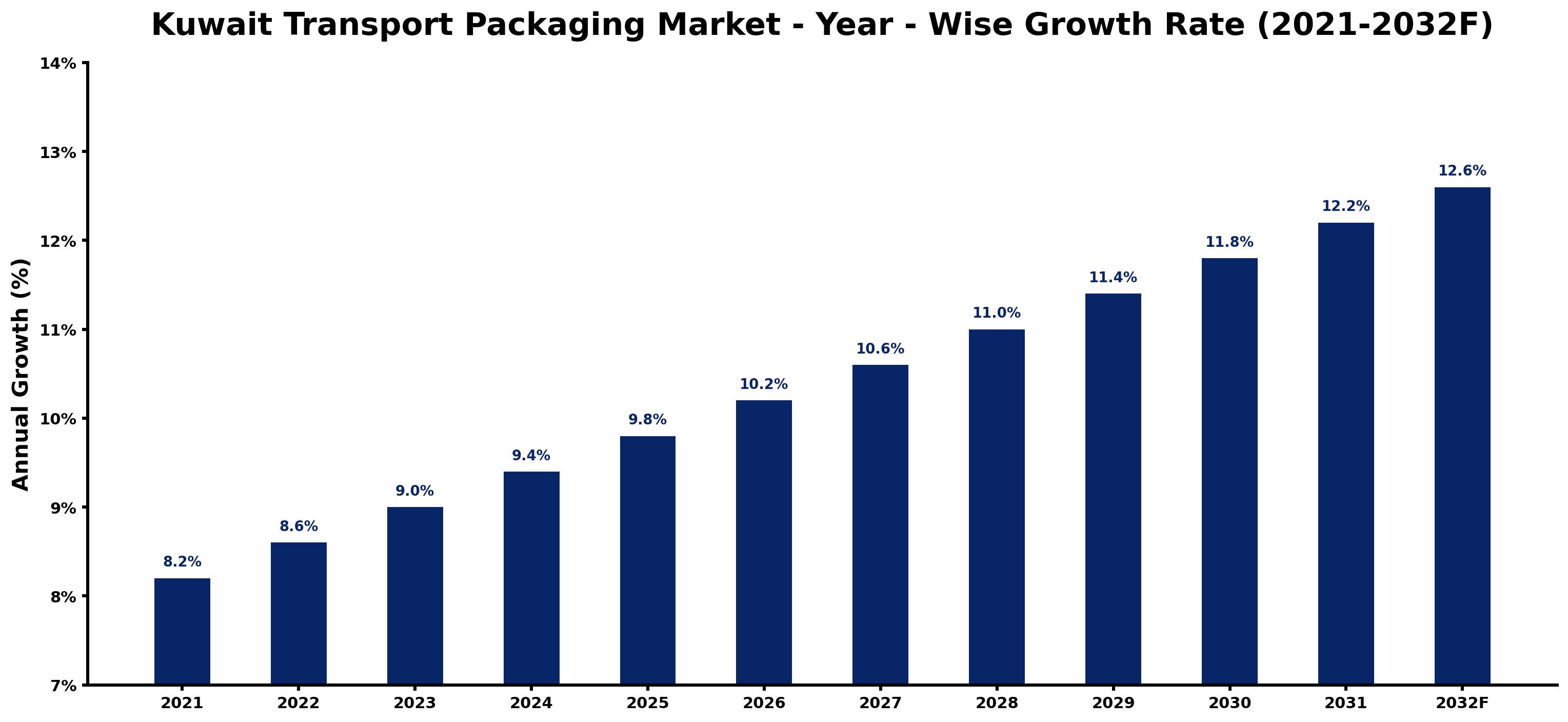
The table below presents the year wise growth rates along with the key drivers influencing the market
| Year | Growth Rate | Major Drivers |
| 2021 | 8.2% | E-commerce expansion in Kuwait accelerates the need for efficient transport packaging solutions. |
| 2022 | 8.6% | Local manufacturers increasingly focus on eco-friendly packaging options to attract consumers. |
| 2023 | 9.0% | Infrastructure developments for logistics enhance the demand for specialized transport packaging. |
| 2024 | 9.4% | Consumer awareness about sustainability creates opportunities for biodegradable packaging materials. |
| 2025 | 9.8% | Retail sector growth in Kuwait leads to heightened competition in the packaging market. |
| 2026 | 10.2% | Rising disposable income encourages premium packaging options within various product categories. |
| 2027 | 10.6% | Utilization of advanced technologies in production boosts efficiency across the packaging supply chain. |
| 2028 | 11.0% | Regional integration efforts among GCC states drive cross-border transport packaging requirements. |
| 2029 | 11.4% | Urbanization trends increase the volume of goods requiring reliable transport packaging. |
| 2030 | 11.8% | Shifts in consumer preferences emphasize the importance of convenience in product delivery. |
| 2031 | 12.2% | Innovation in packaging design aligns with branding strategies for local and international products. |
| 2032 | 12.6% | The circular economy concept gains traction, influencing sustainable practices in transport packaging. |
Note - Market size estimations and growth projections presented in this report are based on 6Wresearch's advanced forecasting approach, validated with industry datasets as of June 2026.
Kuwait Transport Packaging Market Synopsis
The Kuwait Transport Packaging Market is projected to reach 10.2% and witness significant growth during the forecast period (2026-2032). The market is characterized by a diverse range of transport packaging solutions that cater to various sectors, including logistics, e-commerce, and retail. The increasing demand for reliable packaging options is driven by the growth of these sectors, fostering a need for enhanced efficiency and security in logistics.
Kuwait Transport Packaging Market Growth Drivers
Several factors are propelling the growth of the Kuwait Transport Packaging Market. Firstly, the expansion of the e-commerce sector is a significant driver, as businesses seek effective packaging solutions to meet consumer demands for fast and safe delivery. Secondly, the rising food and beverage industry necessitates robust packaging to ensure product integrity during transport. Thirdly, the pharmaceutical sector's strict regulations regarding temperature-sensitive products further stimulate the need for reliable transport packaging.
- The continuous development of retail chains in Kuwait enhances the demand for transport packaging, as they require reliable solutions to manage increased inventory turnover.
- Heightened awareness regarding sustainability encourages businesses to adopt eco-friendly packaging materials, significantly impacting purchasing decisions.
- The preferences for automated and efficient packaging solutions are being adopted across industries, driving innovation within the transport packaging sector.
- Logistical improvements and infrastructure enhancements are contributing to the need for more sophisticated transport packaging solutions to optimize supply chain operations.
- The rise in cross-border trade and exports requires standardized packaging solutions capable of meeting international shipping regulations.
Kuwait Transport Packaging Market Trends and Opportunities
The Kuwait Transport Packaging Market is experiencing notable trends that present various opportunities. One prominent trend is the increasing emphasis on sustainability, where businesses are shifting towards recyclable and biodegradable materials. This shift aligns with global sustainability goals and is becoming a significant purchasing criterion.
- The integration of technology in packaging, including smart packaging solutions that incorporate QR codes and RFID technology, is gaining momentum, enhancing traceability and customer engagement.
- Collaborative efforts between manufacturers and logistics providers are becoming more common, focusing on innovative transport packaging solutions that streamline operations.
- As consumers increasingly demand transparency regarding the origin and handling of products, packaging solutions that communicate these aspects will see heightened demand.
- The growing trend of personalization in packaging offers businesses the opportunity to differentiate their products through customized designs that enhance consumer experience.
- Investment in automation within packaging production facilities is on the rise, providing opportunities for increased efficiency and reduced labor costs.
Kuwait Transport Packaging Market Challenges and Restraints
Despite its growth potential, the Kuwait Transport Packaging Market faces several challenges. Geographical constraints are significant, limiting local production capabilities and thereby increasing dependency on imported packaging materials. High import duties imposed on these materials further exacerbate cost issues for local businesses.
- Limited availability of skilled labor in advanced packaging technologies presents a challenge for the adoption of innovative solutions.
- Regulatory compliance concerning packaging safety and environmental standards can be complex and may deter smaller businesses from entering the market.
- The volatility of raw material prices can lead to unpredictable cost fluctuations, affecting profitability for businesses across the supply chain.
- Competition from imported packaging solutions may lead to price wars, potentially reducing market profitability.
- There is a need for continuous innovation to meet the dynamic requirements of various sectors, necessitating substantial investment in research and development.
Kuwait Transport Packaging Market Government Investment and Initiatives
The Kuwait government has taken proactive steps to enhance the transport packaging sector. Policies promoting the use of recyclable and biodegradable materials have been enacted, demonstrating a commitment to sustainability. The government supports initiatives that aim to meet international packaging safety standards, thus boosting the market's global competitiveness.
- Financial incentives, including grants and subsidies, are being offered to businesses investing in innovative packaging technologies.
- Development plans focusing on enhancing logistics infrastructure are underway to facilitate smoother transport operations and improve overall efficiency.
- Partnerships with private enterprises are being encouraged to promote advancements in packaging solutions, fostering a collaborative approach to market growth.
- Training and workforce development programs are being implemented to address the skills gap in the packaging industry.
- Regulatory frameworks are being streamlined to reduce bureaucratic hurdles for new entrants and facilitate ease of doing business in the packaging sector.
Kuwait Transport Packaging Market Latest Developments (May 2025 - June 2026)
Recent developments in the Kuwait Transport Packaging Market indicate a shift towards increased sustainability and technological integration. Many businesses are exploring partnerships to leverage advanced packaging technologies, aiming to enhance product safety and reduce environmental impact. Additionally, local manufacturers are focusing on expanding their product offerings to meet the changing demands of the food and pharmaceutical industries. The government's continued support for innovative packaging solutions through financial incentives is expected to foster a competitive landscape that encourages further advancements in the sector.
Kuwait Transport Packaging Market - Key Attractiveness of the Report
- 10 Years of Market Numbers
- Historical Data Starting from 2022 to 2025
- Base Year: 2025
- Forecast Data until 2032
- Key Performance Indicators Impacting the Market
- Major Upcoming Developments and Projects
Key Highlights of the Report:
- Kuwait Transport Packaging Market Outlook
- Market Size of Kuwait Transport Packaging Market, 2025
- Forecast of Kuwait Transport Packaging Market, 2032
- Historical Data and Forecast of Kuwait Transport Packaging Revenues & Volume for the Period 2022-2032F
- Kuwait Transport Packaging Market Trend Evolution
- Kuwait Transport Packaging Market Drivers and Challenges
- Kuwait Transport Packaging Price Trends
- Kuwait Transport Packaging Porter's Five Forces
- Kuwait Transport Packaging Industry Life Cycle
- Historical Data and Forecast of Kuwait Transport Packaging Market Revenues & Volume By Material Type for the Period 2022-2032F
- Historical Data and Forecast of Kuwait Transport Packaging Market Revenues & Volume By Plastic for the Period 2022-2032F
- Historical Data and Forecast of Kuwait Transport Packaging Market Revenues & Volume By Polyethylene (PE) for the Period 2022-2032F
- Historical Data and Forecast of Kuwait Transport Packaging Market Revenues & Volume By Polypropylene (PP) for the Period 2022-2032F
- Historical Data and Forecast of Kuwait Transport Packaging Market Revenues & Volume By Polyethylene Terephthalate (PET) for the Period 2022-2032F
- Historical Data and Forecast of Kuwait Transport Packaging Market Revenues & Volume By Paper & Paperboard for the Period 2022-2032F
- Historical Data and Forecast of Kuwait Transport Packaging Market Revenues & Volume By Metal for the Period 2022-2032F
- Historical Data and Forecast of Kuwait Transport Packaging Market Revenues & Volume By Wood for the Period 2022-2032F
- Historical Data and Forecast of Kuwait Plastic Transport Packaging Market Revenues & Volume By Others for the Period 2022-2032F
- Historical Data and Forecast of Kuwait Transport Packaging Market Revenues & Volume By Packaging Types for the Period 2022-2032F
- Historical Data and Forecast of Kuwait Transport Packaging Market Revenues & Volume By Cartons for the Period 2022-2032F
- Historical Data and Forecast of Kuwait Transport Packaging Market Revenues & Volume By Wooden crates for the Period 2022-2032F
- Historical Data and Forecast of Kuwait Transport Packaging Market Revenues & Volume By Containers for the Period 2022-2032F
- Historical Data and Forecast of Kuwait Transport Packaging Market Revenues & Volume By Corrugated boxes for the Period 2022-2032F
- Historical Data and Forecast of Kuwait Transport Packaging Market Revenues & Volume By Barrels for the Period 2022-2032F
- Historical Data and Forecast of Kuwait Transport Packaging Market Revenues & Volume By IBCs for the Period 2022-2032F
- Historical Data and Forecast of Kuwait Transport Packaging Market Revenues & Volume By Strapping for the Period 2022-2032F
- Historical Data and Forecast of Kuwait Transport Packaging Market Revenues & Volume By Others for the Period 2022-2032F
- Historical Data and Forecast of Kuwait Transport Packaging Market Revenues & Volume By End-users for the Period 2022-2032F
- Historical Data and Forecast of Kuwait Transport Packaging Market Revenues & Volume By Agriculture for the Period 2022-2032F
- Historical Data and Forecast of Kuwait Transport Packaging Market Revenues & Volume By Automotive for the Period 2022-2032F
- Historical Data and Forecast of Kuwait Transport Packaging Market Revenues & Volume By Building & Construction for the Period 2022-2032F
- Historical Data and Forecast of Kuwait Transport Packaging Market Revenues & Volume By Chemicals & Pharmaceuticals for the Period 2022-2032F
- Historical Data and Forecast of Kuwait Transport Packaging Market Revenues & Volume By Food & Beverages for the Period 2022-2032F
- Historical Data and Forecast of Kuwait Transport Packaging Market Revenues & Volume By Metallurgical for the Period 2022-2032F
- Historical Data and Forecast of Kuwait Transport Packaging Market Revenues & Volume By Electrical & Electronics for the Period 2022-2032F
- Historical Data and Forecast of Kuwait Transport Packaging Market Revenues & Volume By Others for the Period 2022-2032F
- Kuwait Transport Packaging Import Export Trade Statistics
- Market Opportunity Assessment By Material Type
- Market Opportunity Assessment By Packaging Types
- Market Opportunity Assessment By End-users
- Kuwait Transport Packaging Top Companies Market Share
- Kuwait Transport Packaging Competitive Benchmarking By Technical and Operational Parameters
- Kuwait Transport Packaging Company Profiles
- Kuwait Transport Packaging Key Strategic Recommendations






































