Laos Ethyl Alcohol Market: Top 5 Importing Countries and Market Competition (HHI) Analysis
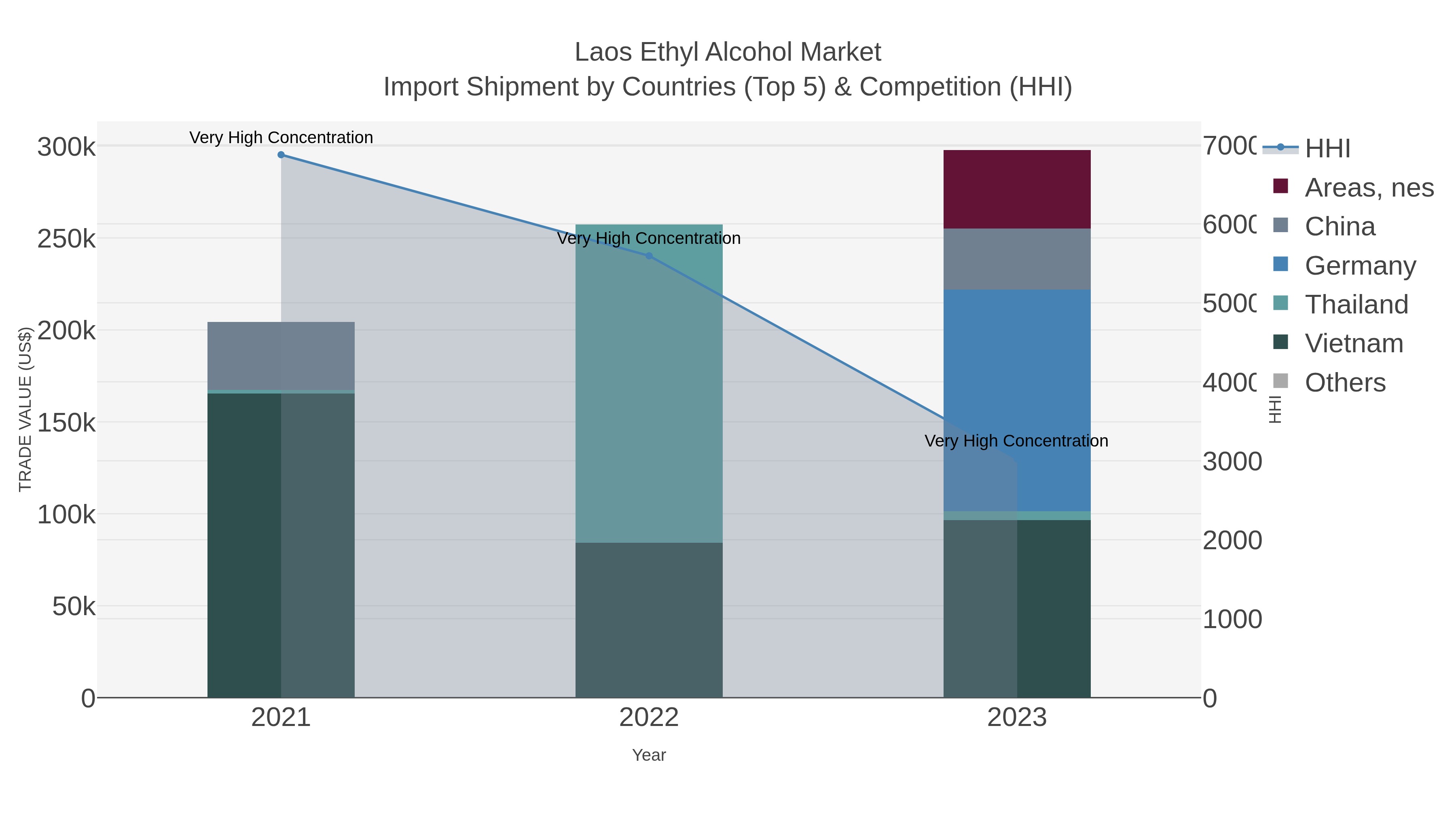
In 2023, Laos continued to witness a significant influx of ethyl alcohol imports, with top exporters being Germany, Vietnam, Areas, China, and Thailand. The high Herfindahl-Hirschman Index (HHI) indicates a concentrated market, suggesting these key players hold a substantial market share. With a notable Compound Annual Growth Rate (CAGR) of 20.73%, the ethyl alcohol import market in Laos is showing robust expansion. The impressive growth rate of 15.74% further underscores the increasing demand for ethyl alcohol in the country, presenting lucrative opportunities for both exporters and local businesses.
Key Highlights of the Report:
- Laos Ethyl Alcohol Market Outlook
- Market Size of Laos Ethyl Alcohol Market, 2025
- Forecast of Laos Ethyl Alcohol Market, 2032
- Historical Data and Forecast of Laos Ethyl Alcohol Revenues & Volume for the Period 2022 - 2032F
- Laos Ethyl Alcohol Market Trend Evolution
- Laos Ethyl Alcohol Market Drivers and Challenges
- Laos Ethyl Alcohol Price Trends
- Laos Ethyl Alcohol Porter`s Five Forces
- Laos Ethyl Alcohol Industry Life Cycle
- Historical Data and Forecast of Laos Ethyl Alcohol Market Revenues & Volume By Grade for the Period 2022 - 2032F
- Historical Data and Forecast of Laos Ethyl Alcohol Market Revenues & Volume By Food Grade for the Period 2022 - 2032F
- Historical Data and Forecast of Laos Ethyl Alcohol Market Revenues & Volume By Industrial Grade for the Period 2022 - 2032F
- Historical Data and Forecast of Laos Ethyl Alcohol Market Revenues & Volume By Pharmaceutical Grade for the Period 2022 - 2032F
- Historical Data and Forecast of Laos Ethyl Alcohol Market Revenues & Volume By Lab Grade for the Period 2022 - 2032F
- Historical Data and Forecast of Laos Ethyl Alcohol Market Revenues & Volume By End-user Industry for the Period 2022 - 2032F
- Historical Data and Forecast of Laos Ethyl Alcohol Market Revenues & Volume By Automotive and Transportation for the Period 2022 - 2032F
- Historical Data and Forecast of Laos Ethyl Alcohol Market Revenues & Volume By Food and Beverage for the Period 2022 - 2032F
- Historical Data and Forecast of Laos Ethyl Alcohol Market Revenues & Volume By Pharmaceutical for the Period 2022 - 2032F
- Historical Data and Forecast of Laos Ethyl Alcohol Market Revenues & Volume By Cosmetics and Personal Care (Includes hand-Sanitizer) for the Period 2022 - 2032F
- Historical Data and Forecast of Laos Ethyl Alcohol Market Revenues & Volume By Other End-user Industries for the Period 2022 - 2032F
- Laos Ethyl Alcohol Import Export Trade Statistics
- Market Opportunity Assessment By Grade
- Market Opportunity Assessment By End-user Industry
- Laos Ethyl Alcohol Top Companies Market Share
- Laos Ethyl Alcohol Competitive Benchmarking By Technical and Operational Parameters
- Laos Ethyl Alcohol Company Profiles
- Laos Ethyl Alcohol Key Strategic Recommendations






































