Latvia Automotive Electric Bus Market Size (2020-2030)
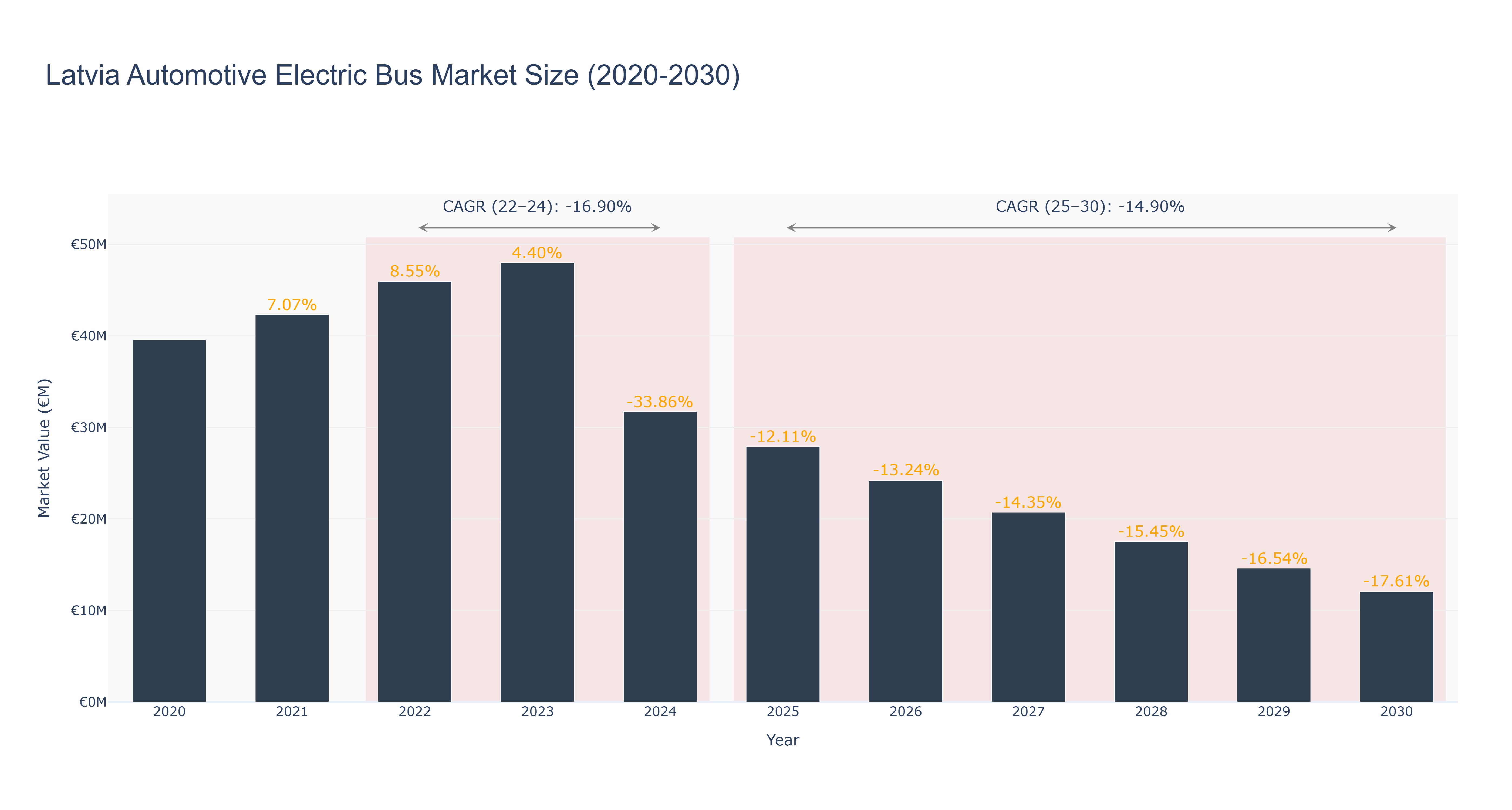
The Latvia Automotive Electric Bus Market experienced a peak market size of €47.98 million in 2023, following a steady growth trajectory from €39.55 million in 2020, with actual growth rates of 7.07%, 8.55%, and 4.40% in 2021, 2022, and 2023, respectively. However, the market is projected to face significant decline, with forecasted values dropping to €12.05 million by 2030, reflecting a CAGR of -14.90% from 2025 to 2030. This downturn can be attributed to several factors, including reduced government subsidies, increased competition from alternative transport modes, and supply chain disruptions. While the market's future may be challenged, emerging projects focusing on infrastructure development and advancements in battery technology could potentially revitalize interest in electric buses. Nonetheless, the current outlook suggests a substantial contraction in the market over the coming years, necessitating strategic adaptations from stakeholders.
Latvia Automotive Electric Bus Market: Production & Trade Performance (2019-2025)
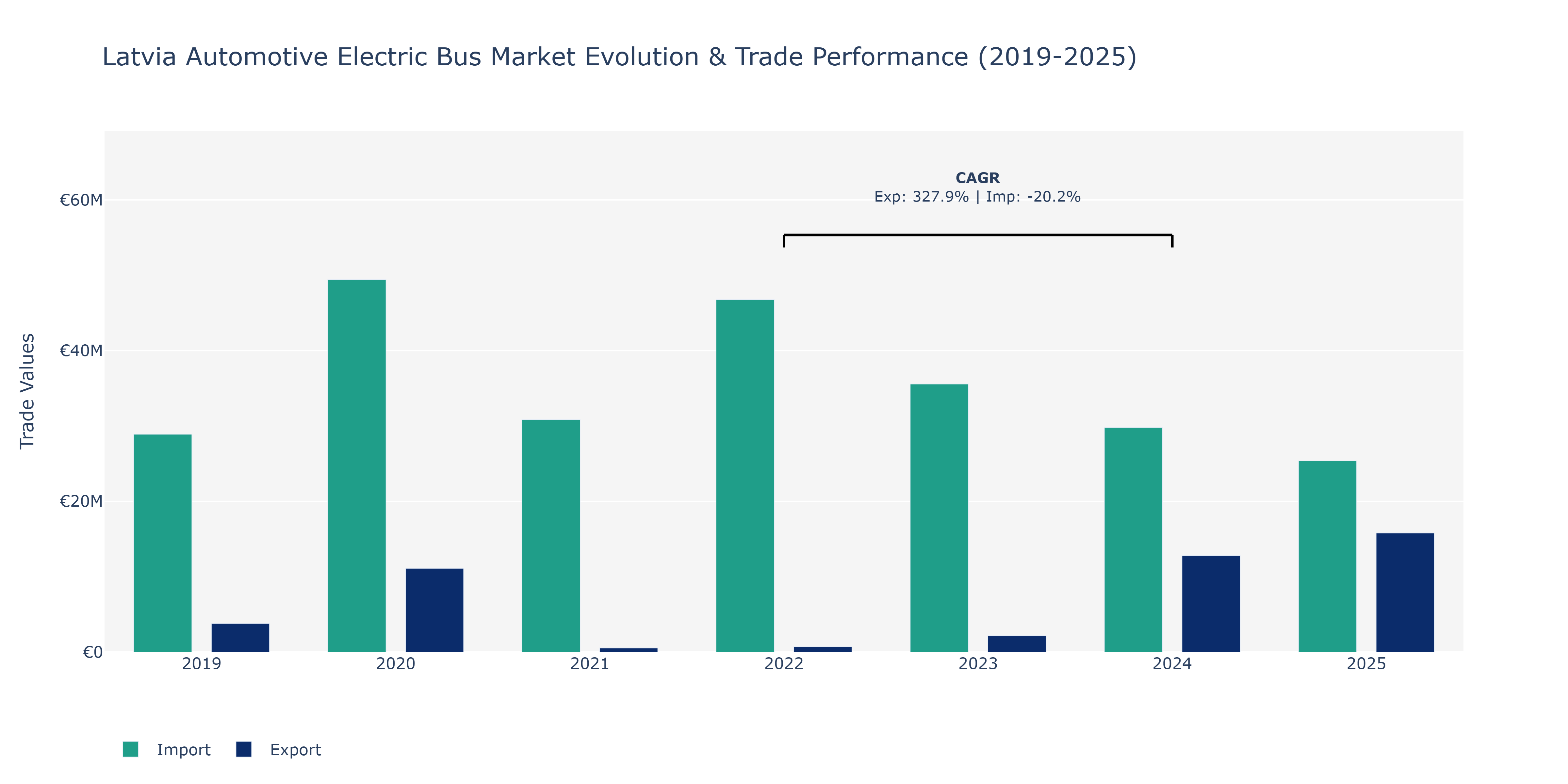
The Latvia Automotive Electric Bus Market witnessed notable fluctuations in both Exports and Imports from 2019 to 2025. Exports showed substantial growth, starting at €3.8 million in 2019, reaching a peak of €15.8 million in 2025. This impressive upward trend can be attributed to increased demand for environmentally friendly transportation solutions, aligning with Latvia's commitment to sustainability and the global shift towards electric vehicles. On the other hand, Imports fluctuated, starting at €28.91 million in 2019, hitting a low of €25.37 million in 2025. The decline in Imports in the latter years could be a result of domestic manufacturing capabilities maturing, leading to reduced reliance on foreign imports. These trends indicate a promising future for the Latvia Automotive Electric Bus Market, supported by the country's push towards green technologies and self-sustainability.
Key Highlights of the Report:
- Latvia Automotive Electric Bus Market Outlook
- Market Size of Latvia Automotive Electric Bus Market, 2024
- Forecast of Latvia Automotive Electric Bus Market, 2031
- Historical Data and Forecast of Latvia Automotive Electric Bus Revenues & Volume for the Period 2021- 2031
- Latvia Automotive Electric Bus Market Trend Evolution
- Latvia Automotive Electric Bus Market Drivers and Challenges
- Latvia Automotive Electric Bus Price Trends
- Latvia Automotive Electric Bus Porter's Five Forces
- Latvia Automotive Electric Bus Industry Life Cycle
- Historical Data and Forecast of Latvia Automotive Electric Bus Market Revenues & Volume By Vehicle Type for the Period 2021- 2031
- Historical Data and Forecast of Latvia Automotive Electric Bus Market Revenues & Volume By Battery Electric Bus for the Period 2021- 2031
- Historical Data and Forecast of Latvia Automotive Electric Bus Market Revenues & Volume By Other for the Period 2021- 2031
- Historical Data and Forecast of Latvia Automotive Electric Bus Market Revenues & Volume By Consumer Type for the Period 2021- 2031
- Historical Data and Forecast of Latvia Automotive Electric Bus Market Revenues & Volume By Government for the Period 2021- 2031
- Historical Data and Forecast of Latvia Automotive Electric Bus Market Revenues & Volume By Fleet Owners for the Period 2021- 2031
- Latvia Automotive Electric Bus Import Export Trade Statistics
- Market Opportunity Assessment By Vehicle Type
- Market Opportunity Assessment By Consumer Type
- Latvia Automotive Electric Bus Top Companies Market Share
- Latvia Automotive Electric Bus Competitive Benchmarking By Technical and Operational Parameters
- Latvia Automotive Electric Bus Company Profiles
- Latvia Automotive Electric Bus Key Strategic Recommendations






































