Latvia Polyester Spun Yarn Market Size (2020-2030)
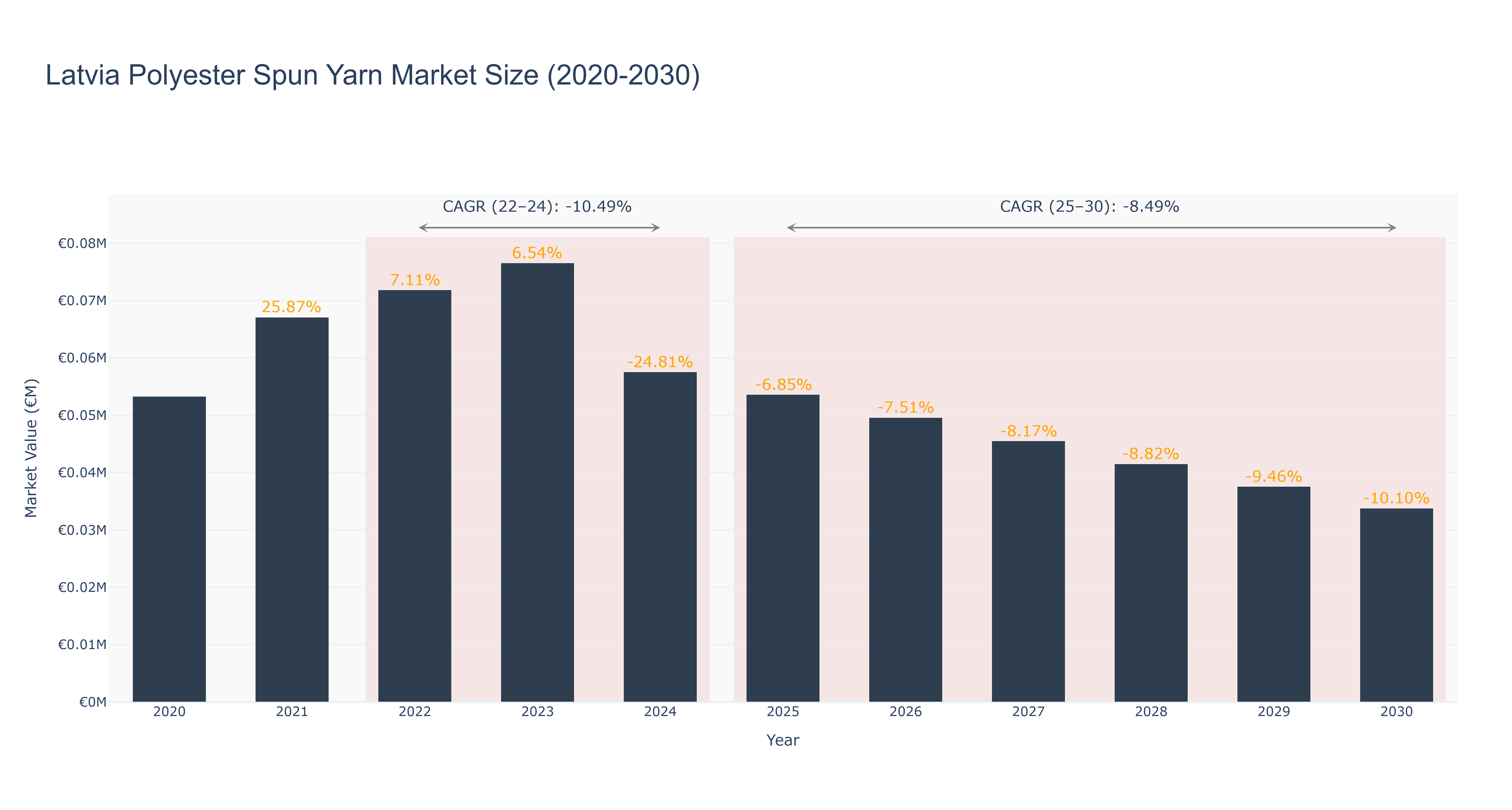
Latvia Polyester Spun Yarn Market has experienced a fluctuating trend in recent years. The peak market size was €0.08 million in 2023, followed by a decline to €0.06 million in 2024. The market is forecasted to continue shrinking, with a projected size of €0.03 million by 2030. The CAGR between 2022-24 was -10.49%, while the CAGR from 2025-30 is expected to be -8.49%. The market's downturn can be attributed to global economic challenges impacting demand, as well as evolving consumer preferences towards sustainable alternatives. Looking ahead, Latvia is focusing on enhancing its textile industry's sustainability practices, with upcoming initiatives aimed at promoting eco-friendly production processes and materials. These developments align with the industry drivers of environmental consciousness and regulatory pressures, indicating a shift towards more sustainable practices in the market.
Latvia Polyester Spun Yarn Market: Production & Trade Performance (2019-2025)
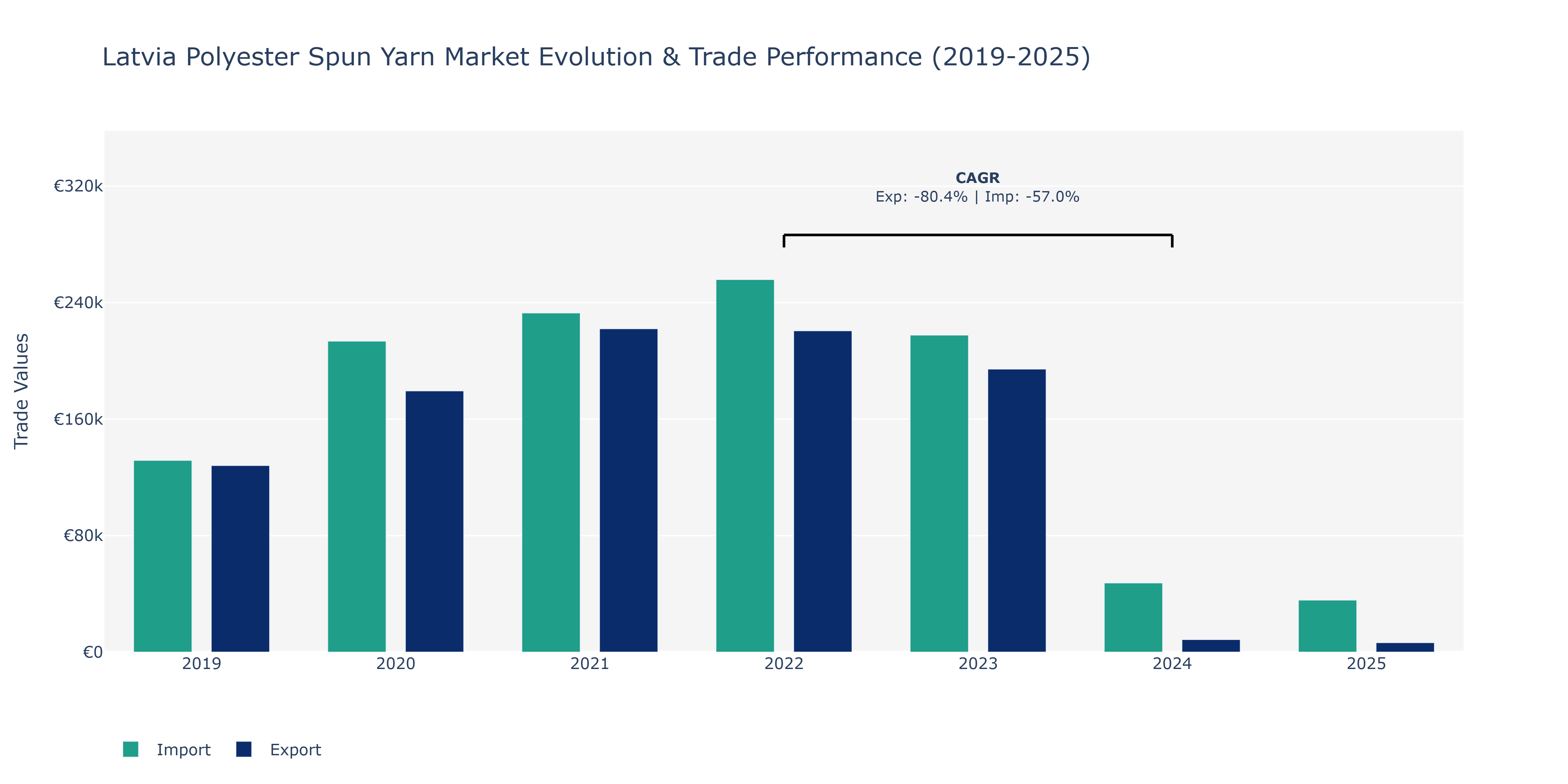
The Latvia Polyester Spun Yarn Market saw fluctuations in both Exports and Imports over the analyzed period. Exports started at €128.04 thousand in 2019, increased to €221.96 thousand in 2021, before experiencing a sharp decline to €8.52 thousand in 2024. This significant drop can be attributed to various factors such as changes in global demand, supply chain disruptions, or shifts in market dynamics impacting the polyester yarn industry. In comparison, Imports began at €131.56 thousand in 2019, rose steadily to €255.75 thousand in 2022, and then decreased to €35.62 thousand in 2025. This fluctuation could be influenced by changing consumer preferences, currency exchange rates affecting pricing, or alterations in trade policies impacting the importation of polyester spun yarn into Latvia. The market likely faced challenges and opportunities, prompting stakeholders to adapt to the evolving industry landscape to maintain competitiveness.
Key Highlights of the Report:
- Latvia Polyester Spun Yarn Market Outlook
- Market Size of Latvia Polyester Spun Yarn Market, 2024
- Forecast of Latvia Polyester Spun Yarn Market, 2031
- Historical Data and Forecast of Latvia Polyester Spun Yarn Revenues & Volume for the Period 2021-2031
- Latvia Polyester Spun Yarn Market Trend Evolution
- Latvia Polyester Spun Yarn Market Drivers and Challenges
- Latvia Polyester Spun Yarn Price Trends
- Latvia Polyester Spun Yarn Porter`s Five Forces
- Latvia Polyester Spun Yarn Industry Life Cycle
- Historical Data and Forecast of Latvia Polyester Spun Yarn Market Revenues & Volume By Types for the Period 2021-2031
- Historical Data and Forecast of Latvia Polyester Spun Yarn Market Revenues & Volume By Recycled Spun Yarn for the Period 2021-2031
- Historical Data and Forecast of Latvia Polyester Spun Yarn Market Revenues & Volume By Non-recycled Spun Yarn for the Period 2021-2031
- Historical Data and Forecast of Latvia Polyester Spun Yarn Market Revenues & Volume By Fields for the Period 2021-2031
- Historical Data and Forecast of Latvia Polyester Spun Yarn Market Revenues & Volume By Apparel for the Period 2021-2031
- Historical Data and Forecast of Latvia Polyester Spun Yarn Market Revenues & Volume By Household Textiles for the Period 2021-2031
- Historical Data and Forecast of Latvia Polyester Spun Yarn Market Revenues & Volume By Others for the Period 2021-2031
- Latvia Polyester Spun Yarn Import Export Trade Statistics
- Market Opportunity Assessment By Types
- Market Opportunity Assessment By Fields
- Latvia Polyester Spun Yarn Top Companies Market Share
- Latvia Polyester Spun Yarn Competitive Benchmarking By Technical and Operational Parameters
- Latvia Polyester Spun Yarn Company Profiles
- Latvia Polyester Spun Yarn Key Strategic Recommendations






































