Lebanon Men Personal Care Market Summary
The lebanon men personal care market was estimated at USD 495 Million in 2025 and is projected to reach USD 686 Million by 2032, growing at a CAGR of 5.8% from 2026 to 2032.
Lebanon Men Personal Care Market Year-wise Growth Rate and Key Drivers
This graph highlights how the Lebanon Men Personal Care Market has steadily grown over the past five years, supported by major growth factors.
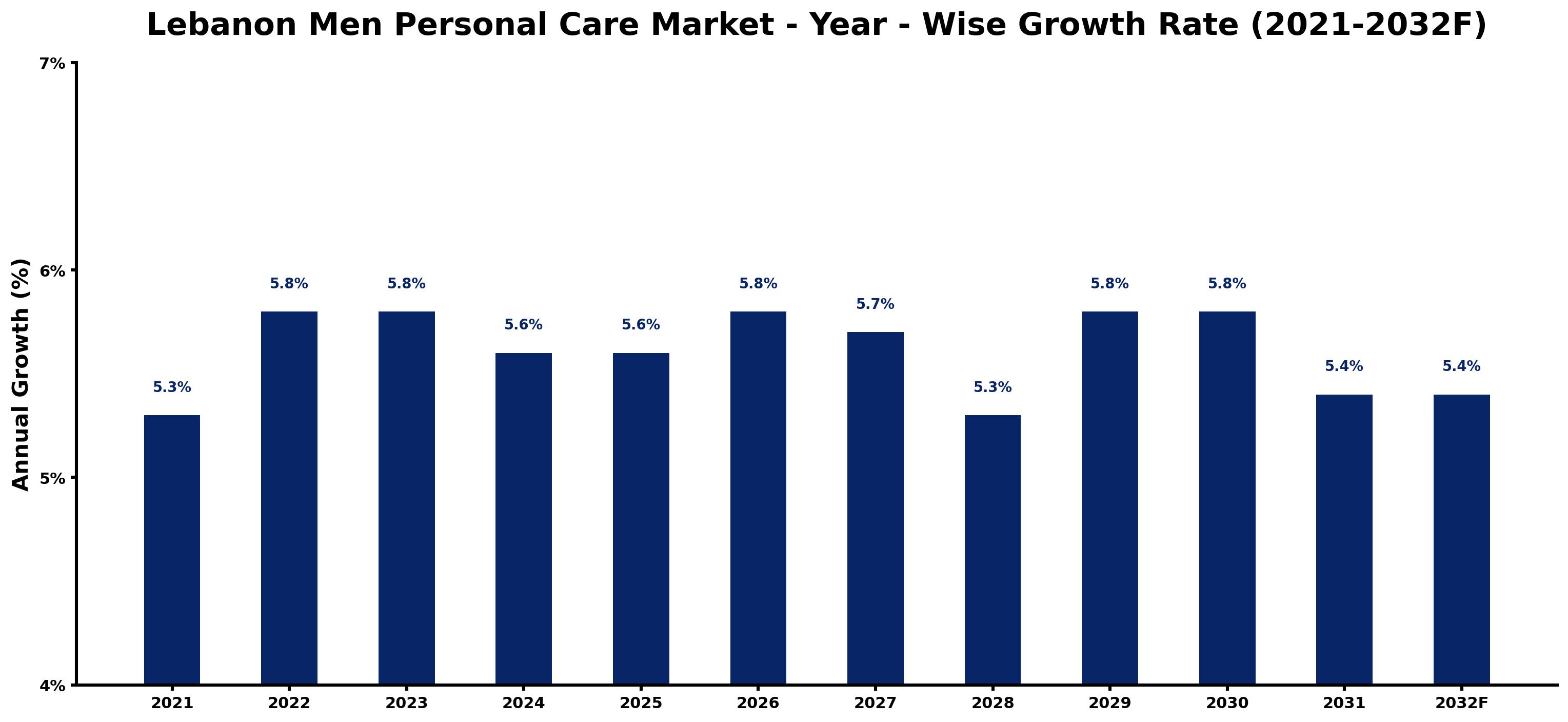
The table below presents the year wise growth rates along with the key drivers influencing the market
| Year | Growth Rate | Major Drivers |
| 2021 | 5.3% | Men increasingly prioritize grooming routines, enhancing their personal care choices. |
| 2022 | 5.8% | Local brands gain traction, appealing to cultural preferences and personal identity. |
| 2023 | 5.8% | E-commerce platforms expand, making personal care products more accessible nationwide. |
| 2024 | 5.6% | Social media influences purchasing decisions, showcasing grooming tutorials and trends. |
| 2025 | 5.6% | Health awareness prompts men to seek skincare solutions tailored to local conditions. |
| 2026 | 5.8% | International brands localize offerings, catering to Lebanon's unique demographic needs. |
| 2027 | 5.7% | Sustainability trends drive demand for eco-friendly and organic personal care items. |
| 2028 | 5.3% | Men's grooming events and expos increase, fostering community engagement and brand loyalty. |
| 2029 | 5.8% | Innovative formulations emerge, targeting specific concerns like acne and aging. |
| 2030 | 5.8% | Collaborations between beauty influencers and brands enhance product visibility and credibility. |
| 2031 | 5.4% | Rural market penetration rises, as brands aim to reach underserved demographics. |
| 2032 | 5.4% | Personalization technology in marketing helps brands connect with consumers on a deeper level. |
Note - Market size estimations and growth projections presented in this report are based on 6Wresearch's advanced forecasting approach, validated with industry datasets as of June 2026.
Lebanon Men Personal Care Market Synopsis
The Lebanon Men Personal Care Market is projected to reach 5.8% and witness significant growth during the forecast period (2026-2032). This anticipated expansion can be attributed to a variety of factors, including increasing awareness about personal grooming and rising disposable incomes among Lebanese men. As lifestyles evolve, there is a marked shift in male attitudes towards personal care, which is being further fueled by the influence of social media platforms, lifestyle publications, and television programs highlighting male grooming trends. This collective acknowledgment of self-care is gradually transforming grooming routines into recognized essential practices, thereby driving demand for a diverse array of men's grooming products.
Lebanon Men Personal Care Market Growth Drivers
Key growth drivers in the Lebanon Men Personal Care Market include:
- Increased awareness of personal grooming: Men are becoming more conscious of their appearance, correlating with a rising acceptance of grooming products traditionally seen as feminine.
- Higher disposable income levels: As economic conditions improve, Lebanese consumers are willing to invest more in premium personal care products.
- Changing societal norms: The stigma surrounding men's grooming is diminishing, encouraging more men to explore skincare, haircare, and grooming products.
- Influence of social media and advertising: Online platforms and influencer marketing are pivotal in shaping perceptions around male grooming, attracting a younger demographic.
- Product innovation and diversification: Continuous efforts from manufacturers to introduce products tailored for men's specific needs further stimulate market demand.
Lebanon Men Personal Care Market Trends and Opportunities
Identifying the prevailing trends within the Lebanon Men Personal Care Market reveals multiple opportunities for innovation and expansion:
- Sustainability in product offerings: There is a growing demand for eco-friendly and organic personal care products, indicating a shift towards sustainable practices among consumers.
- Rise of premium products: A noticeable trend towards premium and niche brands reflects the desire for high-quality, specialized grooming solutions.
- Increased focus on self-care: The rising importance of self-care among men leads to an expanding market for both skincare and wellness products.
- Digital retail growth: E-commerce platforms are increasingly becoming the preferred shopping method for men, encouraging brands to enhance their online presence.
- Personalized grooming solutions: The customization of grooming products, including personalized skincare regimens, offers a unique selling proposition to attract consumers.
Lebanon Men Personal Care Market Challenges and Restraints
Despite optimistic growth projections, the Lebanon Men Personal Care Market faces several challenges:
- Volatility in raw material prices: Fluctuating costs of raw materials could adversely affect product pricing and margins.
- Economic instability: Political and economic turmoil might deter investment in the personal care sector, limiting potential growth.
- Environmental regulations: Stricter policies regarding sustainability and product formulations could challenge manufacturers seeking compliance.
- Consumer price sensitivity: Economic constraints may lead to cautious spending among consumers, particularly in premium segments.
- Increased competition: A saturated market filled with both local and international brands poses challenges for differentiation among products.
Lebanon Men Personal Care Market Government Investment and Initiatives
The Lebanese government has recognized the importance of the personal care industry and is implementing various initiatives to support its growth. Public spending is directed towards enhancing the retail environment and promoting local brands. Furthermore, development plans aimed at improving the overall economic stability are expected to bolster consumer spending in the personal care sector. Craftsmen and small manufacturers receive incentives to innovate and improve product offerings, while import regulations are being assessed to ensure market competitiveness. These government measures reflect a commitment to fostering a robust environment for the Lebanon Men Personal Care Market.
Lebanon Men Personal Care Market Latest Developments (May 2025 - June 2026)
Recent developments in the Lebanon Men Personal Care Market indicate a robust direction towards innovation and cater to modern grooming needs. Throughout this period, numerous brands have enhanced their focus on digital marketing strategies to effectively engage with a younger audience. The introduction of new grooming lines aimed at specific demographic segments, such as skincare solutions targeting men with sensitive skin, has gained traction. Additionally, collaborations between brands and social media influencers have heightened visibility and consumer trust. The ongoing emphasis on sustainability has also prompted several companies to revise their product formulations, integrating natural ingredients to meet consumer preferences.
Lebanon Men Personal Care Market - Key Attractiveness of the Report
- 10 Years of Market Numbers
- Historical Data Starting from 2022 to 2025
- Base Year: 2025
- Forecast Data until 2032
- Key Performance Indicators Impacting the Market
- Major Upcoming Developments and Projects
Key Highlights of the Report:
- Lebanon Men Personal Care Market Outlook
- Market Size of Lebanon Men Personal Care Market, 2025
- Forecast of Lebanon Men Personal Care Market, 2032F
- Historical Data and Forecast of Lebanon Men Personal Care Revenues & Volume for the Period 2022-2032F
- Lebanon Men Personal Care Market Trend Evolution
- Lebanon Men Personal Care Market Drivers and Challenges
- Lebanon Men Personal Care Price Trends
- Lebanon Men Personal Care Porter's Five Forces
- Lebanon Men Personal Care Industry Life Cycle
- Historical Data and Forecast of Lebanon Men Personal Care Market Revenues & Volume By Types for the Period 2022-2032F
- Historical Data and Forecast of Lebanon Men Personal Care Market Revenues & Volume By Hair Care for the Period 2022-2032F
- Historical Data and Forecast of Lebanon Men Personal Care Market Revenues & Volume By Shaving for the Period 2022-2032F
- Historical Data and Forecast of Lebanon Men Personal Care Market Revenues & Volume By Oral Care for the Period 2022-2032F
- Historical Data and Forecast of Lebanon Men Personal Care Market Revenues & Volume By Personal Cleanliness for the Period 2022-2032F
- Historical Data and Forecast of Lebanon Men Personal Care Market Revenues & Volume By Skin Care for the Period 2022-2032F
- Historical Data and Forecast of Lebanon Men Personal Care Market Revenues & Volume By Others for the Period 2022-2032F
- Historical Data and Forecast of Lebanon Men Personal Care Market Revenues & Volume By Distribution Channel for the Period 2022-2032F
- Historical Data and Forecast of Lebanon Men Personal Care Market Revenues & Volume By Online for the Period 2022-2032F
- Historical Data and Forecast of Lebanon Men Personal Care Market Revenues & Volume By Offline for the Period 2022-2032F
- Lebanon Men Personal Care Import Export Trade Statistics
- Market Opportunity Assessment By Types
- Market Opportunity Assessment By Distribution Channel
- Lebanon Men Personal Care Top Companies Market Share
- Lebanon Men Personal Care Competitive Benchmarking By Technical and Operational Parameters
- Lebanon Men Personal Care Company Profiles
- Lebanon Men Personal Care Key Strategic Recommendations






































