Lithuania Cyclohexane Market Size (2020-2030)
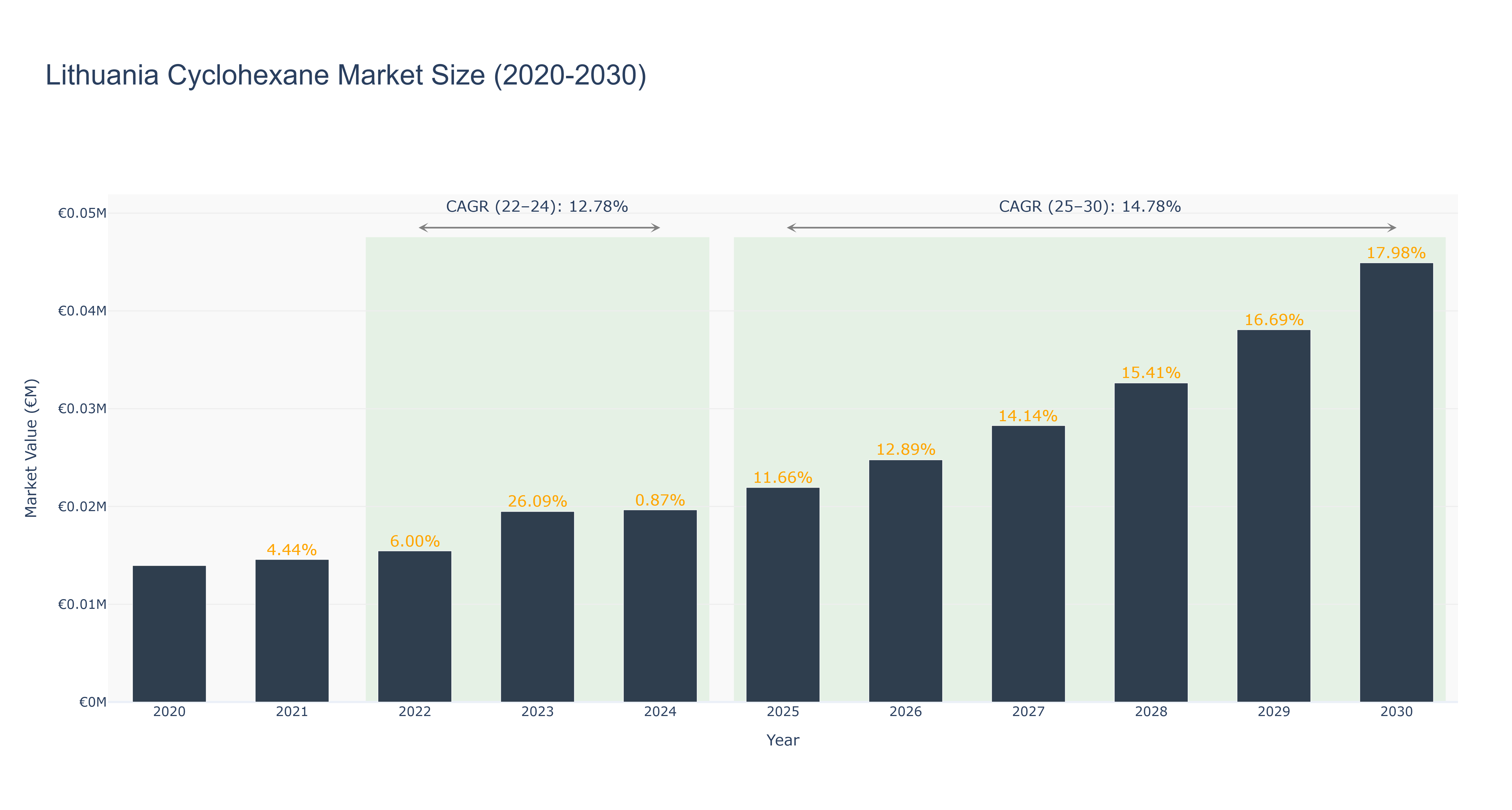
Lithuania Cyclohexane Market has shown steady growth since 2020, with the market size reaching €0.02 million by 2024. The market is forecasted to continue expanding, with a projected size of €0.04 million by 2030. The CAGR for the period 2022-24 is 12.78%, while the CAGR for 2025-30 is expected to be 14.78%. The market experienced a significant growth spurt in 2023, attributed to increased demand from various industries such as chemicals and plastics. The steady growth trend is driven by factors like industrialization, technological advancements, and growing applications of cyclohexane in various sectors. Looking ahead, Lithuania is set to invest in sustainable production methods for cyclohexane, aligning with the country's commitment to environmental conservation and innovation in the chemical industry.
Lithuania Cyclohexane Market: Production & Trade Performance (2019-2025)
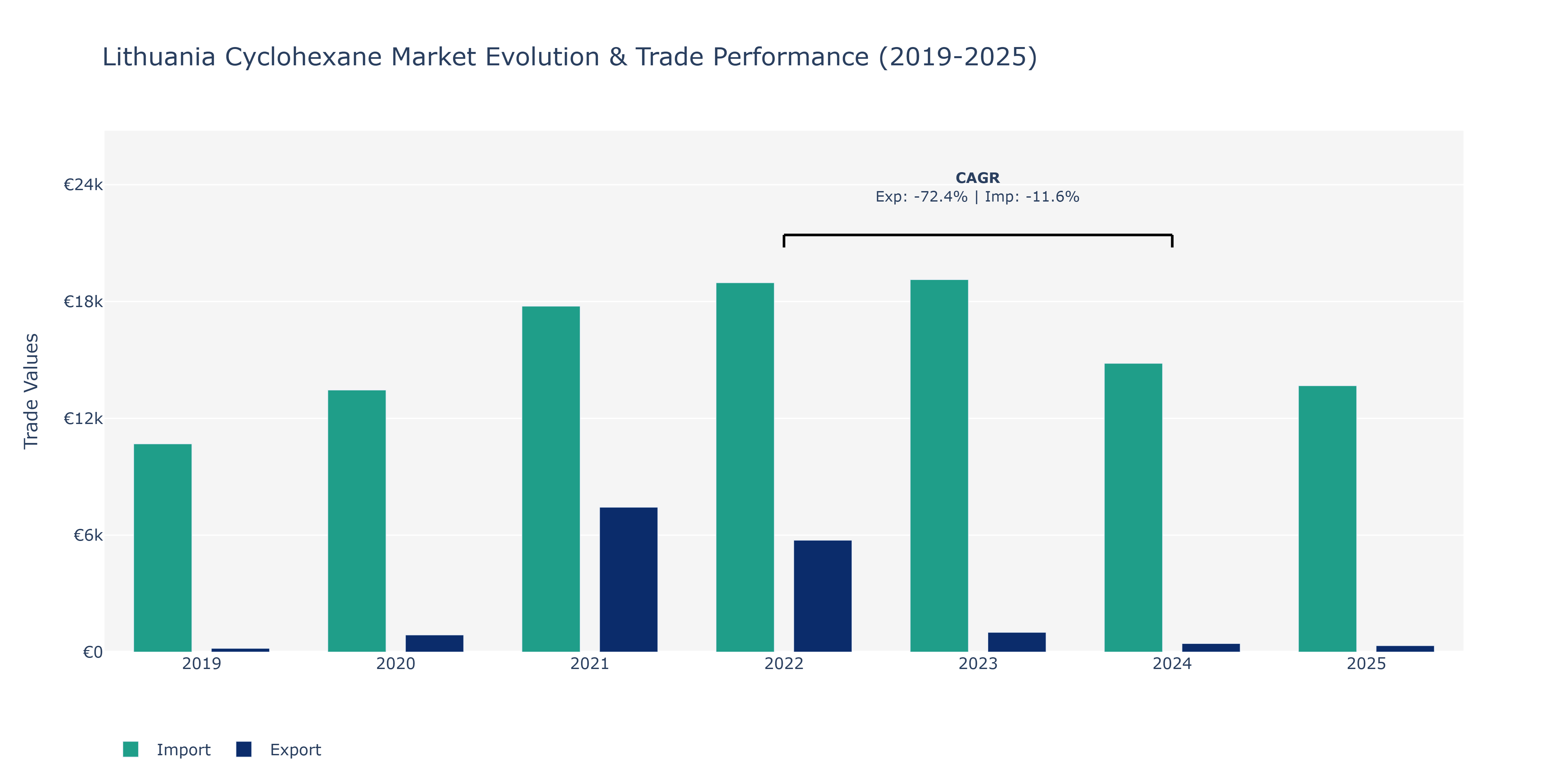
The Lithuania Cyclohexane Market witnessed notable fluctuations in both exports and imports from 2019 to 2025. Exports surged from €190 in 2019 to €7.44 thousand in 2021, a substantial increase attributed to increased demand for cyclohexane in various industries. However, a sharp decline to €5.74 thousand in 2022 followed, possibly due to global economic uncertainties impacting trade volumes. 2023 saw a further decrease to €1.01 thousand before a slight recovery to €437 in 2024. Notably, exports continued to decrease to €328 in 2025, reflecting ongoing market challenges. In contrast, imports peaked at €19.13 thousand in 2023, possibly driven by the need for raw materials for domestic industries. The subsequent decline to €14.83 thousand in 2024 and €13.68 thousand in 2025 could be influenced by evolving trade agreements or shifts in domestic production capabilities. Such fluctuations emphasize the market's sensitivity to global economic conditions and trade dynamics, underlining the importance of strategic planning and market diversification for stakeholders in the Lithuania Cyclohexane Market.
Key Highlights of the Report:
- Lithuania Cyclohexane Market Outlook
- Market Size of Lithuania Cyclohexane Market, 2025
- Forecast of Lithuania Cyclohexane Market, 2032
- Historical Data and Forecast of Lithuania Cyclohexane Revenues & Volume for the Period 2022 - 2032F
- Lithuania Cyclohexane Market Trend Evolution
- Lithuania Cyclohexane Market Drivers and Challenges
- Lithuania Cyclohexane Price Trends
- Lithuania Cyclohexane Porter`s Five Forces
- Lithuania Cyclohexane Industry Life Cycle
- Historical Data and Forecast of Lithuania Cyclohexane Market Revenues & Volume By Application for the Period 2022 - 2032F
- Historical Data and Forecast of Lithuania Cyclohexane Market Revenues & Volume By Adipic acid for the Period 2022 - 2032F
- Historical Data and Forecast of Lithuania Cyclohexane Market Revenues & Volume By Caprolactam for the Period 2022 - 2032F
- Historical Data and Forecast of Lithuania Cyclohexane Market Revenues & Volume By Others for the Period 2022 - 2032F
- Historical Data and Forecast of Lithuania Cyclohexane Market Revenues & Volume By End-use for the Period 2022 - 2032F
- Historical Data and Forecast of Lithuania Cyclohexane Market Revenues & Volume By Nylon 6 for the Period 2022 - 2032F
- Historical Data and Forecast of Lithuania Cyclohexane Market Revenues & Volume By Nylon 66 for the Period 2022 - 2032F
- Historical Data and Forecast of Lithuania Cyclohexane Market Revenues & Volume By Others for the Period 2022 - 2032F
- Lithuania Cyclohexane Import Export Trade Statistics
- Market Opportunity Assessment By Application
- Market Opportunity Assessment By End-use
- Lithuania Cyclohexane Top Companies Market Share
- Lithuania Cyclohexane Competitive Benchmarking By Technical and Operational Parameters
- Lithuania Cyclohexane Company Profiles
- Lithuania Cyclohexane Key Strategic Recommendations






































