Lithuania Smart Thermostat Market Size (2020-2030)
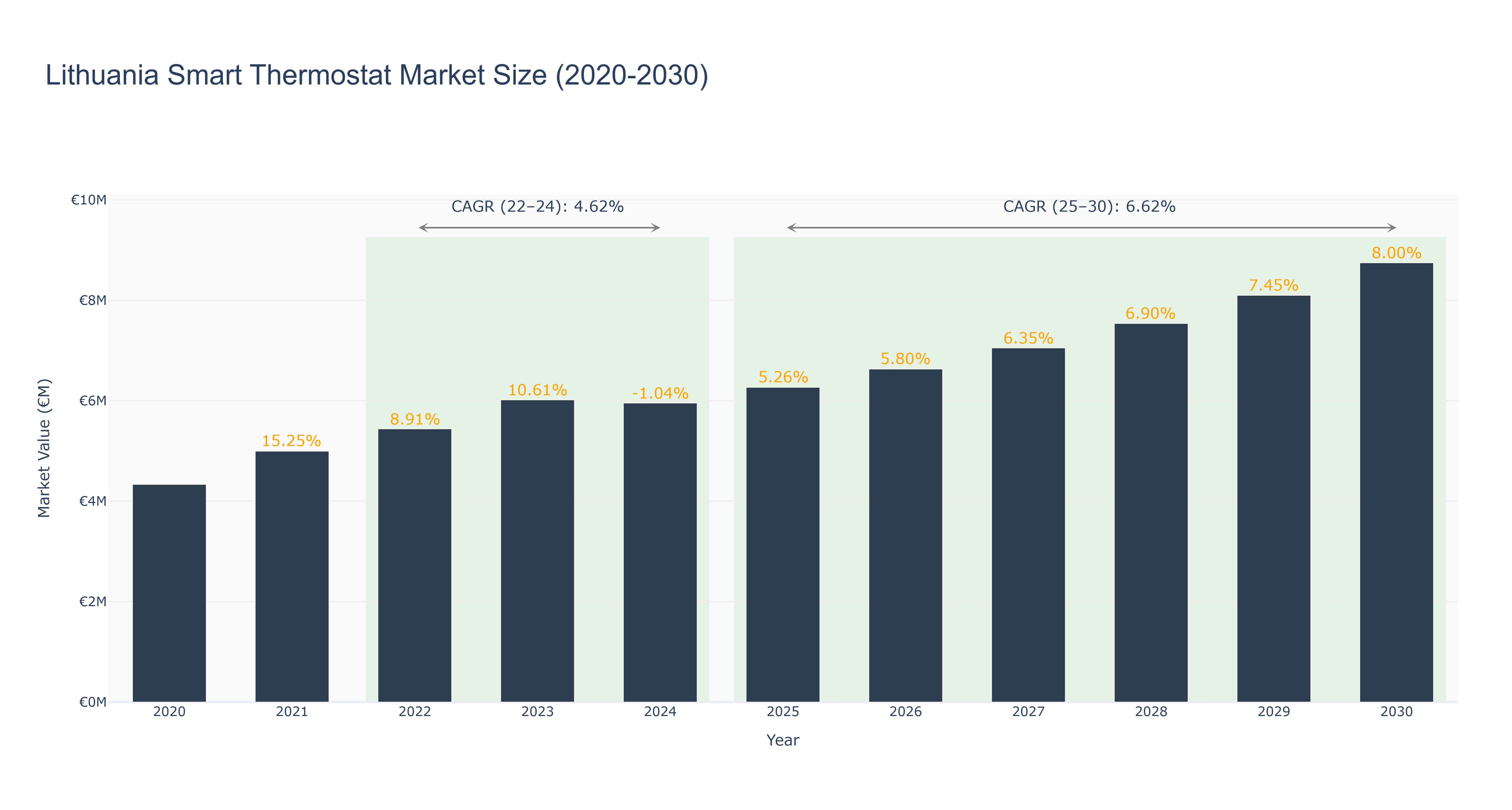
Lithuania Smart Thermostat Market has shown moderate growth with some fluctuations, with the market projected to reach €8.75M by 2030, expanding at a CAGR of 6.62% during 2025–2030. The market recorded steady realised performance from €4.33M in 2020 to €5.95M in 2024, despite a slight dip in 2024, reflecting a CAGR of 4.62% during 2022–24. This trend is driven by increasing adoption of energy-efficient home solutions, supported by rising consumer awareness and regulatory focus on sustainability. Growth is further influenced by technological advancements and evolving preferences toward smart home automation. Looking ahead, the market is forecasted to maintain steady expansion, supported by Lithuania’s smart city initiatives and increasing demand for connected home systems. Additionally, partnerships between technology providers and energy companies, along with advancements in AI- and IoT-enabled thermostats, are expected to enhance functionality and drive long-term market growth.
Lithuania Smart Thermostat Market: Production & Trade Performance (2019-2025)
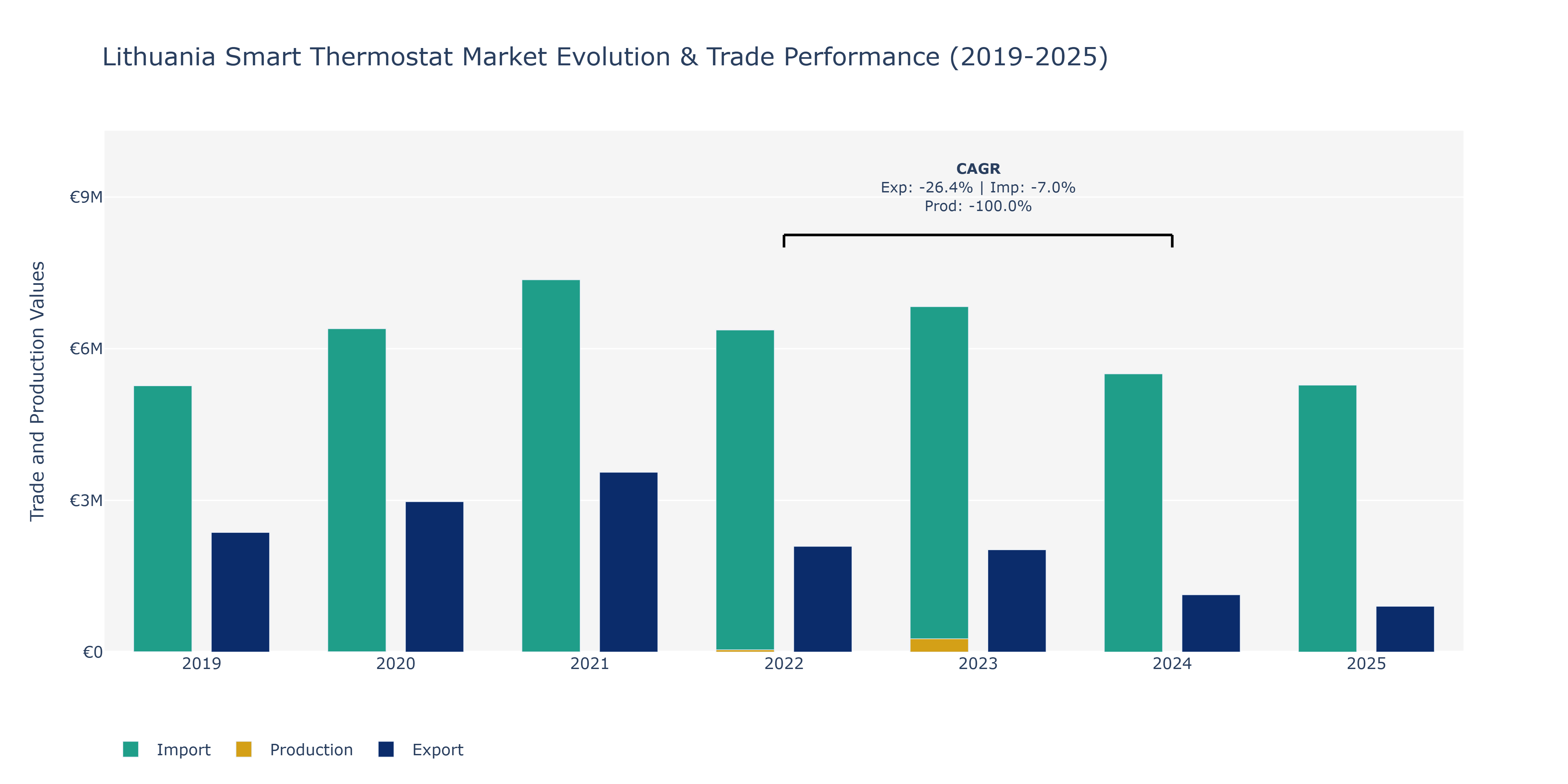
Between 2019 and 2025, the Lithuania Smart Thermostat Market displayed notable fluctuations in Exports, Imports, and Production. Exports saw a peak in 2021 at €3.56 million before declining to €0.91 million in 2025, indicating a downward trend. Imports peaked in 2023 at €6.83 million, showcasing an overall upward trajectory despite minor fluctuations. Production experienced a significant increase from 2019 to 2023, reaching €261 million, before dropping sharply in 2024 to €44 million. The decrease in production could be attributed to potential shifts in manufacturing processes, impacting local production output. The fluctuating trends in exports reflect changing market demands or competition dynamics, potentially influenced by global economic conditions impacting export opportunities. Import increases suggest a growing demand for smart thermostats domestically, possibly due to enhanced consumer awareness of energy efficiency and sustainability, aligning with Lithuania's environmental policies encouraging energy-saving technologies.
Key Highlights of the Report:
- Lithuania Smart Thermostat Market Outlook
- Market Size of Lithuania Smart Thermostat Market, 2025
- Forecast of Lithuania Smart Thermostat Market, 2032
- Historical Data and Forecast of Lithuania Smart Thermostat Revenues & Volume for the Period 2022 - 2032F
- Lithuania Smart Thermostat Market Trend Evolution
- Lithuania Smart Thermostat Market Drivers and Challenges
- Lithuania Smart Thermostat Price Trends
- Lithuania Smart Thermostat Porter`s Five Forces
- Lithuania Smart Thermostat Industry Life Cycle
- Historical Data and Forecast of Lithuania Smart Thermostat Market Revenues & Volume By Type for the Period 2022 - 2032F
- Historical Data and Forecast of Lithuania Smart Thermostat Market Revenues & Volume By Wireless for the Period 2022 - 2032F
- Historical Data and Forecast of Lithuania Smart Thermostat Market Revenues & Volume By Wireless for the Period 2022 - 2032F
- Historical Data and Forecast of Lithuania Smart Thermostat Market Revenues & Volume By End-User Vertical for the Period 2022 - 2032F
- Historical Data and Forecast of Lithuania Smart Thermostat Market Revenues & Volume By Residential for the Period 2022 - 2032F
- Historical Data and Forecast of Lithuania Smart Thermostat Market Revenues & Volume By Commercial for the Period 2022 - 2032F
- Lithuania Smart Thermostat Import Export Trade Statistics
- Market Opportunity Assessment By Type
- Market Opportunity Assessment By End-User Vertical
- Lithuania Smart Thermostat Top Companies Market Share
- Lithuania Smart Thermostat Competitive Benchmarking By Technical and Operational Parameters
- Lithuania Smart Thermostat Company Profiles
- Lithuania Smart Thermostat Key Strategic Recommendations






































