Malaysia Caviar Market Size Growth Rate
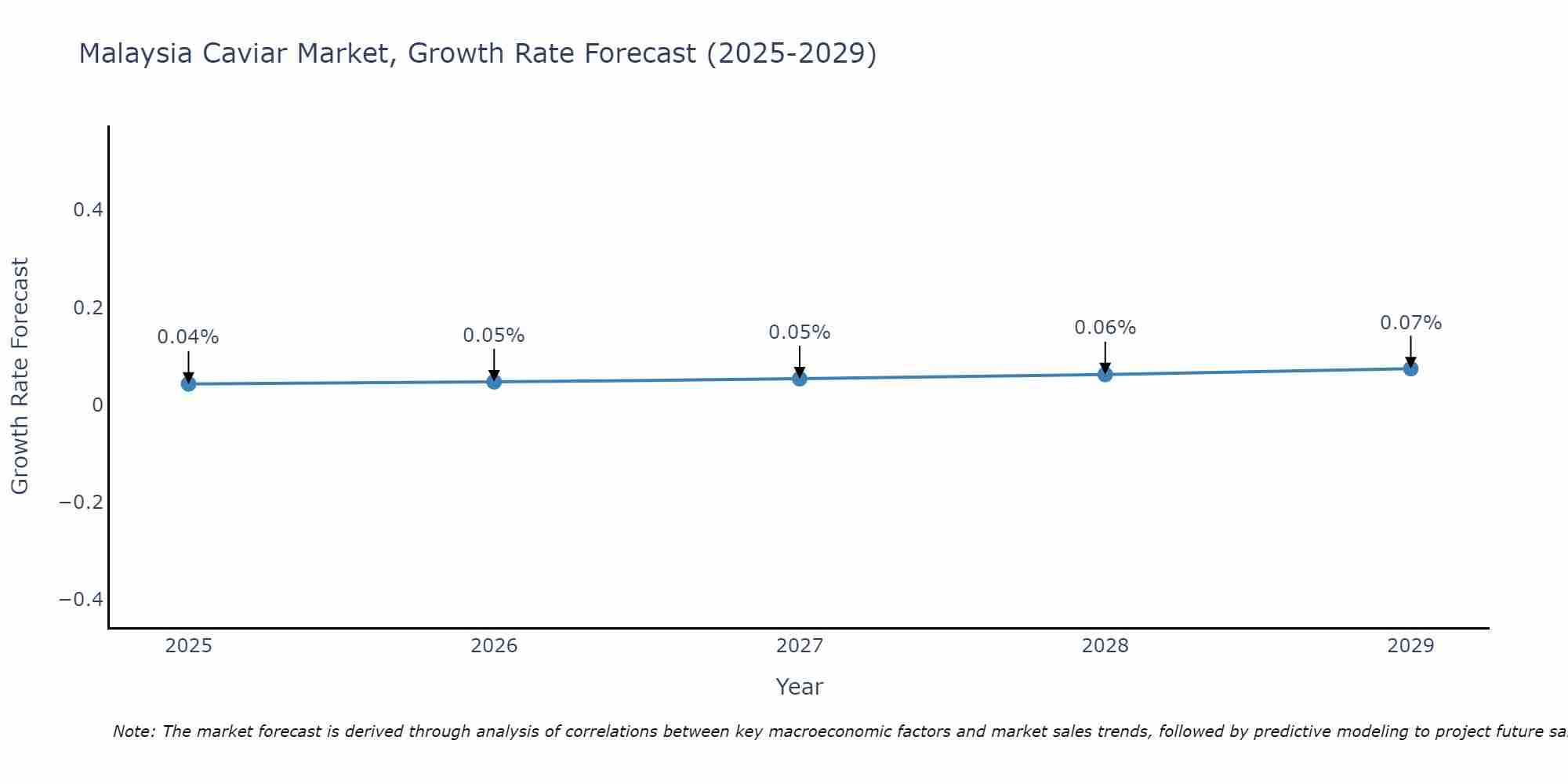
The Malaysia Caviar Market is poised for steady growth rate improvements from 2025 to 2029. From 0.04% in 2025, the growth rate steadily ascends to 0.07% in 2029.
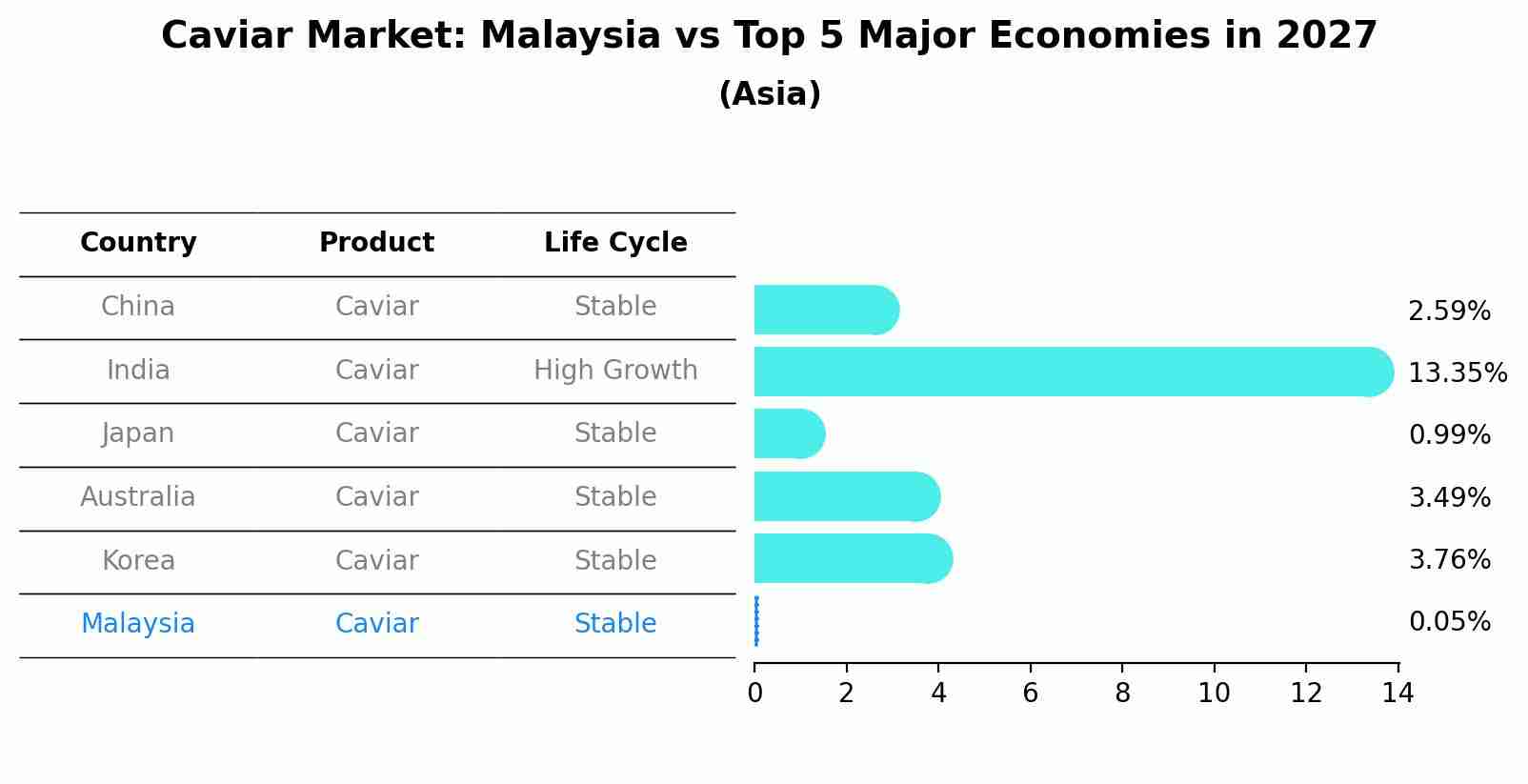
Caviar Market: Malaysia vs Top 5 Major Economies in 2027 (Asia)
By 2027, the Caviar market in Malaysia is anticipated to reach a growth rate of 0.05%, as part of an increasingly competitive Asia region, where China remains at the forefront, supported by India, Japan, Australia and South Korea, driving innovations and market adoption across sectors.
Malaysia Caviar Market Synopsis
The total value of Malaysia caviar market in 2025 was estimated to be around MYR 1 million, and it is projected to record a CAGR of 4.7% during the forecast period. Approximately 45% of the overall sales volume came from online channels with most products being imported from countries like Russia, China and France while others are sourced locally from fish farms located on islands off the coast of Kuala Lumpur or Penang states among other areas in Malaysia.
Market Drivers of the market
The Malaysia caviar market is anticipated to experience positive growth in the coming years. Caviar, the processed roe (eggs) of sturgeon fish, is considered a luxury food item and is used in gourmet cuisine and fine dining experiences. The increasing disposable income and changing food preferences of affluent consumers contribute to the demand for caviar in Malaysia. The presence of upscale restaurants, hotels, and luxury resorts that offer gourmet dining experiences also drives the market`s growth. Additionally, the rising interest in culinary tourism and gastronomy further boosts the demand for premium food products like caviar. However, the market may face challenges related to sustainability and conservation concerns surrounding sturgeon fishing. Responsible sourcing and sustainable harvesting practices are essential to preserve sturgeon populations and maintain the market`s long-term viability.
Challenges of the market
The caviar market in Malaysia faces challenges that can impact its growth and market acceptance. One significant challenge is the limited local production of caviar. The majority of caviar is imported from other countries, leading to price fluctuations and supply uncertainties. The industry needs to explore opportunities for local caviar production through sustainable aquaculture practices. Additionally, the market must address consumer concerns related to sustainability and ethical sourcing of caviar. Companies need to promote responsible harvesting and aquaculture practices to support the conservation of sturgeon species and reduce the environmental impact of caviar production. The caviar market may also face competition from alternative gourmet food products and luxury delicacies. To retain market share, companies must focus on product quality, authenticity, and unique flavor profiles. Moreover, the caviar market needs to overcome the perception of caviar as an exclusive and expensive luxury item. The industry must explore more accessible packaging and portioning options to cater to a broader consumer base and create awareness about the various caviar grades and pricing.
Covid-19 Impact on the market
The COVID-19 pandemic had a notable impact on the caviar market in Malaysia. With the closure of high-end restaurants, luxury hotels, and reduced travel, there was a decline in demand for caviar used in fine dining and luxury culinary experiences. The disruptions in the supply chain and logistical challenges also affected the availability and distribution of caviar products. Additionally, with the economic uncertainties caused by the pandemic, consumers became more cautious about discretionary spending, impacting the demand for luxury food items like caviar. However, as economic activities resume and the hospitality industry recovers, the caviar market is expected to gradually rebound, driven by the resumption of fine dining and luxury culinary experiences.
Key Players of the market
The caviar market in Malaysia is supported by gourmet food distributors and luxury food retailers. Caviar is considered a delicacy and is often associated with premium dining experiences. Key players in Malaysia caviar market may include CaviarElegance Foods Sdn Bhd, GourmetTaste Distributors, and CaviarRoyale. These companies are expected to focus on sourcing high-quality caviar products and catering to the demand from fine dining establishments and affluent consumers.
Key Highlights of the Report:
- Malaysia Caviar Market Outlook
- Market Size of Malaysia Caviar Market, 2024
- Forecast of Malaysia Caviar Market, 2031
- Historical Data and Forecast of Malaysia Caviar Revenues & Volume for the Period 2021-2031
- Malaysia Caviar Market Trend Evolution
- Malaysia Caviar Market Drivers and Challenges
- Malaysia Caviar Price Trends
- Malaysia Caviar Porter's Five Forces
- Malaysia Caviar Industry Life Cycle
- Historical Data and Forecast of Malaysia Caviar Market Revenues & Volume By Product for the Period 2021-2031
- Historical Data and Forecast of Malaysia Caviar Market Revenues & Volume By Sevruga for the Period 2021-2031
- Historical Data and Forecast of Malaysia Caviar Market Revenues & Volume By Osetra for the Period 2021-2031
- Historical Data and Forecast of Malaysia Caviar Market Revenues & Volume By Salmon for the Period 2021-2031
- Historical Data and Forecast of Malaysia Caviar Market Revenues & Volume By Sushi for the Period 2021-2031
- Historical Data and Forecast of Malaysia Caviar Market Revenues & Volume By Others for the Period 2021-2031
- Historical Data and Forecast of Malaysia Caviar Market Revenues & Volume By Form for the Period 2021-2031
- Historical Data and Forecast of Malaysia Caviar Market Revenues & Volume By Fresh for the Period 2021-2031
- Historical Data and Forecast of Malaysia Caviar Market Revenues & Volume By Dried for the Period 2021-2031
- Historical Data and Forecast of Malaysia Caviar Market Revenues & Volume By Preserved & Frozen for the Period 2021-2031
- Historical Data and Forecast of Malaysia Caviar Market Revenues & Volume By Application for the Period 2021-2031
- Historical Data and Forecast of Malaysia Caviar Market Revenues & Volume By Restaurants for the Period 2021-2031
- Historical Data and Forecast of Malaysia Caviar Market Revenues & Volume By Household for the Period 2021-2031
- Malaysia Caviar Import Export Trade Statistics
- Market Opportunity Assessment By Product
- Market Opportunity Assessment By Form
- Market Opportunity Assessment By Application
- Malaysia Caviar Top Companies Market Share
- Malaysia Caviar Competitive Benchmarking By Technical and Operational Parameters
- Malaysia Caviar Company Profiles
- Malaysia Caviar Key Strategic Recommendations






































