Malaysia Curtains and Blinds Market Summary
The malaysia curtains and blinds market was estimated at USD 437 Million in 2025 and is projected to reach USD 659 Million by 2032, growing at a CAGR of 7.9% from 2026 to 2032.
Malaysia Curtains and Blinds Market Year-wise Growth Rate and Key Drivers
This graph highlights how the Malaysia Curtains and Blinds Market has steadily grown over the past five years, supported by major growth factors.
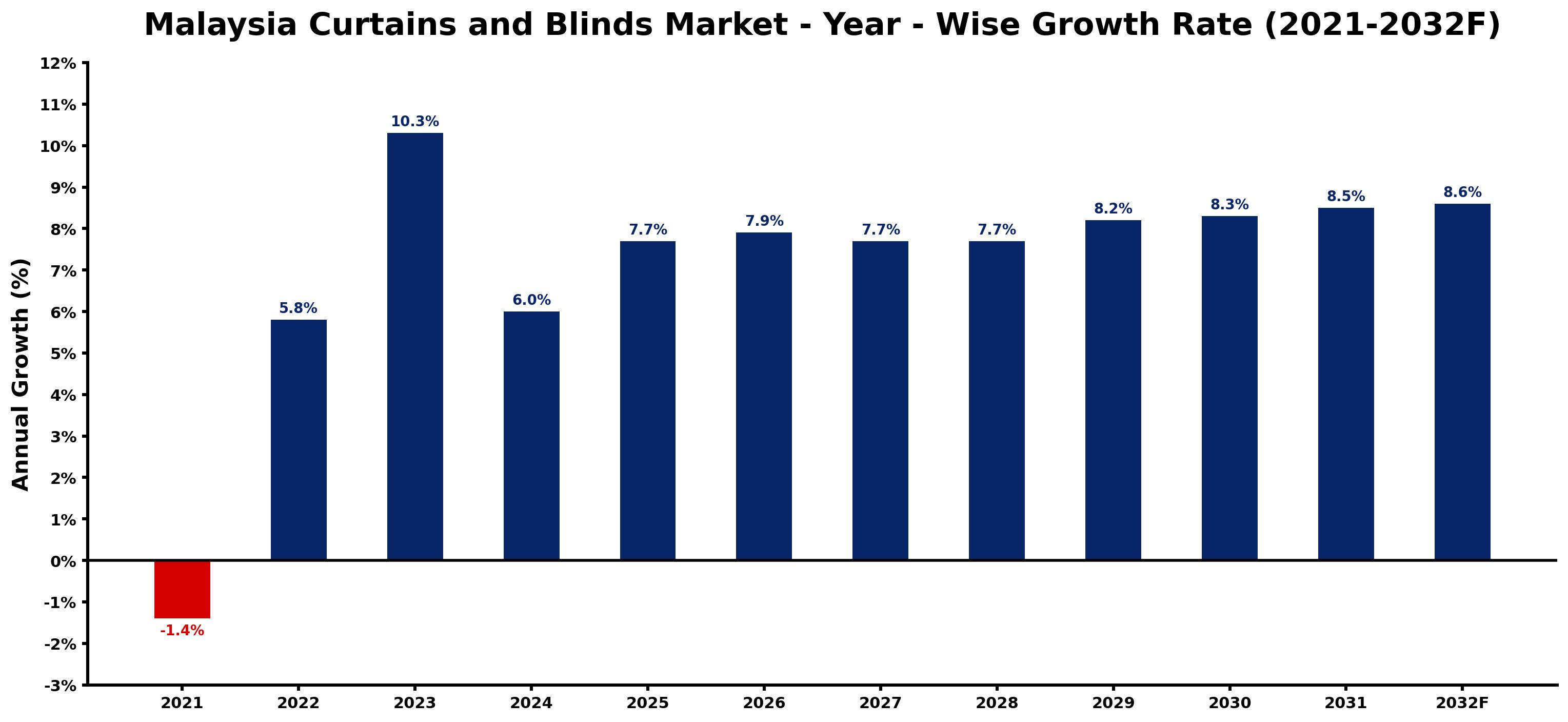
The table below presents the year wise growth rates along with the key drivers influencing the market
| Year | Growth Rate | Major Drivers |
| 2021 | -1.4% | Increased competition from lowcost imports eroded market share for domestic curtain and blind manufacturers. |
| 2022 | 5.8% | Increased urbanization led to a surge in residential property developments across Malaysia. |
| 2023 | 10.3% | Homeowners prioritized energy-efficient materials in response to rising electricity costs. |
| 2024 | 6.0% | Growing awareness about sustainable living influenced preferences for eco-friendly curtain options. |
| 2025 | 7.7% | Digital marketing campaigns successfully targeted younger demographics seeking modern designs. |
| 2026 | 7.9% | Construction sector expansion prompted demand for customized window treatments in new projects. |
| 2027 | 7.7% | Technological advancements improved manufacturing processes, reducing costs and enhancing product quality. |
| 2028 | 7.7% | Renovation trends shifted towards smart home integration, influencing curtain and blind functionalities. |
| 2029 | 8.2% | Luxury home segments increased spending on premium curtains and bespoke installation services. |
| 2030 | 8.3% | Local craftsmanship gained popularity, with consumers valuing handmade and artisanal products. |
| 2031 | 8.5% | E-commerce platforms evolved, offering diverse options and convenient purchasing experiences. |
| 2032 | 8.6% | Cultural events and festivals created opportunities for themed curtain designs and seasonal sales. |
Note - Market size estimations and growth projections presented in this report are based on 6Wresearch's advanced forecasting approach, validated with industry datasets as of June 2026.
Malaysia Curtains and Blinds Market Synopsis
The Malaysia Curtains and Blinds Market is projected to reach 7.9% and witness significant growth during the forecast period (2026-2032). With a compound annual growth rate (CAGR) estimated at around 5.1%, the market's expansion is primarily driven by several interconnected factors such as an increasing population, rising disposable income, rapid urbanization, and evolving consumer lifestyles. Additionally, government initiatives aimed at promoting home renovation projects have bolstered demand for high-quality window treatment products across the nation.
Malaysia Curtains and Blinds Market Growth Drivers
Key drivers propelling the growth of the Malaysia Curtains and Blinds Market include:
- Population Growth: Malaysia's population is steadily rising, creating a greater demand for residential spaces which in turn boosts the need for curtains and blinds.
- Increasing Disposable Income: As disposable incomes rise, consumers are more inclined to invest in high-end and aesthetically pleasing window treatments to enhance their living environments.
- Urbanization Trends: The ongoing urbanization in Malaysia leads to higher housing development rates, fostering a conducive market for curtains and blinds.
- Changing Lifestyles: Modern lifestyles emphasize aesthetics and functionality, leading consumers to opt for versatile and visually appealing window treatment options.
- Growth of E-commerce: The shift from traditional retail to online sales, accelerated by the COVID-19 pandemic, has made it easier for consumers to access a wider range of products, enhancing overall demand.
Malaysia Curtains and Blinds Market Trends and Opportunities
The Malaysia Curtains and Blinds Market is witnessing several notable trends that are reshaping the industry landscape:
- Eco-friendly Products: Increasing consumer awareness regarding sustainability has led to a preference for environmentally friendly materials in curtains and blinds, which presents opportunities for manufacturers.
- Customization and Personalization: Consumers are seeking personalized window solutions that cater to their specific tastes and home aesthetics, thereby pushing suppliers to offer customizable options.
- Smart Home Integration: The incorporation of smart technologies in window treatments for greater convenience and efficiency is becoming a key focus area for innovation.
- Online Retail Growth: The surge in online shopping, driven by convenience and safety measures, is transforming the way consumers purchase curtains and blinds.
- Innovative Designs: There is a growing demand for innovative and contemporary designs that reflect modern trends, such as minimalism and industrial chic aesthetics.
Malaysia Curtains and Blinds Market Challenges and Restraints
Despite the optimistic growth prospects, the Malaysia Curtains and Blinds Market faces certain challenges:
- Material Costs: Fluctuations in raw material prices may affect production costs, potentially leading to increased retail prices and decreased competitiveness.
- Market Saturation: As more companies enter the market, the competition intensifies, making it challenging for new entrants to establish a foothold.
- Consumer Awareness: Limited knowledge about the benefits of high-quality curtains and blinds can result in price sensitivity, impacting sales of premium products.
- Supply Chain Disruptions: Global supply chain issues can affect the availability of materials needed for production, thereby delaying delivery times.
- Imitation Products: The prevalence of counterfeit products in the market can undermine brand integrity and consumer trust.
Malaysia Curtains and Blinds Market Government Investment and Initiatives
The Malaysian government plays a crucial role in fostering the development of the curtains and blinds market through various initiatives:
- Home Renovation Programs: Government-backed schemes to promote home renovations encourage homeowners to explore premium window treatment options.
- Urban Development Projects: Investments in urban infrastructure and housing development naturally elevate the demand for curtains and blinds.
- Incentives for Local Manufacturers: Initiatives aimed at supporting local manufacturers can lead to improved production capabilities and a diverse range of products in the market.
- Trade Policies: Favorable trade policies may facilitate smoother import processes for raw materials, thus benefiting manufacturers in the industry.
- Public Awareness Campaigns: Efforts to educate consumers about the benefits of upgrading their home décor contribute to the overall growth of the market.
Malaysia Curtains and Blinds Market Latest Developments (May 2025 - June 2026)
Recent developments in the Malaysia Curtains and Blinds Market have showcased an evolving landscape marked by innovation and adaptation:
- Increased Focus on Sustainability: Manufacturers are increasingly adopting eco-friendly practices and materials in response to consumer demand for sustainable products.
- Rise in E-commerce Sales: The growth of online sales platforms has continued, enabling manufacturers to reach a broader customer base efficiently.
- Introduction of Smart Blinds: Innovative products that incorporate smart technology have begun to enter the market, catering to the tech-savvy consumer segment.
- Expanding Retail Venues: There has been a noticeable trend towards establishing more retail touchpoints to enhance customer experience and engagement.
- Collaborative Efforts: Partnerships between manufacturers and interior designers are becoming more common, fostering creativity and innovation in product offerings.
Malaysia Curtains and Blinds Market - Key Attractiveness of the Report
- 10 Years of Market Numbers
- Historical Data Starting from 2022 to 2025
- Base Year: 2025
- Forecast Data until 2032
- Key Performance Indicators Impacting the Market
- Major Upcoming Developments and Projects
Key Highlights of the Report:
- Malaysia Curtains and Blinds Market Outlook
- Market Size of Malaysia Curtains and Blinds Market, 2025
- Forecast of Malaysia Curtains and Blinds Market, 2032F
- Historical Data and Forecast of Malaysia Curtains and Blinds Revenues & Volume for the Period 2022-2032F
- Malaysia Curtains and Blinds Market Trend Evolution
- Malaysia Curtains and Blinds Market Drivers and Challenges
- Malaysia Curtains and Blinds Price Trends
- Malaysia Curtains and Blinds Porter's Five Forces
- Malaysia Curtains and Blinds Industry Life Cycle
- Historical Data and Forecast of Malaysia Curtains and Blinds Market Revenues & Volume By Types for the Period 2022-2032F
- Historical Data and Forecast of Malaysia Curtains and Blinds Market Revenues & Volume By Curtain for the Period 2022-2032F
- Historical Data and Forecast of Malaysia Curtains and Blinds Market Revenues & Volume By Blinds for the Period 2022-2032F
- Historical Data and Forecast of Malaysia Curtains and Blinds Market Revenues & Volume By Application for the Period 2022-2032F
- Historical Data and Forecast of Malaysia Curtains and Blinds Market Revenues & Volume By Traditional for the Period 2022-2032F
- Historical Data and Forecast of Malaysia Curtains and Blinds Market Revenues & Volume By Motorised for the Period 2022-2032F
- Malaysia Curtains and Blinds Import Export Trade Statistics
- Market Opportunity Assessment By Types
- Market Opportunity Assessment By Application
- Malaysia Curtains and Blinds Top Companies Market Share
- Malaysia Curtains and Blinds Competitive Benchmarking By Technical and Operational Parameters
- Malaysia Curtains and Blinds Company Profiles
- Malaysia Curtains and Blinds Key Strategic Recommendations






































