Malaysia Kids Footwear Market Summary
The malaysia kids footwear market was estimated at USD 410 Million in 2025 and is projected to reach USD 531 Million by 2032, growing at a CAGR of 5.1% from 2026 to 2032.
Malaysia Kids Footwear Market Year-wise Growth Rate and Key Drivers
This graph highlights how the Malaysia Kids Footwear Market has steadily grown over the past five years, supported by major growth factors.
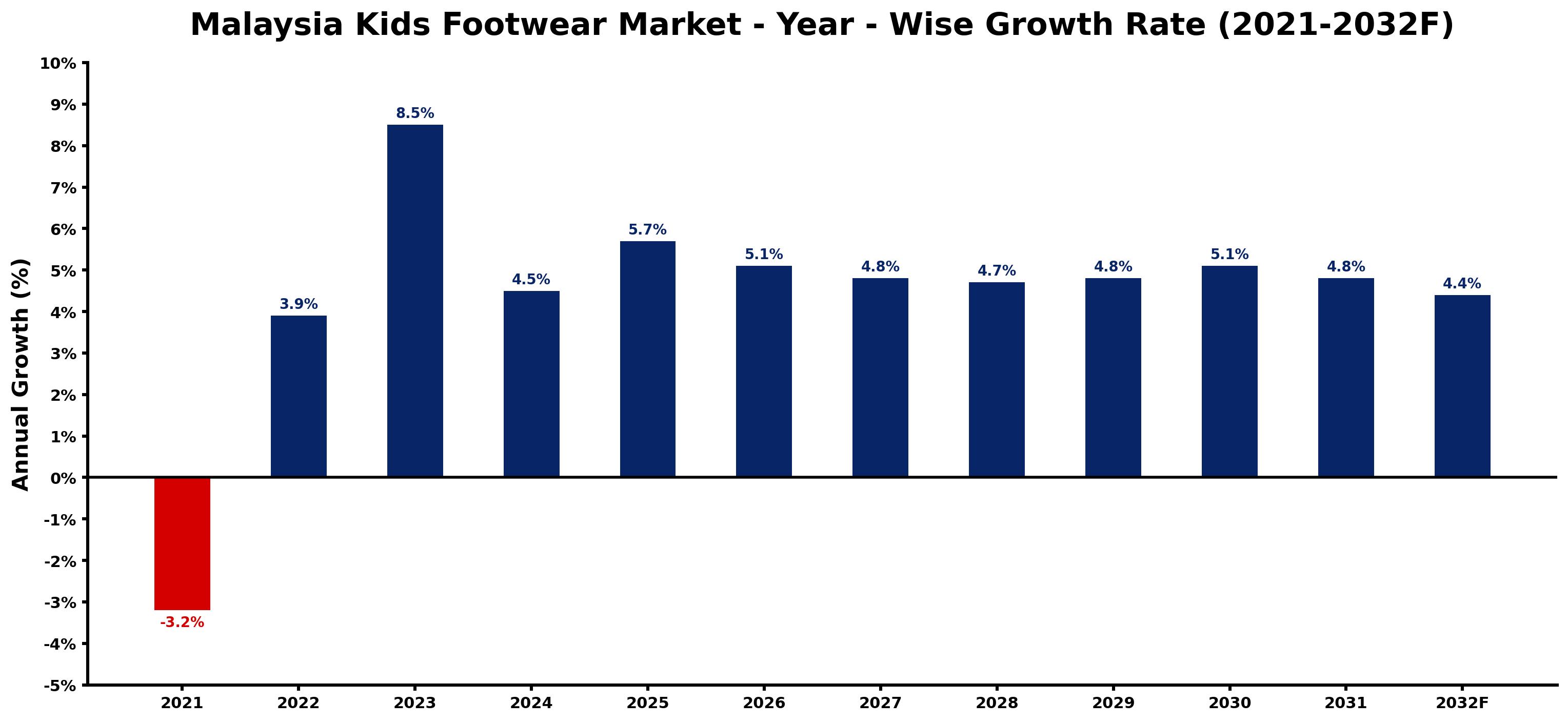
The table below presents the year wise growth rates along with the key drivers influencing the market
| Year | Growth Rate | Major Drivers |
| 2021 | -3.2% | Persistent supply chain disruptions hindered product availability, leading to decreased sales in the kids footwear sector. |
| 2022 | 3.9% | Local brands emerged, emphasizing affordability while maintaining quality for Malaysian consumers. |
| 2023 | 8.5% | E-commerce platforms expanded significantly, providing parents with convenient shopping options. |
| 2024 | 4.5% | Health-conscious parents increasingly prioritize ergonomic designs, promoting foot health in children. |
| 2025 | 5.7% | Fashion collaborations with popular franchises engage kids, making footwear more desirable. |
| 2026 | 5.1% | Rural areas see improved transportation networks, facilitating access to footwear retail outlets. |
| 2027 | 4.8% | Innovative materials enter the market, enhancing performance and durability for active children. |
| 2028 | 4.7% | Increased focus on outdoor activities drives demand for specialized footwear options. |
| 2029 | 4.8% | Cultural events and festivals highlight traditional designs, boosting local craftsmanship recognition. |
| 2030 | 5.1% | Economic recovery post-pandemic influences disposable income levels, encouraging footwear spending. |
| 2031 | 4.8% | Digital marketing campaigns successfully target parents, elevating brand visibility in competitive markets. |
| 2032 | 4.4% | Sustainability certifications become standard, guiding responsible purchasing choices among consumers. |
Note - Market size estimations and growth projections presented in this report are based on 6Wresearch's advanced forecasting approach, validated with industry datasets as of June 2026.
Malaysia Kids Footwear Market Synopsis
The Malaysia Kids Footwear Market is projected to reach 5.1% and witness significant growth during the forecast period (2026-2032). The increasing purchasing power among Malaysian families, coupled with evolving fashion trends for children, is a primary driver of demand for kids' footwear across the region. Furthermore, heightened awareness of foot health among parents has led to a shift towards quality footwear, which is perceived as an important investment in children's well-being. Alongside these factors, rising disposable incomes have enabled families to spend more on premium brands, significantly contributing to the market's expansion. The substantial growth of the e-commerce sector is also noteworthy, allowing consumers easy access to a variety of international kids' shoe brands at competitive prices, thereby influencing purchasing decisions. Additionally, the surge in children's participation in sports and outdoor activities has created a concurrent demand for athletic footwear designed to ensure comfort and support during prolonged use.
Malaysia Kids Footwear Market Growth Drivers
In the Malaysia Kids Footwear Market, several factors are propelling market growth. First, the increased purchasing power of consumers is facilitating the willingness to invest in high-quality footwear for children, which is a critical consideration for parents. Second, the evolving fashion consciousness among kids is driving demand for trendy and aesthetically appealing footwear designs, propelling brands to innovate and keep up with these trends. Third, the rising awareness of foot health and comfort has parents actively seeking footwear that provides adequate support and reduces the risk of foot-related issues. Fourth, the boom in the e-commerce sector has transformed how consumers shop for kids' footwear, providing them with a wide range of choices and the convenience of online shopping. Lastly, the growing participation of children in sports and extracurricular activities has led to increased demand for specialized athletic footwear, reinforcing the growth dynamics of the market.
Malaysia Kids Footwear Market Trends and Opportunities
The Malaysia Kids Footwear Market is characterized by evolving trends that offer significant opportunities for stakeholders. One prominent trend is the rise of eco-friendly and sustainable footwear options, which are increasingly appealing to environmentally conscious consumers. Brands are now exploring the use of recycled materials and sustainable production methods to attract this demographic. Another trend is the customization of footwear, where brands offer personalized options that allow children to express their individuality. Furthermore, the integration of technology in footwear, such as smart shoes with tracking capabilities or enhanced cushioning technology, is gaining traction. There is also a noticeable shift towards multi-functional footwear, blending aesthetics with practicality, suitable for both casual wear and sports activities. These trends present lucrative opportunities for businesses to differentiate themselves in a competitive landscape.
Malaysia Kids Footwear Market Challenges and Restraints
Despite the positive growth prospects in the Malaysia Kids Footwear Market, several challenges may impede progress. Firstly, the volatility in raw material prices can severely affect profit margins for manufacturers, which may lead to increased retail prices and affect consumer purchasing behavior. Secondly, the evolving nature of children's preferences makes it challenging for brands to keep up with trends and maintain inventory that resonates with young shoppers. Thirdly, the presence of counterfeit products in the market poses a significant threat to established brands, impacting their reputation and sales. Fourthly, regulatory compliance regarding product safety and quality standards can pose hurdles for manufacturers and importers, requiring rigorous testing and certification processes. Lastly, economic fluctuations can alter consumer spending habits, leading to uncertainties in demand for kids' footwear.
Malaysia Kids Footwear Market Government Investment and Initiatives
The Malaysian government is increasingly prioritizing the children's healthcare sector, including initiatives aimed at promoting proper foot health through appropriate footwear. Various public awareness campaigns are being implemented to educate parents on the importance of selecting the right shoes for their children, emphasizing comfort and support. Furthermore, government investments in the educational sector support extracurricular activities, leading to an enhanced focus on sports participation among children, which in turn fosters the demand for athletic shoe categories. Additionally, incentives aimed at boosting local manufacturing capabilities in the footwear sector have been introduced, aimed at reducing reliance on imports and stimulating local job creation. These initiatives reflect the government's commitment to fostering an environment conducive to growth within the Malaysia Kids Footwear Market.
Malaysia Kids Footwear Market Latest Developments (May 2025 - June 2026)
Recent developments in the Malaysia Kids Footwear Market indicate a dynamic shift towards innovation and enhanced consumer engagement. Throughout the period from May 2025 to June 2026, there has been a notable rise in digital marketing strategies employed by brands to reach tech-savvy young consumers and their parents. The trend of direct-to-consumer sales is also gaining traction, enabling brands to establish closer relationships with their customers. Furthermore, collaborations between footwear manufacturers and fashion designers have resulted in limited edition collections that cater to the rising demand for unique products. Additionally, brands are increasingly investing in research and development to incorporate advanced materials and technologies into their footwear to enhance performance and comfort. Overall, these developments reflect the market's responsiveness to consumer preferences and the ongoing pursuit of innovation in the kids' footwear segment.
Malaysia Kids Footwear Market - Key Attractiveness of the Report
- 10 Years of Market Numbers
- Historical Data Starting from 2022 to 2025
- Base Year: 2025
- Forecast Data until 2032
- Key Performance Indicators Impacting the Market
- Major Upcoming Developments and Projects
Key Highlights of the Report:
- Malaysia Kids Footwear Market Outlook
- Market Size of Malaysia Kids Footwear Market, 2025
- Forecast of Malaysia Kids Footwear Market, 2032F
- Historical Data and Forecast of Malaysia Kids Footwear Revenues & Volume for the Period 2022-2032F
- Malaysia Kids Footwear Market Trend Evolution
- Malaysia Kids Footwear Market Drivers and Challenges
- Malaysia Kids Footwear Price Trends
- Malaysia Kids Footwear Porter's Five Forces
- Malaysia Kids Footwear Industry Life Cycle
- Historical Data and Forecast of Malaysia Kids Footwear Market Revenues & Volume By Product Type for the Period 2022-2032F
- Historical Data and Forecast of Malaysia Kids Footwear Market Revenues & Volume By Casual for the Period 2022-2032F
- Historical Data and Forecast of Malaysia Kids Footwear Market Revenues & Volume By Sports for the Period 2022-2032F
- Historical Data and Forecast of Malaysia Kids Footwear Market Revenues & Volume By Formal for the Period 2022-2032F
- Historical Data and Forecast of Malaysia Kids Footwear Market Revenues & Volume By Others for the Period 2022-2032F
- Historical Data and Forecast of Malaysia Kids Footwear Market Revenues & Volume By End-users for the Period 2022-2032F
- Historical Data and Forecast of Malaysia Kids Footwear Market Revenues & Volume By Boys for the Period 2022-2032F
- Historical Data and Forecast of Malaysia Kids Footwear Market Revenues & Volume By Girls for the Period 2022-2032F
- Historical Data and Forecast of Malaysia Kids Footwear Market Revenues & Volume By Unisex for the Period 2022-2032F
- Malaysia Kids Footwear Import Export Trade Statistics
- Market Opportunity Assessment By Product Type
- Market Opportunity Assessment By End-users
- Malaysia Kids Footwear Top Companies Market Share
- Malaysia Kids Footwear Competitive Benchmarking By Technical and Operational Parameters
- Malaysia Kids Footwear Company Profiles
- Malaysia Kids Footwear Key Strategic Recommendations






































