Malaysia Sports Nutrition Market Size, Share & Growth Rate
The Malaysia Sports Nutrition Market was estimated at USD 208 Million in 2025 and is projected to reach USD 272 Million by 2032, growing at a CAGR of 3.9% from 2026 to 2032. This trajectory is propelled by a burgeoning fitness culture among Malaysians, coupled with a heightened awareness of the crucial role that nutrition plays in optimizing athletic performance and overall health. Moreover, the increasing penetration of e-commerce platforms has made sports nutrition products readily accessible, further stimulating market growth.
Malaysia Sports Nutrition Market Year-wise Growth Rate and Key Drivers
This graph highlights how the Malaysia Sports Nutrition Market has steadily grown over the years, supported by major growth factors.
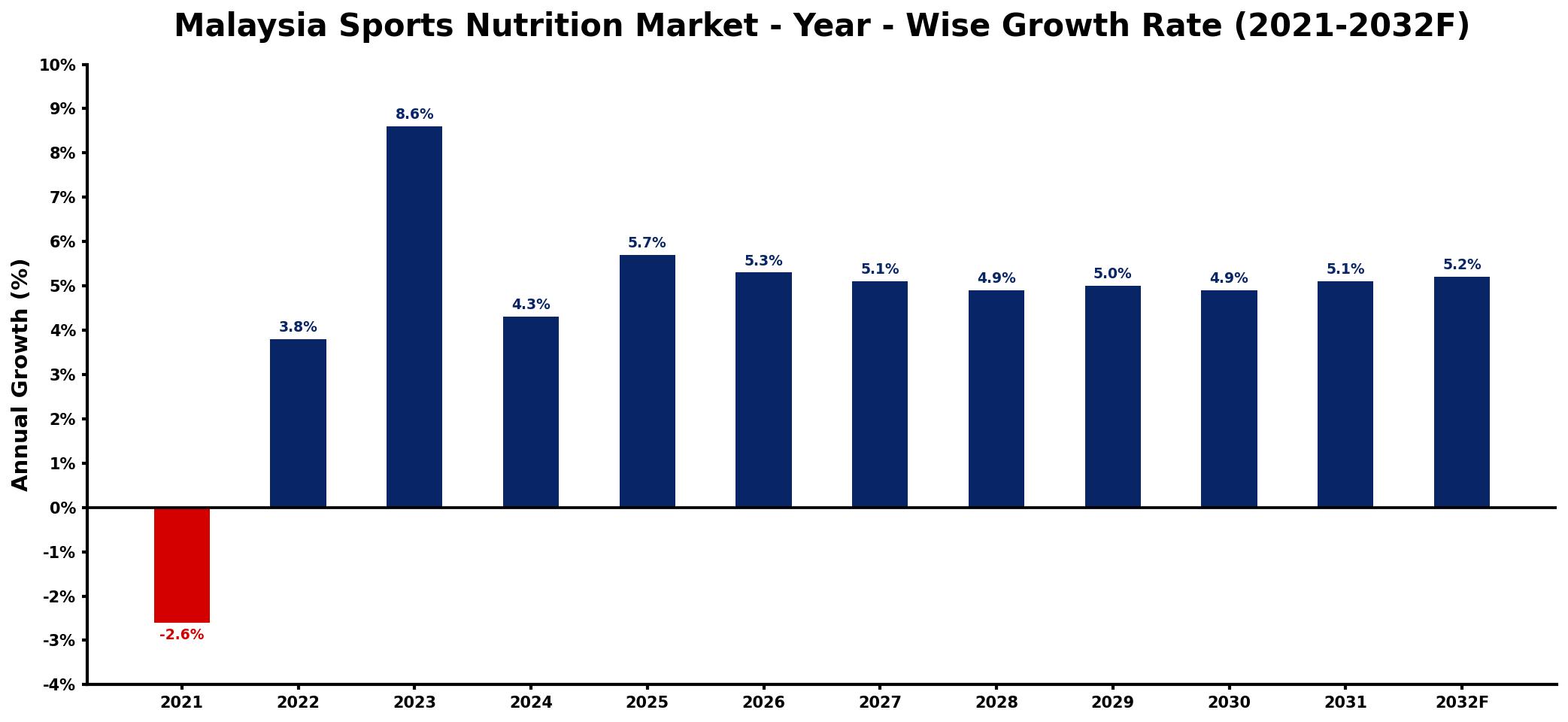
The table below presents the year‑wise growth rates along with the key drivers influencing the market
| Year | Growth Rate | Major Drivers |
| 2021 | -2.6% | decreased consumer health awareness |
| 2022 | 3.8% | increased fitness center memberships |
| 2023 | 8.6% | growing online retail platforms |
| 2024 | 4.3% | rising health consciousness trends |
| 2025 | 5.7% | expansion of fitness events |
| 2026 | 5.3% | increased demand for supplements |
| 2027 | 5.1% | growing influencer marketing impact |
| 2028 | 4.9% | improved raw material availability |
| 2029 | 5.0% | increased corporate wellness programs |
| 2030 | 4.9% | growing popularity of fitness apps |
| 2031 | 5.1% | rise in active lifestyle choices |
| 2032 | 5.2% | increased investment in wellness |
Note: Market size estimations and growth projections presented in this report are based on 6Wresearch's proprietary forecasting methodology, utilizing the latest available industry data, government publications, and primary research inputs.
Malaysia Sports Nutrition Market Synopsis
The key force shaping the Malaysia Sports Nutrition Market is the rapid increase in health consciousness among its population. As more consumers embark on fitness journeys, they are actively seeking products that enhance their physical capabilities and aid in recovery, leading to a surge in demand for protein supplements, energy drinks, and dietary aids.
Additionally, the influence of social media and endorsements from fitness personalities play a significant role in guiding consumer preferences. As a result, brands are adapting their marketing strategies to resonate with the younger demographic, focusing on innovative product offerings that align with modern lifestyle choices.
Malaysia Sports Nutrition Market Key Takeaways
- Growing health consciousness is fueling demand for sports nutrition products across Malaysia.
- E-commerce growth enhances product availability, contributing to market expansion.
- Influence of social media and celebrity endorsements is shaping consumer purchasing decisions.
- Ongoing innovations in product formulation and marketing strategies are vital for industry players.
- Regulatory compliance and quality assurance are crucial for maintaining consumer trust.
Evaluation of Restraints in Malaysia Sports Nutrition Market
Despite the promising growth trajectory of the Malaysia Sports Nutrition Market, certain constraints hinder its full potential. A significant challenge lies in the varying levels of consumer awareness regarding the benefits and proper usage of sports nutrition products. This lack of education can lead to skepticism and hesitancy among potential buyers. Furthermore, maintaining stringent regulatory standards poses operational hurdles for manufacturers, as compliance is essential for ensuring product safety and efficacy. Addressing these barriers through effective educational campaigns and ensuring quality will be critical for industry stakeholders aiming to navigate the competitive landscape.
Malaysia Sports Nutrition Market Trends
Current trends in the Malaysia Sports Nutrition Market include a noticeable shift towards plant-based supplements and organic ingredients. As consumers increasingly prioritize clean label products, brands are responding by innovating their formulations to meet these preferences. Additionally, the rise of customized nutrition solutions is becoming apparent, with more consumers seeking personalized products tailored to their specific health needs and fitness goals. This trend towards personalization reflects a broader movement within the wellness industry, where tailored experiences are gaining traction.
Malaysia Sports Nutrition Market Opportunities
The evolving landscape of the Malaysia Sports Nutrition Market presents numerous opportunities for growth and investment. The increasing number of fitness centers and lifestyle clubs paves the way for collaborative marketing efforts between gyms and nutrition brands. Additionally, the expansion of online sales channels offers brands the chance to reach a broader audience, particularly among younger consumers who favor digital shopping. Moreover, as more Malaysians seek to integrate sports nutrition into their daily routines, there is substantial room for growth in product diversification, including functional foods and beverages that cater to the health-focused consumer.
Government Initiatives in the Malaysia Sports Nutrition Market
The Malaysian government has implemented various initiatives aimed at promoting health and wellness among its citizens, indirectly supporting the sports nutrition market. Public health campaigns focused on increasing physical activity and improving dietary habits emphasize the importance of nutrition in leading a healthy lifestyle. Additionally, government grants and incentives for local sports and wellness businesses can foster innovation and competitiveness within the industry. Such policies aim to create a more health-oriented society, positively influencing the demand for sports nutrition products.
Future Insights of the Malaysia Sports Nutrition Market
Looking forward to the period from 2026 to 2032, the Malaysia Sports Nutrition Market is poised for continued growth, driven by persistent health trends and an evolving consumer base. As fitness becomes an integral part of daily life for more Malaysians, the demand for specialized nutrition solutions is likely to rise. Furthermore, advancements in technology and product formulation, combined with a robust digital sales environment, will bolster market dynamics. Brands that prioritize transparency, quality, and consumer education are expected to gain a competitive edge in this vibrant market.
Malaysia Sports Nutrition Market Latest Developments (2025 - 2026)
In recent months, the Malaysian sports nutrition sector has seen a flurry of activity focused on innovation and consumer engagement. Companies are rolling out new product lines that align with current health trends, particularly emphasizing plant-based and organic options. Additionally, partnerships with fitness influencers are on the rise, enhancing brand visibility and consumer trust. As e-commerce platforms continue to expand, brands are investing in online marketing strategies to capture the attention of tech-savvy consumers seeking convenience and variety in their nutrition choices.
Malaysia Sports Nutrition Market - Key Attractiveness of the Report
- 10 Years of Market Numbers
- Historical Data Starting from 2022 to 2025
- Base Year: 2025
- Forecast Data until 2032
- Key Performance Indicators Impacting the Market
- Major Upcoming Developments and Projects
Key Highlights of the Report:
- Malaysia Sports Nutrition Market Outlook
- Market Size of Malaysia Sports Nutrition Market, 2025
- Forecast of Malaysia Sports Nutrition Market, 2032
- Historical Data and Forecast of Malaysia Sports Nutrition Revenues & Volume for the Period 2022-2032F
- Malaysia Sports Nutrition Market Trend Evolution
- Malaysia Sports Nutrition Market Drivers and Challenges
- Malaysia Sports Nutrition Price Trends
- Malaysia Sports Nutrition Porter's Five Forces
- Malaysia Sports Nutrition Industry Life Cycle
- Historical Data and Forecast of Malaysia Sports Nutrition Market Revenues & Volume By Type for the Period 2022-2032F
- Historical Data and Forecast of Malaysia Sports Nutrition Market Revenues & Volume By Sports Food for the Period 2022-2032F
- Historical Data and Forecast of Malaysia Sports Nutrition Market Revenues & Volume By Sports Drinks for the Period 2022-2032F
- Historical Data and Forecast of Malaysia Sports Nutrition Market Revenues & Volume By Sports Supplements for the Period 2022-2032F
- Historical Data and Forecast of Malaysia Sports Nutrition Market Revenues & Volume By Distribution Channel for the Period 2022-2032F
- Historical Data and Forecast of Malaysia Sports Nutrition Market Revenues & Volume By Supermarkets/Hypermarkets for the Period 2022-2032F
- Historical Data and Forecast of Malaysia Sports Nutrition Market Revenues & Volume By Specialty Stores for the Period 2022-2032F
- Historical Data and Forecast of Malaysia Sports Nutrition Market Revenues & Volume By Convenience Stores for the Period 2022-2032F
- Historical Data and Forecast of Malaysia Sports Nutrition Market Revenues & Volume By Online Stores for the Period 2022-2032F
- Historical Data and Forecast of Malaysia Sports Nutrition Market Revenues & Volume By Other Distribution Channels for the Period 2022-2032F
- Malaysia Sports Nutrition Import Export Trade Statistics
- Market Opportunity Assessment By Type
- Market Opportunity Assessment By Distribution Channel
- Malaysia Sports Nutrition Top Companies Market Share
- Malaysia Sports Nutrition Competitive Benchmarking By Technical and Operational Parameters
- Malaysia Sports Nutrition Company Profiles
- Malaysia Sports Nutrition Key Strategic Recommendations






































