Malta Linen Yarn Market Size (2020-2030)
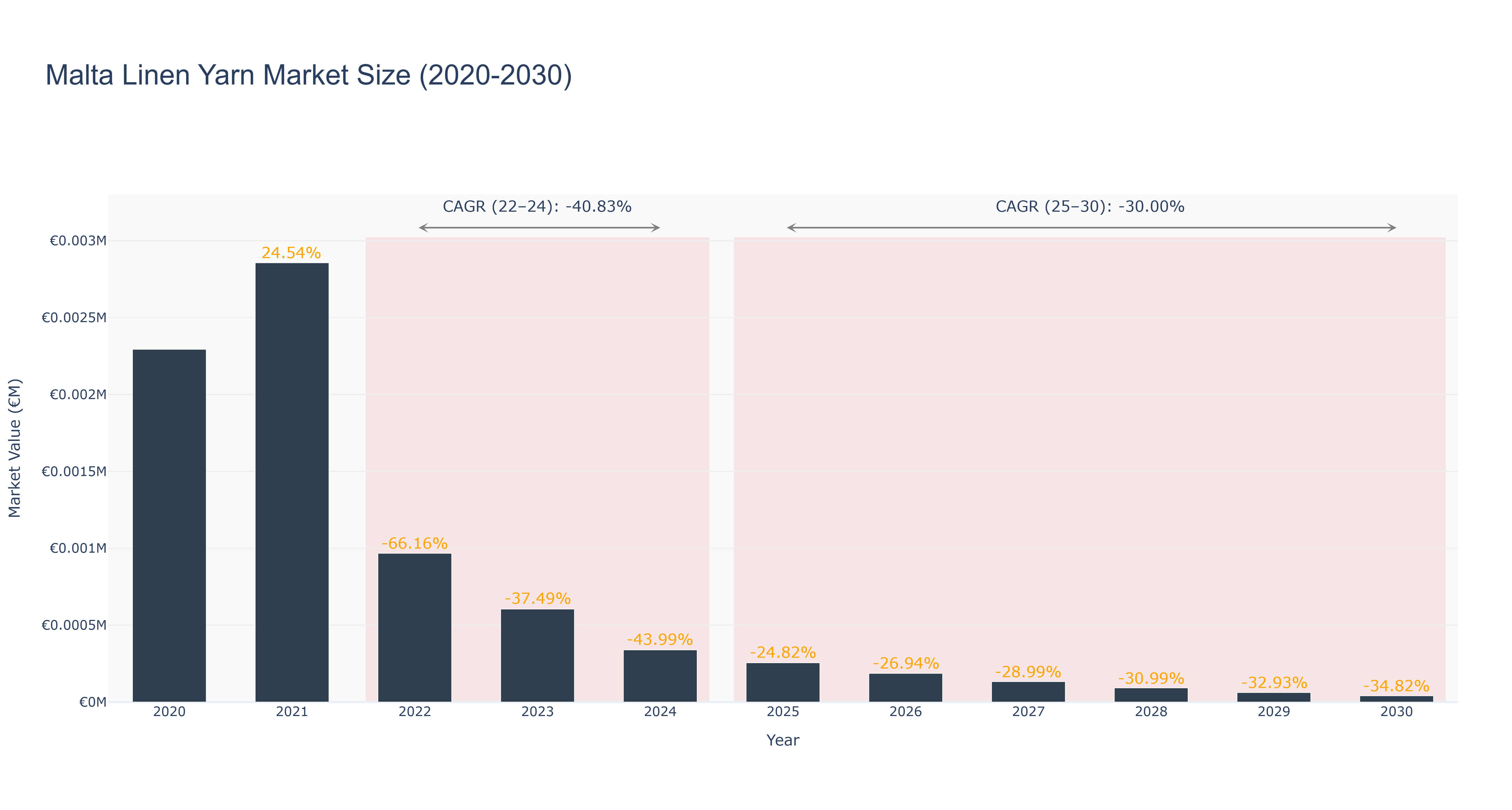
The Malta Linen Yarn Market has experienced a significant decline in recent years, with market size peaking at €966.60 thousand in 2022 before dropping sharply to €338.40 thousand in 2024, reflecting an actual CAGR of -40.83% from 2022 to 2024. This downturn can be attributed to various factors, including reduced demand, increased competition from synthetic fibers, and supply chain disruptions. Looking ahead, the forecasted period from 2025 to 2030 anticipates continued contraction, with projected market sizes decreasing from €254.40 thousand in 2025 to €39.81 thousand by 2030, indicating a CAGR of -30.00%. The persistent decline may be driven by ongoing shifts in consumer preferences towards more sustainable materials and the economic pressures faced by local producers. While specific upcoming projects in Malta are not highlighted, the broader trend towards eco-friendly textiles may influence market dynamics in the longer term.
Malta Linen Yarn Market: Production & Trade Performance (2019-2025)
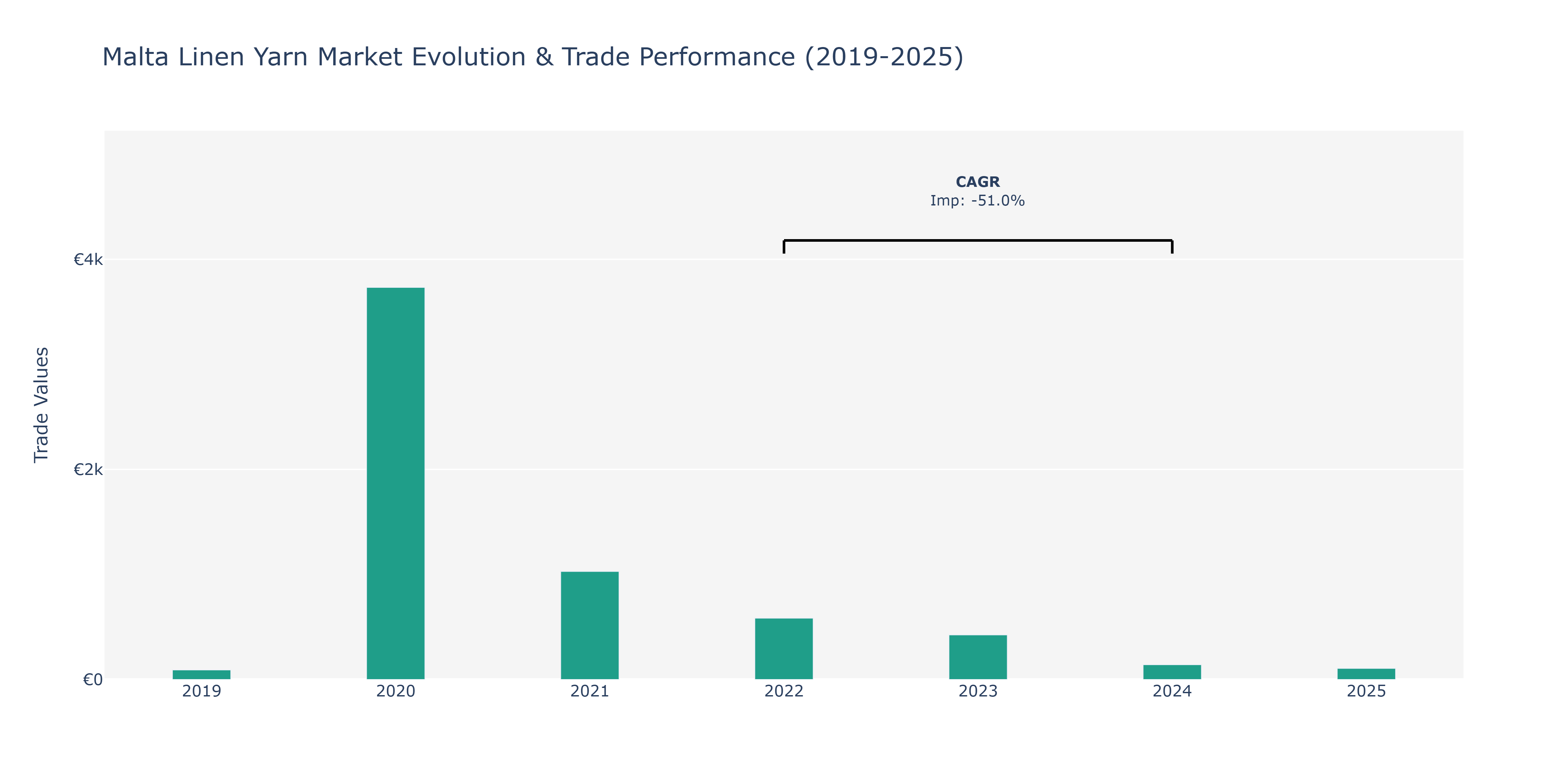
Imports of linen yarn into the Malta market exhibited notable fluctuations over the specified period. In 2019, imports started at €90 thousand and surged significantly in 2020 to €3.73 billion, marking a substantial peak. However, a drastic decline followed in the subsequent years, with figures dropping to €1.03 billion in 2021, €583 million in 2022, and €424 million in 2023. The downward trend continued towards 2024 and 2025, with imports declining further to €140 million and €105.25 million, respectively. These fluctuations could be attributed to global market dynamics, including changes in consumer demand for linen products, shifts in manufacturing practices, and the impact of economic conditions on trade patterns. The decline in imports post-2020 might be influenced by evolving consumer preferences towards sustainable alternatives or supply chain disruptions due to external factors. Further research into consumer behavior and trade policies could provide additional insights into the observed trends.
Key Highlights of the Report:
- Malta Linen Yarn Market Outlook
- Market Size of Malta Linen Yarn Market, 2024
- Forecast of Malta Linen Yarn Market, 2031
- Historical Data and Forecast of Malta Linen Yarn Revenues & Volume for the Period 2021-2031
- Malta Linen Yarn Market Trend Evolution
- Malta Linen Yarn Market Drivers and Challenges
- Malta Linen Yarn Price Trends
- Malta Linen Yarn Porter`s Five Forces
- Malta Linen Yarn Industry Life Cycle
- Historical Data and Forecast of Malta Linen Yarn Market Revenues & Volume By Products for the Period 2021-2031
- Historical Data and Forecast of Malta Linen Yarn Market Revenues & Volume By Dry spun yarn for the Period 2021-2031
- Historical Data and Forecast of Malta Linen Yarn Market Revenues & Volume By Wet spun yarn for the Period 2021-2031
- Historical Data and Forecast of Malta Linen Yarn Market Revenues & Volume By Blended yarn for the Period 2021-2031
- Historical Data and Forecast of Malta Linen Yarn Market Revenues & Volume By Applications for the Period 2021-2031
- Historical Data and Forecast of Malta Linen Yarn Market Revenues & Volume By Clothings for the Period 2021-2031
- Historical Data and Forecast of Malta Linen Yarn Market Revenues & Volume By Beddings for the Period 2021-2031
- Historical Data and Forecast of Malta Linen Yarn Market Revenues & Volume By Others for the Period 2021-2031
- Malta Linen Yarn Import Export Trade Statistics
- Market Opportunity Assessment By Products
- Market Opportunity Assessment By Applications
- Malta Linen Yarn Top Companies Market Share
- Malta Linen Yarn Competitive Benchmarking By Technical and Operational Parameters
- Malta Linen Yarn Company Profiles
- Malta Linen Yarn Key Strategic Recommendations






































