Malta Loudspeaker Market Size (2020-2030)
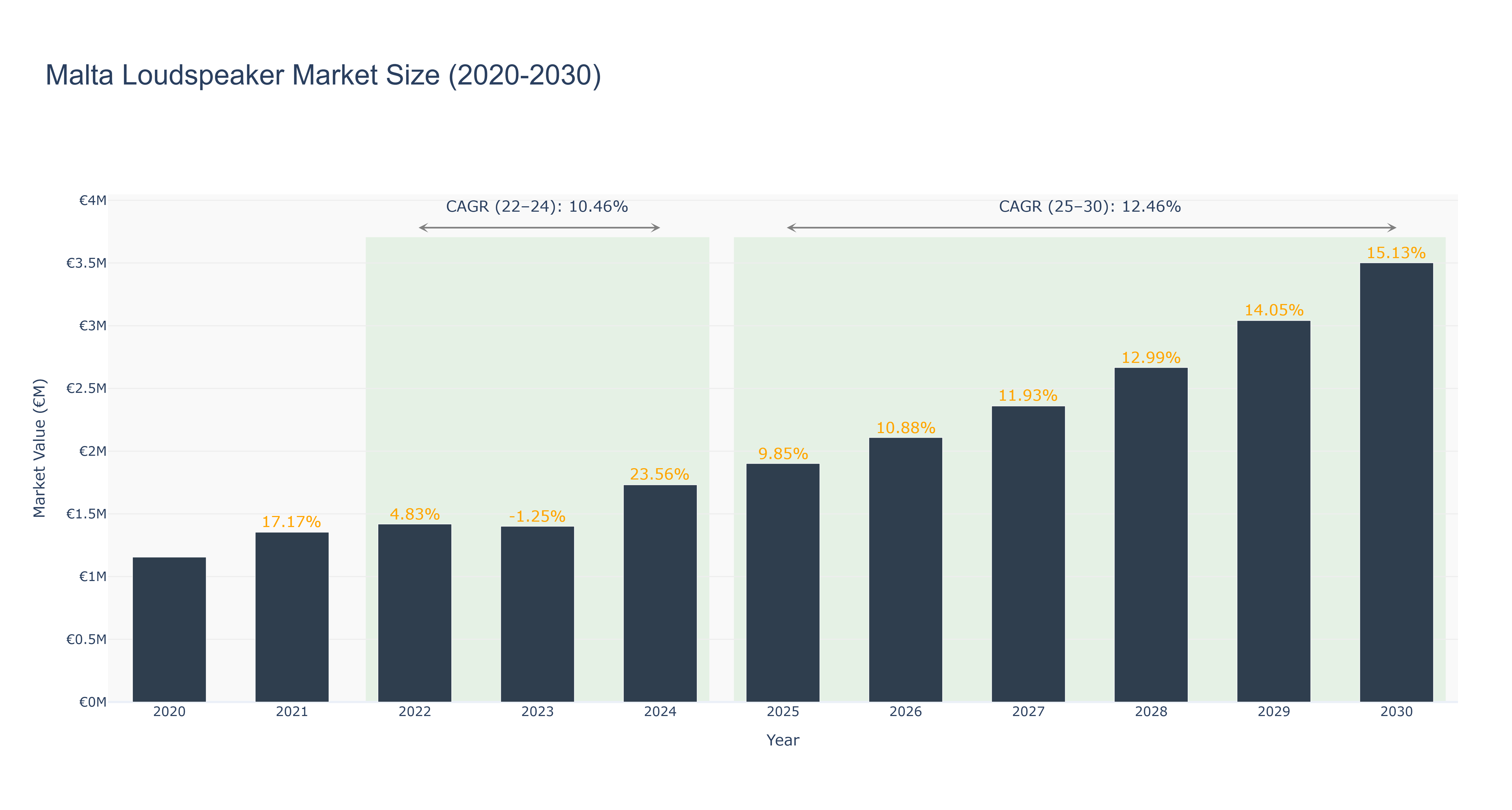
Malta Loudspeaker Market has shown a promising growth trend over the years. The peak market size of €3.50 million is forecasted for 2030, with significant growth observed since 2020 when the market size was €1.16 million. From 2020 to 2024, the market size increased steadily, experiencing a notable spike in 2024 to €1.73 million, driven by increasing demand for loudspeakers. The market is projected to continue its growth trajectory from 2025 to 2030, with a CAGR of 12.46%, supported by technological advancements and consumer preferences for high-quality audio products. Recent developments in Malta's electronics industry, including collaborations with global audio technology companies, are expected to further boost the loudspeaker market in the near future. The industry drivers behind this growth include rising disposable incomes, growing entertainment sector, and evolving audio technologies.
Malta Loudspeaker Market: Production & Trade Performance (2019-2025)
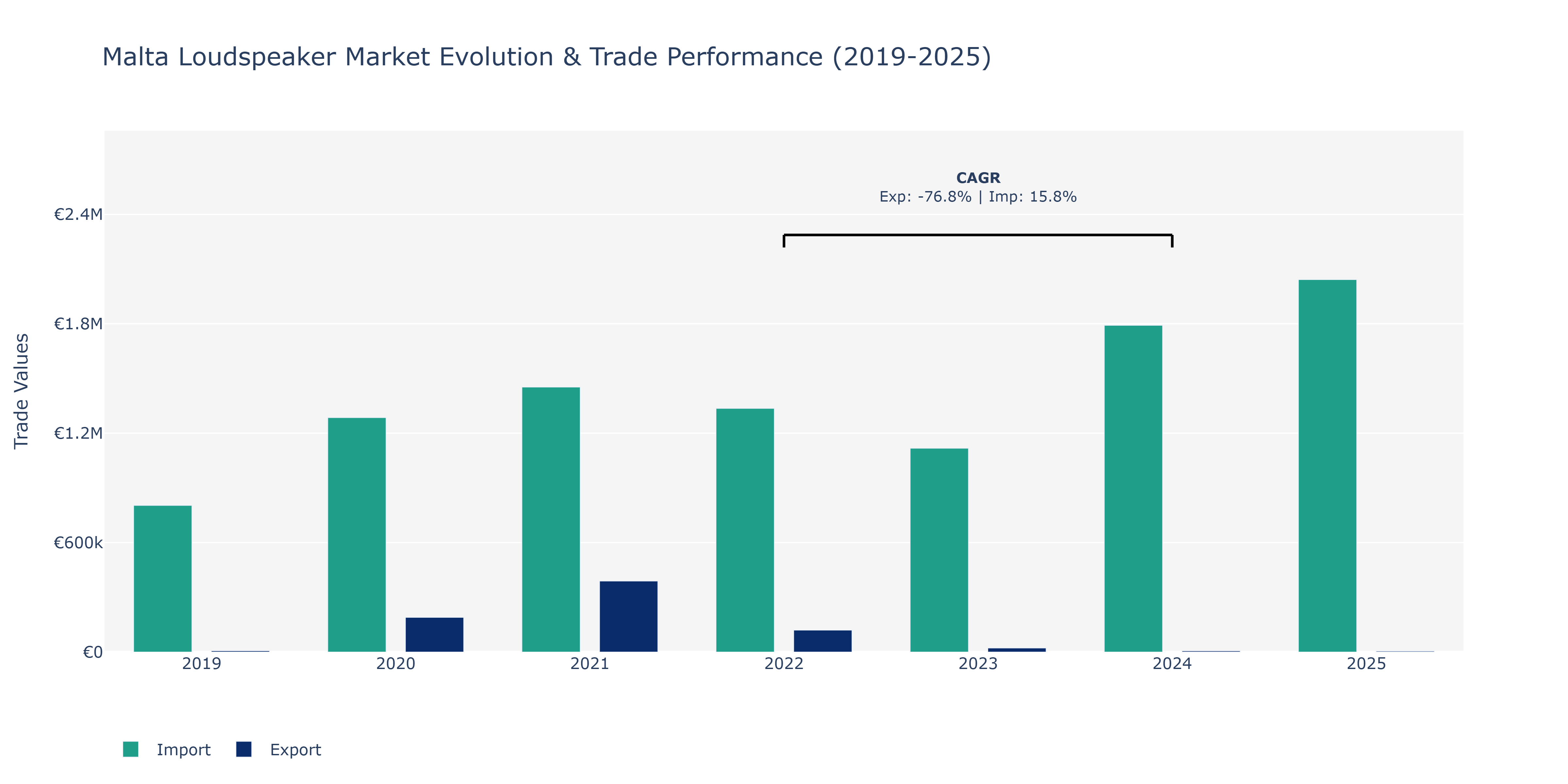
In the Malta Loudspeaker Market, exports and imports showcase distinctive trends over the years. Exports experienced fluctuations, with a noticeable peak in 2021 at €389.36 thousand, followed by a decline to €22.05 thousand in 2023 before a slight recovery in 2024 to €6.45 thousand. In contrast, imports consistently increased annually, reaching €2.04 million in 2025, reflecting a growing demand for foreign loudspeakers. The surge in imports can be attributed to evolving consumer preferences, technological advancements, and the need for diverse product offerings in the local market. Despite the export decline during 2023, the market rebounded by 2024, indicating a potential shift in production strategies or market outreach initiatives. The contrasting export and import trends emphasize the market's reliance on international trade partnerships and the necessity for local manufacturers to enhance competitiveness and innovation to meet consumer demands effectively.
Key Highlights of the Report:
- Malta Loudspeaker Market Outlook
- Market Size of Malta Loudspeaker Market, 2025
- Forecast of Malta Loudspeaker Market, 2032
- Historical Data and Forecast of Malta Loudspeaker Revenues & Volume for the Period 2022 - 2032
- Malta Loudspeaker Market Trend Evolution
- Malta Loudspeaker Market Drivers and Challenges
- Malta Loudspeaker Price Trends
- Malta Loudspeaker Porter's Five Forces
- Malta Loudspeaker Industry Life Cycle
- Historical Data and Forecast of Malta Loudspeaker Market Revenues & Volume By Product for the Period 2022 - 2032
- Historical Data and Forecast of Malta Loudspeaker Market Revenues & Volume By Soundbar for the Period 2022 - 2032
- Historical Data and Forecast of Malta Loudspeaker Market Revenues & Volume By Subwoofer for the Period 2022 - 2032
- Historical Data and Forecast of Malta Loudspeaker Market Revenues & Volume By In-wall for the Period 2022 - 2032
- Historical Data and Forecast of Malta Loudspeaker Market Revenues & Volume By Outdoor for the Period 2022 - 2032
- Historical Data and Forecast of Malta Loudspeaker Market Revenues & Volume By Other Product Types for the Period 2022 - 2032
- Historical Data and Forecast of Malta Loudspeaker Market Revenues & Volume By Application for the Period 2022 - 2032
- Historical Data and Forecast of Malta Loudspeaker Market Revenues & Volume By Communication for the Period 2022 - 2032
- Historical Data and Forecast of Malta Loudspeaker Market Revenues & Volume By Home Entertainment for the Period 2022 - 2032
- Historical Data and Forecast of Malta Loudspeaker Market Revenues & Volume By Automotive for the Period 2022 - 2032
- Historical Data and Forecast of Malta Loudspeaker Market Revenues & Volume By Events and Outdoor Entertainment for the Period 2022 - 2032
- Malta Loudspeaker Import Export Trade Statistics
- Market Opportunity Assessment By Product
- Market Opportunity Assessment By Application
- Malta Loudspeaker Top Companies Market Share
- Malta Loudspeaker Competitive Benchmarking By Technical and Operational Parameters
- Malta Loudspeaker Company Profiles
- Malta Loudspeaker Key Strategic Recommendations






































