Malta Topical Corticosteroids Market Size (2020-2030)
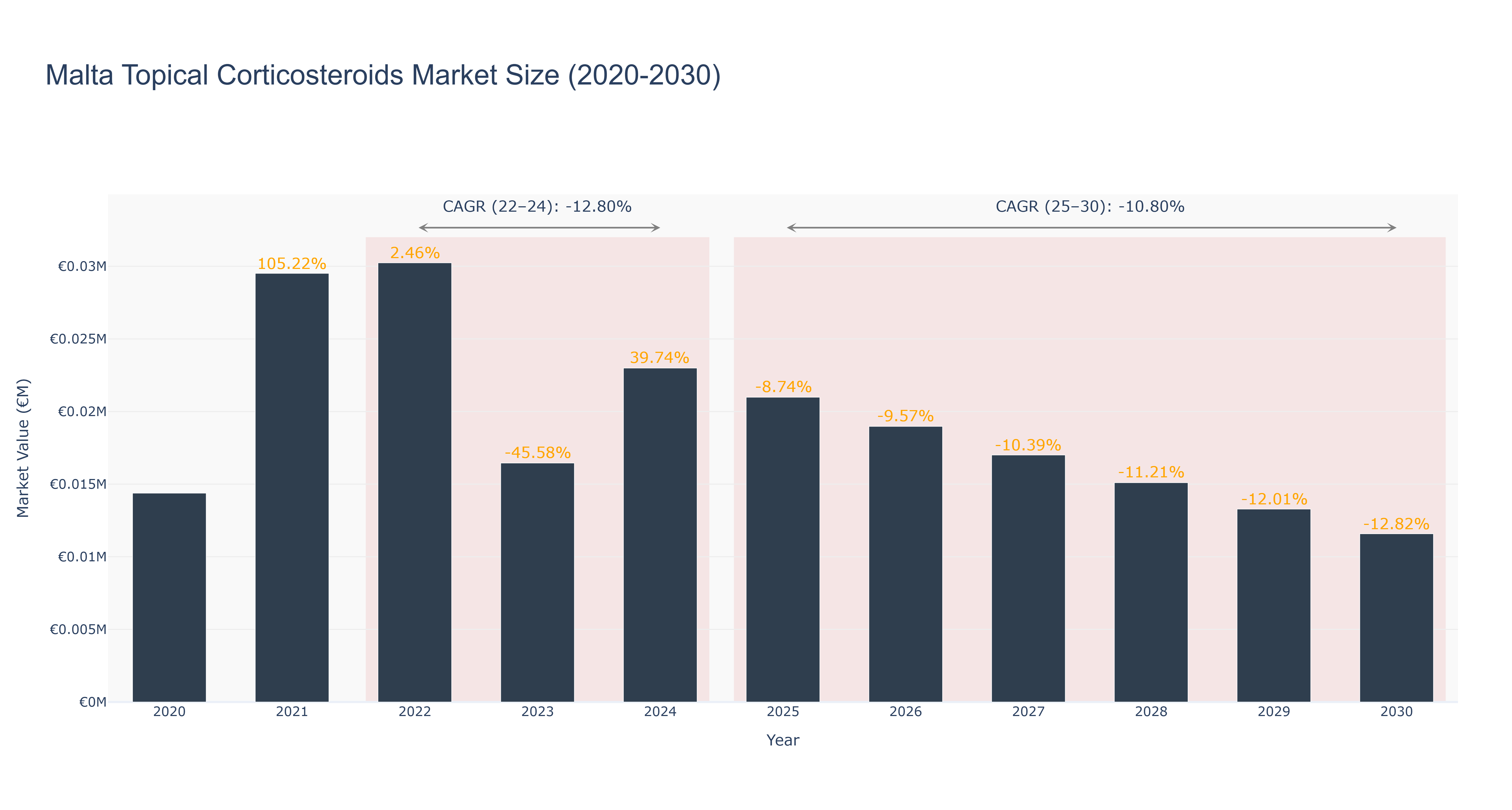
Malta Topical Corticosteroids Market has shown a declining trend since 2024, with the peak market size of €0.03 million in 2021. The actual market size decreased to €0.02 million by 2024, and the forecasted size is expected to continue declining to €0.01 million by 2030. The CAGR values reflect this downward trend, with -12.80% from 2022 to 2024 and -10.80% from 2025 to 2030. The market has been impacted by factors such as pricing pressures, regulatory challenges, and shifting consumer preferences towards alternative treatments. Looking ahead, recent developments in the pharmaceutical sector in Malta indicate a focus on innovation in dermatological products, potentially offering opportunities for growth in the topical corticosteroids market. Industry drivers include increasing awareness about skin conditions, rising healthcare expenditure, and a growing aging population seeking dermatological treatments. Future developments may involve collaborations between local pharmaceutical companies and research institutions to develop advanced corticosteroid formulations catering to evolving patient needs.
Malta Topical Corticosteroids Market: Production & Trade Performance (2019-2025)
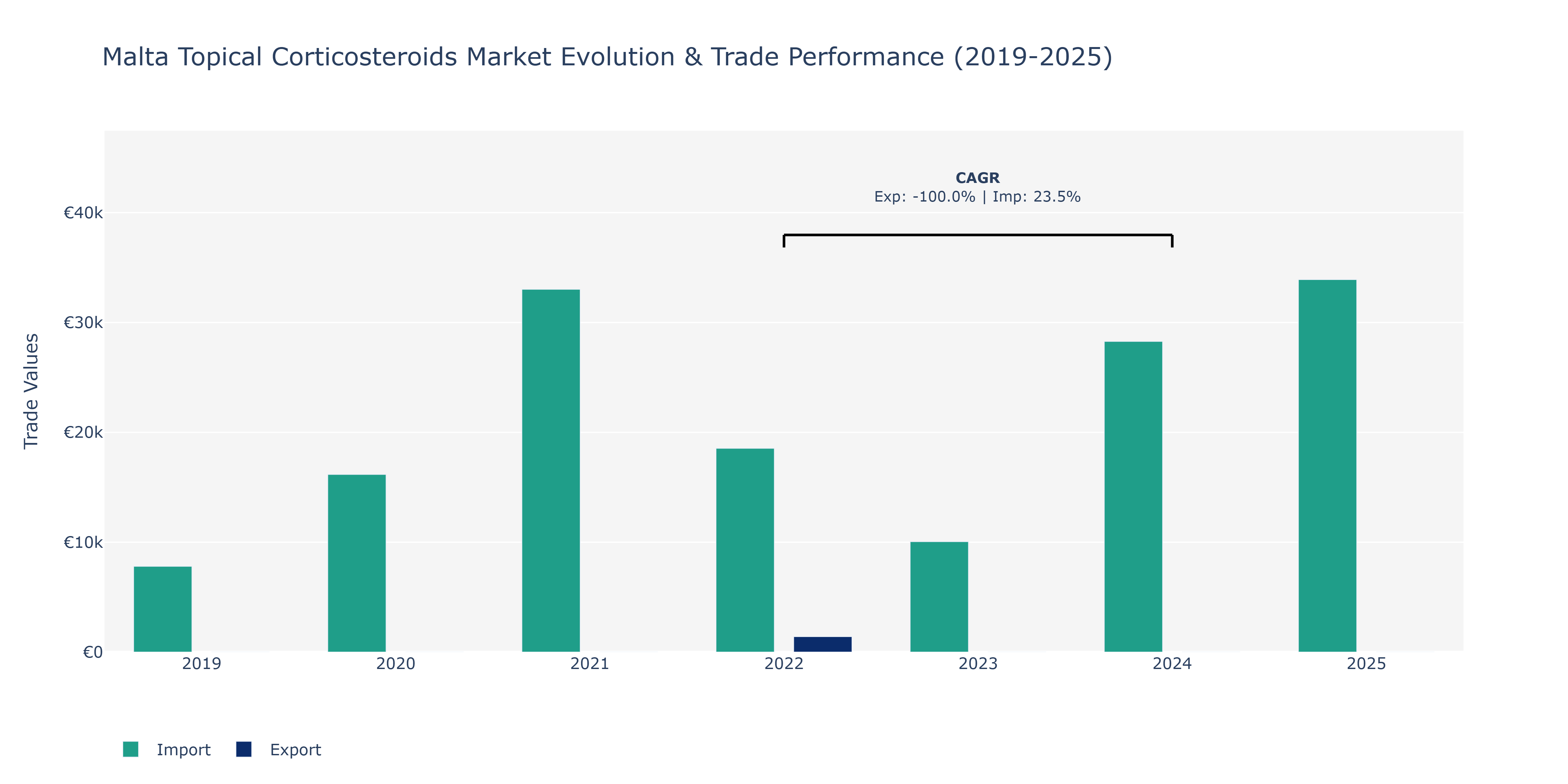
The Malta Topical Corticosteroids Market saw a notable rise in imports from 2019 to 2025, with figures increasing steadily each year. In 2019, imports stood at €7.8 thousand, almost doubling in 2020 to reach €16.17 thousand. The trend continued in 2021, with imports soaring to €33.02 thousand. The peak in imports occurred in 2025, reaching €33.9 thousand, reflecting a consistent upward trajectory. Despite a slight dip in 2023, the market rebounded swiftly. This growth can be attributed to various factors such as an increasing aging population, a rise in skin-related conditions, and a growing emphasis on dermatological health. The surge in imports could also indicate a growing demand for topical corticosteroids in the region, possibly driven by advancements in treatment options and greater awareness of skin ailments.
Key Highlights of the Report:
- Malta Topical Corticosteroids Market Outlook
- Market Size of Malta Topical Corticosteroids Market, 2025
- Forecast of Malta Topical Corticosteroids Market, 2032
- Historical Data and Forecast of Malta Topical Corticosteroids Revenues & Volume for the Period 2022 - 2032
- Malta Topical Corticosteroids Market Trend Evolution
- Malta Topical Corticosteroids Market Drivers and Challenges
- Malta Topical Corticosteroids Price Trends
- Malta Topical Corticosteroids Porter's Five Forces
- Malta Topical Corticosteroids Industry Life Cycle
- Historical Data and Forecast of Malta Topical Corticosteroids Market Revenues & Volume By Type for the Period 2022 - 2032
- Historical Data and Forecast of Malta Topical Corticosteroids Market Revenues & Volume By Prescription for the Period 2022 - 2032
- Historical Data and Forecast of Malta Topical Corticosteroids Market Revenues & Volume By OTC for the Period 2022 - 2032
- Historical Data and Forecast of Malta Topical Corticosteroids Market Revenues & Volume By End User for the Period 2022 - 2032
- Historical Data and Forecast of Malta Topical Corticosteroids Market Revenues & Volume By Hospitals for the Period 2022 - 2032
- Historical Data and Forecast of Malta Topical Corticosteroids Market Revenues & Volume By Dermatology clinics for the Period 2022 - 2032
- Historical Data and Forecast of Malta Topical Corticosteroids Market Revenues & Volume By Pharmacies for the Period 2022 - 2032
- Historical Data and Forecast of Malta Topical Corticosteroids Market Revenues & Volume By Others for the Period 2022 - 2032
- Malta Topical Corticosteroids Import Export Trade Statistics
- Market Opportunity Assessment By Type
- Market Opportunity Assessment By End User
- Malta Topical Corticosteroids Top Companies Market Share
- Malta Topical Corticosteroids Competitive Benchmarking By Technical and Operational Parameters
- Malta Topical Corticosteroids Company Profiles
- Malta Topical Corticosteroids Key Strategic Recommendations






































