Mauritania Non-Alcoholic Drink Market Growth Rate Analysis (2025 - 2031)
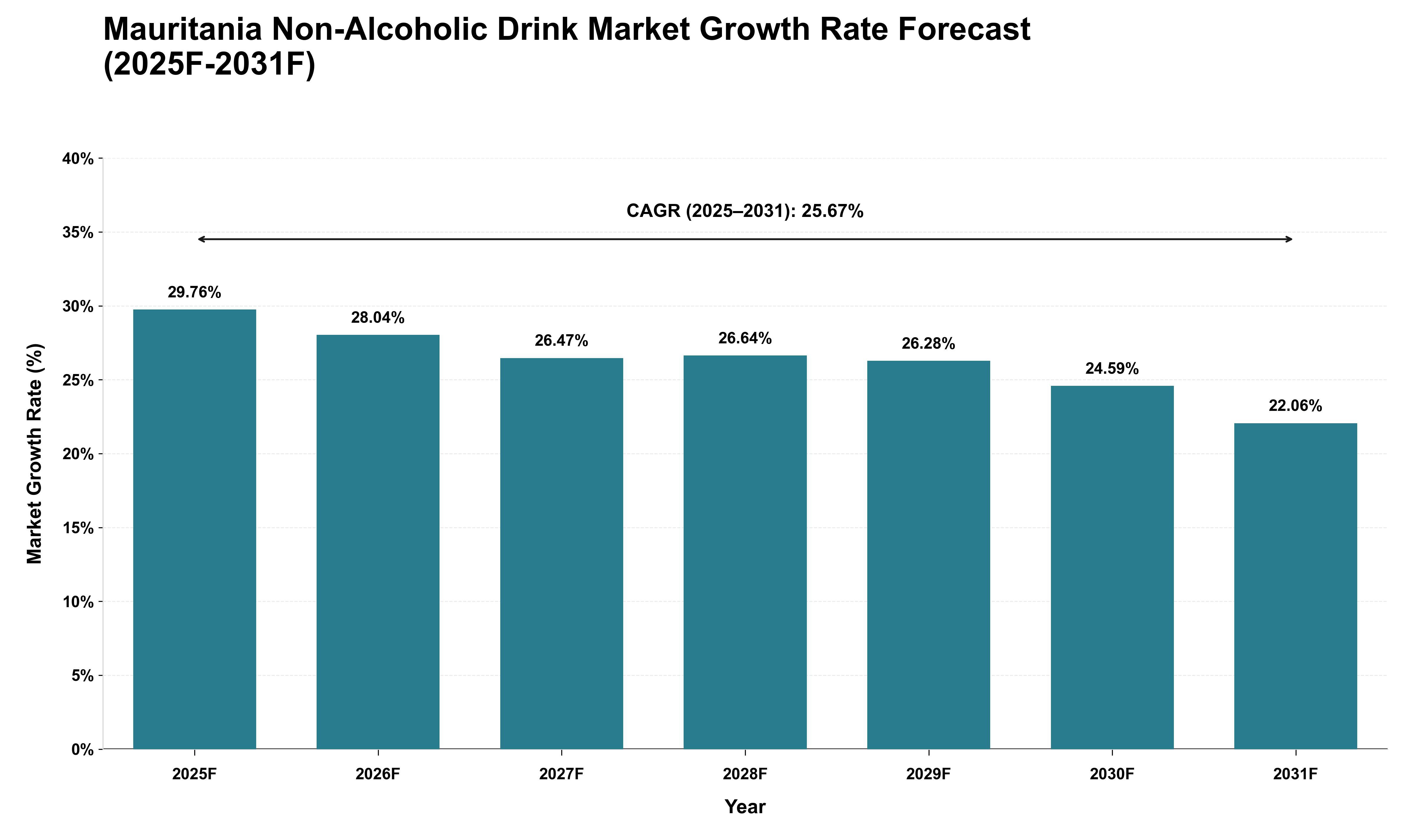
The Mauritania non-alcoholic drink market will experience significant growth driven by evolving consumer preferences and increasing health consciousness among the population. As disposable incomes rise, demand for diverse beverage options will shift towards healthier alternatives, including natural juices and functional drinks. The forecasted CAGR of 25.67% reflects this robust end-use demand shift, with annual growth rates peaking at 29.76% in 2025 before gradually tapering off. Import dependencies will play a crucial role, as local production capabilities may struggle to keep pace with rising consumption, necessitating increased imports to satisfy market needs. Additionally, cyclical trends in consumer spending patterns will likely influence purchasing behavior, particularly during festive seasons or events that promote social gatherings. Overall, the structural dynamics of health awareness and economic growth will underpin a vibrant trajectory for the non-alcoholic drink sector in Mauritania through 2031.
Key Highlights of the Report:
- Mauritania Non-alcoholic Drink Market Outlook
- Market Size of Mauritania Non-alcoholic Drink Market, 2024
- Forecast of Mauritania Non-alcoholic Drink Market, 2031
- Historical Data and Forecast of Mauritania Non-alcoholic Drink Revenues & Volume for the Period 2021-2031
- Mauritania Non-alcoholic Drink Market Trend Evolution
- Mauritania Non-alcoholic Drink Market Drivers and Challenges
- Mauritania Non-alcoholic Drink Price Trends
- Mauritania Non-alcoholic Drink Porter`s Five Forces
- Mauritania Non-alcoholic Drink Industry Life Cycle
- Historical Data and Forecast of Mauritania Non-alcoholic Drink Market Revenues & Volume By Product Types for the Period 2021-2031
- Historical Data and Forecast of Mauritania Non-alcoholic Drink Market Revenues & Volume By CarbonatedDrinks for the Period 2021-2031
- Historical Data and Forecast of Mauritania Non-alcoholic Drink Market Revenues & Volume By Non-CarbonatedDrinks for the Period 2021-2031
- Historical Data and Forecast of Mauritania Non-alcoholic Drink Market Revenues & Volume By Distribution Channel for the Period 2021-2031
- Historical Data and Forecast of Mauritania Non-alcoholic Drink Market Revenues & Volume By Online for the Period 2021-2031
- Historical Data and Forecast of Mauritania Non-alcoholic Drink Market Revenues & Volume By Offline for the Period 2021-2031
- Mauritania Non-alcoholic Drink Import Export Trade Statistics
- Market Opportunity Assessment By Product Types
- Market Opportunity Assessment By Distribution Channel
- Mauritania Non-alcoholic Drink Top Companies Market Share
- Mauritania Non-alcoholic Drink Competitive Benchmarking By Technical and Operational Parameters
- Mauritania Non-alcoholic Drink Company Profiles
- Mauritania Non-alcoholic Drink Key Strategic Recommendations






































