Mauritius Nonmetallic Mineral Product Market Growth Rate Analysis (2025 - 2031)
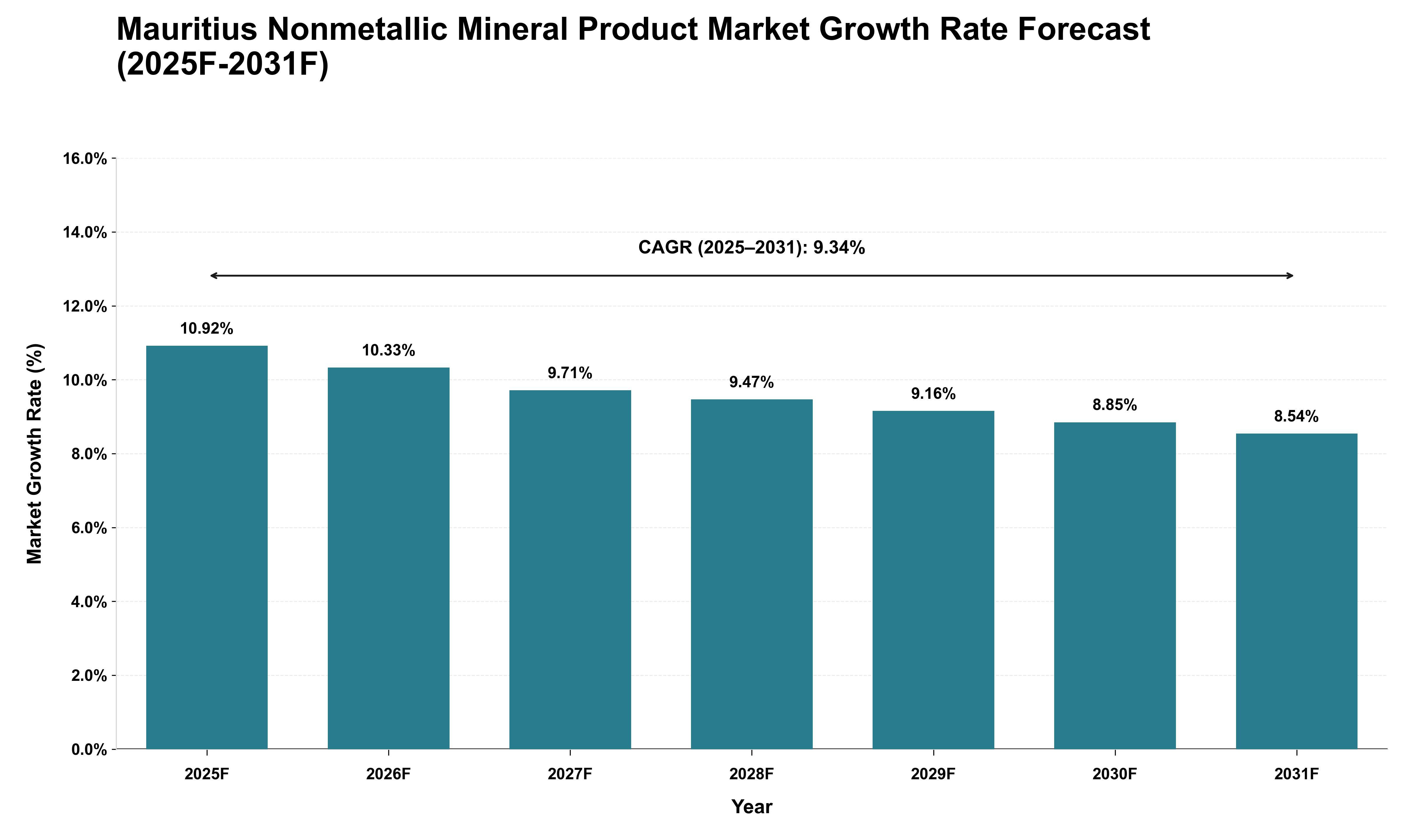
The forecast period for Mauritius's nonmetallic mineral product market will witness a robust growth trajectory, driven by increasing global demand for construction materials and industrial applications. With an anticipated compound annual growth rate (CAGR) of 9.34%, the market will experience significant annual growth rates peaking at 10.92% in 2025 before gradually tapering to 8.54% by 2031. This trend reflects a dynamic interplay between domestic production capabilities and import dependencies, as Mauritius seeks to enhance its export potential while managing the influx of foreign goods. The cyclical nature of construction and infrastructure development globally will further influence trade flows, with heightened demand for nonmetallic minerals expected to bolster both exports and imports throughout this period. As international markets evolve, Mauritius's strategic positioning in the nonmetallic mineral sector will likely facilitate increased trade volumes, contributing positively to its economic landscape.
Key Highlights of the Report:
- Mauritius Nonmetallic Mineral Product Market Outlook
- Market Size of Mauritius Nonmetallic Mineral Product Market, 2025
- Forecast of Mauritius Nonmetallic Mineral Product Market, 2032
- Historical Data and Forecast of Mauritius Nonmetallic Mineral Product Revenues & Volume for the Period 2022 - 2032F
- Mauritius Nonmetallic Mineral Product Market Trend Evolution
- Mauritius Nonmetallic Mineral Product Market Drivers and Challenges
- Mauritius Nonmetallic Mineral Product Price Trends
- Mauritius Nonmetallic Mineral Product Porter`s Five Forces
- Mauritius Nonmetallic Mineral Product Industry Life Cycle
- Historical Data and Forecast of Mauritius Nonmetallic Mineral Product Market Revenues & Volume By Form Type for the Period 2022 - 2032F
- Historical Data and Forecast of Mauritius Nonmetallic Mineral Product Market Revenues & Volume By Powder Form for the Period 2022 - 2032F
- Historical Data and Forecast of Mauritius Nonmetallic Mineral Product Market Revenues & Volume By Liquid Form for the Period 2022 - 2032F
- Historical Data and Forecast of Mauritius Nonmetallic Mineral Product Market Revenues & Volume By End User for the Period 2022 - 2032F
- Historical Data and Forecast of Mauritius Nonmetallic Mineral Product Market Revenues & Volume By Jewellery for the Period 2022 - 2032F
- Historical Data and Forecast of Mauritius Nonmetallic Mineral Product Market Revenues & Volume By Construction for the Period 2022 - 2032F
- Historical Data and Forecast of Mauritius Nonmetallic Mineral Product Market Revenues & Volume By Iron & Ore for the Period 2022 - 2032F
- Mauritius Nonmetallic Mineral Product Import Export Trade Statistics
- Market Opportunity Assessment By Form Type
- Market Opportunity Assessment By End User
- Mauritius Nonmetallic Mineral Product Top Companies Market Share
- Mauritius Nonmetallic Mineral Product Competitive Benchmarking By Technical and Operational Parameters
- Mauritius Nonmetallic Mineral Product Company Profiles
- Mauritius Nonmetallic Mineral Product Key Strategic Recommendations






































