Mexico Brandy Market Summary
The mexico brandy market was estimated at USD 129 Million in 2025 and is projected to reach USD 148 Million by 2032, growing at a CAGR of 0.8% from 2026 to 2032.
Mexico Brandy Market Year-wise Growth Rate and Key Drivers
This graph highlights how the Mexico Brandy Market has steadily grown over the past five years, supported by major growth factors.
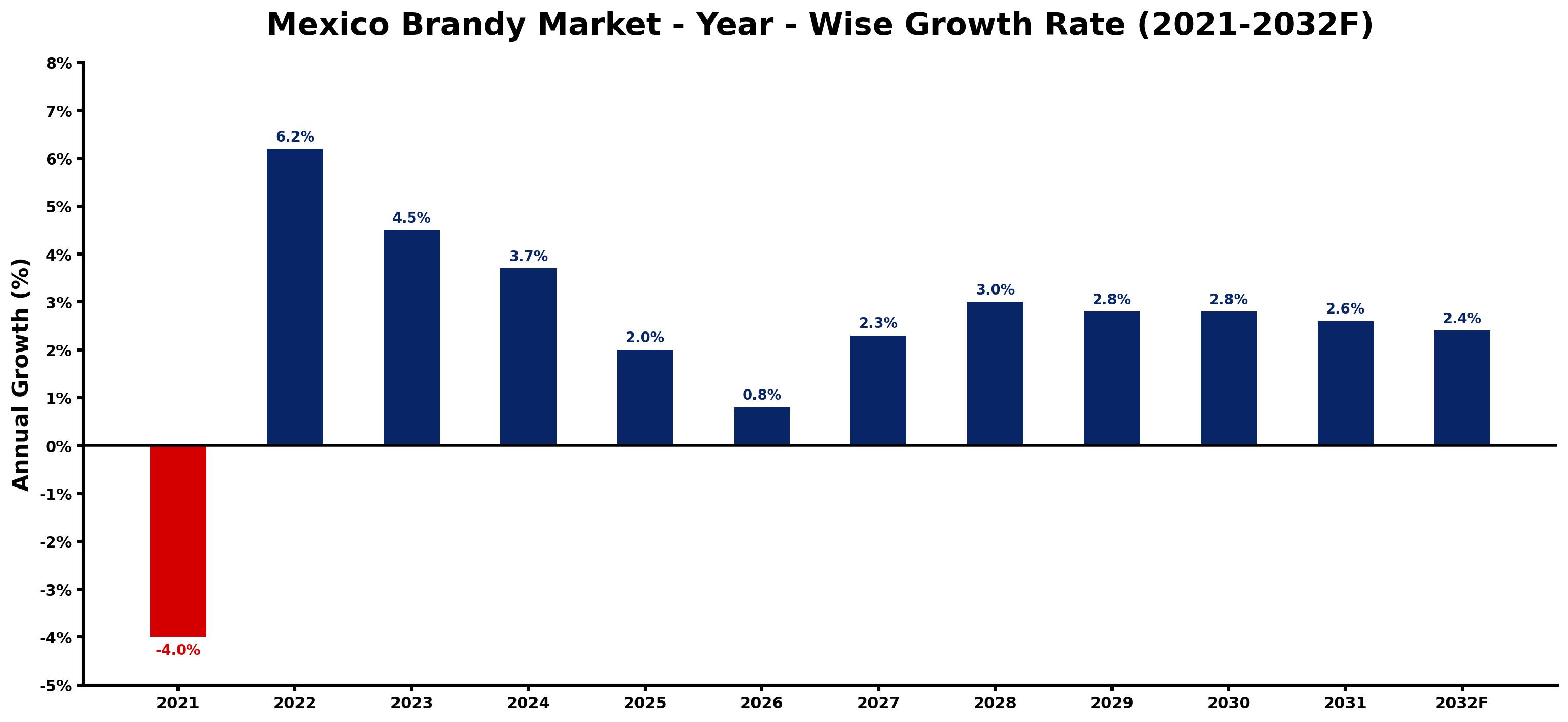
The table below presents the year wise growth rates along with the key drivers influencing the market
| Year | Growth Rate | Major Drivers |
| 2021 | -4.0% | Decreased tourism due to pandemic restrictions significantly reduced brandy sales in bars and restaurants. |
| 2022 | 6.2% | Traditional Mexican distillation processes gained popularity among discerning drinkers. |
| 2023 | 4.5% | Local distilleries introduced innovative flavors, enhancing brandy's market appeal significantly. |
| 2024 | 3.7% | Increased tourism in Mexico showcased local spirits, expanding brandy's consumer base. |
| 2025 | 2.0% | E-commerce platforms enabled easier access to diverse brandy selections nationwide. |
| 2026 | 0.8% | Younger consumers prioritized unique experiences, favoring brandy tastings and events. |
| 2027 | 2.3% | Collaborations between brands and local artisans highlighted cultural heritage through brandy. |
| 2028 | 3.0% | Social media influencers began advocating for premium Mexican brandy brands vigorously. |
| 2029 | 2.8% | Sustainability practices in production attracted environmentally-conscious consumers to brandy. |
| 2030 | 2.8% | International interest in cocktails using Mexican brandy surged, elevating brand visibility. |
| 2031 | 2.6% | Retail expansions introduced brandy to untapped markets, increasing overall consumption rates. |
| 2032 | 2.4% | Innovative marketing campaigns focused on heritage stories revitalized brandy's traditional image. |
Note - Market size estimations and growth projections presented in this report are based on 6Wresearch's advanced forecasting approach, validated with industry datasets as of June 2026.
Mexico Brandy Market Synopsis
The Mexico Brandy Market is projected to reach 0.8% and witness significant growth during the forecast period (2026-2032). The evolving landscape of consumer preferences is resulting in a marked shift toward premium and artisanal spirits, positioning brandy as a sought-after choice among discerning drinkers. This market is increasingly characterized by a demand for unique, high-quality brandy offerings, paving the way for innovation in production methods and aging techniques within the distillery sector.
Mexico Brandy Market Growth Drivers
A multitude of factors is propelling the Mexico Brandy Market forward. Notably, the rising interest in premium alcoholic beverages has led to an expanding consumer base seeking sophisticated drinking options. Factors contributing to this growth include:
- Evolving consumer preferences are at the forefront, as individuals increasingly lean toward high-quality and unique brandy types that enhance their drinking experiences.
- The culture of socializing and celebrating special occasions with refined spirits has intensified, driving demand for premium brandy offerings.
- Innovative production methods are being adopted by distilleries, which not only enhance the quality of the final product but also align with contemporary consumer trends.
- Artisanal distilleries are gaining popularity, with consumers showing a preference for products that reflect local heritage and craftsmanship.
- The increasing availability of brandy in diverse retail channels, including online platforms, is making it more accessible to the broader market.
Mexico Brandy Market Challenges and Restraints
Despite the promising growth, the Mexico Brandy Market faces several challenges. Producers must navigate a complex landscape shaped by cultural and demographic factors impacting alcohol consumption. Key challenges include:
- An understanding of consumer preferences is crucial, as the market is diverse and constantly evolving, making it imperative for producers to stay attuned to changing tastes.
- Striking a balance between traditional production methods and innovative approaches is essential in resonating with both heritage-focused consumers and modern taste enthusiasts.
- Regulatory hurdles can impede market entry for new players, necessitating a thorough understanding of compliance requirements in alcohol production and distribution.
- Heightened competition from other spirits markets may dilute brandy's presence, especially among younger consumers who may gravitate toward alternative beverages.
- Economic fluctuations can influence consumer spending on premium products, leading to variability in demand during economic downturns.
Mexico Brandy Market Government Investment and Initiatives
The regulatory framework governing the Mexico Brandy Market plays a pivotal role in shaping industry standards and practices. Key initiatives include:
- Regulations ensure quality standards are upheld across the board, with agencies like the National Chamber of the Tequila Industry (CNIT) overseeing compliance in production methods.
- The Mexican Institute of Industrial Property (IMPI) enforces labeling requirements, ensuring transparency and consumer trust in brandy products.
- Government policies also address taxation and import/export controls, which are crucial for maintaining a competitive market environment for domestic producers.
- Public initiatives aimed at promoting responsible alcohol consumption are increasingly relevant, particularly as brandy gains traction among health-conscious consumers.
- Support for local distilleries through grants and subsidies helps bolster artisanal production, reinforcing the cultural heritage associated with Mexican brandy.
Mexico Brandy Market Latest Developments (May 2025 - June 2026)
Recent trends within the Mexico Brandy Market highlight a dynamic shift towards innovation and consumer engagement. Distilleries are increasingly emphasizing the use of local ingredients and traditional production techniques as consumers express a preference for authenticity. Additionally, the growing trend of premiumization is prompting brands to invest in marketing campaigns that reinforce the unique qualities of their products. Initiatives aimed at promoting brandy as a versatile beverage option have also gained traction, encouraging consumers to explore diverse serving methods. This period has seen a collaborative spirit among producers as they share insights and strategies to navigate market challenges and capitalize on emerging opportunities.
Mexico Brandy Market - Key Attractiveness of the Report
- 10 Years of Market Numbers
- Historical Data Starting from 2022 to 2025
- Base Year: 2025
- Forecast Data until 2032
- Key Performance Indicators Impacting the Market
- Major Upcoming Developments and Projects
Key Highlights of the Report:
- Mexico Brandy Market Outlook
- Market Size of Mexico Brandy Market, 2025
- Forecast of Mexico Brandy Market, 2032
- Historical Data and Forecast of Mexico Brandy Revenues & Volume for the Period 2022-2032F
- Mexico Brandy Market Trend Evolution
- Mexico Brandy Market Drivers and Challenges
- Mexico Brandy Price Trends
- Mexico Brandy Porter's Five Forces
- Mexico Brandy Industry Life Cycle
- Historical Data and Forecast of Mexico Brandy Market Revenues & Volume By Type for the Period 2022-2032F
- Historical Data and Forecast of Mexico Brandy Market Revenues & Volume By V.S. ("very special") for the Period 2022-2032F
- Historical Data and Forecast of Mexico Brandy Market Revenues & Volume By V.S.O.P. ("very superior old pale") for the Period 2022-2032F
- Historical Data and Forecast of Mexico Brandy Market Revenues & Volume By XO ("extra old") for the Period 2022-2032F
- Historical Data and Forecast of Mexico Brandy Market Revenues & Volume By Hors d'age ("beyond age") for the Period 2022-2032F
- Historical Data and Forecast of Mexico Brandy Market Revenues & Volume By Applications for the Period 2022-2032F
- Historical Data and Forecast of Mexico Brandy Market Revenues & Volume By Shop & Supermarket for the Period 2022-2032F
- Historical Data and Forecast of Mexico Brandy Market Revenues & Volume By Restaurant & Bar & Club for the Period 2022-2032F
- Historical Data and Forecast of Mexico Brandy Market Revenues & Volume By Exclusive Store for the Period 2022-2032F
- Historical Data and Forecast of Mexico Brandy Market Revenues & Volume By Others for the Period 2022-2032F
- Mexico Brandy Import Export Trade Statistics
- Market Opportunity Assessment By Type
- Market Opportunity Assessment By Applications
- Mexico Brandy Top Companies Market Share
- Mexico Brandy Competitive Benchmarking By Technical and Operational Parameters
- Mexico Brandy Company Profiles
- Mexico Brandy Key Strategic Recommendations






































